
SOUTHWEST
Captiva
fishing guide
Work beach bait lanes and understand pass hazards. Plan public parking before exploring this narrow island on foot.
Explore the guide ↓Plan around limited public access
Captiva offers Gulf beach fishing, nearby pass water and access to the wider Pine Island Sound fishery by suitable boat. It is also a narrow island with limited public parking and substantial private waterfront. A successful visit begins by choosing a lawful entrance and enough time to use it comfortably.
Snook can patrol the beach shallows, while whiting and pompano feed over sand. Bait concentrations may bring mackerel, ladyfish or jacks within casting range. The most useful fishing position is usually a particular trough or current edge, not every stretch of beach equally.
Captiva and North Captiva are separate places. Do not use a boat-access recommendation for North Captiva as driving directions to this island. This guide focuses on Captiva’s public beach setting and explains the more demanding pass and boat options separately.
Alison Hagerup Beach Park
Alison Hagerup Beach Park is at 14790 Captiva Drive. The reviewed county listing describes direct beach access, restrooms and paid parking from dawn to dusk. Parking can be a meaningful part of the cost, so check the current rate and allow for the full walking and fishing time.
Use the designated lot rather than nearby private spaces. Carry a compact kit so you can walk to an uncrowded permitted fishing position. Do not spread rods across a narrow entrance where families need to reach the beach.
The posted beach rules require attended poles and protect dunes, nesting wildlife and live shells. Read the current signs on arrival. A beach that allows fishing still requires care around swimmers, walkers and birds.
Blind Pass needs a different plan
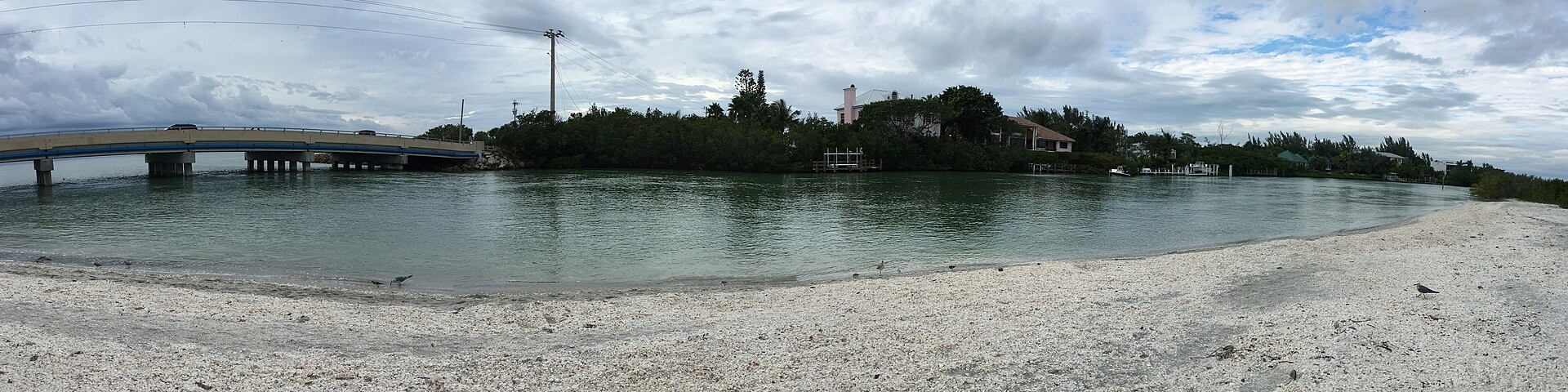
At the southern end, Blind Pass separates Captiva from Sanibel. Moving water and changing sand can gather bait, but the same features create hazards. Keep away from deep or fast water and do not attempt to wade across the opening.
Check the exact park and parking area you will use. Turner Beach and neighboring access points have their own management and notices. A reopened beach does not guarantee that every bank, bridge position or shoreline edge is available for fishing.
If you cannot present a lure without sweeping through traffic or snagging in rough ground, change positions within lawful access or return to the open beach. Stronger current is not automatically better fishing for the equipment you have.
Watch where small fish collect
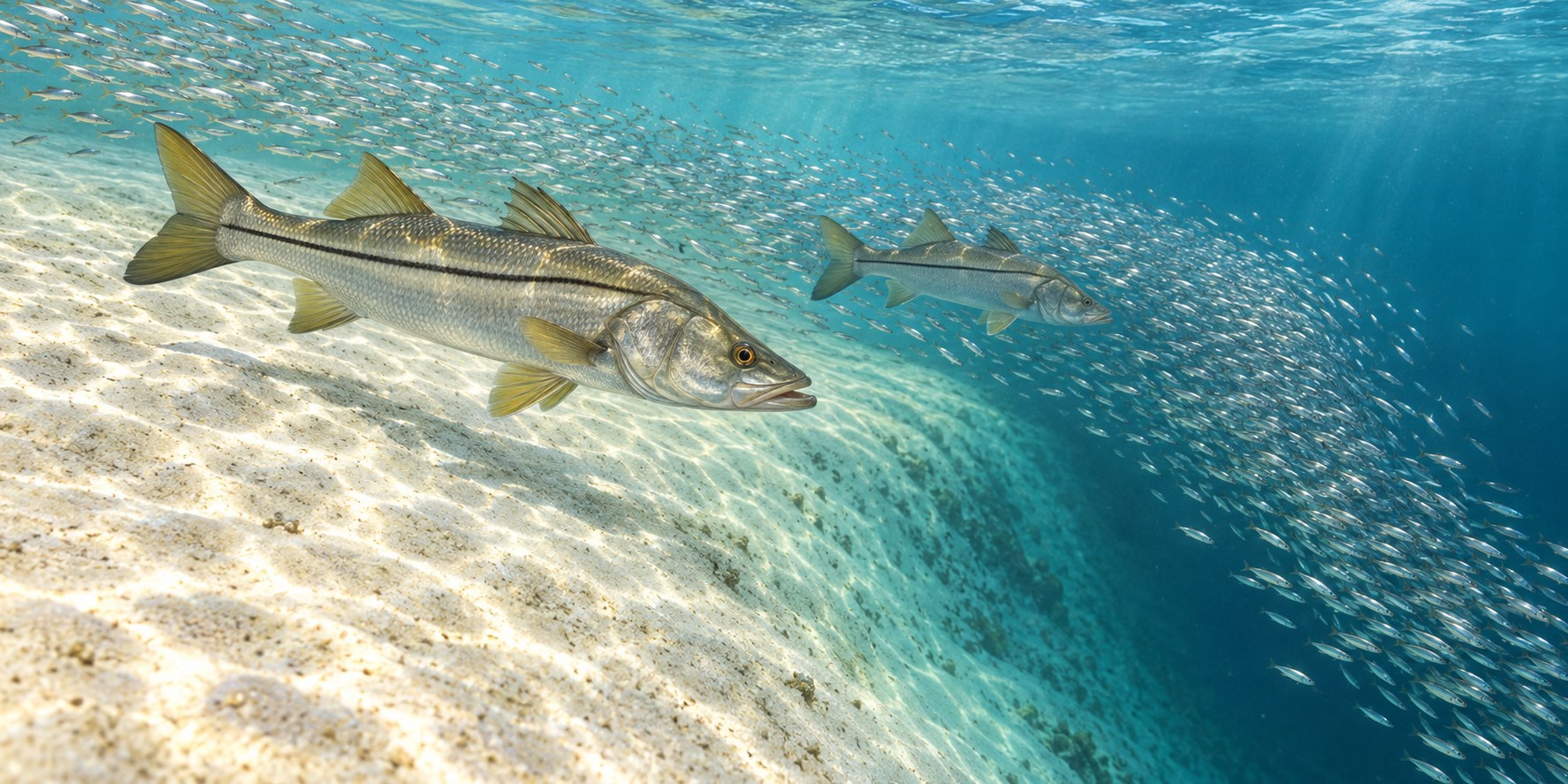
A moving school of minnows can reveal a useful beach lane. Look for a dark patch that changes shape, small flashes at the surface or repeated bird attention. Predators often work the edge of the school rather than remaining in its center.
Make a cast ahead of the bait’s movement and retrieve across the outside. Keep the lure clear of birds. If the school passes beyond your safe casting range, let it go rather than following into deeper or restricted water.
At a pass edge, bait may gather where shallow sand meets a deeper channel. Fish can hold along that change in depth. The illustration shows the relationship, not a chart of Blind Pass or a recommendation to stand at a particular point.
Fish and practical bait choices
| Target fish | Best feature to test | Useful offering |
|---|---|---|
| Snook | Shallow shoreline lane with small bait | A slim paddletail or small swimming plug |
| Whiting | Sand in the closest manageable trough | A small fresh shrimp piece |
| Pompano | Clean moving surf over sand | Sand fleas, shrimp or a light bouncing jig |
| Spanish mackerel | Fast bait activity outside the wash | A compact silver spoon |
| Ladyfish | Open current seams and small bait schools | A jig retrieved with short pauses |
| Jacks | Surface feeding that pushes bait toward the beach | A durable lure and enough tackle strength for a controlled fight |
Keep your choice consistent with the available landing space. A large fish beside a steep or crowded edge can be difficult to release safely. Do not target it merely because it is visible.
When to favor the beach
Cooler conditions can make small-bait surf fishing a useful plan. Whiting and pompano deserve attention when the water is reasonably clean and the waves are manageable. A passing front may require a delay while the Gulf settles.
Spring brings opportunities to follow warming water and bait. Keep a lure ready for moving fish, but make the cast only when there is clear space. The first active school is not worth a hook near another beach visitor.
Warm summer mornings can suit a quiet snook walk. Look close to shore and approach slowly. Plan around the heat and thunderstorms, and keep handling brief when a fish is released.
Fall can offer changing schools of bait and comfortable walking temperatures. Tropical weather and erosion can still alter the shoreline. Recheck access and do not assume a familiar route remains open after a storm.
Use the wind to choose the session length
Onshore wind can create surf and push grass against the beach. If the water is heavily weeded, a small change of position may help, but a continuous belt of grass can make the entire plan unproductive. Be willing to finish early rather than using the whole paid parking period in poor conditions.
An offshore breeze can make the beach look calm while making an unplanned paddle trip unsafe. Do not launch a small craft just because the surf is flat. The wider sound and passes need their own forecast and route assessment.
Review the Captiva-area weather and tides and watch several sets of waves before rigging. Keep a dry return path and do not let the tide pin you against an eroded section.
Two simple methods for a short visit
Small bait in the near trough
Use a hook proportioned to a shrimp piece and only enough sinker to hold the chosen lane. Check the bait after small taps. Move the cast a few yards before changing every part of the rig, so you can learn whether distance is the issue.
A walking lure presentation
Carry one rod and scan ahead for snook or bait. Cast selectively, keeping the lure above the bottom. If a fish follows without taking, alter speed or profile on the next opportunity rather than repeatedly splashing the same fish.
Both methods work best when the angler has room. Move away from concentrated swimming and leave shell collectors an easy route along the wash. Keep the rods attended even during a short conversation or photograph.
What to carry from the parking lot
Bring a small tackle bag, water, sun protection and a suitable spinning outfit. Include leader material, pliers, a measuring tool and a closed container for rubbish. A heavy cooler and several rods can make the limited-access walk less enjoyable than it needs to be.
Keep shrimp cool and use it while it is fresh. A few effective lures are more useful than a large open tray exposed to sand and salt. Protect the reel when setting the rod down and avoid laying hooks in the walking path.
For children, choose an uncomplicated bait session on a broad stretch of sand. Keep the pass out of the plan unless the group has the experience and conditions for it. A small catch landed calmly is a better introduction than a difficult fight near strong current.
Birds are part of the fishing scene
The photograph shows royal terns along Captiva’s beach. Their presence is a reminder to watch the air as well as the water. Do not cast into diving birds, leave bait unattended or allow line scraps to blend into the shell.
If a bird is hooked, stop pulling and seek appropriate help rather than cutting away a long length of trailing line. Keep people clear of the animal’s bill while handling assistance is arranged. Avoid creating the problem by waiting for an open casting lane.
Confirm FWC’s saltwater fishing requirements before harvest. The Captiva park and photograph notes provide the access source and image credit used here.
Choose a comfortable distance from the entrance
Limited parking and a narrow public entrance can make visitors feel they must walk a long way to find worthwhile water. First inspect the nearest permitted stretch with enough casting room. A small trough, bait school or change in surf may already provide a useful test. Walk farther only when there is a clear reason and the return remains comfortable. If carrying bait, keep it cool in a small insulated container rather than taking a heavy cooler down the entire beach. Save energy for careful observation and fish handling. A short productive visit that ends before the parking allowance or heat becomes a problem is a good introduction to Captiva.
Captiva fishing questions
Can I leave a bait rod while I walk for shells?
No. The reviewed beach rules require poles to be attended. Reel in and secure the hook before leaving the fishing position.
Is North Captiva reached from this beach by road?
No. North Captiva is a separate island. Do not confuse its boat-based access advice with Captiva’s road-accessible public beach parks.
Should I fish directly beneath feeding birds?
Wait for a clear opening and work the outside of the bait school. A cast through birds risks tangling or injuring them.
What makes a short Captiva trip easier?
A confirmed parking plan, one rod and a nearby permitted stretch of beach reduce the time spent carrying equipment and searching for access.