

SOUTHWEST
Bonita Beach
fishing guide
Start with the first trough and let bait activity guide the next cast. Keep public entrances and bay-launch plans separate.
Explore the guide ↓A beach fishing trip that starts close to shore
Bonita Beach rewards anglers who study the first few yards of water before making a long cast. Whiting and pompano search the sand for small food. Snook can travel along the inside trough with surprisingly little water over their backs. A comfortable, uncrowded stretch of permitted beach can offer more useful fishing than a distant patch reached by unnecessary wading.
The Gulf shore and the protected waters behind the barrier island are different fishing settings. This guide begins with beach access and light surf tackle. Estero Bay and its mangrove shorelines require a separate launch, route and weather decision. Do not assume a beach entrance also provides permission to cross private property into the bay.
A short morning visit is a good way to learn the area. Bring one manageable rod, a small bait container and enough water to remain comfortable. Watch the water while you walk, then choose a position with a clear casting lane and room to land a fish.
Choose the right Bonita Beach entrance
Lee County lists Bonita Beach Park at 27954 Hickory Boulevard. It also maintains numbered beach accesses farther along the island. Access number 10 is Little Hickory Island Beach Park. These names matter when checking parking, hours and repair notices because one entrance’s conditions do not describe every other entrance.
Look at the current county notice for your intended park before leaving. Beach restoration and storm repairs can affect parking or facilities even when some shoreline remains reachable. On arrival, use the marked public path and read signs about fishing, wildlife areas and beach use.
Do not park in residential driveways or treat a private waterfront as an alternative entrance. A long walk with several heavy rods can make a small parking problem much worse. Pack for the access you actually have, including the return walk after the day warms.
Give swimmers the first consideration when selecting a fishing position. A clear beach at opening time may become busy later. If the swimming area expands around your lines, move to another permitted stretch or finish the session.
Find the trough before choosing a sinker
A trough is the slightly deeper strip between the shoreline and a sandbar. It may appear as darker water just beyond the small shore break. Pompano and whiting can move through that lane while feeding on creatures disturbed by waves.
Watch several sets of waves. A place where waves break farther out may mark a shallow bar. A gap in that pattern can indicate deeper water. Treat these observations as fishing clues rather than an invitation to wade into an opening.
Set one bait in the inside trough first. If there is safe room for a second presentation, compare it with a bait near the outer edge. Change only one thing at a time so you can tell whether distance, bait or movement affected the result.
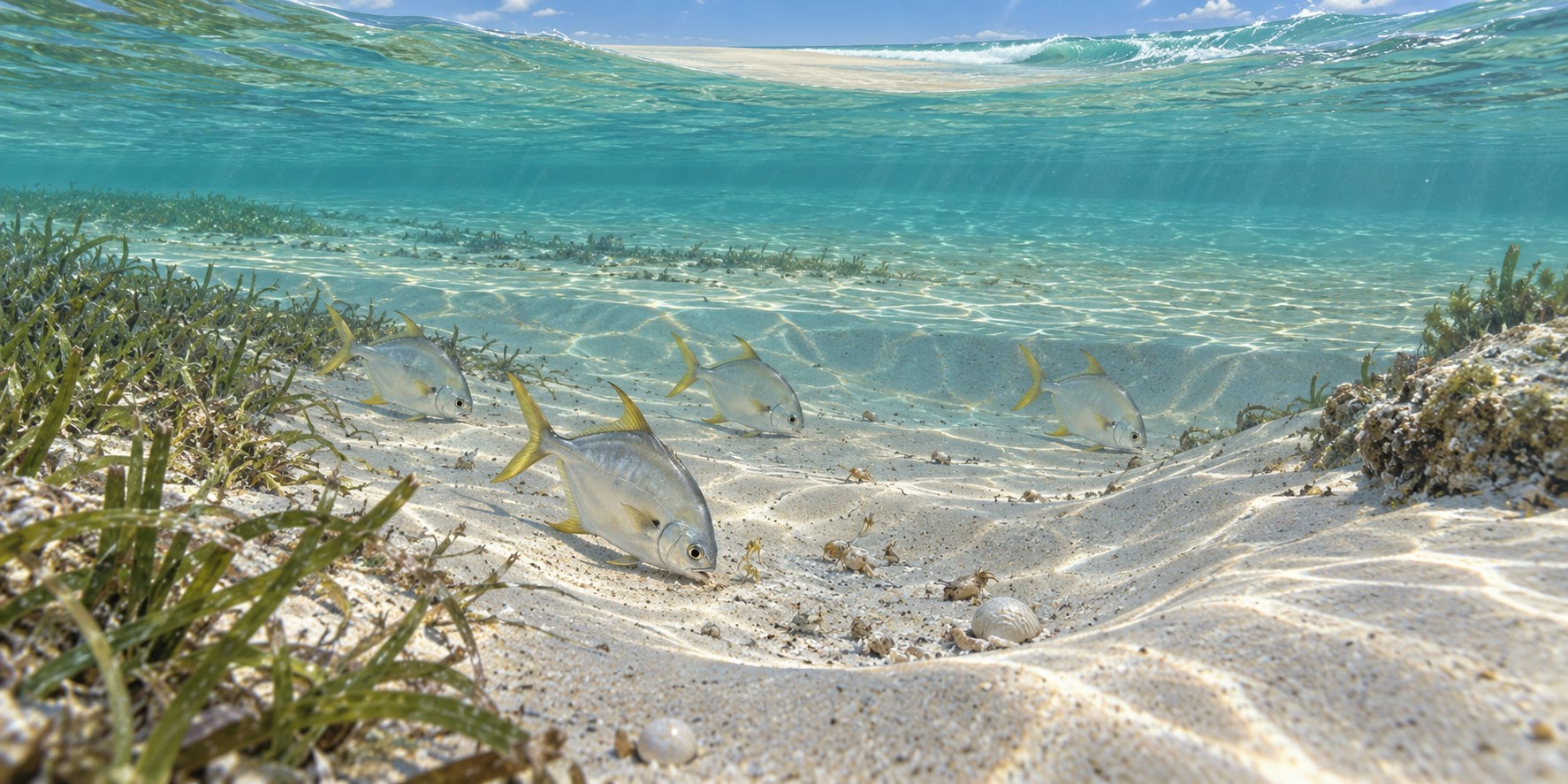
Fish to look for and simple bait choices
| Fish | Useful setting | Starting bait or lure | Adjustment to try |
|---|---|---|---|
| Pompano | Clean moving surf over sand | Small shrimp piece or sand flea | Move the bait to another trough before adding extra hooks |
| Whiting | Nearshore sandy feeding lane | Fresh shrimp on a small hook | Shorten the cast if bites stop farther out |
| Snook | Shallow beach edge near baitfish | Small paddletail or unweighted baitfish imitation | Retrieve along the beach rather than straight across it |
| Spanish mackerel | Open water with tightly packed minnows | Compact spoon or fast swimming jig | Match the size of the bait instead of the size of the predator |
| Ladyfish and jacks | Moving bait schools | Small jig or spoon | Cast to the school edge where your lure remains visible |
These are reasonable targets for the habitat, not a promise that each will be present during every visit. Water clarity, temperature and bait supply can change the day’s mix.
Two useful ways to fish the beach
For bait fishing, a light surf outfit with a small bottom rig covers much of the easy fishing. Use enough weight to keep the bait in its lane without dragging constantly. A heavy sinker that buries deeply can hide delicate bites and make every retrieve tiring.
Keep shrimp pieces small enough for the hook point to remain clear. Large loose pieces are easily stripped. Check a motionless bait occasionally rather than leaving an empty hook soaking for half the morning.
For walking and casting, a medium spinning rod with a small paddletail is easier to carry. Start with a light jig head in shallow water. If the lure plows through sand on every retrieve, reduce weight or raise the rod slightly.
Snook feeding near shore often see you before you see them. Walk slowly, avoid stepping into the trough and cast ahead of the direction they are traveling. A lure landing directly on a visible fish usually ends the opportunity.
Let temperature and weather guide the target
During cooler stretches, beach bait fishing can be a sensible choice when the Gulf settles after a front. Pompano and whiting are worth considering, but a cold, dirty shoreline is not improved simply by waiting through a calendar’s preferred month.
As the water warms, watch for snook along the beach and more frequent baitfish activity. Early light gives you better casting space and less heat. It also helps you see fish moving through the shallows before glare becomes strong.
Summer brings short weather windows and thunderstorms. Finish well before a storm reaches the beach. A rod is not worth carrying across exposed sand while lightning is approaching.
In fall, moving bait can make an ordinary-looking section lively. Watch birds carefully without casting toward them. A compact lure worked beside the bait may be more useful than a large bottom bait left behind the school.
Use the forecast to choose a comfortable shoreline
Onshore wind can build surf and make light rigs difficult to hold. Offshore wind may flatten the nearshore surface while creating a poor return route for a paddle craft. A calm-looking beach therefore does not automatically mean safe kayaking.
Compare the local tide and weather outlook with what you see at the sand. Notice whether foam and floating grass move steadily or remain almost still. Gentle movement can help carry scent and food through the trough.
Check water-quality and beach notices after unusual runoff or reports of irritated eyes, coughing or dead fish. Changing locations is a better response to questionable water than trying to solve it with a different bait.
When the back bay makes more sense
Estero Bay offers mangrove edges, grass and deeper channels that support a different style of fishing. Snook, redfish and seatrout use those habitats. Reaching them requires legal launch access and a route that matches your boat or kayak.
Do not improvise a bay crossing from a beach parking space. Use a designated launch and account for wind on the return leg. Start with nearby sheltered water rather than planning a long circuit around unfamiliar islands.
Small shrimp or weedless soft plastics can be practical in shallow cover. Keep the lure outside roots and grass instead of dragging through them. Avoid grounding a motorboat on the flat while trying to reach a fish you can already see.
A realistic first two hours
Spend the first few minutes checking the entrance, signs and swimming activity. Walk far enough to find casting room, but keep the return distance comfortable. Identify one inside trough and one deeper-looking lane.
Fish a small shrimp bait in the closer lane while watching for minnows or cruising fish. If bites are absent, inspect the bait and move a short distance along the same permitted beach. A fresh stretch of trough is often a more useful test than a much heavier rig.
If baitfish arrive, switch to the casting rod. If swimmers arrive, shorten the session. Leave time to collect line fragments and bait packaging before returning through the public access.
Keep the catch and the beach in good condition
Confirm your license requirements and the current species rules with the Florida Fish and Wildlife Conservation Commission. A beach fish should be identified and measured before any decision to keep it.
Wet your hands for handling. Keep released fish out of dry sand, support their weight and return them promptly. Use a landing tool that suits the fish rather than pulling a large fish by the line. Keep spare hooks secured while walking through busy entrances.
Keep the sand out of the tackle
Set the reel on a clean support rather than laying it directly in wet sand. A small towel or closed bag keeps spare rigs organized during the walk. When changing bait, secure the loose hook before turning toward a companion. These simple habits matter on a busy beach where space changes as people arrive. At the end of the session, collect short leader pieces as carefully as the larger packaging. Clear line can be nearly invisible against pale sand.
Bonita Beach questions
Do I need a very long surf rod?
No. Many useful feeding lanes are close to the beach. Choose a rod that handles your sinker and lets you cast accurately without exhausting you.
Is Little Hickory the same access as Bonita Beach Park?
No. Little Hickory Island Beach Park is access number 10. Check the specific entrance’s parking and notices.
Should I wade out to reach snook?
Often the opposite approach is better. Remain on the sand and search the shallow lane before stepping into it.
Where are the access sources and photo details?
The Bonita Beach reference notes identify the official park information and photograph credit used for this guide.