
SOUTHWEST
Lovers Key
fishing guide
Choose a beach walk or sheltered paddle, with current tram, supply and ramp notices built into the plan.
Explore the guide ↓Pick a beach walk or a sheltered paddle
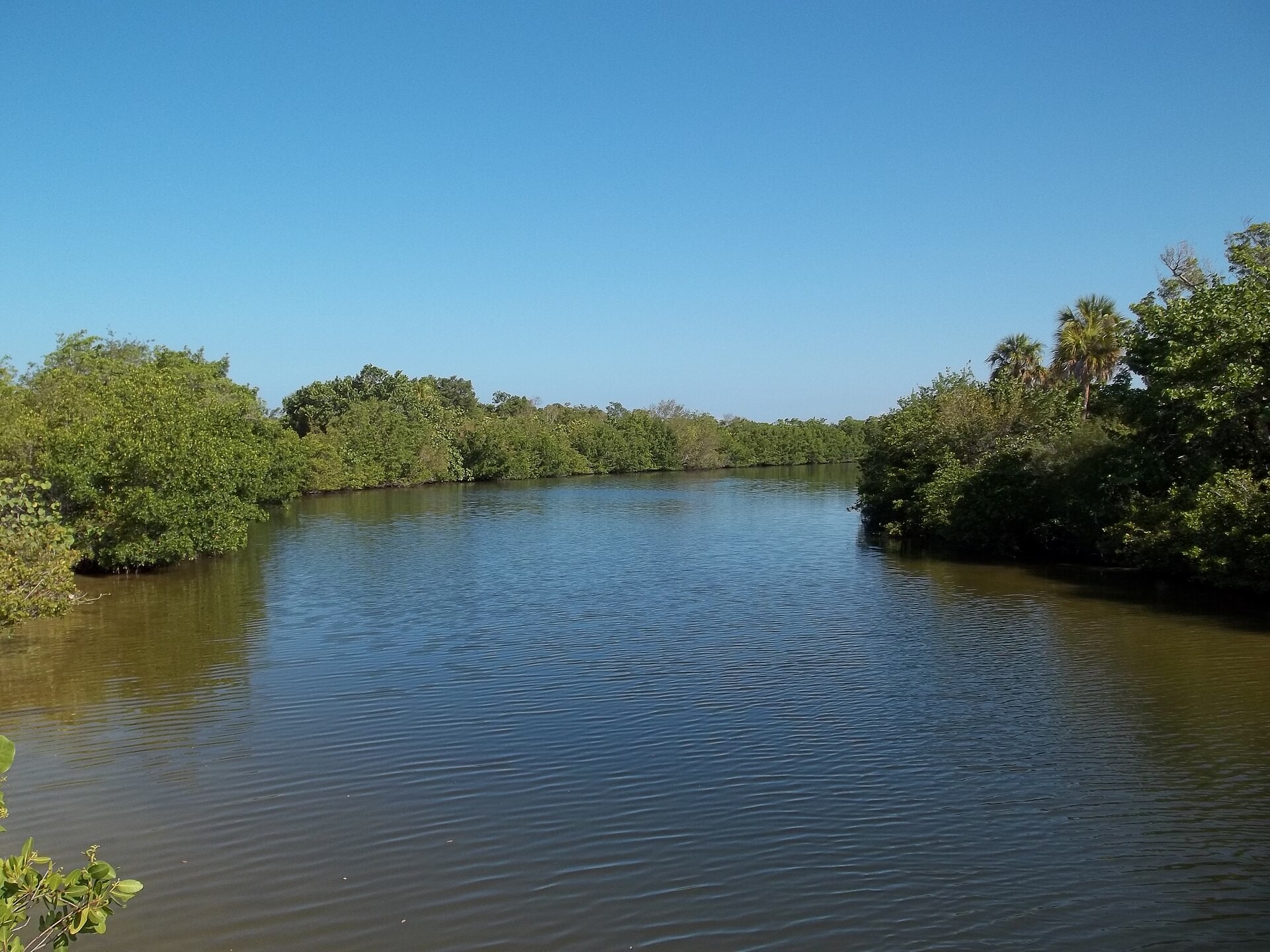
Lovers Key State Park combines Gulf beach, tidal creeks and mangrove habitat near the southern end of Estero Island. Those settings offer different fishing opportunities. Pompano and whiting belong in a beach plan. Snook, redfish and seatrout are more closely associated with the nearby estuary, channel edges and cover.
The important choice is how you will reach the water. A visitor carrying a single rod to the beach has different limits from someone launching a kayak. Decide which trip you want before packing. Attempting both with too much equipment can turn a pleasant morning into a long haul.
This is a state park with protected habitat, shared recreation areas and access rules. Fishing should fit around the permitted places and current conditions. A fish visible from a trail or bridge is not proof that you may cast from that position.
Plan for the current park arrangements
The park entrance is at 8700 Estero Boulevard. The reviewed state listing gives normal day-use hours of 8 a.m. to sunset. Confirm the day’s notices, admission and parking before travel, especially if you need the boat ramp.
The 2026 park notice describes a partial boat-ramp closure beginning in July with limited parking. It also says the tram has been discontinued. Beach access therefore involves walking. Mid-Beach is reached by a wooden bridge about 1,000 feet from parking lot 1; South Beach involves roughly a half-mile walk via a concrete bridge.
The same notice reports that gift, bait and food service ended May 1, while rentals remained available. Bring your own drinking water, food and fishing bait. Do not build a trip around buying supplies inside the park.
These details can change as work progresses. Check the current park notice and follow staff directions. A partially available ramp is not a promise that a trailer space will be waiting when you arrive.
Beach fishing without overpacking
A compact bait kit is well suited to the walk. Small shrimp pieces and modest sinkers cover whiting and other sand feeders. Search for a trough or a place where moving water crosses a change in depth.
Set up away from swimming activity and leave the walking route clear. The first comfortable open area is not always the best fishing position, but neither is the farthest point. Watch the water for a few minutes before deciding how much farther to carry your gear.
For pompano, keep the bait close to the bottom and compare different distances. If floating grass fouls the line repeatedly, retrieve and reposition. Adding weight does not solve a steady stream of weed crossing the rig.
Beach snook may move through shallow water when conditions suit them. A lightly weighted paddletail cast along the shoreline can cover that lane. Avoid repeated splashes into the same patch when a fish is already visible.
Why a creek mouth can concentrate fish
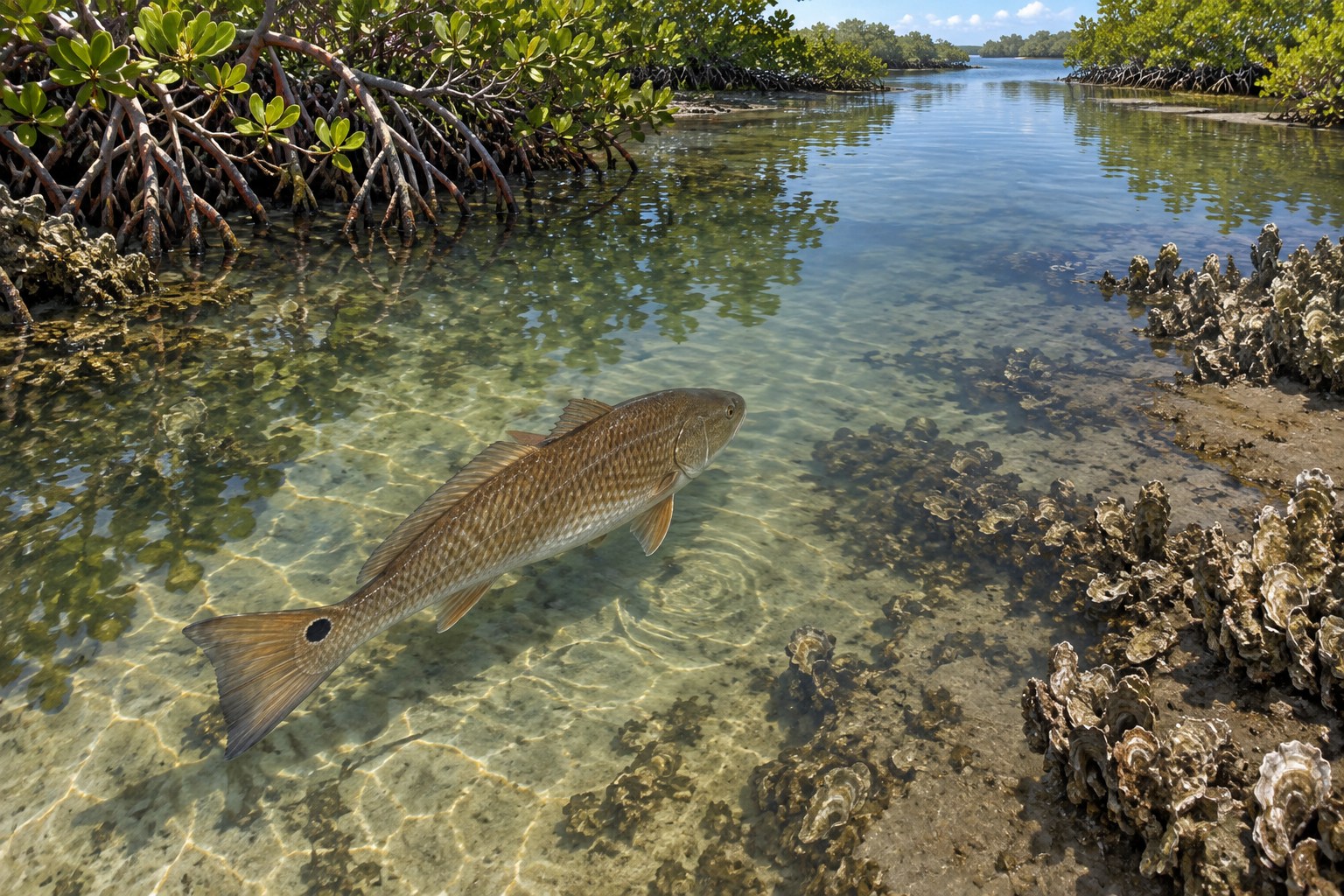
When water leaves flooded mangrove edges, it carries small prey toward nearby channels. A creek mouth can narrow that movement into a smaller area. Redfish or snook may hold where they can intercept food without remaining in the strongest flow.
Look for a change from shallow, quiet water to a slightly deeper moving lane. Make the first cast from outside the opening. A kayak pushed directly into the mouth can disturb fish before the lure reaches them.
The illustration explains this type of habitat. It does not mark a launch, a guaranteed fishing spot or a route through the park. Use current maps and signs to establish where you may travel and fish.
Match the fish to the part of the park
| Target | Habitat clue | Useful presentation | Common mistake |
|---|---|---|---|
| Whiting | Small sandy trough near the Gulf beach | Fresh shrimp on a light bottom rig | Casting past the nearshore feeding water |
| Pompano | Clearer surf crossing sandbars | Small crustacean bait or compact jig | Using a bait too large for a clean bite |
| Snook | Current beside roots or a channel bend | Weedless paddletail worked past the edge | Dropping a lure deep into branches |
| Redfish | Mangrove drain with nearby shallow feeding ground | Shrimp or slowly moved soft plastic | Moving the kayak over the fish first |
| Seatrout | Grass beside a sand opening | Small jig or shrimp suspended above cover | Dragging the hook through grass continuously |
Use the table to narrow your first choice. Changing from a beach rig to creek fishing requires a change in location and access plan, not simply a different bait.
Make a kayak trip easy to reverse
Choose a short route with a clear return path to the permitted launch. Wind can make an open stretch of Estero Bay much more demanding than a sheltered creek. Plan the return before entering water that will be harder to cross later.
Wear a flotation device and secure loose tackle. Carry water, sun protection, a charged communication device and a way to identify your route without relying only on mobile service. Let someone know when you expect to return.
Keep room between the kayak and mangrove branches while casting. A lure snagged behind your shoulder is dangerous in a narrow cockpit. Short controlled casts are more useful here than maximum distance.
Watch water depth as the tide drops. A route that was passable earlier can become too shallow for an easy return. Do not drag the boat through living grass to preserve an ambitious fishing circuit.
What changes through the year
Cooler weather can make a sunny afternoon more appealing than a cold dawn in the backwaters. Fish may gather near deeper water after a front. Slow the lure and allow it to remain near the useful depth longer.
During spring warming, look for increased bait activity along moving-water edges. A short period of feeding near a creek opening can matter more than covering every shoreline in sight. Note the stage of the tide when that activity begins.
Summer favors an early start, a shorter route and an early return before storms. Water and shade become part of the fishing plan. Warm shallow water with little movement may be less productive than a nearby channel edge.
Fall often brings changing bait concentrations and a mix of warm and cooler days. Keep one small moving lure ready even if bait fishing is your main method. The opportunity may pass before a complicated rig can be changed.
Read movement instead of chasing a tide label
A tide prediction gives a useful starting point, but it does not describe every creek at the same minute. Wind and the shape of connected water affect what you see. Compare the area forecast and tide outlook with the direction of drifting leaves and foam.
If a creek has little movement, check the next safe nearby edge rather than assuming the entire park is unproductive. If current becomes too strong for comfortable boat control, leave that opening and fish sheltered water.
On the beach, movement is also shaped by waves and shoreline angle. A rig that holds comfortably in one stretch may sweep rapidly along another. Select a position where you can keep the line away from other visitors.
Combine fishing with a comfortable park visit
For a family group, separate the fishing period from swimming time. One adult can manage hooks and bait while another keeps younger children out of the casting area. Put rods away before the group moves into swimming water.
A small beach cart may help on suitable paths, but confirm the route and bridge conditions rather than assuming every path accepts the same equipment. Carrying less remains the simplest way to manage the walk.
Set a firm turnaround time that includes packing, cleaning up and walking back. Sunset is a closing limit, not the time to begin a distant return. Keep a dry shirt and spare drinking water in the vehicle.
Check rules and protect shallow habitat
Review the FWC saltwater fishing rules for licenses, identification, seasons and limits. Park rules can further restrict where and how you fish. Ask staff when a boundary or sign is unclear.
Keep hooks out of bird feeding areas and retrieve loose line whenever you can do so safely. Handle released fish with wet hands and avoid laying them on hot sand. Treat mangrove roots and grass as living habitat, not convenient places to secure a boat.
Check the walking load before leaving the car
Lift the full kit and walk a short distance in the parking area before committing to the beach path. Water, bait and a cooler can weigh more together than expected. Remove equipment that does not serve the chosen session. One compact rig, pliers and a spare leader may be enough for a short beach visit. Keep supplies for a kayak outing separate so they do not add unnecessary weight to a walking trip. The discontinued tram makes this simple check especially useful for visitors returning after several years.
Before you visit Lovers Key
Can I still use the tram to carry fishing gear?
The reviewed 2026 notice says tram service has ended. Plan to walk and check for later changes before visiting.
Should I buy bait after entering the park?
Bring it with you. The current notice reports the end of on-site bait service.
Is the boat ramp fully available?
The park reports a partial closure and limited parking during work. Verify the latest arrangement before towing a boat.
Where can I read the park notices used here?
The Lovers Key source notes include the official park pages and the photograph’s credit.