
BIG BEND / NATURE COAST
Steinhatchee
fishing guide
Learn the river route before spreading out across the flats. Make a useful drift, choose the right ramp and fish one habitat well.
Explore the guide ↓A RIVER ROUTE TO BIG BEND FLATS
Use the river as your starting point, not your shortcut
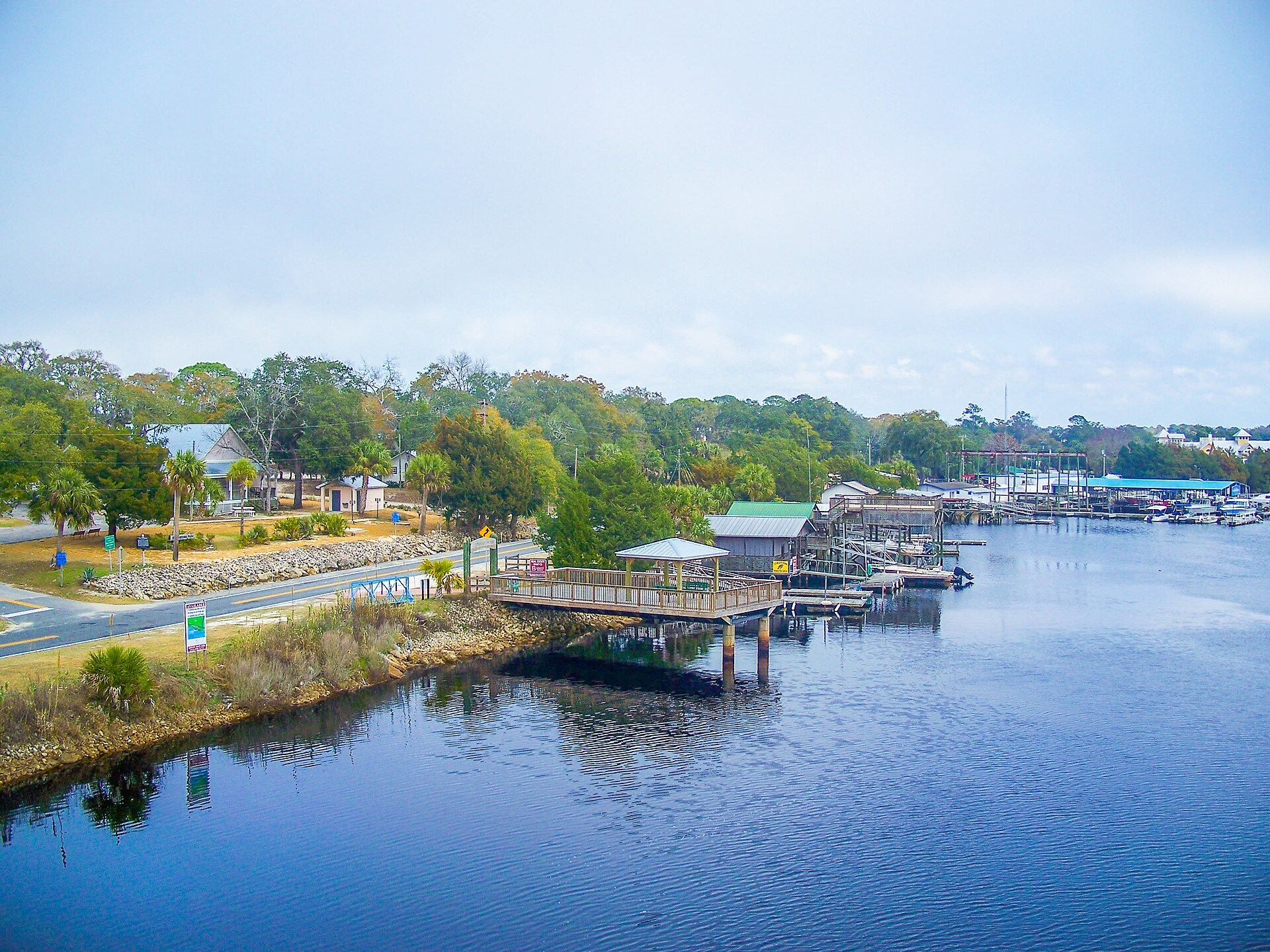
Steinhatchee sits beside a river that opens into the shallow Big Bend coast. The river provides a defined route, working docks and shoreline structure. Outside the mouth, the fishing spreads across grass, sand and low hard-bottom features.
A first visit works best when those settings remain separate in your mind. River fishing emphasizes current and cover. Flats fishing emphasizes habitat, water depth and controlled drifts. Running between the two requires more attention than the short distance might suggest.
Keep the first fishing area close enough that you can return comfortably. You can expand the search after learning the channel, launch routine and effect of wind on local water levels.
Choose the correct side of the river
Steinhatchee lies on the Taylor County side, while Jena lies across the river in Dixie County. Ramp rules and permits are not interchangeable. Taylor County’s published ramp-permit system includes Steinhatchee facilities. Confirm the particular ramp you will use before buying a pass or setting a route.
At the launch, organize rods and safety gear away from the active lanes. Have a person ready to move the tow vehicle promptly. Leave working docks and private slips clear even when the public area is busy.
Check current ramp and road conditions before traveling. Storm repairs can change the useful facilities without changing the name shown on a map. An old fishing report is not an access notice.
Upstream is another kind of trip
The Steinhatchee Springs area farther inland belongs to a different river setting. Do not combine freshwater access advice with a saltwater flats plan. Choose the water and applicable rules before selecting tackle.
Reach the flats without cutting the corners
Stay in the marked river route where required for safe passage. A bend may have much shallower water on its inside edge. Keep a careful lookout for other vessels, paddlers and floating debris.
Beyond the mouth, avoid assuming that a broad horizon means deep water. Use current navigation information and leave enough depth for the return. Do not follow a smaller boat over a flat because it appears to make the trip easily.
Before beginning a drift, decide where it will end. Wind can carry you toward water that is too shallow to leave under power. Stop early and reposition through an appropriate route.
Build a useful drift instead of covering random water
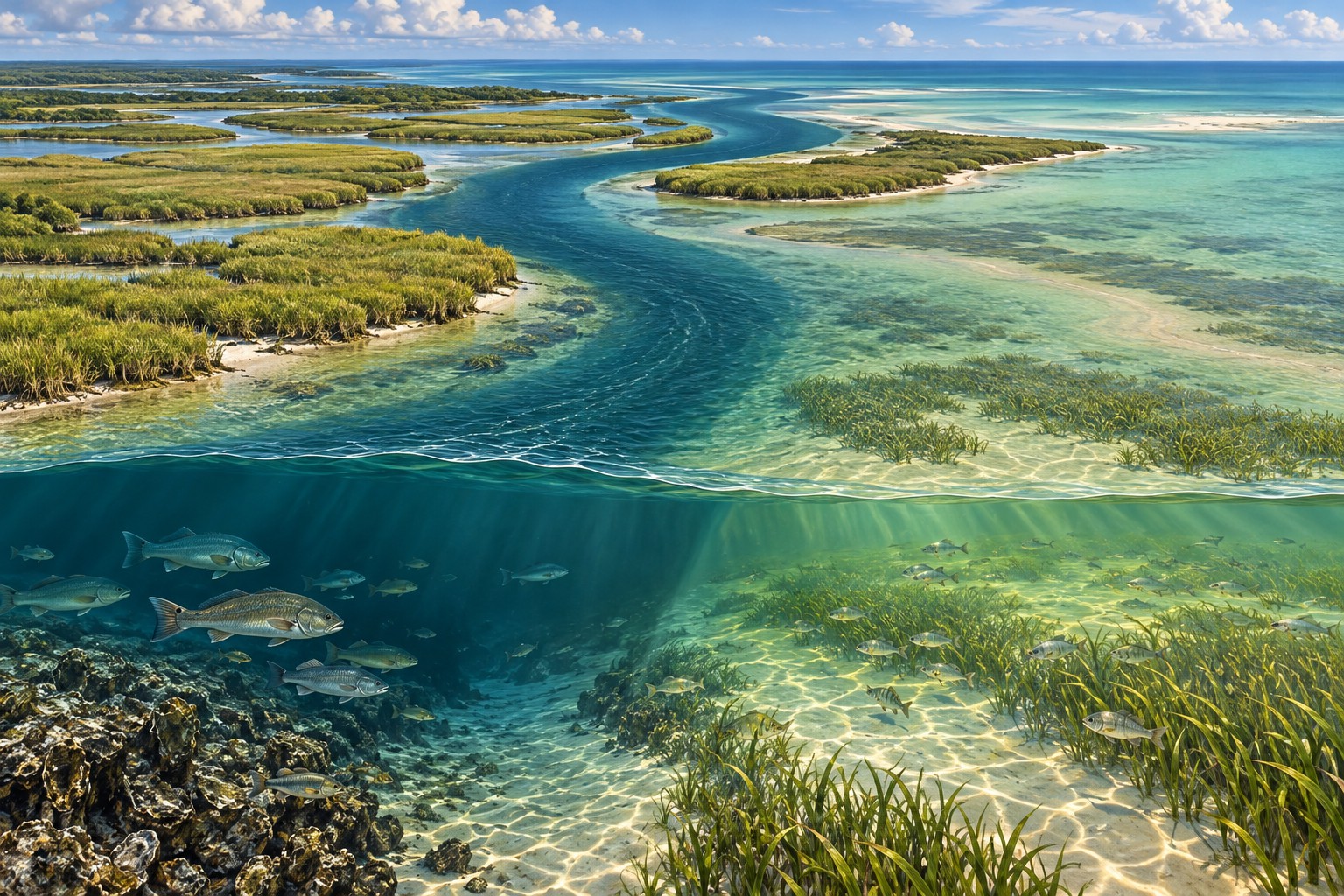
Find a stretch with visible grass and nearby sand or deeper water. Begin with a lure that stays clean at a comfortable retrieve. Make controlled casts across the direction of drift so you can tell where each bite occurs.
When a fish strikes, note the bottom and how long the lure had been sinking. A bite near a sandy opening may suggest repeating that edge. A bite immediately after a pause may suggest the retrieve matters more than the exact location.
Do not drive back through the center of productive water. Approach from a safe outside route, reset the drift and give the area time. Keep enough distance from other boats that everyone can fish without crossed paths.
If floating grass collects on every cast, look for a cleaner lane. Repeatedly retrieving a fouled lure does not test whether fish are present.
Targets for a manageable inshore day
| Fish | Useful feature | Starting choice |
|---|---|---|
| Spotted seatrout | Grass meeting sand or deeper water | A light paddletail or shrimp below a float |
| Redfish | Shoreline feeding edges and shallow cover | A quiet soft-plastic presentation or shrimp |
| Flounder | Sandy changes beside a deeper route | A small lure moved close to the bottom |
| Sheepshead | Hard structure where fishing access allows | A small crustacean bait held close |
| Spanish mackerel | Moving bait in open coastal water | A small spoon retrieved through the outside of the school |
Large offshore species require another plan. Do not let a mixed regional catch list push a small inshore boat beyond a suitable route or weather window.
Fish river structure with less line in the way
From a permitted position, place a bait beside the outside edge of structure. Keep enough contact to steer it clear when current changes. A short cast is easier to manage around boat traffic than a long line across the river.
Use weight only to maintain control. If a rig wedges in the bottom repeatedly, change the angle or choose a slightly different edge. Inspect the leader for abrasion before the next cast.
Do not cast under occupied boats or across a working slip. If the waterfront is too busy to fish safely, choose another allowed location. The river is a transport route as well as fish habitat.
Adjust the plan as the coast changes
Spring warming can draw attention to grass and shallow edges. Start with nearby depth in the plan so you have an alternative after a cold front. Watch actual bait activity rather than relying on a fixed seasonal promise.
Summer brings more recreational traffic, especially when people are using the coast for scalloping. Watch for divers and obey the applicable distance and speed requirements. Keep your fishing lines away from swimmers and choose less congested water.
Fall can offer enjoyable drift-fishing conditions. Wind still determines whether a flat is comfortable and reachable. A shorter route with good habitat is often preferable to a long search across exposed water.
Winter calls for particular care with low water. Protected depth changes may deserve more time, and lures may need a slower pace. Avoid leaving the river route for unfamiliar shallows simply because the surface looks calm.
What to check before leaving the ramp
Review the weather and tide outlook with the return journey in mind. Make sure everyone knows where life jackets and communication equipment are kept. Carry sufficient fuel, water and navigation information for a delayed return.
Keep a net, pliers and measuring board within reach. A fish should not spend extra time out of the water while someone searches through storage. Use steady rod pressure and let the net do the final lifting.
Confirm species rules with the Florida Fish and Wildlife Conservation Commission. Scalloping and fishing are separate activities with separate requirements, so do not assume one set of dates or permissions covers both.
Fish a river bend without occupying the route
A bend can create an outside edge with more depth and an inside area with less. Fish may use the transition to wait for food. You still need a position that leaves safe passage for boats.
Cast along a reachable edge from permitted space rather than across the channel. Let a small bait travel naturally while retaining enough contact to retrieve it promptly. Long slack lines are difficult to control when traffic approaches.
When using a lure, work the near edge before extending the cast. You may find useful water without reaching the middle at all. Keep a clear landing position so a fish does not have to be dragged around dock hardware.
Do not anchor in a way that obstructs the navigation route. A productive-looking bend is not an excuse to make passage difficult for other vessels. Choose another feature if the only available position creates a conflict.
Set up the boat for efficient flats fishing
Have one lure rig and one natural-bait option ready if space allows. A soft plastic helps you search. A shrimp beneath a float lets you spend more time around a promising patch without continually recasting a heavy lure.
Keep the tackle selection small enough to reach safely. A handful of appropriate jig weights, spare leaders and hooks covers more useful situations than a large box you cannot find anything in. Store exposed hooks away from feet and seating.
Set the drag before the first bite. It should allow controlled line release without letting an ordinary fish take everything unchecked. Avoid tightening it sharply during a fight simply because the fish moves away.
Use a landing net and keep a measuring board ready. If a fish will be released, remove the hook with minimal delay. Do not leave it on a hot deck while searching for a camera.
Evaluate the drift after each pass
Ask whether the lure stayed clean, whether you saw bait and whether the boat remained over suitable depth. A drift with no bites can still teach you which water is worth a second look.
If conditions stay safe but the habitat looks empty, move to a nearby contrast. Try the outside edge rather than the center, or a sandy break rather than uniform grass. A deliberate small change is easier to understand than a long run to an unrelated place.
Keep enough time to return through the river without rushing. A hurried last leg is a poor ending to an otherwise careful fishing day.
Steinhatchee questions
Does one ramp permit cover both riverbanks?
Do not assume that. Taylor County and Dixie County have different jurisdictions. Check the exact launch.
Can I learn the area without going offshore?
Yes. A carefully planned river or nearby flats trip offers plenty to learn without a long Gulf run.
Why repeat a drift?
It lets you test the same productive habitat with a controlled presentation. That is more informative than leaving immediately after a bite.
Is the river always safer than the flats?
It can provide a defined route, but current, traffic and weather still matter. Safe boating depends on the actual conditions and your craft.