
TAMPA BAY / SUNCOAST
Tampa
fishing guide
Fish Tampa’s estuary with a practical understanding of public parks, colored water and the difference between open facilities and damaged piers.
Explore the guide ↓Fish a city at the head of the bay
Tampa fishing is shaped by shallow bay water, river influence, seawalls and mangroves. It is not open-ocean beach fishing. The color of the water may change after rain, and wind can move water off shallow shorelines. Successful outings often start with finding comfortable, accessible water rather than chasing a famous location.
Hillsborough Bay on the east side of South Tampa and Old Tampa Bay on the west can behave differently in the same wind. Choose an access point that faces manageable conditions. Do not assume a forecast for a Gulf beach describes the city shoreline.
This guide concentrates on public park access and ordinary light tackle. Port property, industrial docks and fenced waterfront are not fishing alternatives.
Ballast Point needs a closure check
Ballast Point Park, at 5300 Interbay Boulevard, offers a view across Hillsborough Bay and a small boat launch. However, the city identifies its fishing pier as closed because of hurricane damage. Treat that notice as more important than older photographs or general descriptions of round-the-clock pier fishing.
The park and launch have separate operating arrangements. The city lists only four trailer spaces at the ramp, so a boat outing needs an early parking plan and a fallback. Do not block the lane while deciding whether your trailer will fit.
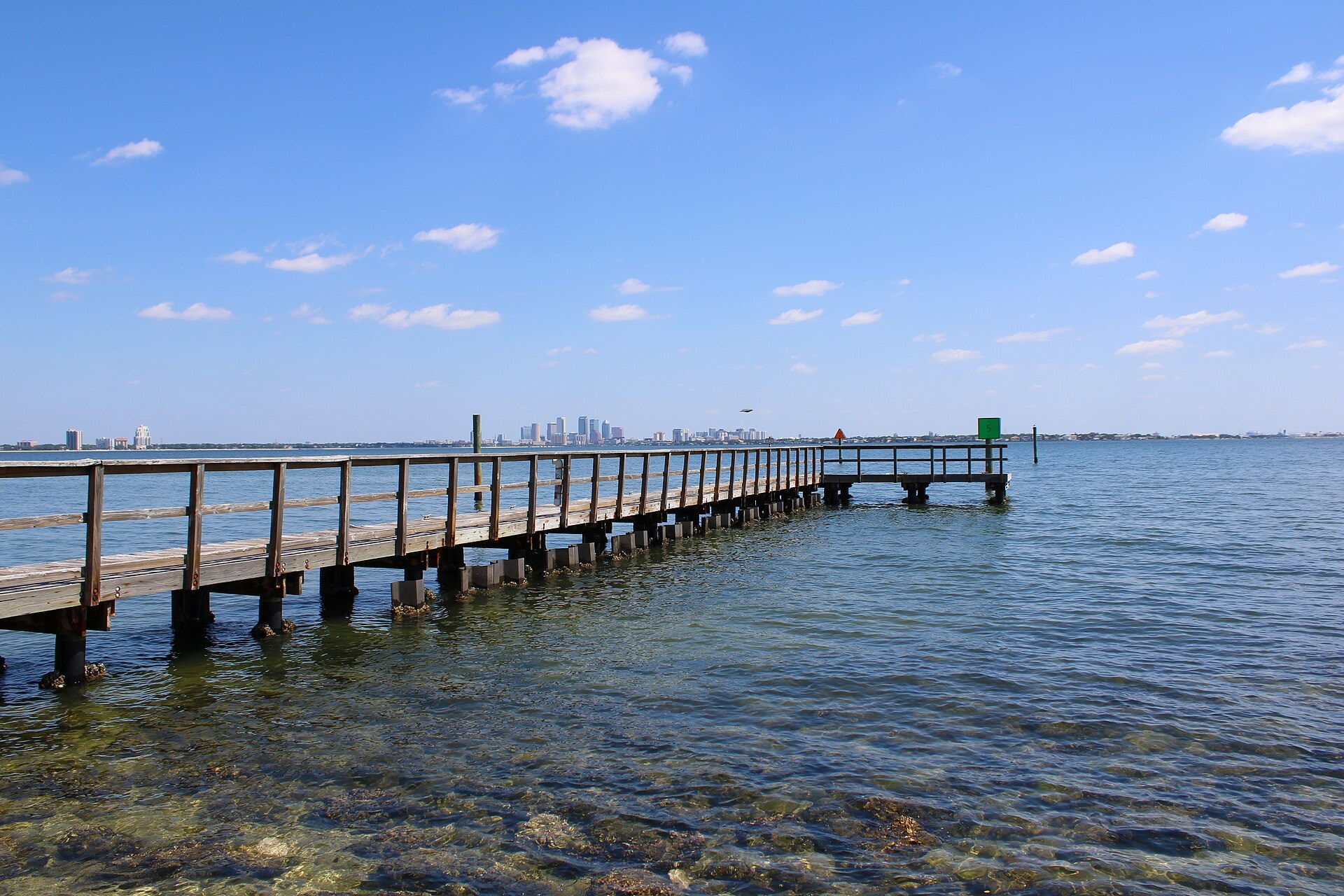
The photograph in this guide shows the waterfront in April 2024, before the later storms. It illustrates the bay setting, not the present availability of the pier. Confirm repairs are complete before making it your fishing destination.
Consider Picnic Island’s fishing facilities
Picnic Island Park lies on the western side of South Tampa. City information lists a fishing pier beside the boat ramp and a separate canoe and kayak launch. Its beach and dog area also attract other users, so fish from the appropriate space rather than casting through recreation activity.
The park’s usual hours run from sunrise to sunset, while the boat ramp has separate twenty-four-hour access. Check current notices before an early or late visit. An open ramp does not grant unrestricted use of every part of a park after hours.
From a permitted fishing position, observe the direction of drift and nearby boat movements. Give launching boats priority. A modest cast into a clean lane is preferable to one that crosses the approach to the ramp.
Do not judge bay water by beach standards
Tampa’s estuary often carries natural color. Brown or green water is not automatically unfishable. The useful question is whether fish can find food and whether conditions are healthy. Avoid water with posted health warnings, obvious pollution or distressed wildlife.
After rain, look for a gentle boundary between different water colors. Small prey may gather along it. Fish the edge from legal access without approaching storm drains or restricted structures.
In stained water, a lure with a clear silhouette can be easier for a fish to track. Slow it enough to remain within reach, but keep it moving naturally. Extremely muddy water after strong wind may call for a different shore or another day.

Possible catches around Tampa’s saltwater edges
| Fish | Useful place to look | Starting bait or lure |
|---|---|---|
| Redfish | Shallow edges with shell, grass or mangrove cover | Shrimp or a weedless soft plastic |
| Snook | Warm shorelines and current breaks | A small paddletail or baitfish |
| Spotted seatrout | Grass near a depth change | A light jig swimming above the bottom |
| Sheepshead | Open public structure with shell growth | A small crab or shrimp |
| Black drum | Softer bottom near cover | A fresh natural bait near bottom |
Jacks and ladyfish can appear wherever bait collects. Keep an open mind about the catch, but identify each fish correctly before deciding whether to keep it.
Start with scent and accurate depth
Fresh shrimp is useful when the water is too colored for sight fishing. Present a small bait near the bottom or suspend a live shrimp above grass. The aim is to put food where a fish can reach it, not to fill the water with unnecessary bait.
A float rig helps in shallow cover. Adjust until the hook stays clear of vegetation. If the float drifts toward a boat lane, retrieve early. A longer drift is not worth creating a navigation problem.
For bottom fishing, use only enough weight to keep reasonable contact. Soft mud can swallow a heavy sinker and hide the bait. A lighter rig placed on a firmer edge may be easier for fish to find.
Inspect the bait after a few minutes. Small fish can remove shrimp without producing a dramatic bite, leaving an empty hook in apparently promising water.
Search a shore with a simple lure pattern
Begin with short casts near the edge. Work a fan of angles before increasing distance. This lets you find changes in depth without immediately casting over every fish close to shore.
A three-inch paddletail on a light head is a versatile choice. Use a darker body in dirty water and a natural baitfish shade when clarity improves. Retrieve slowly enough to maintain depth, with occasional pauses only where the bottom is clean.
If you encounter grass, keep the lure above it or use a weedless hook. Do not rip repeatedly through roots to recover a snag. Move your angle and retrieve carefully.
A medium rod with 10 to 20-pound braid provides useful control. Increase leader strength around abrasive cover, then reduce bulk when fishing open water with small baits.
Plan for shallow-water changes
A strong front can push water off a flat and expose mud that was covered the previous day. A kayak route may become a long difficult return. Check the Tampa-area weather and tides, including wind direction and strength.
In summer, early sessions reduce heat exposure and give you more time before typical afternoon storms. That is not a guarantee of safe morning weather. Watch the actual sky and leave exposed shore when thunder develops.
Cooler months can suit slow fishing near structure during stable weather. Spring warming and autumn bait movement broaden the choices. Water temperature trends and recent rainfall often explain more than the calendar date alone.
A useful shore session in three stages
First, confirm access and walk the available area. Find the deepest reachable clean lane, the closest cover and the safest place to land a fish. Keep away from closed sections even if another person has stepped beyond a barrier.
Next, test one natural bait at a controlled depth. If it drifts safely but receives no interest, change its position. If it snags repeatedly, adjust depth or move. Do not spend an hour feeding tackle into the same obstruction.
Finally, make a short lure search along open water if space allows. This can reveal moving fish missed by the stationary bait. End with notes about water color, wind and which part of the tide you observed.
Keep urban fishing orderly
Public parks serve walkers, children, dogs and boaters. Keep hooks out of paths and pause casting when anyone enters the space behind you. Pack line scraps immediately rather than setting them on a windy bench.
Release fish in the water whenever practical. If lifting one for a photograph, support its body and return it promptly. Avoid placing fish on concrete that has heated in the sun.
Check the FWC recreational saltwater guidance for licenses and current limits. Freshwater rules may apply farther inland, so match regulations to the water you actually fish.
Use shoreline clues after rain
After a rainy period, compare a few visible clues before casting. Is bait still present? Does the water have ordinary estuary color, or is there an obvious warning sign such as a posted advisory or distressed fish? Is the current carrying floating material into a quiet corner?
Healthy colored water can still be useful. A small natural bait gives fish scent to follow, while a dark soft plastic can provide a clear outline. Keep either presentation near a feature such as a depth change rather than placing it randomly in the bay.
If a lure is difficult to see in the first few inches, slow the presentation enough for a nearby fish to detect it. Do not assume faster movement will compensate for poor visibility. A steady retrieve through a narrow feeding lane can be more convincing.
Avoid making a large search on foot across exposed mud. A falling tide may reveal soft ground that does not support your weight. Remain on approved access and use casting angle to explore the edge.
Compare the east and west sides of South Tampa only when you have time and a confirmed alternative. The change can be useful because wind exposure differs, but it should not become a hurried drive between closed facilities.
Record recent rain alongside your fishing notes. On a later visit, it may explain why a familiar shore had different clarity, bait or water movement even though the tide prediction looked similar.
Tampa fishing questions
Is Ballast Point Pier ready for a fishing trip?
The city still identifies a storm-damage closure in the material reviewed for this guide. Verify a reopening before relying on it.
Does colored water mean no fish?
No. Natural estuary color is common. Look for healthy conditions, food and usable depth, while respecting any water-quality alert.
Can I fish inside the port from any open-looking dock?
No. Restricted and private waterfront is not public access. Stay with designated parks and fishing facilities.