
SOUTHWEST
Vanderbilt Beach
fishing guide
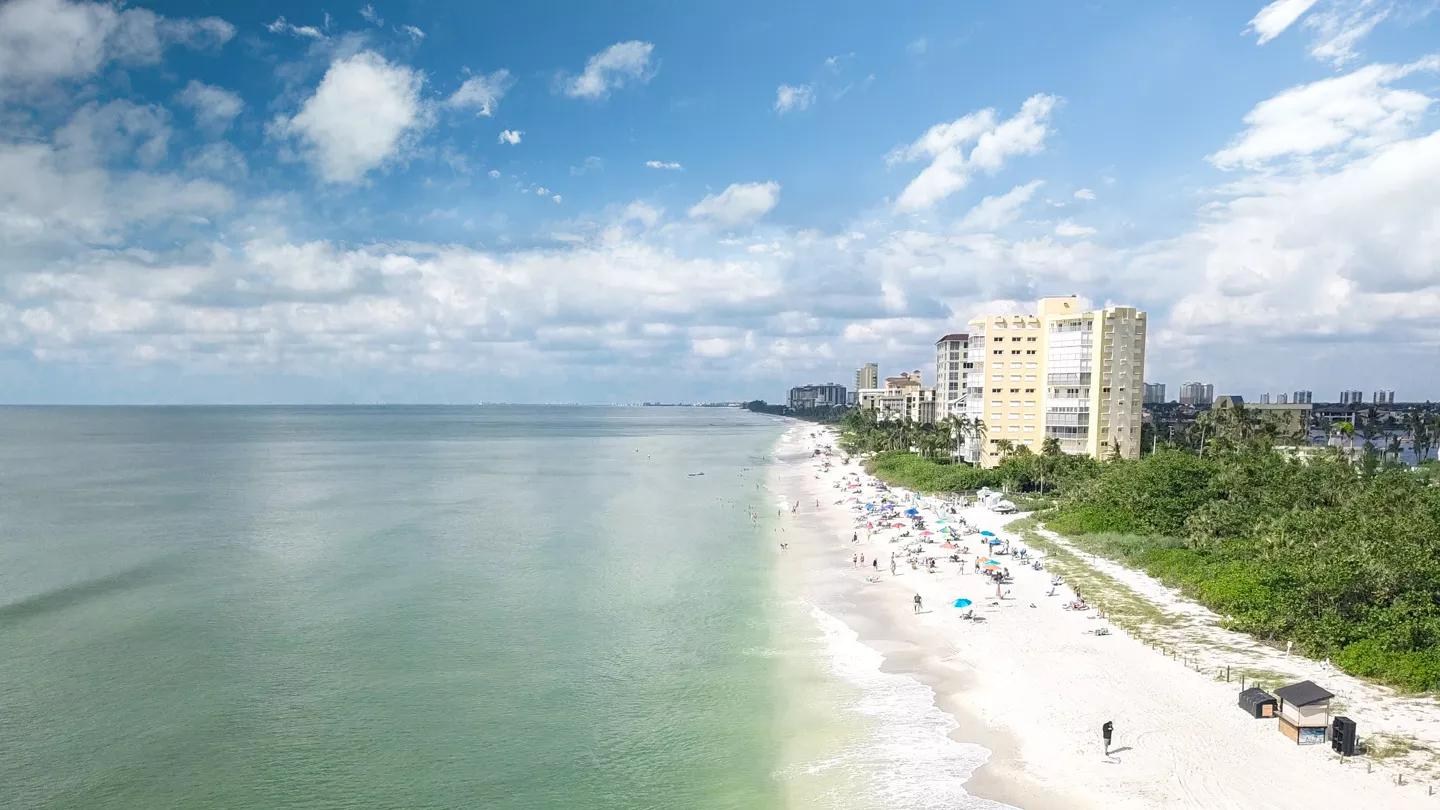
Vanderbilt Beach is a popular Naples Gulf shoreline at the west end of Vanderbilt Beach Road. A useful fishing visit starts with a permitted casting area and enough room around beachgoers. Read the nearshore sand, pack compact tackle and keep the busy public access clear.
Explore the guide ↓Find the beach before choosing a fishing lane
Collier County lists Vanderbilt Beach Park at 100 Vanderbilt Beach Road. Its regular hours are 8 a.m. to sunset. The county describes beach parking, restrooms and foot showers, with a fee for vehicles that lack a qualifying beach parking permit.
Parking is especially busy during the winter visitor season. The county advises arriving before 10 a.m. during January through March. That advice helps with arrival, but it does not reserve a place to fish or guarantee space beside the water.
Ask about current beach angling rules and marked swimming areas before setting a hook. A park listing is not a blanket permission to cast anywhere on the sand. Carry gear through the public route and stay out of private resort walkways.
Study wave breaks from dry sand
Look for a darker trough between the beach and the first breaking bar. Water that pauses between wave sets can reveal the shape more clearly. A small shore wash sometimes carries feeding fish close enough for a short cast.
A gap in the line of breaking waves may show a deeper route. Observe it for several sets before deciding where to place bait. Do not step into a current seam just because the beach appears shallow beside it.
Fishable space can change faster than the sand pattern. If swimmers move into your lane, retrieve and relocate only to another allowed clear section. A productive trough is not useful when hooks would cross a family's route into the water.
Start with ordinary Gulf surf fish
Whiting and pompano are sensible regional targets in suitable surf conditions. Use a small piece of shrimp, purchased sand flea bait or a modest strip bait. Match the hook to the actual offering instead of covering a large hook with a bulky handful.
Cast first to reachable nearshore water. If bites are absent, compare a second distance before changing everything in the rig. A controlled test tells you more than casting as far as possible on every retrieve.
Keep the hook point exposed and check whether the bait returns intact. Empty hooks can mean small bait stealers rather than an empty beach. Replace damaged bait neatly and keep the rest covered from gulls and blowing sand.
Use a moving lure when warm water brings bait close
Snook can follow small prey along Gulf beaches during warm periods. A slender soft plastic or small baitfish lure can cover more shoreline than a stationary surf rig. Use it only where a safe walk and clear casting route remain available.
Watch the shallow edge before casting. If a fish is moving parallel to the beach, lead its route rather than dropping a lure directly onto it. Retrieve smoothly and keep the presentation swimming above the sand.
Stronger leader helps with abrasion but does not make rough handling acceptable. Wet your hands, support the fish and release it promptly when required. Check the current Gulf snook rules before considering keeping one.

Let conditions guide the beach session
Cooler months often suit a careful search for pompano in the regional surf. Warm weather changes the baitfish activity and can bring beach snook into the plan. These are seasonal tendencies, not a promise that a particular fish will be present.
A moving tide may improve feeding while changing how much dry sand remains. Compare the forecast water level with the wave wash at your feet. Wind can raise the wash above what a tide chart alone suggests.
Morning can offer less heat and fewer people, but use the published park access hours. Do not plan an early session that depends on a closed parking gate. Holiday crowds may make a family visit more suitable than fishing.
Pack for a short walk and controlled casts
A manageable surf outfit with a compact bait rig is enough for many small-fish sessions. Bring a lighter spinning rod only if you genuinely plan to work a clear beach edge. Carrying several long rods through a crowded access makes the trip harder.
Use the least weight that keeps the rig stable in safe conditions. If the line continually sweeps toward swimmers or neighboring anglers, reduce the spread or stop. Extra sinker weight cannot correct a dangerous casting position.
Keep pliers, a measuring tool, water and a covered waste bag close to hand. The table connects a few simple presentations with the water you can actually reach from an allowed position.
| Water to examine | Presentation | Useful adjustment |
|---|---|---|
| Near trough | Small shrimp on a compact surf rig | Compare a short cast before adding distance |
| Breaking-bar gap | Purchased sand flea or strip bait | Watch several waves and stay on dry sand |
| Clear warm beach edge | Small baitfish lure | Cast ahead of the prey route |
| Crowded bathing water | Rod packed away | Choose another allowed lane or return later |
Use beach facilities without spreading tackle through them
Restrooms and foot showers make Vanderbilt practical for a mixed family visit. They are shared facilities rather than places to clean fish or rinse loose hooks. Put tackle inside a closed container before walking back through those areas.
A parking fee and a fishing license serve different purposes. Check the correct Florida saltwater license or exemption for your circumstances. Visitors should not assume that a resident shore-fishing provision applies to them.
Warm pavement and sand can make the walk back tiring. Save drinking water for the return and protect feet as well as your head. A short successful outing is better than extending the trip until everyone is overheated.
Watch wind direction and lightning
Onshore wind can add waves, drifting weed and cloudy water. Small changes in clarity may be manageable for bait fishing, but heavy surf and repeated weed tangles are reasons to reconsider. Choose a later visit instead of fighting conditions beyond your equipment.
Thunderstorms can develop quickly on hot afternoons. Leave open sand before lightning is close and follow local evacuation instructions. A beach umbrella is sun cover, not storm shelter.
Check current coastal conditions before departing. If a local advisory affects swimming or water quality, understand what it means for the visit and fish handling. Do not judge the whole water column from a clear patch at the edge.
Leave a clean shoreline for the next visitor
Retrieve all leader, hooks and bait packaging. Small pieces lost in sand can still injure bare feet or birds. Store used rigs in a rigid container so that a trash bag does not hide sharp points.
Stay outside marked turtle or shorebird protection areas. Leave dunes and vegetation alone even when an inland shortcut would shorten the walk. Wildlife protection signs can change the available beach route during the year.
Identify a catch before deciding whether it is legal to keep. Use current limits for the species and region, measure carefully and account for closed seasons. When identification is doubtful, a careful release is the practical choice.
Common questions
Is Vanderbilt Beach a guaranteed fishing area?
No. Confirm current angling rules, swimming boundaries and an open casting position before using tackle.
What bait should I bring for small surf fish?
Compact shrimp pieces, purchased sand flea bait and strip bait are useful choices to test against the nearshore trough.
Does a beach parking payment replace a fishing license?
Parking payment covers the vehicle visit. Check the separate saltwater fishing license requirements and any valid exemption.
Can I arrive before the park opens to fish?
Build the visit around the current public access hours. Do not depend on entering a closed lot or private access.
Prepare for your visit
Check local tides and weather. Read more about snook, florida pompano, whiting. Check current FWC saltwater fishing rules.