

SOUTHWEST
Tigertail Beach
fishing guide
Tigertail Beach joins a developed park to tidal lagoon habitat and the outer beach of Marco Island. Birds use the lagoon and Sand Dollar Island area, while the walking route can be long. Choose an allowed fishing section without wading an uncertain lagoon shortcut.
Explore the guide ↓Know the lagoon and outer beach are different waters
Tigertail is a county park on the northwest side of Marco Island. The developed entry faces tidal habitat, with the outer Gulf shore beyond the lagoon area. A short aerial distance does not describe an easy direct walk across the water.
Use the current open land route or ask park staff about the safe way to reach the outer shore. This guide does not recommend wading the lagoon to shorten the trip. Depth, soft bottom and changing water can make an apparent shortcut unsuitable.
The city describes the lagoon as a feeding area for birds and the Sand Dollar Island area as nesting habitat. Follow posted boundaries before choosing where to walk or fish. A public park entry does not authorize crossing a wildlife enclosure.
Plan for the walk beyond the developed park
The city lists public parking and restroom facilities at Tigertail, with beach parking from sunrise to sundown. Verify the current payment and access instructions at the county park. Facilities at the entry do not mean the outer shore has the same services.
Do not make the trip depend on older references to a concession or equipment rental. Confirm present operation before arriving. Bring drinking water and a tackle load that remains manageable on the full return walk.
Ask staff where angling is allowed around the lagoon and outer beach. Keep hooks covered on boardwalks and shared routes. If the approved route or casting area is unclear, observe the habitat while you establish permission.
Study nursery habitat without disturbing it
The tidal lagoon supports small prey and feeding birds, with conditions changing as water moves. Sand patches, shallow edges and sheltered corners can show how fish use coastal nursery habitat. Wildlife observation is worthwhile even when a section is not available for casting.
Where fishing is expressly allowed, keep a small offering above unwanted bottom contact. A shrimp imitation or carefully suspended bait can test an open lane. Do not drag hooks through vegetation or stand in feeding habitat just to reach a darker patch.
Birds moving along the shallows need room. Stop casting near concentrated feeding flocks and stay outside nesting areas. The lagoon's ecological role matters more than forcing access to every fish-shaped movement.
Test the outer shore with compact bait
The Gulf side offers a different approach over sandy surf. Regional pompano and whiting can respond to small shrimp, prepared strip bait or lawfully purchased sand fleas in suitable conditions. Bring bait rather than relying on beach collection under Marco's local rules.
Look for a reachable trough inside a breaking bar. Start with one controlled distance and inspect the rig regularly. Nearby feeding water may be more useful than a long cast requiring heavy weight and a large backcast.
A small float on a dropper can lift the offering slightly above sand. Keep the rig short enough to handle safely on a shared beach. If surf carries it alongshore into people or protected space, choose another permitted position or stop.
Fish a clear coastal route with a quiet lure
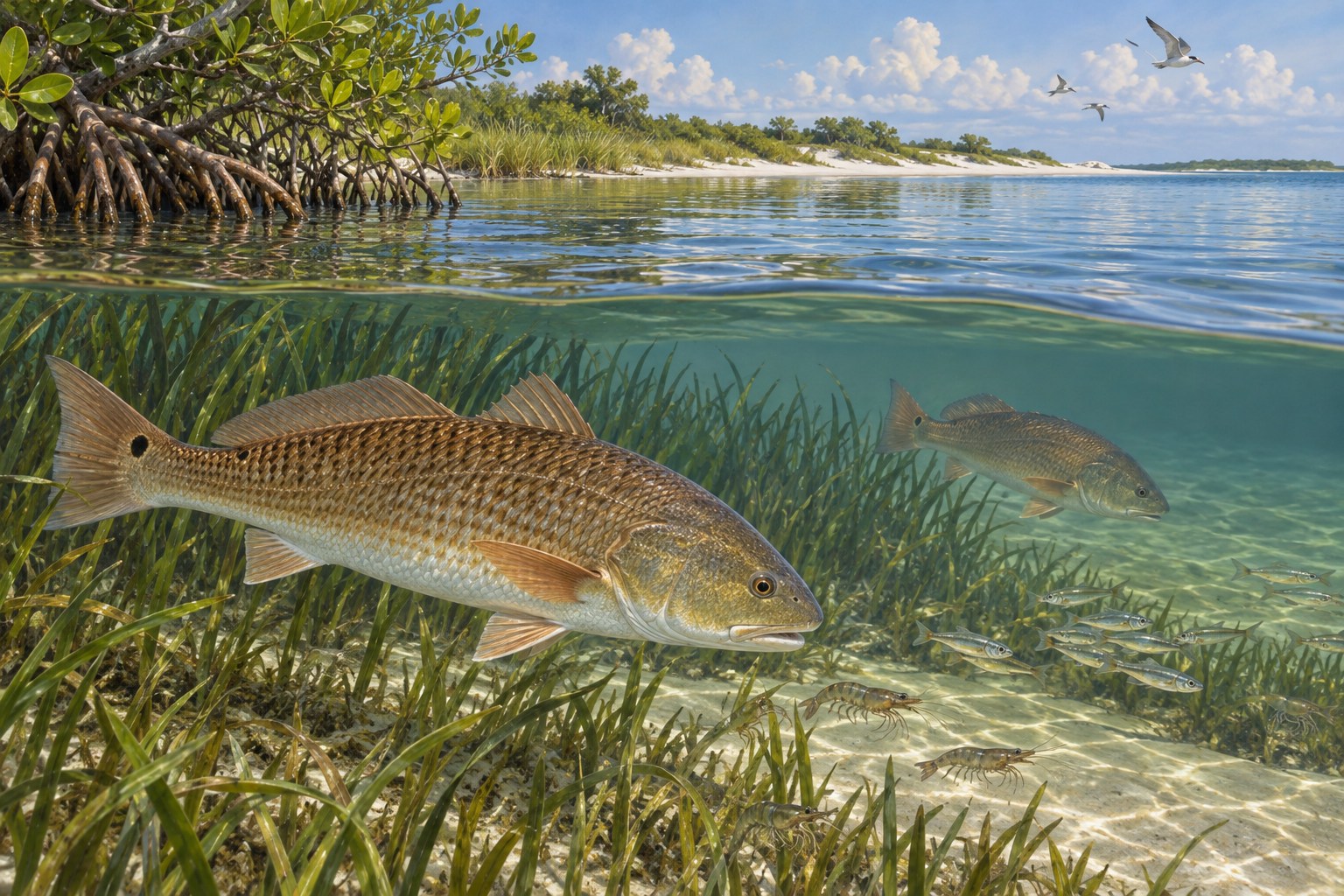
Snook may use the outer beach when warm water and prey align. Watch for a route along the wash before casting a small paddle-tail or other baitfish imitation. Keep the lure above the bottom and outside occupied swimming water.
A fish cruising close to shore may need a shorter, quieter cast than expected. Place the offering ahead rather than on top of it. Let the fish intercept a natural-looking retrieve instead of repeatedly splashing beside its head.
Use sufficient leader and a fast release plan. Support the body, avoid dry sand and check current regional retention rules. A good sight-fishing opportunity is not proof that harvest is open.
Carry tackle that leaves room for water and safety
One versatile medium spinning outfit may be more practical than several rods over a long beach walk. Match any sinker to the rod's rating and safe surf conditions. Larger intended fish need a different strength and handling plan.
Take pliers, a ruler, spare leader and a closed container for tackle waste. Reserve carrying capacity for drinking water and sun protection. Secure the hook while passing families or walking the boardwalk.
The table keeps lagoon observation separate from fishing an allowed Gulf section. The actual signs and staff directions decide the available route.
| Area or condition | First approach | Boundary |
|---|---|---|
| Lagoon habitat | Observe prey and birds | Fish only where expressly allowed |
| Open Gulf trough | Compact surf bait | No hooks in swimming or nesting space |
| Clear coastal snook route | Light baitfish lure | Prompt lawful release |
| Changing lagoon water | Approved land return route | No uncertain wading shortcut |
Keep the return route safe as water changes
A tidal lagoon does not remain the same depth or shape throughout the visit. A route that looked simple on arrival may be wetter later. Avoid using a water crossing as the return plan and stay on an approved open land route.
On the Gulf shore, rising water can narrow the dry strip and move the useful trough closer. Watch both the fishing lane and the direction back to the park. Move bags early and leave before the route becomes impractical.
Wind can change water level and surf beyond the printed tide time. If conditions are confusing, shorten the outing. Reaching a distant fish is not worth losing a predictable way back.
Fish around the needs of birds and people
Bird nesting and feeding are central to Tigertail's natural setting. Boundaries may change with season and habitat conditions. Follow the current signs rather than assuming a beach path used last year is still open.
Cooler regional conditions can suit a surf-fish search, with fronts sometimes producing rough waves. Warm-season beach snook may be present, while heat and storms reduce safe walking time. Read the actual water instead of treating the month as a catch forecast.
Leave extra time for the walk when summer thunder builds. Outer sand and isolated trees are not suitable lightning shelter. A shorter outing with a secure return is a better plan than staying until weather forces a hurried crossing.
Bring lawful bait and leave habitat untouched
Check Marco Island beach rules along with Florida fishing licensing and species limits. Do not remove crustaceans, live shells or other animals for bait without verified permission. This plan assumes bait brought from a lawful source.
Keep nesting enclosures and bird feeding space free of tackle. Release unfamiliar fish promptly and use wet hands and proper body support. Do not leave a catch on hot sand while searching for a measurement rule.
Take all line, hooks and packaging back to the park entry. Inspect the resting and fishing areas before the return walk. The long route makes a secure small waste container more useful than loose scraps in an open bag.
Common questions
Should I wade across the Tigertail lagoon to save time?
This guide does not recommend that. Ask staff for the current safe open land route to the outer beach.
Are lagoon fish and outer-beach fish the same plan?
No. The lagoon is sheltered wildlife habitat, while the outer Gulf shore offers a separate sandy surf approach.
Can I rely on an old concession listing?
No. Confirm current operation and bring essential water and supplies for the full walk.
What bait does this guide suggest bringing?
Compact shrimp, strip bait or legally purchased surf bait, with local collection restrictions checked separately.
Prepare for your visit
Check local tides and weather. Read more about snook, florida pompano, whiting. Check current FWC saltwater fishing rules.