
SOUTHWEST
South Marco Beach
fishing guide
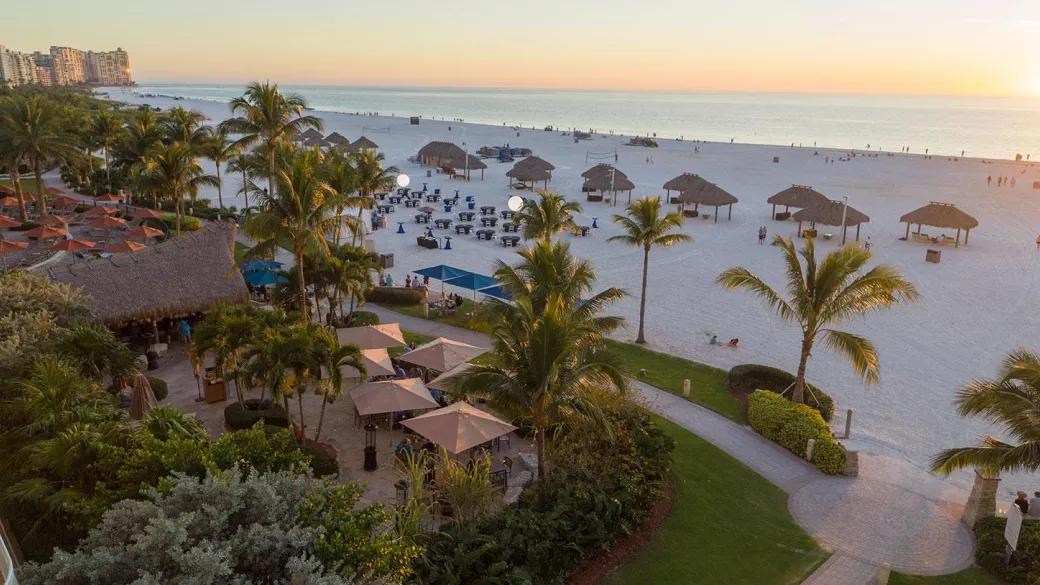
South Marco Beach gives visitors a public route to the Gulf shore of Marco Island. The walk from the county parking area crosses a busy developed beach district. Confirm local fishing rules, bring bait and choose a clear dry-sand lane away from swimming activity.
Explore the guide ↓Use the public South Marco route
South Marco Beach Access has county parking on Swallow Avenue and a walk across South Collier Boulevard to the beach. It is distinct from residents-only facilities on the island. Use the signed route rather than cutting through hotel or condominium grounds.
The city lists beach parking from sunrise to sundown, with a $10 fee or qualifying beach permit. Street and swale parking in the South Beach area is prohibited. Confirm the current meter and available space before unloading tackle.
Check local beach fishing instructions with the city or posted signs. Bring your own lawful bait and verify any limits on gathering it from the shore. Permission to enter a public beach does not remove local method, wildlife or swimming restrictions.
Select room before selecting fish
The south end is used by swimmers, walkers and families. Watch how people move between the access and water before placing a rod. A line extending well offshore can still cross a swimmer's route that begins near your feet.
Choose one attended outfit and keep hooks secured during the road crossing and walkway. Do not use private fences or landscaping to support tackle. Leave the public path fully available for other visitors.
A quieter period may offer more room, but signs still apply. Move or stop when people enter the lane. A fishing plan should fit the beach's public use rather than expecting people to stay clear of unattended rods.
Read the Gulf sand close to shore
A darker trough inside the breaking bar can be a useful first test. Watch several wave sets and compare where foam moves along the beach. The nearby route may hold more feeding activity than water reached by an extreme cast.
Begin with a short bait placement and note whether it remains stable. Try a modest second distance if the first provides no activity. Return to the range that produces repeated taps instead of changing everything after one empty retrieve.
Do not wade through a bar gap or walk into deeper water to gain reach. Outward flow and changing depth make that unsuitable. Keep the surf session on stable dry sand with enough room to land a fish away from people.
Bring compact bait rather than gathering it here
Shrimp pieces, prepared strip bait and lawfully purchased sand fleas can test regional pompano or whiting in suitable surf. Marco Island has local beach rules, so verify bait-collection restrictions before removing any coastal animals. Bringing prepared bait avoids relying on uncertain collection permission.
Keep each offering small with the hook point visible. A two-drop rig can compare two baits using one rod. Make sure the hooks remain separated and controlled during casting and walking.
Check the bait after subtle taps or a long wait. Small fish can strip a hook without a large rod bend. Replace soft bait and inspect the leader for abrasion before deciding the beach is unproductive.
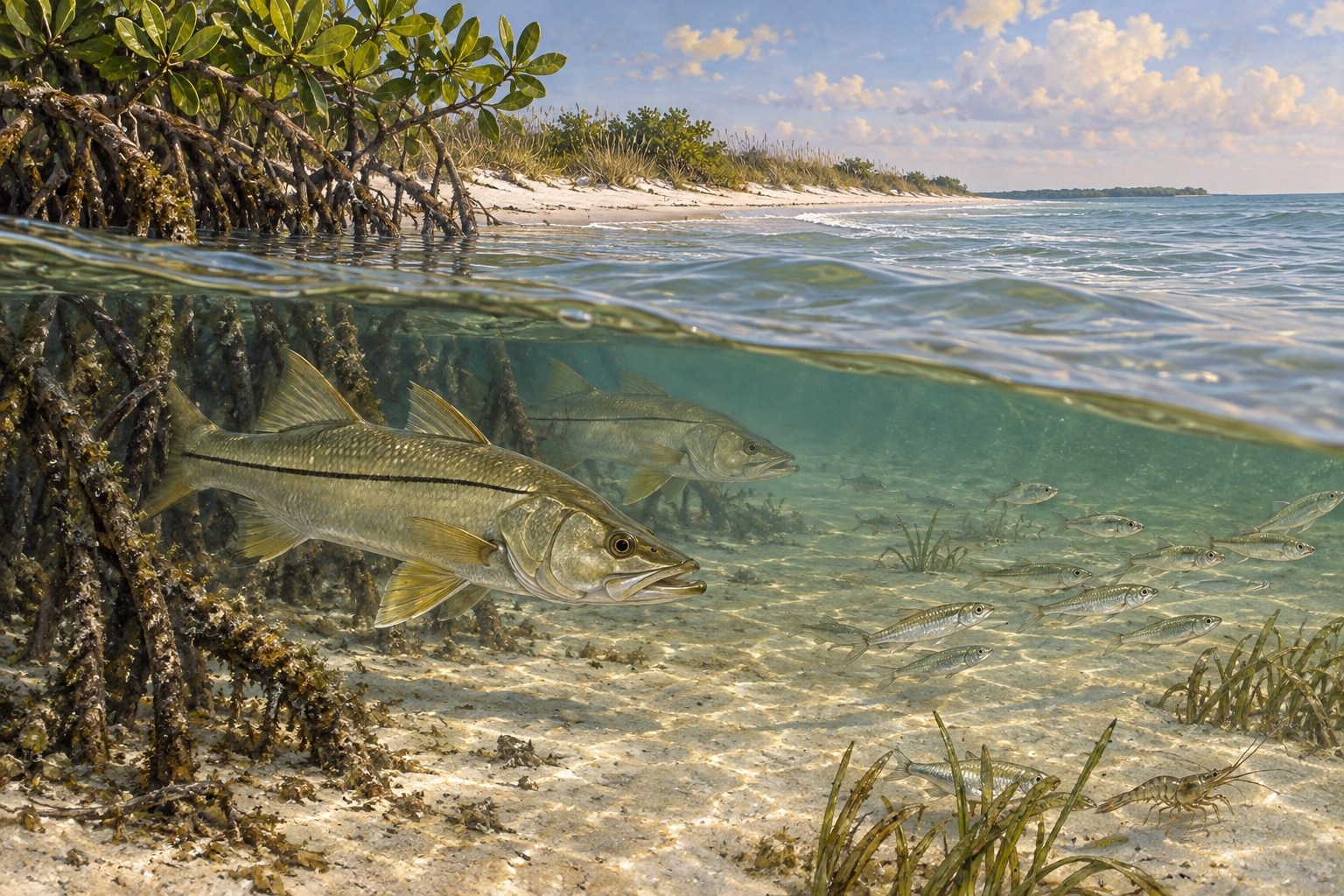
Watch a clear edge for feeding snook
Snook may cruise Marco's coastal wash when warm water and prey conditions suit them. A small baitfish-shaped lure can search that route in a permitted clear section. Use a controlled retrieve that keeps the lure above sand.
When a fish is visible, cast ahead of its movement and allow it to approach. Repeated splash near the fish can spoil the opportunity. A light suitable jig gives a quieter entry than a heavy sinker cast over the same shallow water.
Use adequate leader, wet hands and proper body support. Snook rules depend on current region and season, not simply the month when beach fish feed. Plan release first and check whether any retention is lawful.
Keep the gear useful for the walk
A medium spinning outfit handles modest lures and light surf bait in manageable conditions. A suitable surf rod can cast a larger permitted weight, but needs more room. Choose the rod and sinker together rather than exceeding the outfit's safe rating.
Take pliers, a measuring tool, spare hooks and a covered waste container. Bring water and sun protection even when facilities are nearby. Keep bait out of public shower areas and away from shared picnic use.
The options below are general starting methods for an allowed open section. They do not grant access to a private shore facility or guarantee a catch.
| Permitted water | Starting rig | Local consideration |
|---|---|---|
| Sandy inner surf | Compact shrimp or strip bait | Bring bait from a lawful source |
| Open snook route | Small paddle-tail | Current regional harvest rules |
| Surface prey activity | Modest spoon | Clear hooks away from swimmers |
| Rising wash | Reposition bags and rod | Keep the public return walkway available |
Adapt to water level and sideways flow
A rising tide can bring the inner trough closer and narrow dry sand at the same time. Move bags before the wash reaches them. Maintain a clear return to the public walkway without stepping through private landscape.
Crosswind and alongshore current can carry a rig sideways. Watch the line path after each cast rather than leaving it unattended. If it approaches swimmers or other tackle, reel in and change position or stop.
A tide prediction helps schedule the day, but actual surf decides the safe presentation. More lead cannot turn an occupied water lane into fishing space. Keep the choice of target flexible enough to fit the available conditions.
Match the visit to wildlife and weather
Marco Island's beach supports sea turtle and shorebird nesting. The city gives seasonal lighting and nest-protection instructions. Follow posted barriers and current lighting directions, particularly during turtle season, and do not assume night fishing is unrestricted.
Cooler periods can suit a regional pompano search with fronts sometimes making waves rough. Warm months may suit beach snook while summer storms shorten the outing. Use actual prey, wind and safe space to choose the day's method.
Plan a shorter session when heat, visitors or construction limit the beach. Allow enough time to cross back to the parking area safely before closing. Thunder is a reason to leave early rather than make one more cast.
Check the local rule and the species rule
The city and county manage beach access while Florida fishing requirements govern licenses and catches. Verify both before fishing. A valid license does not authorize casting into swimmers or entering a closed nesting area.
Identify retained fish carefully and use the current measurement, bag and season rules. Pompano and permit can be confused by inexperienced anglers, so release uncertain fish rather than guessing. Support released fish and avoid dry-sand handling.
Collect every bait wrapper and leader piece before leaving. Keep hooks controlled while crossing South Collier Boulevard and walking beside other visitors. A careful return finishes the fishing session without leaving a hazard in a busy beach district.
Common questions
Is South Marco Beach limited to island residents?
This guide concerns the public county access and parking, separate from residents-only facilities.
Can I park on a nearby street if the lot is full?
The city says street and swale parking in the South Beach area is prohibited. Use legal available parking.
Should I collect sand fleas on the beach for bait?
Verify current Marco bait-collection rules first. This plan uses bait brought from a lawful source.
Can I assume after-dark fishing has no extra restrictions?
No. Check current beach lighting, wildlife and any night-fishing requirements before planning it.
Prepare for your visit
Check local tides and weather. Read more about snook, florida pompano, whiting. Check current FWC saltwater fishing rules.