
HookCurrent Florida fishing
Hogfish
Learn why hogfish root through the seabed, how they change as they grow, and how patient shrimp presentations can catch them on Florida hard bottom.
Lachnolaimus maximus
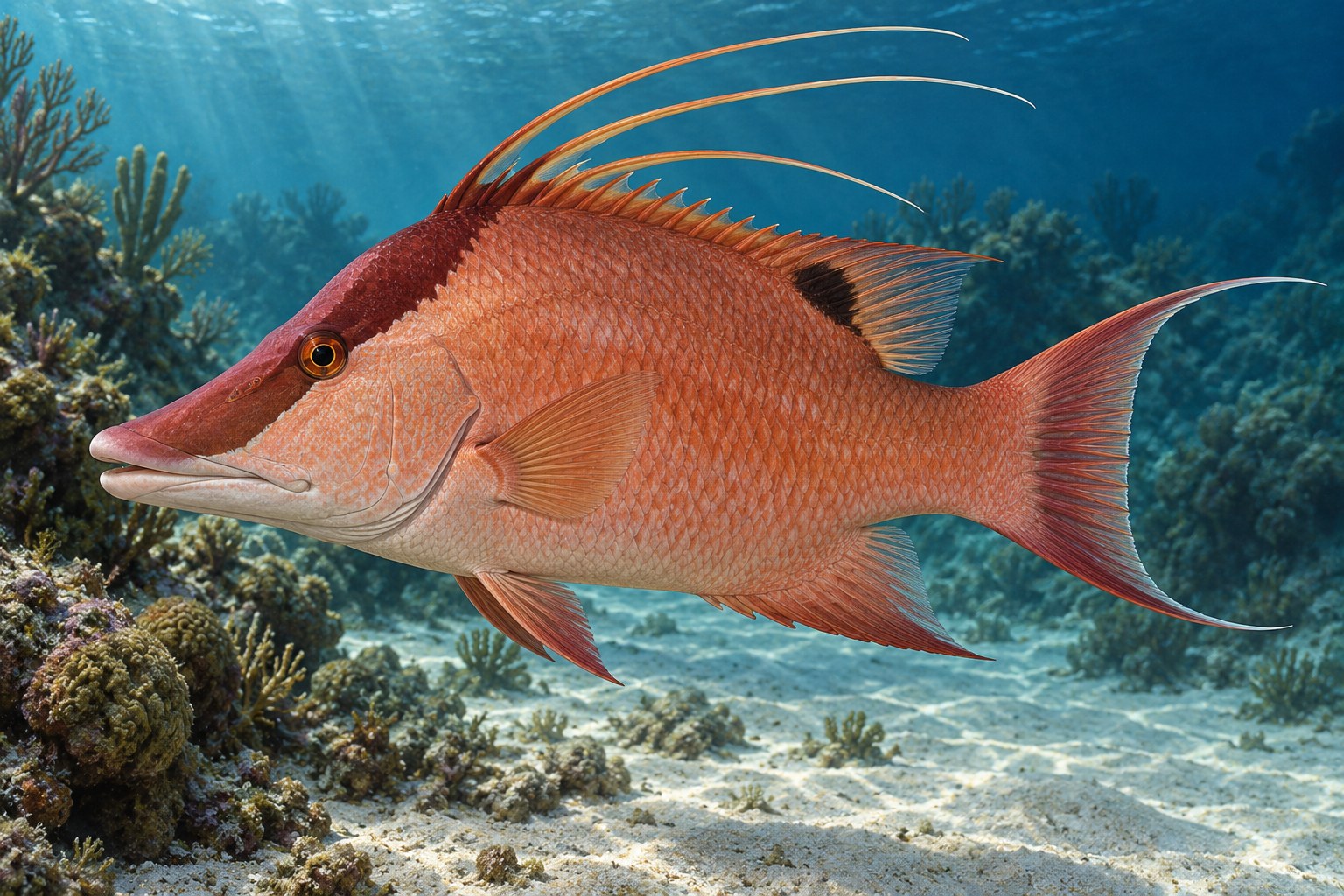
A reef fish with a different way of feeding
Hogfish use an extended snout to search for small animals in and around the seabed. That feeding style explains why a large fish bait intended for grouper may be ignored while a carefully presented shrimp gets attention.
Although often called hog snapper, a hogfish is a wrasse. Understanding that difference helps an angler move away from a generic snapper rig and toward the small crustaceans and careful bottom presentations this fish actually uses.
Shape, color and age
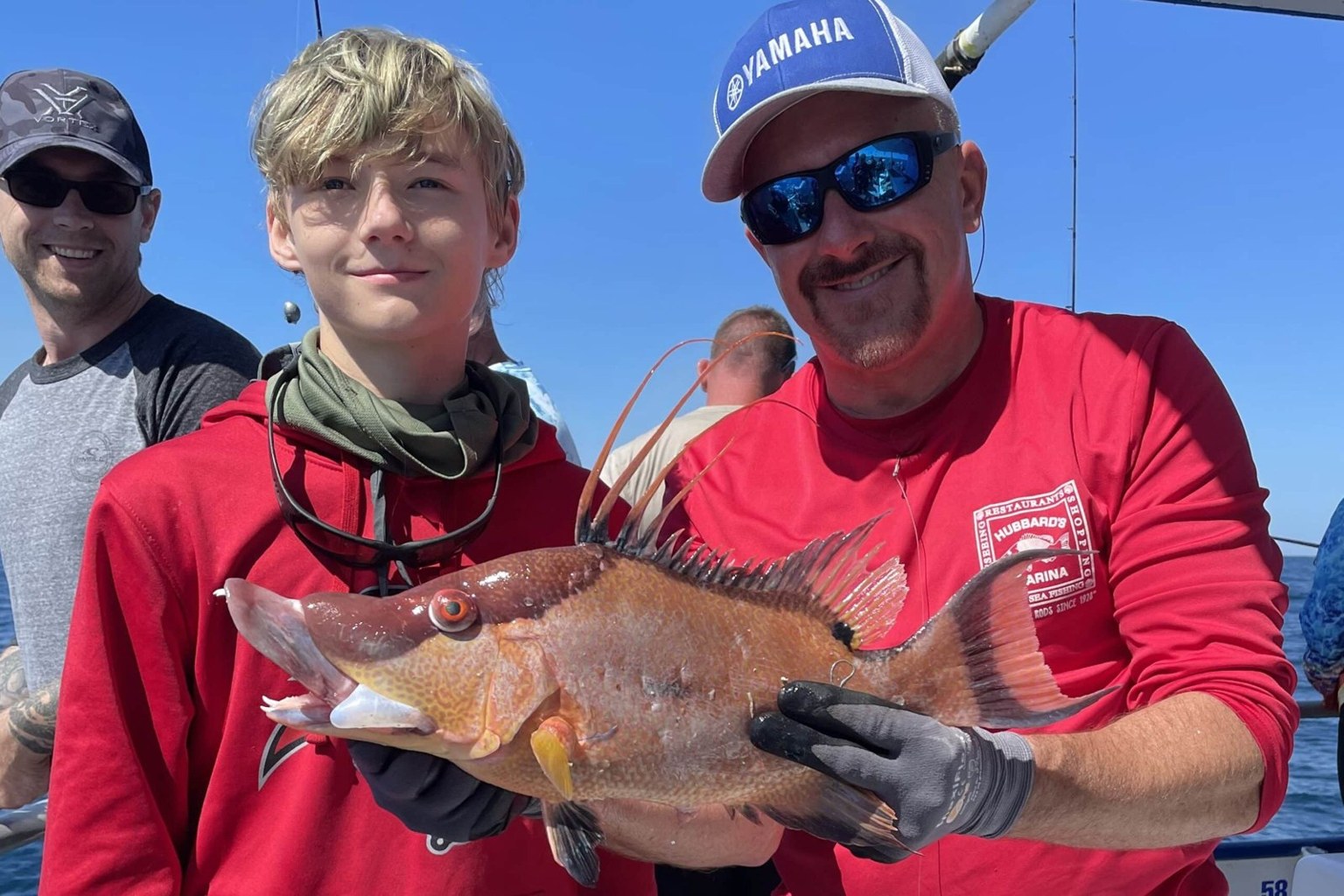
Lachnolaimus maximus has a deep, flattened body and an elongated snout. The first few dorsal spines extend into long filaments. A dark mark near the rear of the dorsal area provides another useful feature.
Color varies with age, sex and condition. Smaller fish can be mottled, while mature males often have a more striking head and body pattern. Do not rely on a single photograph's color to identify every hogfish.
The mouth can extend while feeding. Keep fingers clear when unhooking, and support the fish carefully around its fin spines. A long snout is an identification feature, not a safe lifting handle.
Seagrass nurseries to rocky adult habitat
Young hogfish settle into shallow nursery settings that can include seagrass. As they grow, they use deeper rocky bottom, reef and ledge habitat. Sand beside hard structure can be just as relevant as the tallest part of a reef.
Look for a mix of cover and feeding bottom. Small crustaceans and mollusks live around rubble, sand and rock edges. A fish rooting in those places may not be visible high in the water column.
West-central Florida and the Keys provide well-known hogfish opportunities, though habitat and fishing methods differ. A Gulf hard-bottom trip off the Tampa Bay region is not identical to a dive or reef trip in the Keys.
How hogfish reproduce
Hogfish begin adult life as females, and some later change to males. Large males can maintain territories with several females. This makes the size and social structure of the population relevant, not just the total number of fish.
Florida research describes a long breeding period from late fall into early summer, with strong activity in spring. Spawning can occur late in the day. Eggs and larvae develop in the water before young fish settle into nursery habitat.
The presence of large males is part of a functioning population. Harvest decisions should account for current management rules rather than assuming that the largest visible fish is always the best one to remove.
Food found in the seabed
Hogfish eat bottom-dwelling crustaceans and mollusks. Their snout helps them investigate sediment and crevices. This feeding is more deliberate than a mackerel racing through a bait school.
Live shrimp are a practical hook-and-line bait. Small crabs and other appropriate crustacean baits can also fit the diet, but legal collection and use need to be checked.
Keep the bait natural and manageable. A huge bundle can hide the point and attract small pickers without helping a hogfish take the hook. Fresh bait and a clean presentation are useful starting priorities.
Position over productive bottom
Use the sounder and chart to identify hard bottom, ledges and adjacent sand. Avoid anchoring on living coral or protected habitat. Local restrictions can govern anchoring and fishing at specific reef sites.
Current should carry the rig to the feeding area without dragging it endlessly through snags. An anchor position or controlled drift that places bait beside a ledge can be more useful than sitting directly over the roughest rock.
Watch how the rig behaves during the first few drops. If every bait is lost in the same crevice, adjust position or weight before sacrificing more tackle. A snagged hook is not a natural feeding opportunity.
A sensitive but capable outfit
Medium spinning tackle often provides the feel needed for small bites while retaining enough strength for mixed reef catches. Line and leader should match the bottom and expected fish, not simply the lightest setup that casts a shrimp.
A compact bottom rig or suitable jig head can present shrimp close to the seabed. Hook requirements vary with area and bait use, so choose a legal arrangement before the trip.
Use enough weight to know where the bait is. Excess weight can bury it or wedge the rig into rock. Insufficient weight may keep it floating above the feeding zone in stronger current.
Present a shrimp patiently
Hook the shrimp securely while leaving its point accessible. Lower it under control and establish contact with the bottom. Then keep the bait near the feeding zone without repeatedly jerking it away.
Hogfish bites can feel less dramatic than those of aggressive reef predators. Small taps may be pickers, while a steady weight may signal a fish taking the bait. Learn the difference through careful contact rather than constant forceful hook-sets.
With a circle hook, tighten smoothly when the fish moves off. With other legal arrangements, follow the hook's intended method. The aim is a clean connection without tearing a small bait away too soon.
Working through the smaller bait thieves
Pinfish and other reef residents may reach a shrimp first. That does not prove hogfish are absent. It does mean bait condition needs frequent inspection.
Change position slightly if every drop is stripped immediately. A different edge of the same bottom feature may hold fewer small pickers. Increasing bait size dramatically can create a different problem by making it less suitable for the intended fish.
Try to recognize a useful feeding rhythm. If bites occur shortly after the bait settles, repeated bouncing may be unnecessary. If nothing happens, a small lift and reposition can expose the bait without dragging it a long distance.
Hook and line versus spearfishing
Hogfish are well known as a spearfishing target, but this guide's fishing methods focus on hook and line. Both approaches require accurate identification and current knowledge of regional rules.
Spearfishing brings separate training, equipment, buddy and location requirements. Clear water and visible fish do not remove those responsibilities. Never assume that a site allowing rod fishing also allows every diving or spearing activity.
A rod-and-reel angler should respect divers in the water and keep hooks away from their working area. Divers likewise need a clearly marked safe area and awareness of boat traffic.
Landing and checking the fish
Use a net when appropriate and keep hands clear of spines. Measure according to the current rule's required method. A quick estimate based on a photograph or a boat rail is not reliable.
Hogfish management differs between Florida regions, including separate size, bag and season provisions. The boundary matters. Check the current official map and rules for the actual fishing location before deciding what can be retained.
Have release equipment available for fish brought from deeper water. Minimize time on deck and use a descending device where needed. Put legal retained fish on ice promptly rather than leaving them in the sun while rebaiting.
Improving a second trip
Record bottom type, depth, current and the bait presentation that worked. A note such as shrimp beside low rubble is more useful than simply writing hogfish spot.
Compare the quiet periods too. They can reveal that a rig was too high, current was too strong or smaller fish were stripping bait before it reached the target. Small practical adjustments often matter more than buying another lure.
Hogfish questions
Is hogfish actually a snapper?
No. It belongs to the wrasse family. Hog snapper is a common nickname, not its biological family.
Can they be caught with a fishing rod?
Yes. Patient bottom presentations with shrimp can catch them, particularly where suitable hard-bottom habitat is available.
Do all hogfish become males?
Not every fish necessarily makes that transition. They begin as females, and some change as they grow and social conditions allow.
Why is my shrimp gone without a clear bite?
Small reef fish may be picking it apart. Keep contact with the rig, inspect bait regularly and consider a modest change in position.
Are the rules the same around all of Florida?
No. Regional differences are important for hogfish. Read the current rules and boundary information before fishing.
Should the bait sit on top of the reef?
It needs to reach a useful feeding area. Sand or rubble beside hard structure can offer a better presentation with fewer snags than a deep crack in the reef.
Match your approach to the water
| What you find | An option to try | The detail that matters |
|---|---|---|
| Low rock with nearby sand | Live shrimp on a compact rig | Hold close to the seabed without burying the bait. |
| Small fish stripping every shrimp | A slight position change | Try another edge before making the bait oversized. |
| A steady weight after small taps | Controlled hook engagement | Match the motion to the hook rather than striking wildly. |
Plan a hogfish trip
Local access guides for hogfish trip planning: Clearwater Beach, St. Petersburg, Key Largo.
Tides and weather · Florida fishing charters
Read the current FWC rules for hogfish.
Rules review: October 4, 2026.
Research and photograph credits · All fish species · Return to the beginning