
TAMPA BAY / SUNCOAST
Venice Beach
fishing guide
Compare the fishing pier and Gulf beach while accounting for South Jetty work and changing public access.
Explore the guide ↓Choose the pier or the open sand
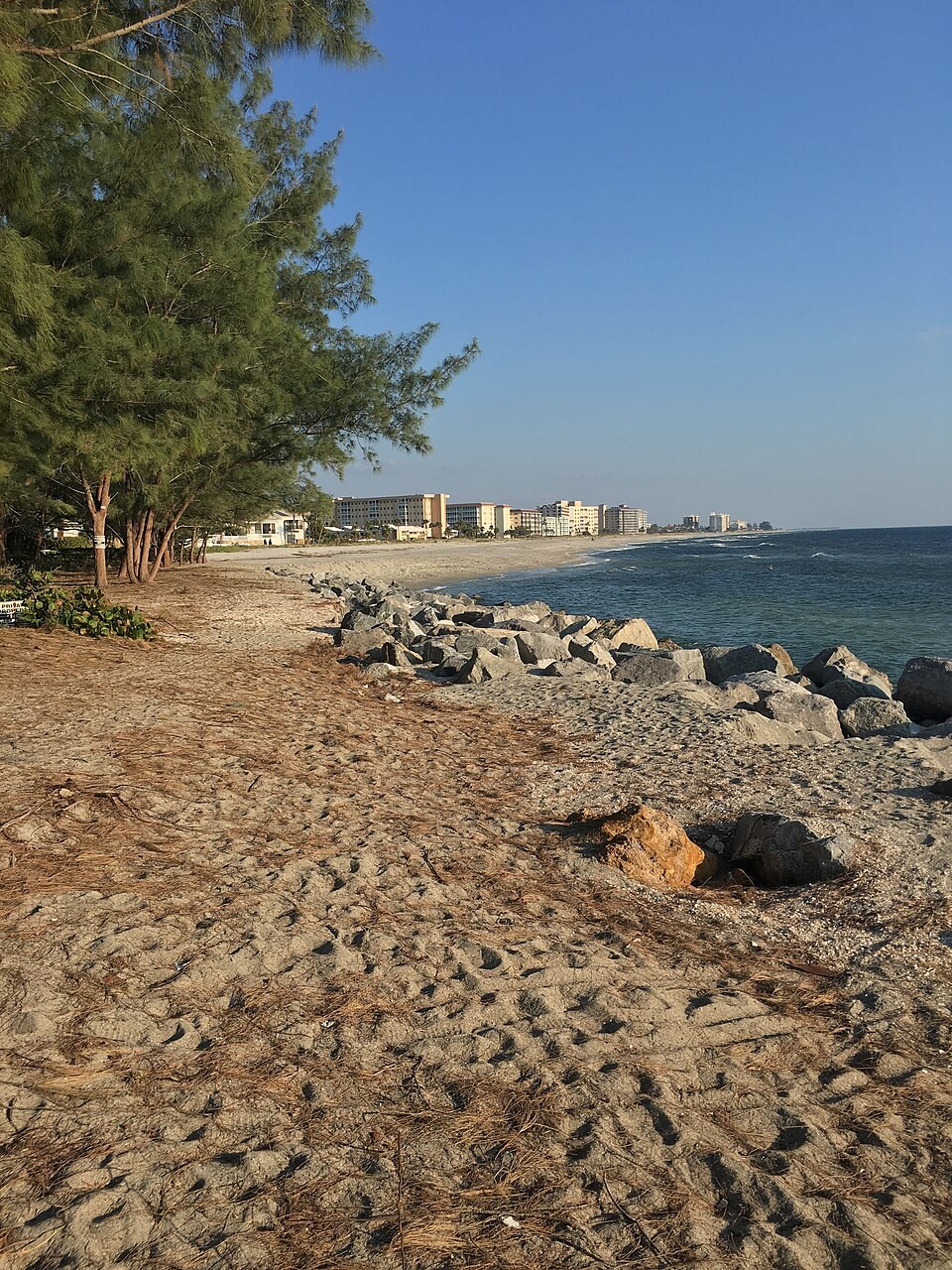
Venice Beach gives shore anglers two useful ways to reach fish. The beach lets you follow a trough, a bait school or a patch of cleaner water. Venice Fishing Pier reaches beyond the wash and adds pilings that hold food. The best choice is the one that fits the wind, your tackle and the people sharing the space.
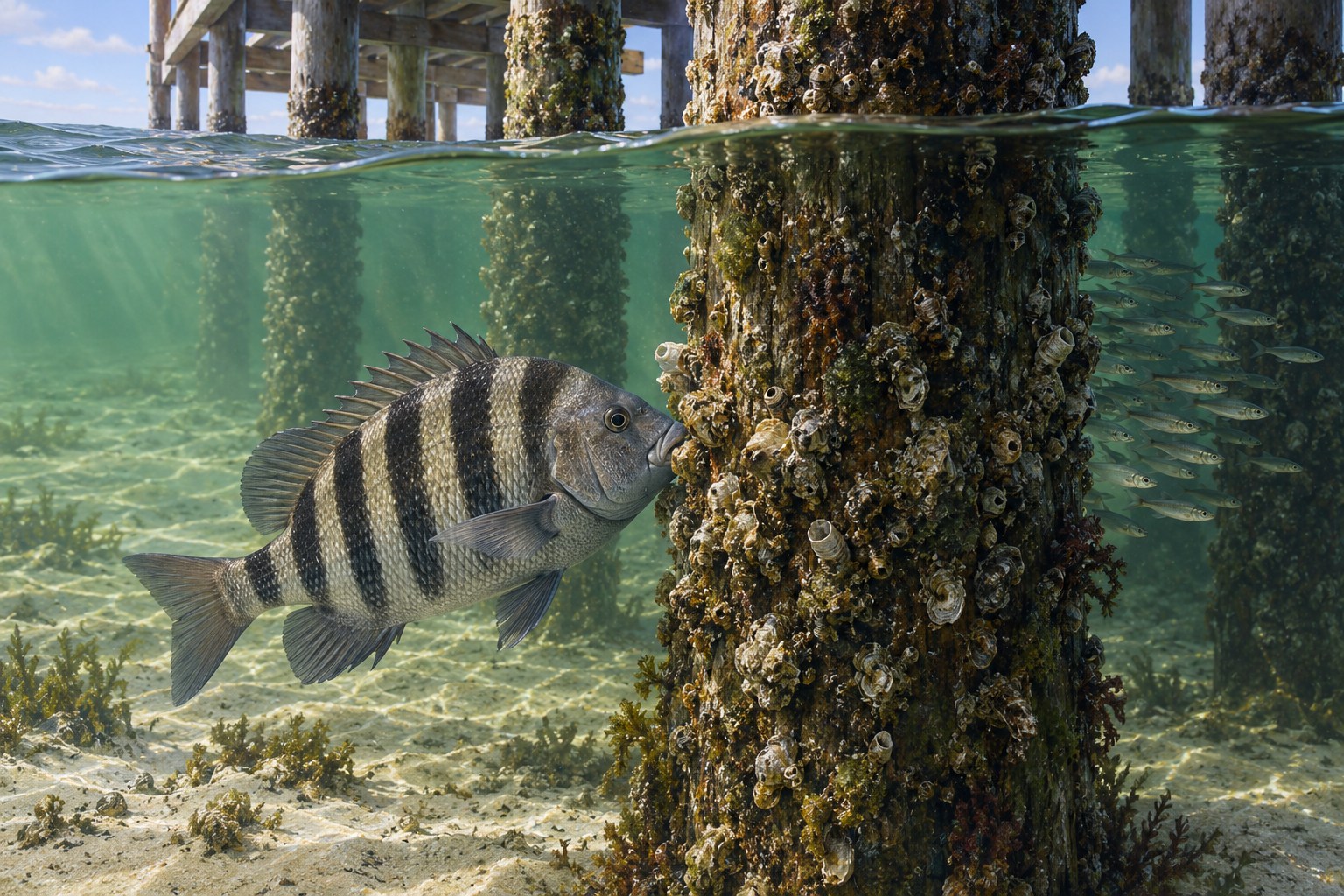
This is not a place where every successful cast must go a long distance. Whiting can feed almost at your feet. Snook sometimes cruise the narrow strip between the beach and the first drop. From the pier, sheepshead may stay much closer to a piling than to the end of your longest cast.
Keep your plans flexible. Venice has active coastal repair and beach nourishment work. The city identifies the fishing pier as open around the clock, but nearby parking and beach paths can be affected by construction. A photograph of an open beach is not a current access notice.
Three places that should not be confused
Venice Fishing Pier
The city-owned pier is at 1600 South Harbor Drive. It is the main pier-fishing option in this guide. Before setting up, find the permitted fishing space and look at the route you will use to land a fish. Do not occupy an entire rail section with unused rods or leave hooks across the walkway.
Venice Beach shoreline
Public beach entrances provide an alternative when the pier is busy. Walk beyond concentrated swimming activity and follow posted restrictions. A light outfit and a small shoulder bag make it easier to move between patches of productive-looking water without repeatedly hauling heavy equipment.
Humphris Park and the South Jetty
The city’s current South Jetty information describes ongoing repair work and a maintenance report expected in November 2026. Treat the closed jetty area separately from the open fishing pier. Do not follow an old fishing report through a barrier. North Jetty Park is across the inlet in Nokomis, not another entrance to the same facility.
What the pilings do for fish
Pilings interrupt current, create shade and support barnacles and other small life. Sheepshead feed close to that hard cover. Snapper may use the darker spaces and nearby bottom. Passing bait schools can bring mackerel or jacks through more open water outside the structure.
Begin by watching which direction loose grass travels. Lower a bait where the current can carry it toward a piling without wrapping your line around it. Keep contact with the rig. An unattended line bowing underneath the pier is likely to snag or interfere with another angler.
Look for a safe landing method before targeting a powerful fish. A small fish can often be handled with suitable pier equipment. A large one should not be lifted by its jaw, dragged up the structure or pursued with tackle that cannot control it.
Match the bait to the feeding zone
| Fish | Useful bait | Where to put it |
|---|---|---|
| Sheepshead | A small shrimp or legal crab bait | Beside a piling with the hook point exposed |
| Whiting | Fresh shrimp cut into small pieces | On sand in the nearer surf trough |
| Pompano | Sand fleas or a small jig | Along a clean sandy lane with gentle wave action |
| Snook | A slim soft plastic or appropriately sized live bait | Across a beach travel lane or a current edge |
| Spanish mackerel | A compact spoon or small metal jig | Through open water where bait is being chased |
| Mangrove snapper | A small live shrimp | Near shaded structure with enough leader to resist abrasion |
Do not solve every missed bite with a larger bait. A sheepshead can remove loose pieces without taking the hook. Trim a shrimp to fit the hook and leave the point clear. With a circle hook, come tight steadily instead of making a sharp overhead strike.
A seasonal plan for Venice
Winter fishing often rewards a slower approach near structure or a search for whiting and pompano along the beach. A cold front can make conditions poor for a day and useful again after the water settles. Fish the recovery period rather than assuming the first sunny hour means the Gulf is calm.
In spring, watch the movement of small baitfish. Mobile predators can turn a quiet stretch into active fishing very quickly. Carry a lure that can be cast immediately, but do not rush a cast through a crowded pier rail.
Summer beach walks can reveal snook in very shallow water. The first useful light is often a better choice than the hottest part of the day. Give fish room to pass and cast ahead of their path. Repeatedly landing a lure on their backs is more likely to move them away than produce a bite.
Fall offers changing bait patterns, cooler mornings and fronts of varying strength. Search for evidence of feeding each visit. Water temperature, clarity and bait presence give better guidance than treating a calendar month as a guarantee.
Read waves, current and construction
Beach nourishment can temporarily change the shape of the nearshore bottom. The trough you remember may have shifted or filled. Watch how the waves break rather than relying on last season’s casting distance. Keep well outside machinery, pipes and marked work areas.
At the pier, wind can push your line sideways even when the surface current runs another way. Reduce slack and choose a casting lane that will not cross your neighbor. If controlling the line requires an excessive sinker or constant correction, change methods or return in easier weather.
A high or low tide prediction is only part of the picture. Wave height determines whether a beach position stays dry, while actual current affects bait presentation. Compare your plan with the local weather and tide outlook before leaving home.
A compact Venice tackle kit
For mixed beach fishing, start with a medium spinning rod, modest braid and a replaceable leader. A separate, stronger outfit can be useful around pier structure. The important distinction is abrasion and fish control, not simply buying the longest rod available.
Pack small bait hooks, a few sinker sizes, shrimp, one spoon and a couple of soft plastics. Add a ruler, a dehooking tool and a landing plan. Bring only the bait you can keep fresh. Warm, soft shrimp that repeatedly falls off the hook wastes fishing time.
Secure your equipment against gusts. A towel, bait bag or line clipping can blow into the water from a pier in a second. Keep the deck tidy and return loose line to a closed container rather than relying on a distant bin while the wind is strong.
Make the first hour a useful experiment
Pick one target and one feeding zone. For sheepshead, spend time learning the feel of the bottom and the piling. For whiting, compare a close cast with a slightly longer one. For mackerel, watch where the bait moves instead of repeatedly working water that shows no activity.
Change one thing when the first approach fails. Shorten the bait, reduce the weight or alter the casting angle. If you change the hook, bait, depth and location together, you will not know which adjustment mattered.
Keep a simple note of the wind, water color and fish caught. Over several visits, that record can show whether your preferred section fishes better after a front, during a moving tide or before the beach fills with swimmers. It is more useful than a list of catches without conditions.
Handle catches and rules carefully
Make a positive identification before adding any catch to your cooler. Similar-looking jacks, pompano and permit do not share every rule. Pier access also does not automatically mean every visitor is covered by a fishing license exemption. Confirm the facility’s current license arrangement for your situation.
Read the current FWC recreational saltwater rules for harvest limits and license requirements. Keep a fish in the water whenever a quick release is possible. For a photograph, have the camera ready before lifting it.
Use the Venice research and photo notes to review the city’s access information. Repair schedules can move, so signs and current notices take priority over any older description of a favorite fishing position.
Leave the last minutes for a clean finish
Begin packing before the return becomes rushed. Secure each hook, collect leader offcuts and check the sand around the rod holder. A small transparent line fragment is easy to miss but can trouble birds later. Keep the reel off wet sand while removing the rig. This orderly finish is particularly useful when a beach entrance or parking route has changed because of nearby work.
Questions before a Venice fishing trip
Is the South Jetty the same as Venice Fishing Pier?
They are separate places. The jetty sits at the inlet, while the fishing pier extends from the Gulf beach farther south. Their access conditions are different.
Should I fish at the very end of the pier?
Only if it offers the habitat or bait activity you want. Pilings closer to shore can hold sheepshead, and the surf below the inner section may hold small bottom feeders.
What is a good bait for a child’s first catch?
A small piece of shrimp on suitable tackle is a useful start for whiting or other small fish. Pick a position with a clear cast and a manageable landing area.
Does clear water always mean better fishing?
Clear water helps you see snook and bottom features, but it can also make fish wary. Slightly colored water with food moving through it may fish well if the sea remains safe.