
HookCurrent Florida fishing
Permit
Plan a Florida permit trip with advice on identification, flats habitat, crab presentations, fly fishing, spawning movements and careful release.
Trachinotus falcatus
A fish that rewards an accurate first cast
Permit are famous for making a difficult cast matter. On a clear shallow flat, a fish may inspect a crab, turn away from a splash or disappear into glare before the angler can try again. The challenge is part of the appeal. Success usually comes from putting a believable offering in the right place with very little disturbance.
Not all permit fishing happens in ankle-deep water. Fish also use channels, wrecks and reefs. A guide to permit needs to explain both the careful flats approach and the heavier situations around offshore structure.
Identification without relying on size
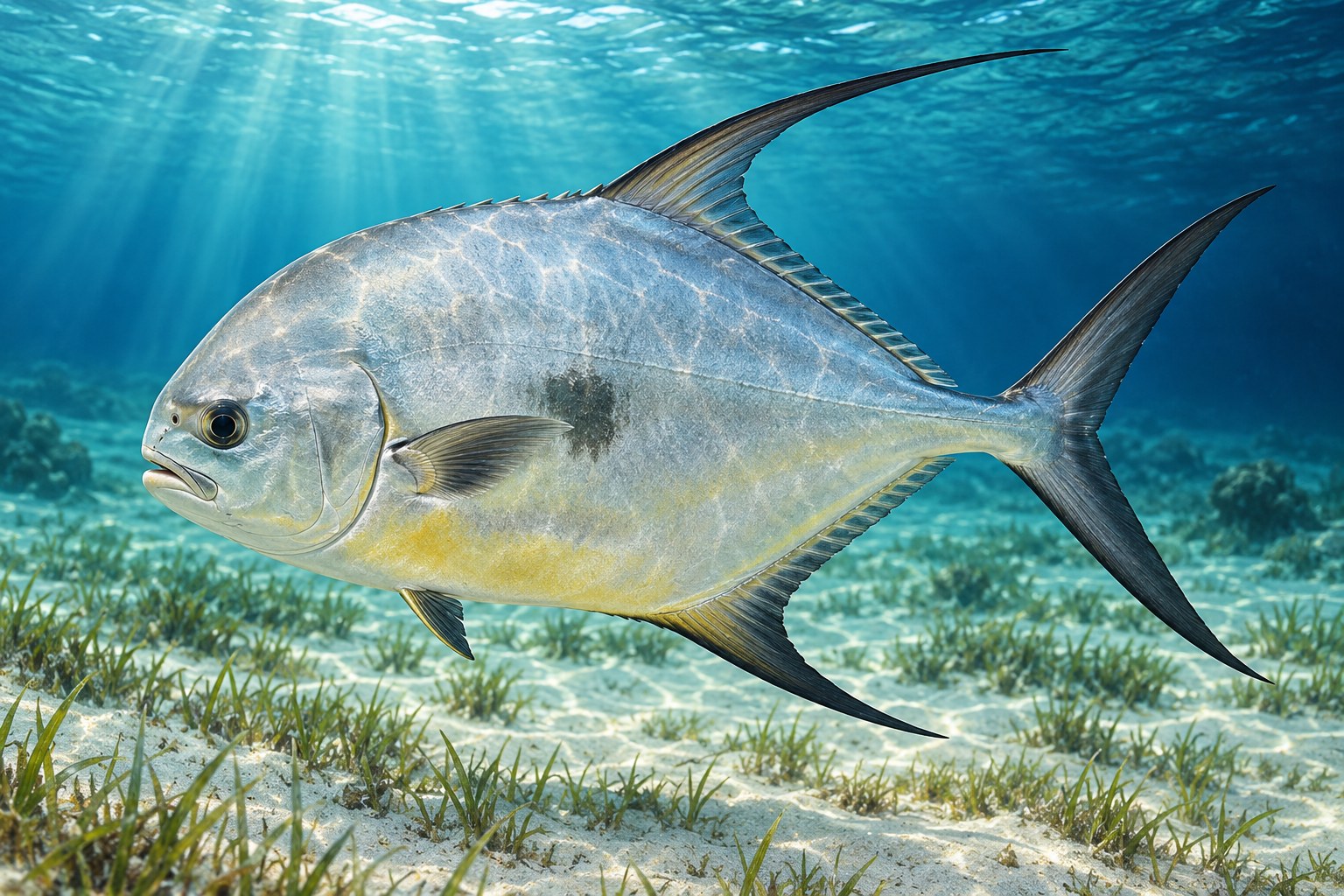
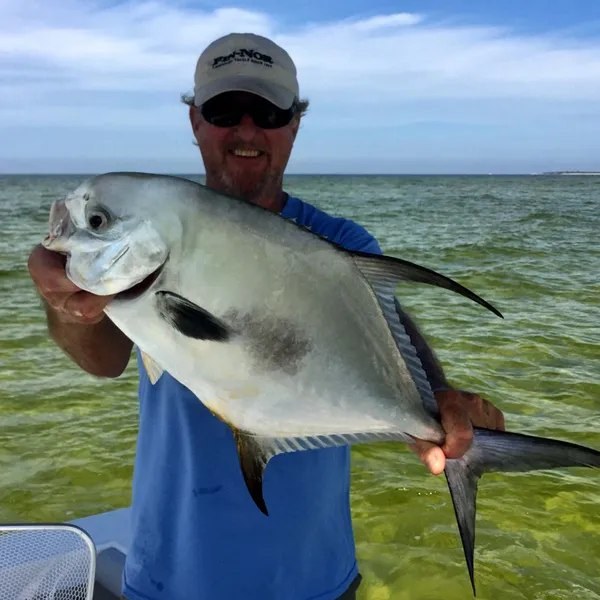
Permit have a deep compressed silver body, a steep forehead and long swept dorsal and anal fin lobes. The tail is deeply forked. Golden tones can show on the belly, particularly in some water conditions.
Florida pompano look similar but have a gentler forehead and shorter fins. Small permit can be especially confusing. Compare the overall profile and fin placement instead of calling every modest-sized silver fish a pompano.
African pompano are a different species with their own identifying features and rules. A common name containing pompano does not place all three fish under one interchangeable harvest allowance.
Flats, channels and offshore structure
Permit feed over sand and grass flats where crabs and other hard prey are available. A useful flat often lies near a deeper channel that allows fish to enter and leave with changing water levels. The shallow feeding area and the escape route belong in the same fishing plan.
Offshore, permit may gather around wrecks and reef structure. These fish can be easier to locate than isolated flats fish, but current, depth and spawning considerations change how the trip should be approached.
Do not assume that a flat appearing pale and empty from a map lacks food. Small changes in grass cover, bottom firmness and tidal flow can support prey that is difficult to see from the boat. Patient observation helps reveal those differences.
Tides create and remove feeding space
A rising tide can bring enough depth for fish to move onto a flat. A falling tide can pull them back toward channels and edges. The useful stage depends on the flat's height, the wind and the route fish use.
Wind can raise or lower water beyond the simple tide prediction. Arrive with a range of options instead of planning around one exact depth at one exact minute. A nearby deeper edge may save a trip when the intended flat remains too shallow.
Watch direction as well as height. A crab presentation should reach the fish naturally. If current carries the bait across the leader or away from the fish's path, reposition before making repeated poor casts.
Seasonal movement and spawning
Permit use both inshore feeding habitat and offshore spawning areas. Warm-season gatherings around structure are part of the life cycle. Timing varies, and a fish seen on a flat should not be assumed to remain there all year.
Adults can travel between feeding areas and spawning locations. Protecting a productive flat alone does not protect every place the fish needs. The connections between those habitats are important to the fishery.
Florida has a Special Permit Zone with rules designed around the southern fishery. Its spawning-season harvest closure is a management measure, not a declaration that fish are absent during those months. Check current requirements for the exact area.
Food and crushing power
Crabs, clams and other hard-bodied prey are central to permit feeding. Crushing structures inside the mouth help process those meals. Shrimp and other small animals can also be taken.
The fish often tips downward to feed, which can lift the tail above the surface in shallow water. A tailing fish gives a strong clue about its position and activity, but not every visible tail belongs to permit. Identify the body when possible.
Match the offering to both the fish and the bottom. A crab that lands gently and settles naturally is often more convincing than one dragged rapidly across grass. In deeper water, current may require a different presentation to reach the feeding level.
A practical spinning setup
A medium or medium-heavy spinning outfit can cast a crab while providing control during long runs. Around 15 to 30 pound braid and an appropriate leader are common starting ranges for open flats. Structure, fish size and wind can justify changes.
Do not choose line only for invisibility. A leader must survive the fight and the route the fish may take. Good knots, a smooth drag and a properly balanced rod matter as much as small differences in leader diameter.
Check the spool and line path before stalking fish. Loose loops, a sticky bail or line trapped under a rod holder can ruin the one clean cast available. Quiet preparation prevents noisy correction later.
Presenting a live crab
Use a healthy crab of suitable size and rig it securely without destroying its ability to move. The hook point must remain clear. Keep bait handling quick and avoid repeatedly dropping crabs onto a hard deck.
Place the crab ahead of the fish's route, with enough room for a natural approach. A cast directly onto the fish may produce a startled turn rather than a bite. Judge both speed and current before choosing the landing point.
Once the fish approaches, avoid unnecessary movement. Let the crab behave like food. With a circle hook, allow the line to tighten and reel steadily rather than snapping the rod overhead.
Reading the fish's body language
A cruising permit may continue along a clear path, while a feeding fish can turn abruptly toward bottom prey. Tail angle, direction changes and head-down behavior help determine where to place the cast.
If the fish accelerates toward the bait, remain calm and keep control of slack. If it veers away immediately after the splash, the cast may have landed too close. Learn from that response before attempting the same placement again.
Several fish traveling together can create competing opportunities. Choose a safe clear presentation to a reachable fish rather than casting across the whole group. Lines and baits crossing over fish can disturb more than the original target.
Fly fishing for permit
Permit on fly require accurate casting under real wind conditions. Practice delivering the fly quickly at useful distances instead of concentrating only on maximum range. The first cast often matters more than a series of elaborate false casts.
Crab patterns vary in sink rate, size and how they rest on the bottom. Choose weight for depth and current so the fly reaches the fish without landing like a stone. A pattern that worked over clean sand may snag repeatedly in grass.
Manage loose line before the fish arrives. Clear loops from feet and deck fittings. When a fish takes, use an appropriate strip-set technique and maintain contact rather than lifting the rod as if striking a freshwater trout.
Quiet boat positioning
Poling or carefully controlled shallow-water movement can reduce disturbance. Keep the boat outside the fish's immediate route and allow the angler a comfortable casting angle. Repeated motor corrections beside a fish can erase an opportunity.
Sun angle matters for visibility. Glare can hide a fish that another person sees clearly. Agree on simple directional language and approximate distance before the search begins so the guide and angler can communicate without confusion.
Do not run across grass merely to reach the next flat faster. Use appropriate channels and protect the shallow bottom. The feeding habitat is part of the reason the fish are there.
Wading for permit
Some flats can be waded where access and rules allow, but bottom conditions vary. Firm-looking sand may border deep channels or soft sediment. Understand the tide and the route back before moving away from the boat or shore.
Move slowly and avoid pushing a large bow wave ahead of you. Keep the rod and loose line controlled. Wade within your ability, with footwear suitable for shell and other hazards.
Do not assume every accessible flat is open to fishing or walking. Sanctuary zones, park restrictions and private access can apply. Confirm the rules for the specific location rather than relying on the general reputation of the Keys.
Permit around wrecks and reefs
Offshore fish may be associated with a structure, yet the bait still needs to reach them naturally. Current can move a crab far from the boat before it reaches the intended level. Observe the school and line angle before adding weight.
Use tackle that can keep the fish away from the wreck. Open-flat tactics do not transfer unchanged to sharp structure. A long uncontrolled run may end in a broken leader and a fish carrying tackle.
Be particularly thoughtful around spawning aggregations and predator activity. If sharks repeatedly take fish, leave the spot. A concentration of permit should not become an excuse for repeated harmful releases.
Fighting and releasing permit
Permit can make long runs and change direction quickly. Keep steady pressure and let the drag work. Clear line from obstacles before attempting to gain ground on the fish.
Support the body during any necessary handling and keep air exposure brief. Avoid holding a heavy fish by its jaw or tail alone. Have the camera ready before lifting rather than making the fish wait while equipment is found.
Release in suitable water with enough space to recover and swim away. Watch for predators. When a release cannot be made safely at a heavily sharked spot, changing fishing locations is the practical answer.
Florida areas for planning
The Florida Keys and Biscayne Bay are central destinations for flats permit fishing. Islamorada, Big Pine Key, Cudjoe Key and Key West provide different starting areas for a guided trip. Permit can also occur elsewhere around Florida's coastal and offshore structure.
Choose the area according to the style of fishing you want. A flats fly trip is different from a reef live-bait trip. Tell a guide about casting experience, preferred tackle and physical limitations before booking so the day can be planned realistically.
Special Permit Zone and other rules
Florida separates permit rules inside the Special Permit Zone from those outside it. Size, vessel limits, personal limits, gear and the seasonal harvest closure need to be checked together. The zone includes much of the southern fishery but should be identified from the official boundary description.
Do not borrow Florida pompano limits because the two fish look similar. Correct identification comes first. Check current rules before departure, especially when a trip may cross between inshore, offshore and specially managed waters.
Permit questions answered
Why are permit difficult to catch on flats?
Clear shallow water gives them time to inspect a presentation and notice disturbance. Accurate placement and a quiet approach reduce those problems.
Is a live crab always necessary?
No. Shrimp and artificial offerings can work, including carefully selected crab flies. A live crab remains a useful conventional choice because it matches important prey.
What does a tail above the water mean?
The fish may be tipping down to feed. Confirm the species and direction before placing a cast.
Can I use the same leader on a flat and a wreck?
The risk is different. Sharp offshore structure usually requires more protection and control than an open sand flat.
Does the spawning closure mean no permit are around?
No. A harvest closure protects fish during an important period. Presence and legal possession are separate questions.
Should a beginner try permit on fly immediately?
A guided trip can teach a great deal, but accurate casting practice helps. Discuss expectations and consider having a conventional outfit available when appropriate.
Match your approach to the water
| What you find | An option to try | The detail that matters |
|---|---|---|
| Permit feeding over a shallow flat | Small live crab | Lead the fish and let the crab reach the feeding level. |
| A clear-water fly opportunity | Crab pattern of suitable weight | Land quietly and avoid dragging the fly across the fish. |
| Fish around deeper structure | Stronger bait outfit | Account for depth, current and the first run toward cover. |
Plan a permit trip
Local access guides for permit trip planning: Key Largo, Islamorada, Key West.
Tides and weather · Florida fishing charters
Read the current FWC rules for permit.
Rules review: October 4, 2026.
Research and photograph credits · All fish species · Return to the beginning