
HookCurrent Florida fishing
Whiting
Catch Florida whiting with practical advice on surf habitat, kingfish identification, small baits, beach rigs, tides and finding fish close to shore.
Menticirrhus species
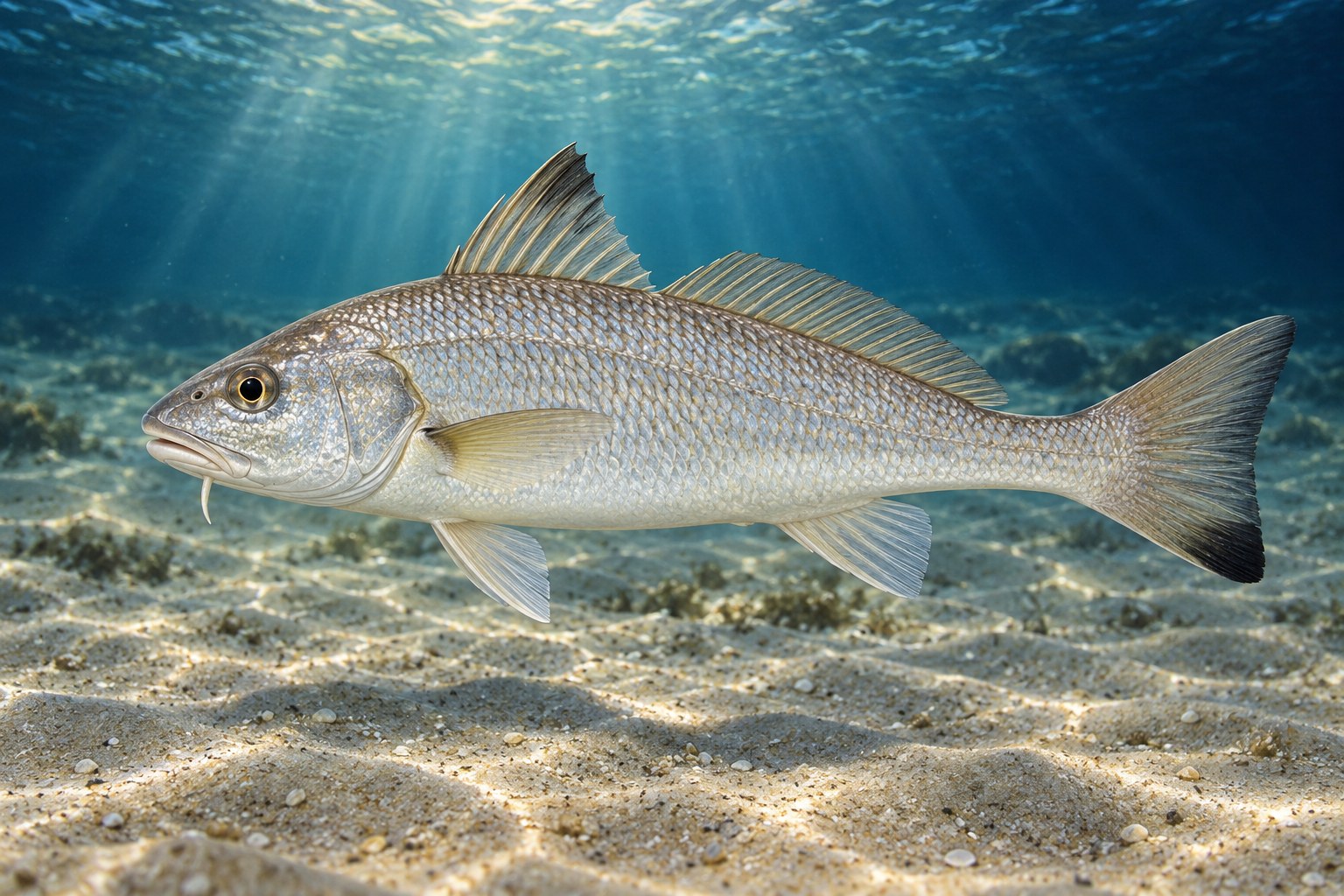
A beach fish that does not require a long cast
Whiting offer one of Florida's most approachable saltwater fishing experiences. A simple outfit, a small piece of bait and a productive stretch of beach can be enough. Many fish feed in the first trough, within reach of an easy cast.
The challenge is to fish where food collects rather than automatically casting as far as possible. A shallow lane between the beach and a sandbar can hold more feeding fish than the deeper-looking water beyond it.
What anglers mean by whiting
Florida anglers use whiting for several closely related kingfish in the drum family. This guide centers on Gulf kingfish, Menticirrhus littoralis, while recognizing that southern and northern kingfish can also enter a surf catch.
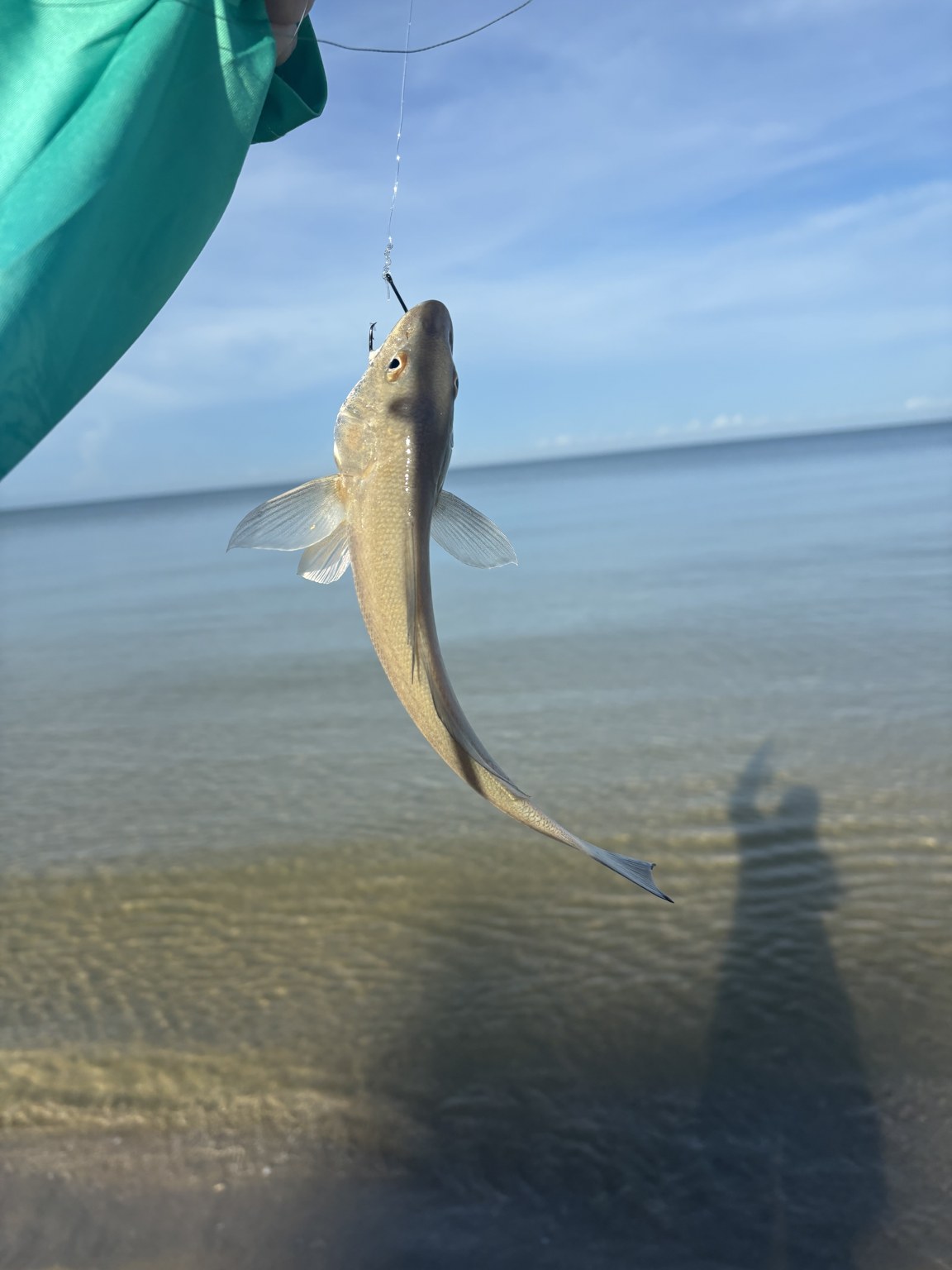
Gulf kingfish are mostly silver without strong dark body markings. A small barbel sits under the lower jaw, and the tail can show a dark tip. Southern kingfish commonly show darker diagonal body marks. Northern kingfish have a more distinct marking pattern and a taller first dorsal area.
These small bottom feeders are not king mackerel. The shared word kingfish causes confusion, but a beach whiting and an offshore king mackerel are very different fish with different tackle needs.
Reading the surf habitat
Whiting search sandy coastal bottom for food. Breaking waves disturb small animals, and the fish use that moving water to find a meal. Sandbars, troughs and cuts can organize both the food and the fish.
A trough often appears as a darker strip running along the beach. A break in the bar may look like a place where waves stop breaking. Observe from dry sand before setting up, and never enter a rip current to reach a casting position.
The best-looking feature can shift after a storm. A productive trough from last month may be filled with sand today. Reading the present beach is more useful than relying on an old photograph of the same access point.
Florida places and practical access
Open sandy beaches on both coasts can hold whiting. Panhandle beaches, northeast Florida surf and many central coastal beaches provide suitable habitat. Local water conditions matter more than the name of the nearest town.
Pensacola Beach, St. Augustine Beach and the Space Coast offer different surf settings worth learning. Gulf beaches can provide gentler conditions, though wind direction and weather can change that quickly.
Use legal beach access and keep lines away from swimmers. Check fishing restrictions, parking hours and any seasonal wildlife protections. Leave enough room that a moving fish will not carry a line across a family entering the water.
Seasons, water temperature and breeding
Whiting can be present through much of the year in Florida. The best local period varies with water temperature, surf conditions and which kingfish species is present. A single statewide peak month would hide those differences.
These fish reproduce in coastal water, with warmer-season spawning important for Gulf kingfish. Eggs and larvae develop in the water before young fish settle into shallow feeding habitat. This life cycle differs from a nest-guarding fish that stays beside its eggs.
On the beach, focus on comfortable water and available food. A tide beginning to cover a trough can create an opportunity, while dirty water after severe weather may make the same beach difficult to fish.
Food beneath the sand
Small crustaceans, worms and other bottom animals are important foods. The chin barbel helps the fish search near the bottom. Small fish may also be eaten.
Fresh shrimp pieces are a dependable starting bait. Sand fleas, small pieces of clam and suitable prepared surf baits provide alternatives. The bait should be small enough for the fish to take without repeatedly pulling on a large loose end.
Peeling part of a shrimp can release scent, but very soft bait may not survive a cast. Cut compact portions and replace them after small fish have picked them apart. A clean hook point should remain exposed.
A simple whiting outfit
A light or medium spinning outfit is enough in calm surf. A longer surf rod becomes helpful when waves, distance or sinker weight increase. Choose the rod for the conditions rather than buying the heaviest equipment because the fishing takes place on a beach.
Line around 8 to 15 pounds is a useful starting range for many easy conditions. Stronger gear may be needed for heavier sinkers or mixed catches. Match every part of the rig to the safe casting load of the rod.
Use small hooks suited to the bait and applicable rules. Oversized hooks and large chunks of bait can turn clear bites into repeated misses. A fish with a small mouth needs a presentation it can actually take.
Bottom rigs that keep bait available
A simple dropper rig can hold one or two small baits just above the sand where legal. A sliding sinker arrangement is another option when a bait needs to lie near the bottom. Keep either rig tidy and free from unnecessary swivels and beads.
Use the lightest sinker that keeps the bait in a useful place. A pyramid or other holding shape can help in stronger flow, but more weight is not always the answer. Sometimes moving to a calmer stretch creates a better fishing situation.
Check local hook and gear restrictions before fishing several rods or hooks. Keep casts controlled, and look behind you every time. A busy beach is not a place for an unchecked overhead swing with a heavy sinker.
Search near and far on purpose
Start with one bait in the closest useful trough. If fishing another rod safely and legally, place it at a different distance. This compares locations instead of putting every bait into the same empty water.
After several quiet casts, move a short distance along the beach or change the depth. A small shift may place the bait beside a cut where food is concentrating.
Watch the rod tip without treating every wave pulse as a bite. Repeated small taps can indicate feeding fish. Bring the line tight according to the hook type rather than making a violent strike that pulls a small bait away.
Wind, waves and clean water
Some wave action can free food from the sand. Too much surf makes bites difficult to see and can move rigs constantly. The useful middle ground depends on the beach and the tackle available.
Floating weed can make a site almost impossible to fish effectively. A hook buried in grass is not presenting a bait. If clearing weed takes more time than fishing, try another section or return under different conditions.
Thunderstorms, dangerous surf and strong currents are reasons to end the session. Whiting often feed close enough to catch from dry sand, so there is little reason to wade into unsafe water for them.
Handling a mixed surf catch
Small drum-family fish, pompano and other species may take the same bait. Identify each fish before deciding whether it can be kept. A general whiting plan does not replace the rules for the actual fish on the hook.
Use wet hands for fish being released and avoid dropping them on hot sand. Have pliers and a measuring tool within reach. Return unwanted catches promptly rather than leaving them beside the rod holder while preparing another bait.
For retained fish, check current rules and bring an iced cooler. Keep the beach clean of line and bait packaging. Lost hooks and discarded line are hazards for people, birds and other wildlife.
Whiting questions
Do I need to cast beyond the sandbar?
Not necessarily. Whiting often feed in the nearest trough. Test close water before assuming the longest cast is best.
Is whiting the same as king mackerel?
No. Beach whiting are small kingfish in the drum family. King mackerel are larger toothy predators with very different habits.
What bait should a beginner buy?
Fresh shrimp is a practical choice. Cut it into small pieces that fit the hook and stay on during the cast.
Why am I getting taps without hookups?
The bait may be too large, the hook point may be covered or very small fish may be picking at it. Inspect the rig before changing the entire outfit.
Can children catch whiting?
Yes, with supervision and suitable conditions. Short casts, small hooks and a clear stretch away from swimmers make a more manageable first session.
Will the same beach trough last all season?
No. Waves and storms move sand. Recheck the shape of the beach each visit and adjust where the bait lands.
Match your approach to the water
| What you find | An option to try | The detail that matters |
|---|---|---|
| Near trough inside the bar | Small fresh shrimp piece | Make an easy short cast and compare it with deeper water. |
| Bait constantly washing away | Compact firmer bait portion | Expose the hook point and replace damaged bait. |
| No bites across several casts | Another cut or stretch of trough | Move a short distance before assuming the entire beach is empty. |
Plan a whiting trip
Local access guides for whiting trip planning: Pensacola Beach, St. Augustine, Navarre Beach.
Tides and weather · Florida fishing charters
Read the current FWC rules for whiting.
Rules review: October 4, 2026.
Research and photograph credits · All fish species · Return to the beginning