
NORTHEAST ATLANTIC
Ormond Beach
fishing guide
Ormond Beach fishing guide with Cassen Park, Halifax River methods, seatrout and sheepshead tactics, and separate surf options.
Explore the guide ↓Start with the Halifax River
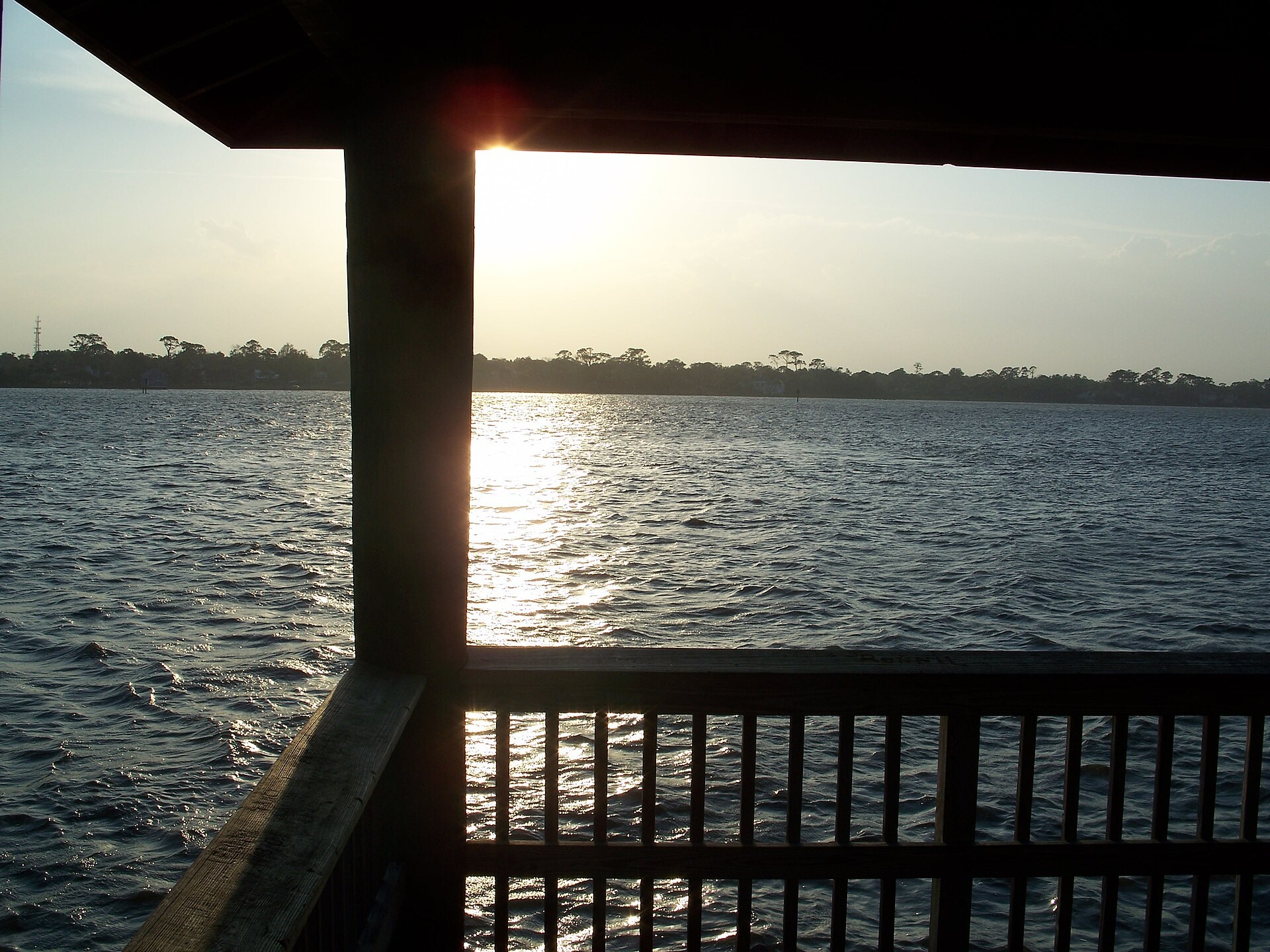
Ormond Beach offers more than an Atlantic surf line. The Halifax River runs through the area and provides public fishing access around the Granada Bridge. For a visitor learning local saltwater fishing, a clearly designated river pier can be easier to organize than an unfamiliar beach.
The river is an estuary setting. Redfish, spotted seatrout, flounder and sheepshead use different parts of its shore and structure. Their presence depends on water conditions and food, so choose a method for the habitat within reach rather than trying to catch everything at once.
The ocean remains a separate option for whiting, pompano and passing bait-chasing fish. It needs surf tackle and an open public beach crossing. A calm-looking river should not be used to judge wave conditions on the other side of the barrier island.
Use the public parks around Granada Bridge
Cassen Park is at 1 South Beach Street on the west side of the Halifax River. The city lists a fishing pier extending beneath the Granada Bridge, boat access, restrooms and a bait shop. Its published park hours are 5 a.m. to midnight, subject to temporary changes.
Fortunato Park offers another riverfront setting near the eastern end of the bridge. Check the current signs for the exact areas open to fishing. A public lawn does not make every nearby dock or bridge surface a permitted casting platform.
Keep boat ramps and docking space clear. Anglers and launching boaters may share a small area, and a line across the approach creates trouble quickly. Use the fishing space intended for that purpose.
Before choosing a position, identify how a fish could be landed safely. High railings, pilings and nearby people affect the plan. A long-handled landing net can be more useful than adding another rod.
Search a depth edge for spotted seatrout
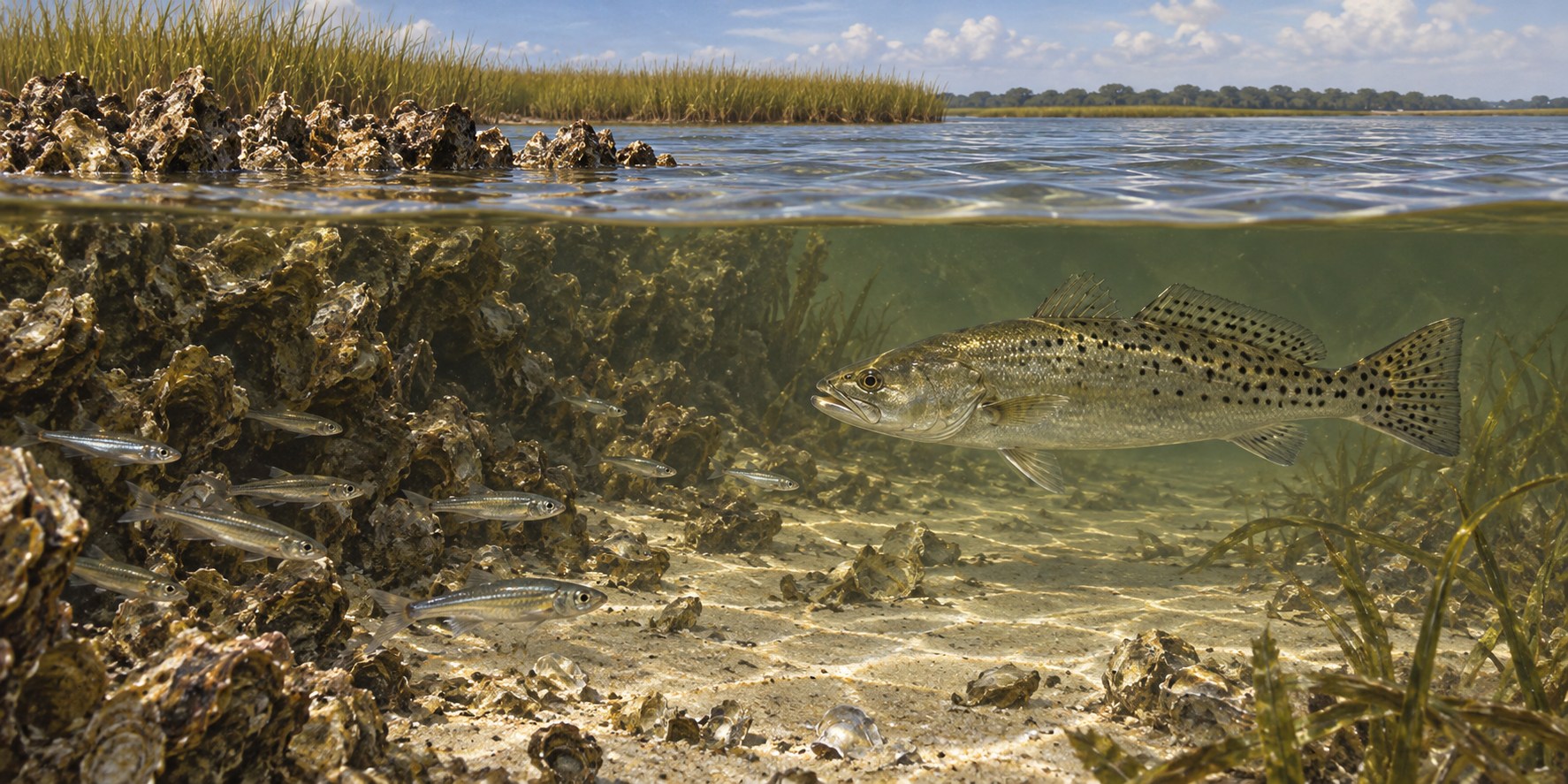
Look for small bait moving along a change in depth. The useful edge may be subtle: a darker strip, a seam in the current or water beside a shallow margin. Cast across it so the lure spends time near the transition.
A small paddle-tail lure allows a steady, controlled search. Count briefly after the cast, then retrieve at a pace that keeps it above the bottom. If it comes back with debris each time, reduce the depth or change the route.
Live shrimp beneath a float can hold a bait above snags. Set the hanging depth according to the water you can reach. A float drifting with the current should remain under observation and outside other anglers’ lanes.
When a fish strikes, keep pressure steady and guide it away from nearby structure. Seatrout have delicate mouths, so excessive force can lose a fish that was otherwise well hooked.
Fish beside structure without surrendering every rig
Pilings and hard edges can hold food for sheepshead and other fish. A shrimp or small legal crustacean bait near the structure may draw attention, but it also faces abrasion and snags. Use a compact rig and keep the line angle manageable.
Begin on the open-water side of the feature. Let the bait settle near it rather than casting deep between multiple supports. If the flow carries the rig toward a piling, retrieve before it wraps.
Sheepshead bites can be brief and difficult to distinguish from bottom contact. Stay in touch with the bait and make a controlled response. Constant slack makes the bite harder to read.
Inspect the leader after retrieving from rough surfaces. A cloudy or rough patch signals wear. Replace it before the next good fish tests the connection.
Choose one starting method
| Reachable habitat | Possible target | Useful first presentation |
|---|---|---|
| Open river edge with bait | Spotted seatrout | Light swimming lure or suspended shrimp |
| Shallow margin beside deeper water | Redfish | Weedless plastic brought along the boundary |
| Sand near a break in current | Flounder | Small jig moved slowly near bottom |
| Piling or hard structure | Sheepshead | Compact shrimp bait close to cover |
| Atlantic trough | Whiting or pompano | Small bait on a surf rig |
Do not carry the entire list to one pier and expect every option to fit. Look at the depth, current and available casting space first. The most suitable method is the one you can present cleanly in that particular lane.
Give a shoreline redfish room to approach
Where an accessible margin contains shallow feeding water, a redfish may travel along it rather than sit in one visible spot. Cast ahead of a likely route and bring the bait across it. Landing a lure directly on a fish can end the opportunity.
Keep movement and noise low, particularly from a small craft. Avoid pushing into the shallowest water just to get closer. A longer quiet cast can protect both the habitat and the fishing chance.
A shrimp presentation can work when the current carries it naturally. Use enough weight to maintain control, but avoid making the bait look anchored unnaturally in a flowing lane. Adjust after observing how the first cast behaves.
Not every shoreline is public. Stay within park boundaries or fish from a legally operated craft. Residential docks and yards remain private even when the water beside them is attractive.
Treat a surf session as a different outing
At an open beach crossing, study the wave pattern before setting up. A trough inside the first bar can hold whiting close to shore. Small shrimp pieces are a practical way to test that water.
Pompano may travel through clean surf, especially when suitable food is available over the sand. A compact dropper rig lets the bait remain above the bottom. Distance is less important than placing it in a productive lane.
Beach users need clear space. Choose a fishing position away from swimming groups and keep spare hooks covered. Follow all signs about vehicle areas and protected dunes.
For a more focused northern beach plan, compare Ormond-by-the-Sea’s access and surf tactics. The riverfront photograph in that guide should not be mistaken for an ocean fishing platform.
Watch actual river movement
Tide predictions are useful for planning, but the river’s visible current is the immediate guide. Watch floating debris or a lightly weighted bait to see how the water moves beside the chosen structure. The fastest part may be less fishable than a nearby seam.
When flow slows, a lure may need a more deliberate retrieve. When it strengthens, shorten the drift or add only enough weight to remain in control. The same rig need not stay unchanged through the whole tide.
Wind can make a river pier uncomfortable even when the ocean forecast sounds modest. Consider the direction across the open water and the amount of exposed casting space. Lightning ends both river and beach fishing.
Review the local conditions page before leaving and recheck the sky during the session. An early start is helpful only if the rest of the weather window remains suitable.
Make a first river visit easy to manage
Start with one rod per active angler and a small amount of tackle. Show a new angler how to check behind before casting and where to place the hook while walking. Keep bags out of the public path.
Have a landing and release plan before the first bite. A fish should not hang from a line while someone searches for pliers. Wet hands, body support and brief handling help avoid unnecessary injury.
Bring a ruler and verify harvest rules through FWC’s recreational saltwater guidance. Public pier access does not by itself establish that a fishing license is included.
Record one useful observation after the outing, such as the current direction that kept the bait near a piling without snagging. That makes the next visit more purposeful even if the first catch is modest.
Use shade as a clue, not a guarantee
A bridge or pier can create shade and a boundary in light. Small prey and predators may use that transition, but the useful feature still needs suitable depth and a clean presentation. Work the open edge rather than throwing into the darkest tangle of supports. Watch where the lure travels after it lands.
When several anglers share the river position, keep casts predictable and ask before moving into an occupied lane. The current may carry a neighbor’s bait farther than it first appears. A little space at the start prevents a tangle after a fish is hooked.
Put the plan into practice
At a river-side position, watch floating leaves or foam to understand the local drift. Use that movement to choose a short first cast that stays clear of neighboring lines and supports.
Ormond Beach fishing questions
Where can I begin without a boat?
Cassen Park has designated fishing access along the Halifax River. Check current pier notices and keep boat-launch areas clear.
Is the Halifax River a surf-fishing location?
No. It is an estuary waterway. The Atlantic beach is a separate setting with different rigs, wave conditions and access points.
What can shrimp catch here?
Shrimp can interest several estuary fish, including seatrout and sheepshead. Present it according to the depth and nearby cover instead of using one fixed setup everywhere.
Does a park entrance cover my fishing license?
Do not assume that it does. Check your license or exemption and any specific pier license arrangement before fishing.