
SPACE / TREASURE COAST
Sebastian Inlet
fishing guide
Sebastian Inlet fishing guide with entrance hours, bridge work, snook seams, jetty methods, surf options and safe catch handling.
Explore the guide ↓Strong water is the defining feature
Sebastian Inlet connects the Indian River Lagoon with the Atlantic. Water moving through that narrow connection carries prey and creates feeding opportunities, but it also makes the setting demanding. A successful visit begins with control of the presentation and a safe place to stand.
Snook are closely associated with inlet fishing, while redfish, sheepshead, flounder and passing mackerel can also be possibilities in suitable water. The ocean beach provides a separate surf-fishing option when access and space allow.
Do not treat the inlet as a place to wade or improvise a small-craft crossing. Use designated public fishing surfaces and keep clear of navigation water.
North and south entrances have different hours
The state park’s current notice lists the North Ranger Station as operating 24 hours a day. The South Ranger Station uses 8 a.m. to sunset hours. South-side after-hours access is limited to registered campers or visitors with an annual entrance pass and an after-hours permit.
Those arrangements should be confirmed for the visit, especially during construction or temporary closures. North-side capacity limits can stop incoming visitors on busy days. Arriving with a fishing rod does not reserve a place.
The north jetty reopened on June 30, 2025 after repairs. Older reports of that particular closure should not be presented as current, but later maintenance or weather restrictions may still affect access.
Bridge replacement work began affecting the area in 2026. Expect possible traffic delays, noise and changes around entrances. Follow current signs instead of relying on an older parking diagram.
Fish the seam beside the main flow
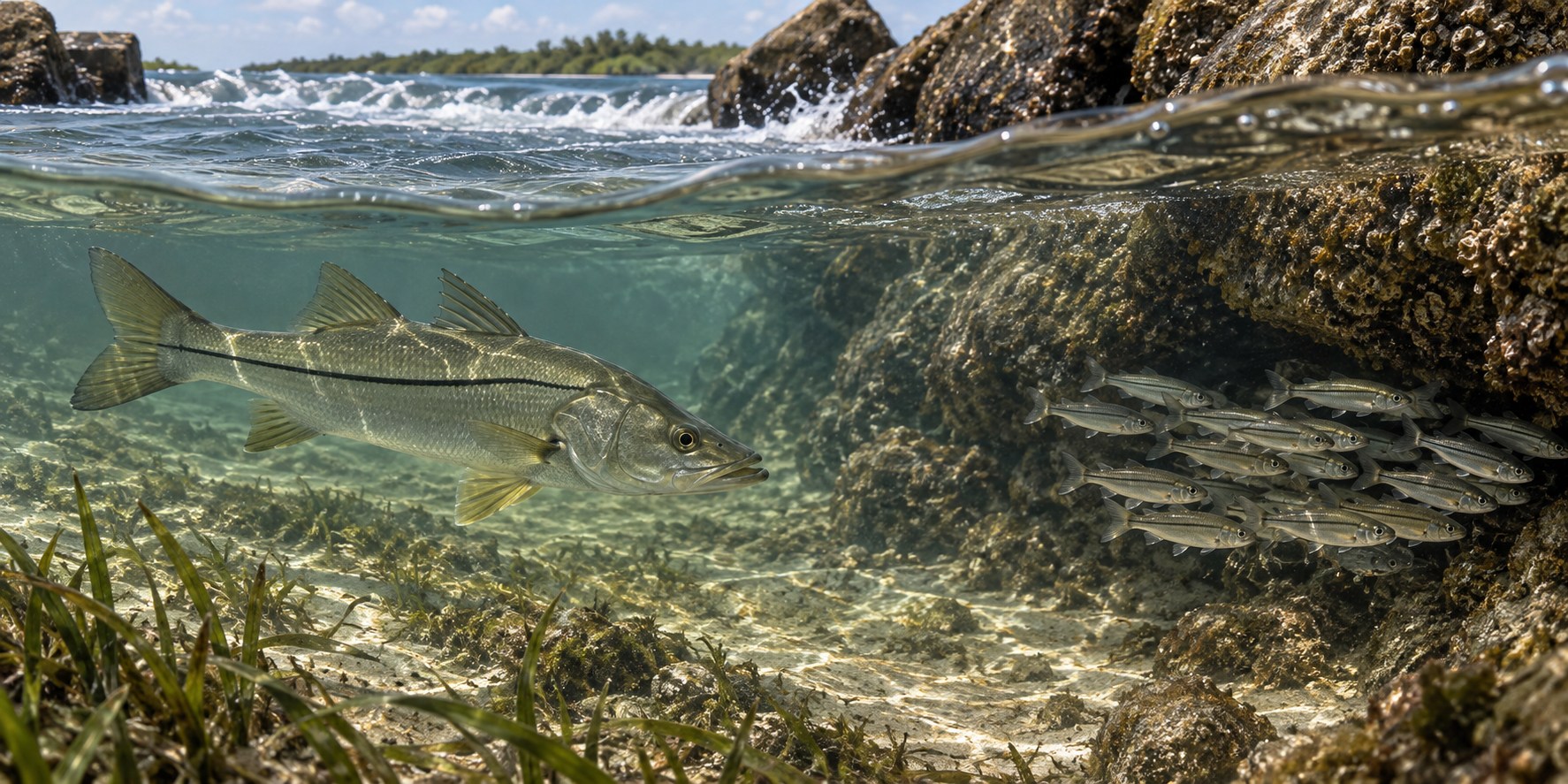
Look for a boundary where fast water meets a slower pocket. Snook can use such places to feed without remaining in the strongest flow. A bait or lure that travels through that boundary under control is more useful than one swept instantly out of reach.
Start with a casting angle that lets the presentation approach the seam naturally. Watch the line throughout the drift. Retrieve before it reaches a piling, rock gap or neighboring angler’s position.
Use leader and tackle appropriate for abrasion and the target. Keep steady pressure when a fish turns toward cover, but avoid locking everything so tightly that the first surge breaks the connection.
Snook rules differ by region and season. Plan to release the fish unless you have checked the current requirements for this exact area and can identify a legal catch confidently.
Let the tide change your method
During a slower period, it can be easier to learn depth and present a bait close to structure. As the current builds, the same weight may stop holding a useful lane. Adjust deliberately rather than continuing with an uncontrolled drift.
Use only enough weight to reach the intended depth. Excess weight can bury a bait in rough bottom and increase snags. Too little can keep it far above the feeding area.
Watch foam and small debris to understand the local flow. The water beside a structure may move differently from the main channel. Tide predictions do not show every small eddy.
When the flow exceeds what the outfit can manage safely, wait for a different stage or change the plan. More weight and harder casts do not solve every inlet condition.
Choose a target you can land responsibly
| Fish | Useful habitat clue | Approach |
|---|---|---|
| Snook | Current seam beside structure | Controlled live bait or swimming lure |
| Sheepshead | Hard cover outside the most forceful flow | Small crustacean bait close to the edge |
| Flounder | Sand near a break in current | Slow low presentation without constant snagging |
| Spanish mackerel | Small bait active in open water | Compact lure with a suitable leader |
| Whiting or pompano | Permitted ocean sand away from inlet current | Small surf bait in a trough |
A target should fit the platform, tackle and landing equipment. The possibility of a very large fish does not mean a visitor is prepared to handle one from any position.
Keep small structure baits out of the cracks
Sheepshead may feed close to surfaces holding small marine life. Use a compact shrimp or other legal bait and keep enough contact to feel a brief take. Excess slack makes a subtle bite difficult to read.
Place the bait beside the structure rather than deep inside it. If the current pushes it toward a snag, retrieve early. A slightly different angle can preserve the same feeding opportunity with less tackle loss.
Check the hook point and leader after rough contact. Replace a worn section before another cast. Small damage is especially important where a hooked fish can immediately reach cover.
Do not descend onto rocks to recover a rig. Break off safely when necessary and choose a less snag-prone presentation for the next attempt.
Keep a surf plan separate from the channel
An open beach section away from swimming and inlet flow can offer a simpler small-bait session. Read the sandbar and begin with the inside trough. Whiting can feed within a modest cast.
Pompano may take compact bait held above sand in clean moving water. Check the bait after taps and clear weed before it drags the line sideways. Avoid oversized pieces that hide the hook point.
Do not wade toward the inlet to reach deeper water. The channel’s force and bottom changes are not comparable to a shallow beach pool.
For a more sand-focused nearby outing, see Wabasso Beach’s fishing guide. Its access should be checked independently from the state park.
Wind and current can combine badly
A breeze opposing the flow can steepen waves near the inlet. Look at the marine forecast and inspect the actual water before walking to an exposed position. A sunny day can still have difficult sea conditions.
Use the tide and weather planner to narrow the window, then let visible conditions guide the decision. Current strength beside the fishing position matters more than a generic “good tide” label.
Carry water and sun protection, and leave early when thunder approaches. After-hours access does not make darkness or weather harmless. A first visit in daylight is easier for learning the layout and landing conditions.
Bridge work can add travel time. Leave enough margin that a delay does not push the outing into a period you were not equipped to fish.
Keep the release tools within reach
Bring pliers, a ruler and the landing equipment suited to the platform. Handle fish with wet hands, support their weight and minimize time on hot surfaces. Keep the photograph brief.
Use FWC’s current saltwater regulations to verify licensing and harvest decisions. Park entry and annual access passes are separate from species requirements.
Collect line and damaged hooks in a closed container. Repeated snagging is a signal to change the lane, not a reason to leave more tackle around the structure.
Record the flow and presentation that remained manageable. That practical observation will be useful on the next visit even if the bite was slow.
Learn the shared current pattern before joining it
At a busy position, watch several casts before setting up. Anglers may be timing retrieves to keep lines moving through the same direction of flow. Entering that pattern with a long cross-current cast can create tangles even when everyone has room at the rail.
Choose a short controlled first presentation and communicate calmly with neighboring anglers. If a fish changes direction, make others aware without rushing across their equipment. Keep the landing tool ready so the finish does not require blocking the walkway.
The aim is a predictable routine that suits the current and the public space. If there is no room to establish one, wait for an opening or choose another permitted area.
Put the plan into practice
Do not follow a running fish onto an unsafe edge. Set the drag for the outfit and choose a position with a clear, legal landing route before fishing.
Sebastian Inlet fishing questions
Is the north jetty still closed from the repair project?
That project ended with a reopening on June 30, 2025. Check current notices for any later restriction.
Are both park entrances open all night?
No. The north station is listed as 24-hour access, while the south has daytime hours and specific after-hours eligibility.
Will bridge work affect a visit?
It can cause traffic, noise and entrance changes. Follow current project and park notices before traveling.
Should I cast into the fastest water?
A controlled seam is usually more practical than an uncontrolled main-channel drift. Choose water that the tackle and landing plan can handle.