
SOUTHEAST ATLANTIC
DuBois Park
fishing guide
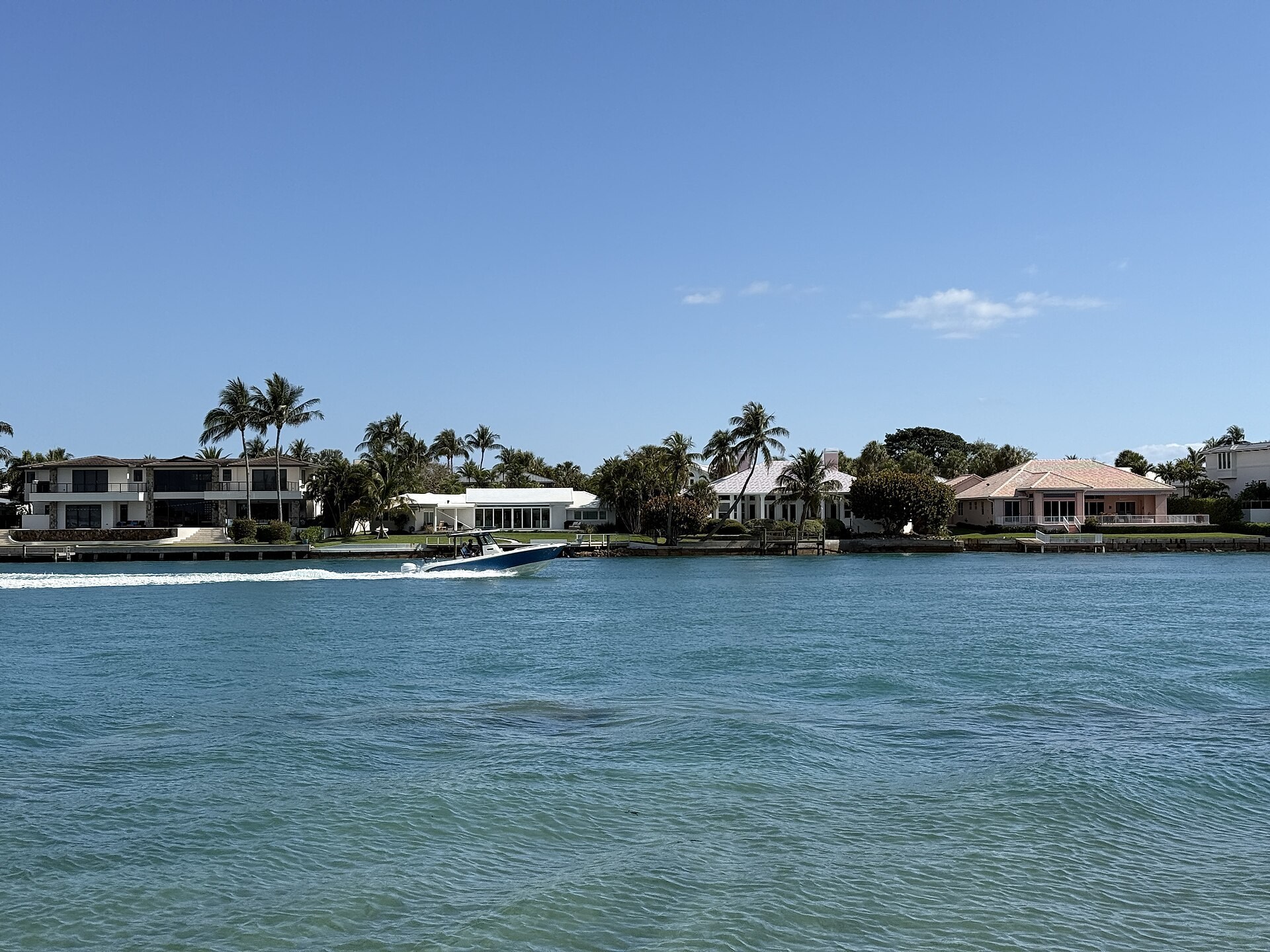
DuBois Park is a Jupiter Inlet setting with a swimming lagoon, boat traffic and stronger water nearby. A good fishing visit starts by separating those uses and choosing a shoreline position where bait, tackle and a hooked fish stay under control.
Explore the guide ↓Keep the swimming lagoon out of the fishing plan
DuBois Park sits at 19075 DuBois Road in Jupiter. The county lists saltwater fishing and a jetty among its activities and facilities. It also lists a guarded lagoon and a separate snorkeling area, so the whole waterfront is not one fishing zone.
Fishing is excluded from the guarded swimming area. Locate today's boundaries before opening the bait container. A quiet lagoon corner is not a shortcut around that restriction.
Published park hours are sunrise to sunset. Restrooms, outdoor showers and picnic areas help with a family visit. The boat ramp is for non-motorized craft, and the listed slips are for day use.
Guarding hours vary with the school calendar. The absence of a lifeguard at a particular moment does not turn a swimming area into a fishing area. Ask park staff where tackle may be used if the boundary is unclear.
Watch the inlet before picking a casting angle
Water near an inlet can move much faster than water inside a sheltered lagoon. Floating weed, foam and small baitfish show how a surface lane is traveling. Observe the flow before choosing a weight or lure.
The useful place may be the slower shoulder beside the main movement. Fish can intercept food there without holding in the strongest flow. Keep the presentation within water you can reach and retrieve safely.
Boat wakes can arrive after the boat has passed. Leave space above the waterline and secure the bait station. Do not stand on a low edge that a wake can suddenly cover.
An outgoing tide can carry prey toward the mouth, while incoming water changes clarity and the direction of a drift. Neither phase is automatically best. The right choice is the one that lets the offering remain in a plausible feeding route.
Put a snook presentation ahead of the flow
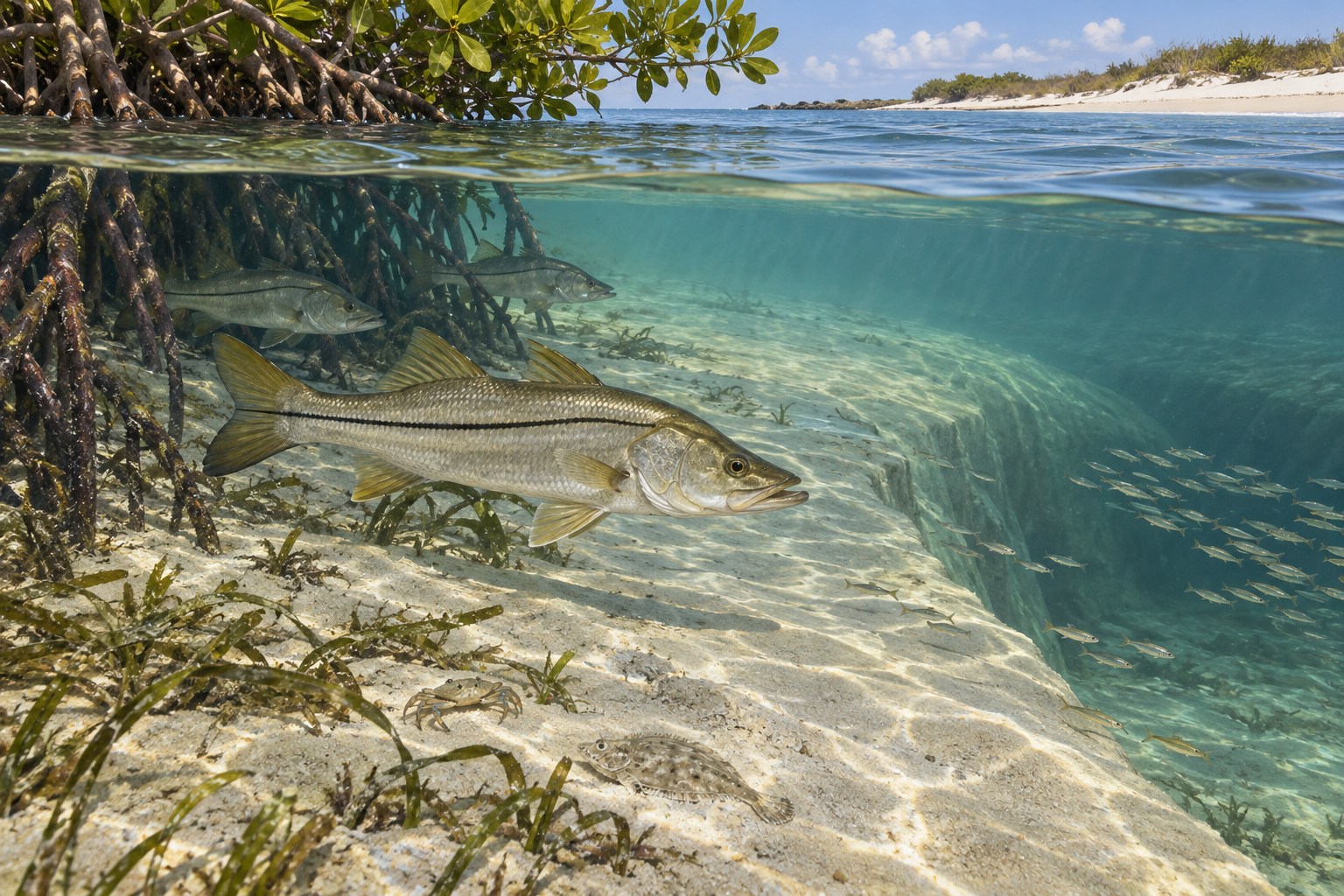
Snook are a sensible fish to study around South Florida inlet habitat. They often use depth changes and structure to meet small fish carried by moving water. Look for a lane that joins faster flow to a quieter pocket.
Cast a swimming lure across or slightly ahead of that lane, then retrieve at a pace that preserves its action. If it is swept out of reach immediately, shorten the presentation or choose a slower boundary.
Live shrimp can be fished with modest weight when the drift remains manageable. Bait should pass naturally without wrapping around a rock or entering a swimmer's space. Retrieve early if the path becomes uncertain.
Set drag with the landing route in mind. A fish headed toward rough cover needs controlled pressure, but locking the reel is not a substitute for a sound position and appropriate leader.
Use snapper tactics on permitted hard edges
Mangrove snapper can feed around suitable hard cover in warm coastal water. A small shrimp piece or small baitfish offering is a reasonable first test near a clear edge. Avoid filling the hook with more bait than the intended fish can take.
Work close enough to cover to interest fish, while leaving a route to lift the rig. Repeated snags suggest the weight is settling too deep in a crack or the bait is drifting too far.
A short, controlled presentation helps separate subtle bites from current pulling the line. Examine the leader after each rough contact. Small abrasions can turn an otherwise successful hook-up into a break-off.
Sheepshead may use crustacean-rich surfaces, while jacks can pass through open bait schools. Those fish require different methods. Change the method because the water shows a different opportunity, rather than because a catch list contains many names.
Use sand beside the current for a slower search
A sandy boundary beside an inlet channel can suit flounder or other bottom-feeding fish. A lightly weighted soft plastic or bait moved in short steps can test that layer. Keep the lure close to the bottom without plowing into every obstruction.
Allow a brief pause after a short lift. If the current moves the rig too quickly, return to shallower or slower reachable water. A heavy sinker that pins the bait in the wrong place is not an improvement.
Watch the retrieve for shell, weed and damaged line. Those clues describe the lane you actually fished. They are more useful than assuming all water beside the inlet has the same bottom.
Do not wade into the channel to extend the search. Current, boat traffic and abrupt depth changes make a shoreline decision different from a sheltered beach walk.
Make the bait and landing tools easy to reach
Keep live shrimp shaded and in suitable water with enough oxygen for the session. Crowding a small bucket reduces bait quality. Remove only the shrimp needed for the immediate cast.
For cut shrimp, prepare small pieces away from the walking route. Place the bait so the point remains clear and the piece cannot slide over it during the cast. Bring enough spare hooks to replace a bent or damaged one.
Pliers, a measuring tool and a landing plan should be ready before fishing near an elevated edge. Do not lift a substantial fish by the line simply because no landing tool was packed.
A wet-handed release can be quick when the hook is accessible. Support the fish, avoid touching gills and return it without a long display on a hot surface.
Choose one manageable part of the waterfront
Begin with a single outfit and a specific target. Several rods spread around an active park increase the chance of crossing lines, blocking movement or losing track of a drifting bait. A focused session is easier to adjust.
| Setting | Useful first method | Reason to change |
|---|---|---|
| Permitted current shoulder | Swimming lure ahead of the feeding lane | Flow sweeps it into traffic or rough cover |
| Legal hard edge | Small shrimp bait near the surface of the cover | Repeated wedging or damaged leaders |
| Reachable sandy margin | Short lifts with a light bottom presentation | The channel cannot be fished safely from shore |
| Swimming lagoon | Leave fishing tackle packed | The area is reserved for another use |
Fit the session to the park and the weather
Arrive with enough time to inspect the permitted section before the preferred tide phase. Parking, a walk with gear and a boundary check can consume the first part of a short visit.
Summer heat and storms favor a compact plan with a clear exit. Cooler days may allow more time, but wind can make the inlet shoulder difficult even when the lagoon appears calm.
Consult HookCurrent's tide and weather outlook for Jupiter, then compare the predicted phase with the observed flow. Water movement at a narrow opening can lag behind a tide table's broad estimate.
Keep fishing separate from the family swim. Store hooks and lures before moving to the lagoon, and leave dry clothing where it cannot be reached by a wake or spilled bait bucket.
Respect the park's shared shoreline
DuBois has historic and natural features as well as fishing access. Stay on the intended routes and avoid disturbing shoreline vegetation or marked sites. A casting advantage is not a reason to enter a protected section.
Balloons are prohibited at the park. Carry out bait packaging and any line removed from a tangled rig. Birds often approach a working bait station, so stop the cast when one enters the path.
Use the FWC link for current rules before keeping snook, snapper or another catch. Entry to the park does not settle species limits, seasonal closures or license requirements.
When the current shoulder is unsuitable, finish the fishing portion rather than forcing it. Nearby Jupiter beach guides offer different conditions, and a return visit can be planned around what you learned today.
Common questions
Can the swimming lagoon be used for fishing?
The guarded swimming area excludes fishing. Use only a clearly permitted part of the waterfront.
Is DuBois a motorboat launch?
The county describes its ramp as non-motorized. Verify a different authorized ramp for a powered boat.
Does calm lagoon water show that the inlet is calm?
No. The channel can have stronger flow and boat wakes even when the protected lagoon looks quiet.
What bait is a practical starting point?
A small shrimp offering can test suitable permitted edges. Choose its weight according to the actual drift.
Prepare for your visit
Check local tides and weather. Read more about snook, mangrove snapper, permit. Check current FWC saltwater fishing rules.