
PANHANDLE
Johnson Beach
fishing guide
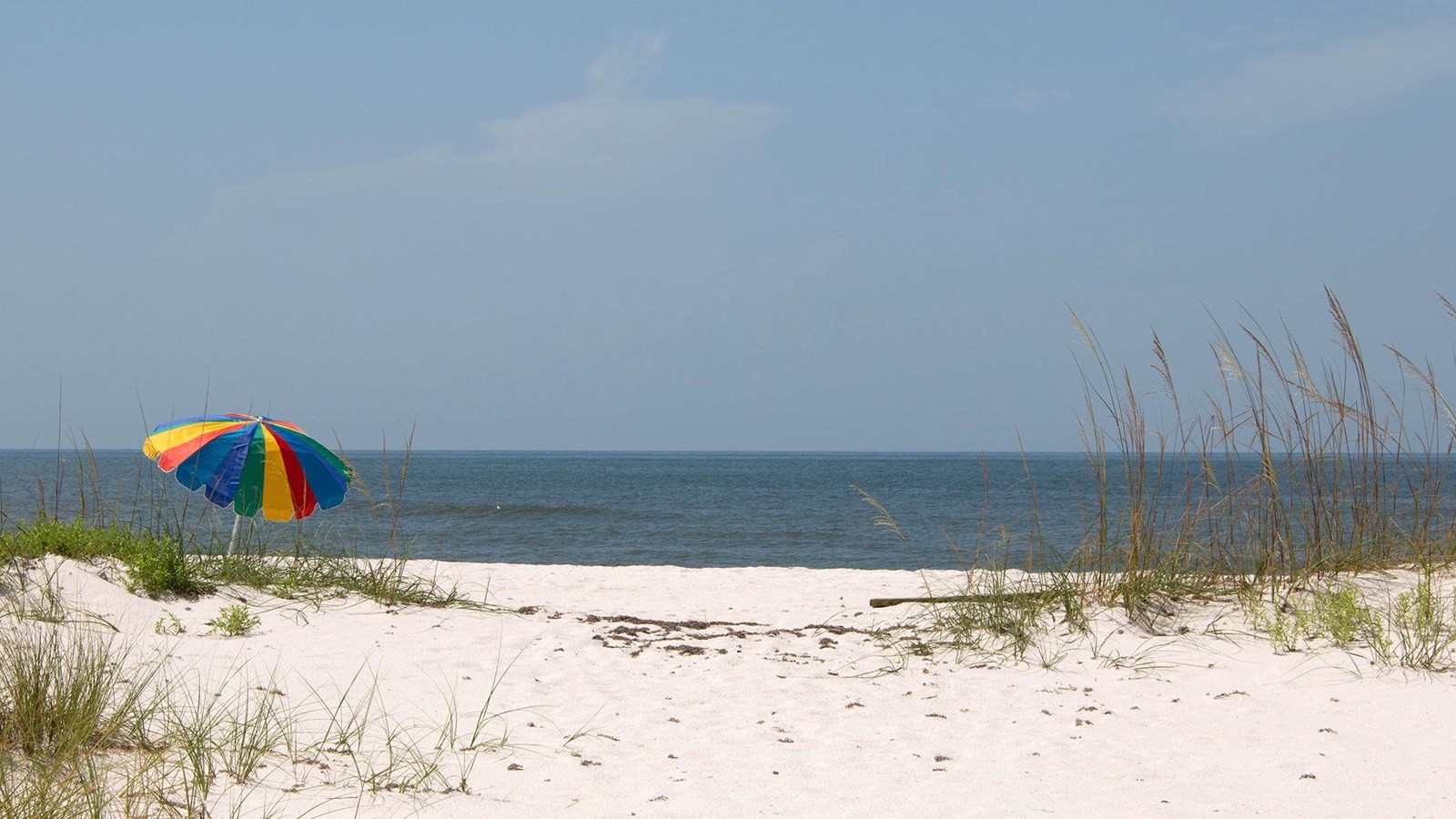
Johnson Beach offers Gulf surf fishing inside the Perdido Key area of Gulf Islands National Seashore. Choose an open stretch beyond the protected swimming area, then work the sand troughs with small baits and controlled casts.
Explore the guide ↓Use the national seashore entrance
Rosamond Johnson Beach is part of Gulf Islands National Seashore on Perdido Key. It is not the same entrance as Perdido Key State Park. Check the national seashore's current alerts, gate schedule and entrance fee before setting off.
The main beach area has parking, picnic pavilions, restrooms and showers. Those facilities support a short family visit, but they do not make every nearby section suitable for casting.
National Park Service guidance excludes fishing inside the flagged swimming beach when lifeguards are on duty. Find that boundary on arrival. Move only along an open permitted route, keeping out of dunes and shorebird enclosures.
Traffic and parking capacity can affect entry. Carry an alternative public destination rather than waiting in a queue with live bait overheating. Park instructions and posted restrictions take priority over a planned fishing schedule.
Find the near trough before chasing distance
Watch a group of waves before making the first cast. A strip of smoother or darker water between the wash and an outer breaker may be a trough. That change in depth can collect small creatures carried by the surf.
Try the closer water first. Send a compact bait past the wash without casting into a swimmer's path. If the rig holds and returns free of heavy weed, test a second distance rather than moving every rod far offshore.
A gap in a sandbar can move food, but it may also indicate dangerous flow. Fish toward it from dry sand if the casting lane is safe. Do not wade out to prove the depth or stand on a breaking bar.
Make a small shrimp bait easy to take
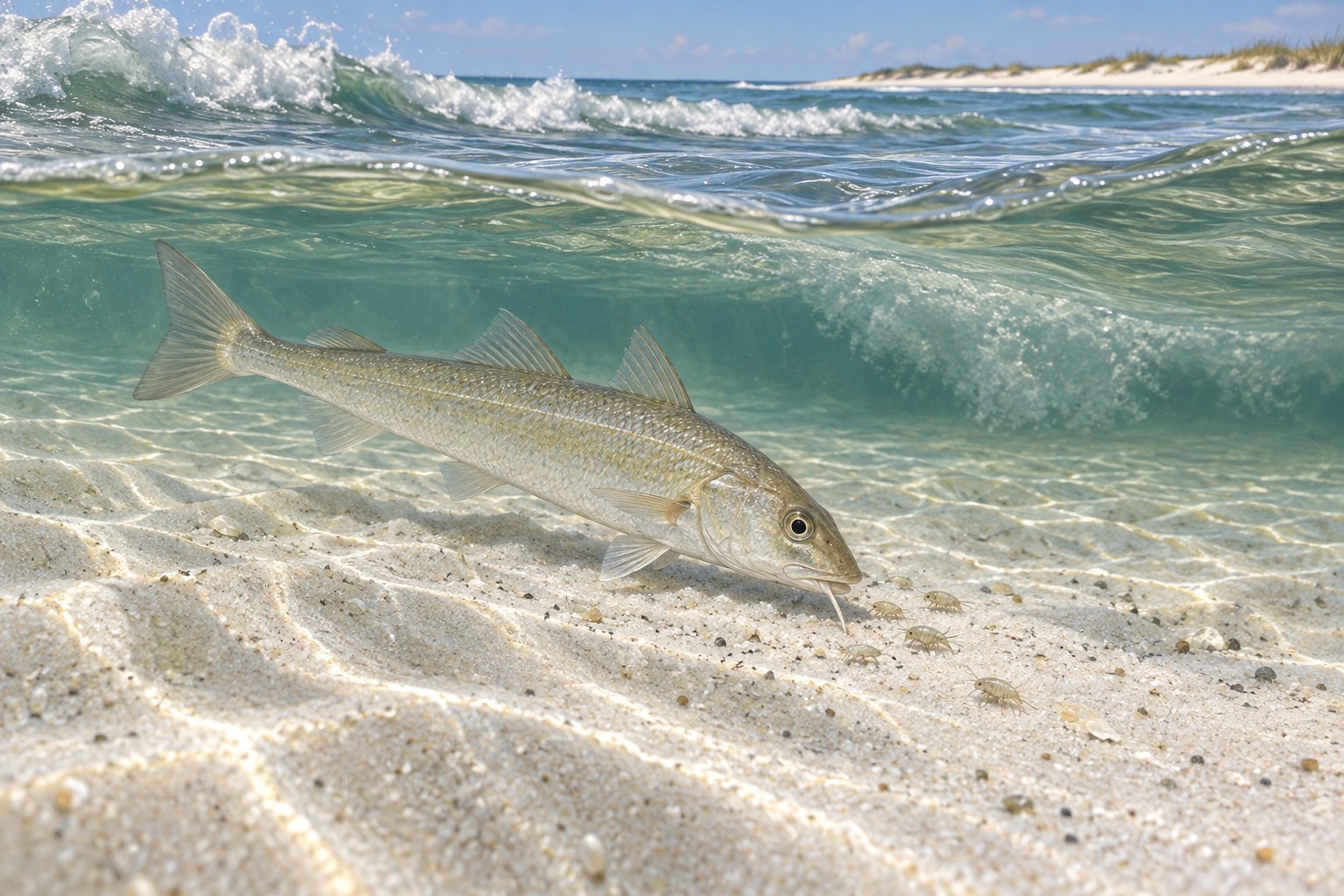
Whiting feed near sandy bottom and can make a modest surf session worthwhile. Use a small shrimp piece with the hook point exposed. A large wad of bait can hide the hook and make light bites harder to convert.
Keep a slight bend in the rod tip after the sinker settles. Too much slack hides small bites. Too much tension can pull the weight across the bottom and make every wave look like a fish.
Retrieve at regular intervals to inspect the bait. A clean hook after repeated taps suggests you need a smaller or more secure offering. Replace stale bait instead of leaving an empty hook in the water for long periods.
Treat pompano as a sand-feeding target
Florida pompano search surf habitat for small crustaceans. Sand fleas, compact shrimp baits and suitable prepared strip baits are common options. Use a neat presentation that stays near the sandy feeding lane.
A simple dropper rig can place the bait just above the bottom. Keep hook size proportionate to the offering. Colorful floats and beads are optional details, not substitutes for finding a suitable trough.
If you see a deep-bodied silver fish, confirm its identity before keeping it. Pompano and permit are different fish with different rules. A quick glance at body shape alone is not enough for a harvest decision.
Carry a second plan for visible baitfish
A small spinning lure can be useful when predators push bait close to shore. Watch for several repeated disturbances, then cast near the edge of the activity. Throwing directly into the densest school can foul fish or scatter prey.
A compact metal lure reaches open water without a bulky rig. Retrieve it with control and change speed gradually. If fish follow but do not strike, try a short pause or a smaller silhouette.
Keep lure hooks out of the path of beach walkers. Check behind you on every cast, even after choosing a quiet section. A lure outfit needs active attention and should not be left propped up while you handle a second rod.
Match the sinker to the surf you can handle
Choose the lightest suitable weight that holds a manageable bait position. Strong sidewash may require a different sinker shape. Stay within the casting rating printed on the rod, including the weight of the bait and rig.
Place a rod holder firmly in dry stable sand. Keep the line route visible and narrow. One well-managed outfit is a better beginner plan than spreading tackle across a busy public beach.
A spare leader, pliers, hook remover and small measuring device belong in the bag. Take a closed container for line scraps so nothing sharp blows away while you rerig.
| Observation | What to try | What it tells you |
|---|---|---|
| Small taps in the near trough | Reduce the shrimp piece | Whether fish can take the whole bait |
| Weight rolls sideways | Adjust sinker shape within rod rating | Whether the line can stay in a safe lane |
| Baitfish repeatedly jump | Try a small controlled lure | Whether active predators are within reach |
| Hooks return covered in weed | Move to another open clear patch | Whether the problem is the fishing lane |
Use a short weather window wisely
Wind can change the beach faster than a predicted tide time. A light offshore breeze may flatten the near surf, while an onshore wind can add whitewater and side drift. Check the actual flags and waves after arriving.
Spring and fall can bring useful surf opportunities, but there is no dependable calendar promise for an individual visit. Look at water temperature trends, clarity and available prey rather than treating a month as a guarantee.
Leave enough time to pack up before the entrance closes. A sunset photograph does not establish permission to remain after hours. Thunder or lightning ends the session even if fish have just begun biting.
Separate a family fishing lane from the swim area
Choose a fishing section with room behind the rod and a clear path back to the facilities. Keep children away from loose hooks and loaded rods. Let one adult manage the tackle while another watches the water and the group.
Bring drinking water and shade that can be secured without blocking the walkway. The national seashore prohibits glass and pets on this beach. Do not build a shortcut through dune vegetation to reach a more secluded patch.
Fish handling should happen where people can pass safely. Support a catch with wet hands, keep it off hot dry sand when practical and release it promptly when it is not being retained legally.
Finish with the right rules and a small footprint
National seashore rules apply alongside Florida fishing requirements. Check the license you need, current species limits and any temporary local restrictions. This guide does not authorize fishing inside a protected swimming area.
Do not chum from the beach. Keep bait scraps and fish remains away from swimmers and wildlife. A simple baited hook does not require feeding the whole stretch of shoreline.
Before the walk back, inspect the sand around the rod holder and bait container. Remove hooks, line, packaging and every item you carried in. Leave bird enclosures and turtle protection markers exactly as you found them.
Common questions
Can I fish beside the lifeguarded swimming area?
Fishing is excluded from the flagged swim beach when lifeguards are present. Locate the marked boundary and use an open permitted section away from swimmers.
Is Johnson Beach a Florida state park?
No. It is within the Perdido Key area of Gulf Islands National Seashore, managed by the National Park Service.
How far should my first surf cast go?
Start with the nearer sandy trough if it is safe and open to fishing. Test longer distances only after checking how the rig holds.
Can I leave a rod unattended while swimming?
Keep fishing tackle actively managed. Do not leave a line where it can cross a swimming or walking route.
Prepare for your visit
Check local tides and weather. Read more about florida pompano, whiting, permit. Check current FWC saltwater fishing rules.