
PANHANDLE
Navarre Beach Park
fishing guide
Navarre Beach Park gives anglers a choice between Gulf surf, the nearby fishing pier and sheltered sound-side planning. Each has a different access route and set of restrictions. Choose your water before packing the tackle.
Explore the guide ↓Start with the Gulf and sound sides
Navarre Beach Park occupies the eastern part of the developed Navarre barrier-island area. The Gulf lies south of Gulf Boulevard, while Santa Rosa Sound lies to the north. A sheltered-looking shoreline on one side does not describe conditions on the other.
Santa Rosa County's park map shows Gulf dune walkovers, pavilions, restrooms and sound-side launch facilities. Use the current map and signs to find the route that matches your plan. A pavilion name is not a marked fishing boundary.
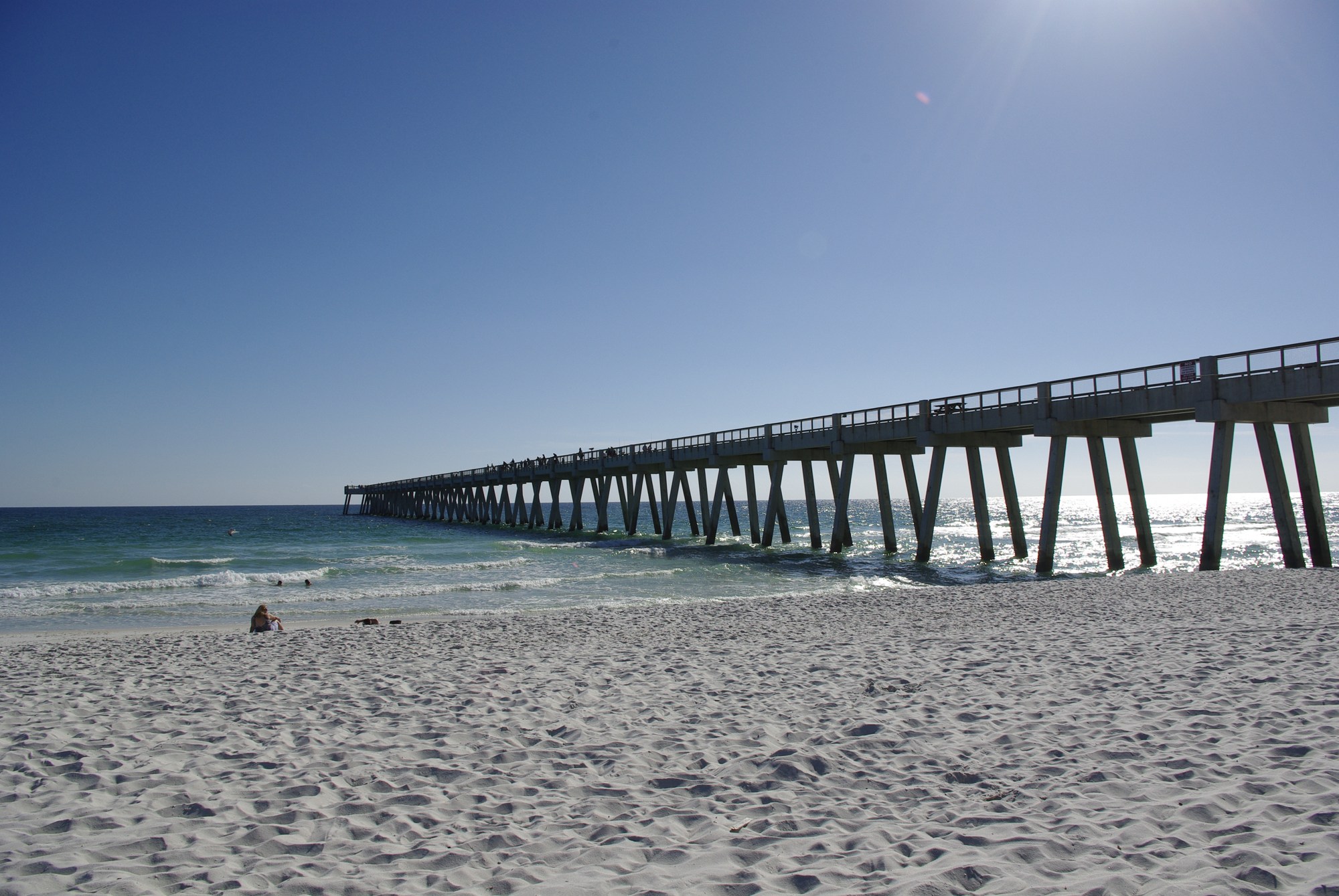
Navarre Beach Pier is a separate fishing option near the park. It extends into Gulf water and has its own operating schedule, fees and rules. If you choose the pier, confirm those details at 850-710-3239 instead of assuming beach access covers the pier visit.
The county prohibits fishing within designated bathing areas during the applicable posted season. Locate the current signs on arrival, keep away from swimmers and follow any ranger or lifeguard direction. An empty stretch inside a marked swim zone is not automatically an open fishing section.
Read the beach from a dune walkover
A higher view can help you see the first sandbar and the strip of water inside it. Look for a trough where waves break differently, then confirm the casting lane from the beach. Avoid planning a cast across people simply because the bottom looks promising.
Small changes along the shore can concentrate food. Foam gathering near a depression or a shell patch may show water movement worth testing. Use an open permitted section and compare short distances before committing to a long cast.
A channel through the bar can carry a rip current. Treat strong returning water as a reason to stay on stable dry sand. A fish feeding near that flow does not make wading through it sensible.
Start with whiting and a compact shrimp offering
Whiting are a practical sandy-surf target for a simple beach outing. Cut shrimp into a manageable piece and fit it neatly to the hook. A small fish should be able to take the offering without the bait blocking the hook gap.
Pompano can use the same broad sandy coast when seasonal movement and conditions suit them. Try a sand flea or an appropriate prepared strip bait as a second option. Keep the bait small and the rig easy to inspect.
If bites are light, check whether the bait is still on the hook. Repeatedly casting an empty rig farther out will not solve bait theft. Adjust bait size or security, then give the change a fair test in the same lane.
Use the pier for a different presentation
The county describes Navarre Beach Pier as 1,545 feet long. Its height and reach create a different fishing setting from the beach trough. You need a controlled line path and a landing method suitable for a raised platform.
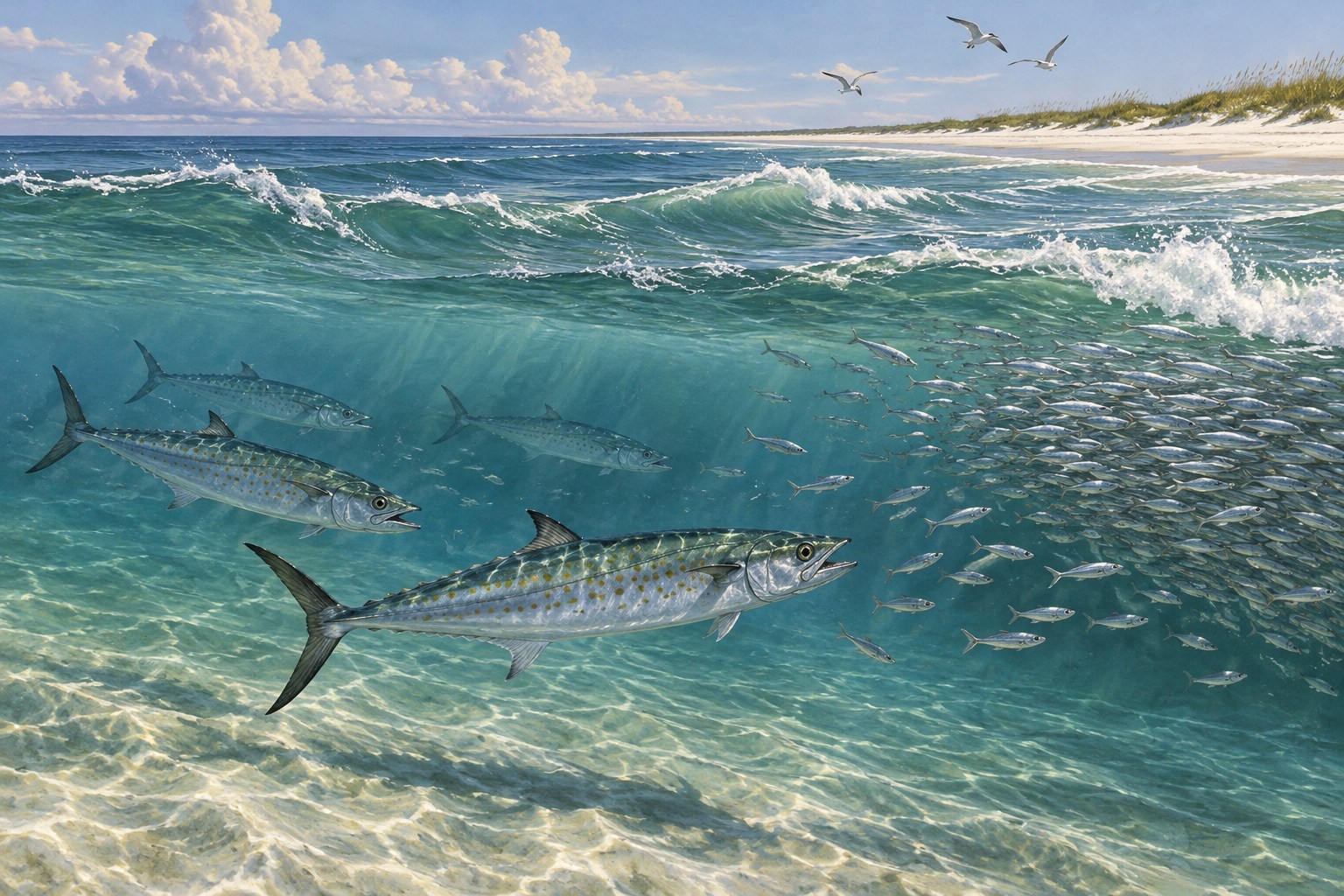
Small baitfish-shaped lures can be useful when mobile fish feed near the pier. Watch the direction of drift and other anglers' lines before casting. A long sideways cast can create a problem even when there is no swimmer nearby.
The pier prohibits running, climbing or sitting on railings, fish cleaning and leaving fish on the deck. It also has specific tackle restrictions around the octagon, including no sabiki rigs there. Read the posted rules before selecting a position.
Plan the sound side as an inshore outing
Santa Rosa Sound offers a sheltered-water alternative, subject to the day's wind and legal entry. Mixed sand, submerged vegetation and changes in bottom depth can support small prey. Those features favor lighter inshore presentations over a heavy surf sinker.
A shrimp under a float can stay above vegetation. A small soft plastic can search an open sand edge. Keep the lure moving slowly enough to control depth, and lift or reduce weight if it catches grass repeatedly.
For a kayak session, check the designated launch and the return route before departure. Wear a life jacket and keep out of boating lanes. Do not assume a sound-side swim area or landscaped bank is a suitable launch or casting place.
Pack one main plan and a modest backup
The Gulf, pier and sound require different tackle decisions. Choose the primary plan so you are not carrying an oversized collection across the sand. A few spare leaders and suitable bait often help more than several unattended rods.
A surf outfit needs a safe casting weight and a sinker that holds. A pier outfit needs a recoverable line and proper fish landing equipment. An inshore outfit needs enough control to keep the bait clear of vegetation.
Treat the following choices as starting ideas. Confirm the open access and local restrictions before using any of them.
| Setting | Starting method | Planning detail |
|---|---|---|
| Permitted Gulf surf | Small shrimp or sand flea bottom rig | Find an unoccupied lane beyond swim restrictions |
| Open fishing pier | Controlled bait or compact lure presentation | Read octagon tackle and landing rules |
| Authorized sound shoreline | Suspended shrimp or light soft plastic | Keep hooks clear of grass and boats |
| Designated kayak launch | Small inshore kit with secure hooks | Set a conservative return route |
Let the wind decide how far the outing goes
An onshore Gulf wind can produce waves and side drift. A different wind direction may make the sound uncomfortable while the beach looks calmer. Check each water you intend to use rather than choosing a location from one distant forecast number.
Use the tide forecast to plan, then observe actual water movement and depth. Wind can affect shallow sound water and the line angle from the pier. The most useful fishing period is one you can manage safely.
In spring and fall, changing temperature and moving bait can make coastal fishing interesting. That broad pattern does not give a reliable arrival date for fish at one walkover. Watch the prey, clarity and weather during the visit.
Make room for both anglers and beach visitors
Choose a fishing position that leaves a clear walkway between the water and the dunes. Keep spare hooks packed away and check behind the rod before casting. A child watching a fish may step into a casting arc without noticing it.
The county beach rules prohibit glass, fires, beach pets, camping and overnight parking. Personal items must be removed at the end of the day. Do not leave rod holders or gear as an overnight claim to a beach section.
Pavilions and facilities can help with a short family outing, but they are shared spaces. Prepare bait in a contained way, take drinking water and leave tables clean. Reserve the swim area for swimming rather than using it for tackle practice.
Common questions
Can I fish anywhere inside Navarre Beach Park?
No. Follow designated bathing-area restrictions, signs and staff direction. Keep tackle away from swimmers and use an authorized open fishing position.
Is the pier included with a beach visit?
The pier has separate fees, hours and rules. Confirm its current arrangements before planning a pier session.
What is a simple Gulf surf bait here?
Try a compact shrimp piece for sandy-bottom feeders, with a hook that stays exposed and a suitable holding sinker.
Is the sound always calm enough for a kayak?
No. Wind, boat traffic and the return route matter even in sheltered water. Use the designated launch only when conditions suit the trip.
Prepare for your visit
Check local tides and weather. Read more about florida pompano, whiting, permit. Check current FWC saltwater fishing rules.