
PANHANDLE
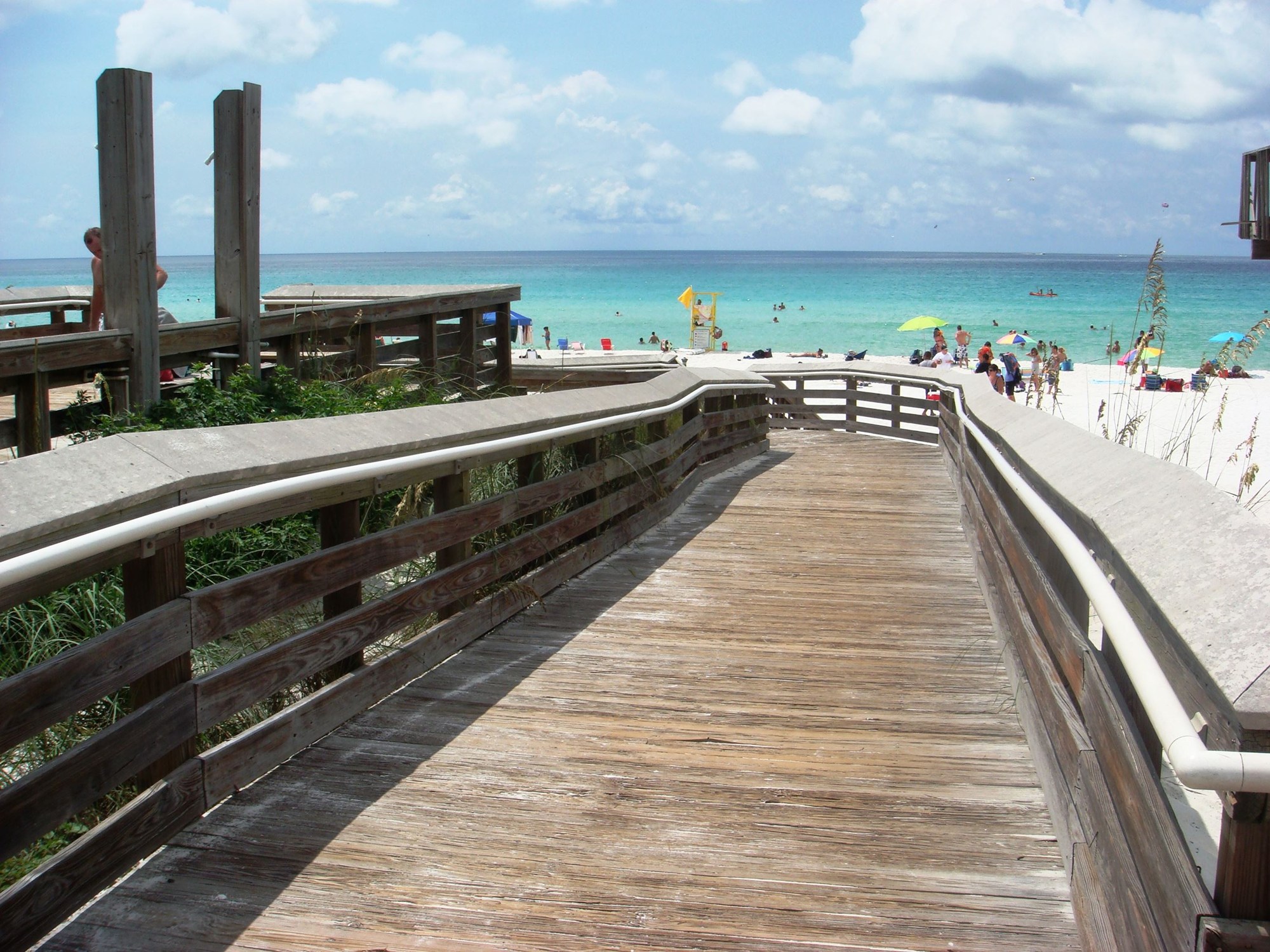
June White Decker Beach Park
fishing guide
June White Decker Beach Park is a small public doorway to Destin's busy Gulf shore. It is best approached as a careful surf session around beach traffic. Test nearby feeding water before adding distance, rods or heavier tackle.
Explore the guide ↓Use the city park instead of a private shortcut
Destin lists June White Decker Park at 1950 Scenic Highway 98. The city's beach information describes parking, restrooms and showers. It is a public access in an area surrounded by resorts and beach businesses. Enter through the designated park route, rather than assuming a neighboring property's walkway is available.
Check the lot's posted conditions and the beach notices when you arrive. The park's relatively small upland footprint means a large fishing cart can be cumbersome. Keep long rods under control around vehicles and pedestrians. Walk the crossing once to judge the beach before committing to the rest of the equipment.
Choose a session around the people already there
This is a popular swimming and sunbathing frontage. A surf rig needs an empty landing area, a safe backswing and a clear path for the entire line. If only a narrow gap remains between groups, casting farther out does not remove the danger near shore. Wait for adequate space or choose another permitted location.
Low light can mean fewer people, but it also makes swimmers and loose tackle harder to see. Follow the park's current hours and avoid a cast when you cannot account for the water ahead. Pack light enough to move promptly when beach use changes. One attended rod is easier to manage than a wide spread.
Find the trough before measuring casting distance
Destin's Gulf sand can form a shallow bar with a feeding trough close to shore. Watch the line of breaking waves and the calmer water beside it. Several wave sets provide better clues than a single dark patch. Polarized glasses can help on clear days, but glare and cloud shadows still distort the view.
Place a modest bait cast into the first clear trough and give it a fair test. If a second rod is appropriate and there is ample space, use it to compare a slightly farther position. Record where bites occur. Repeating a productive distance is more useful than continually adding power to the cast.
Keep bait small enough to work in the wash
A small piece of fresh shrimp can interest whiting and other bottom feeders. Sand fleas or compact strip bait are useful alternatives for a pompano-focused outing. Hook the offering securely without hiding the point. A bulky bait clump can spin, collect weed and reduce the chance of a clean hookup.
Keep spare bait shaded and cooled, then take out only what you need for the next few casts. Salt water and heat can soften shrimp quickly. Frequent checks also reveal small bites that the surf hides. If an offering disappears consistently, shorten it and check the rig sooner instead of waiting for a dramatic strike.
Use a lure only when the beach gives you room
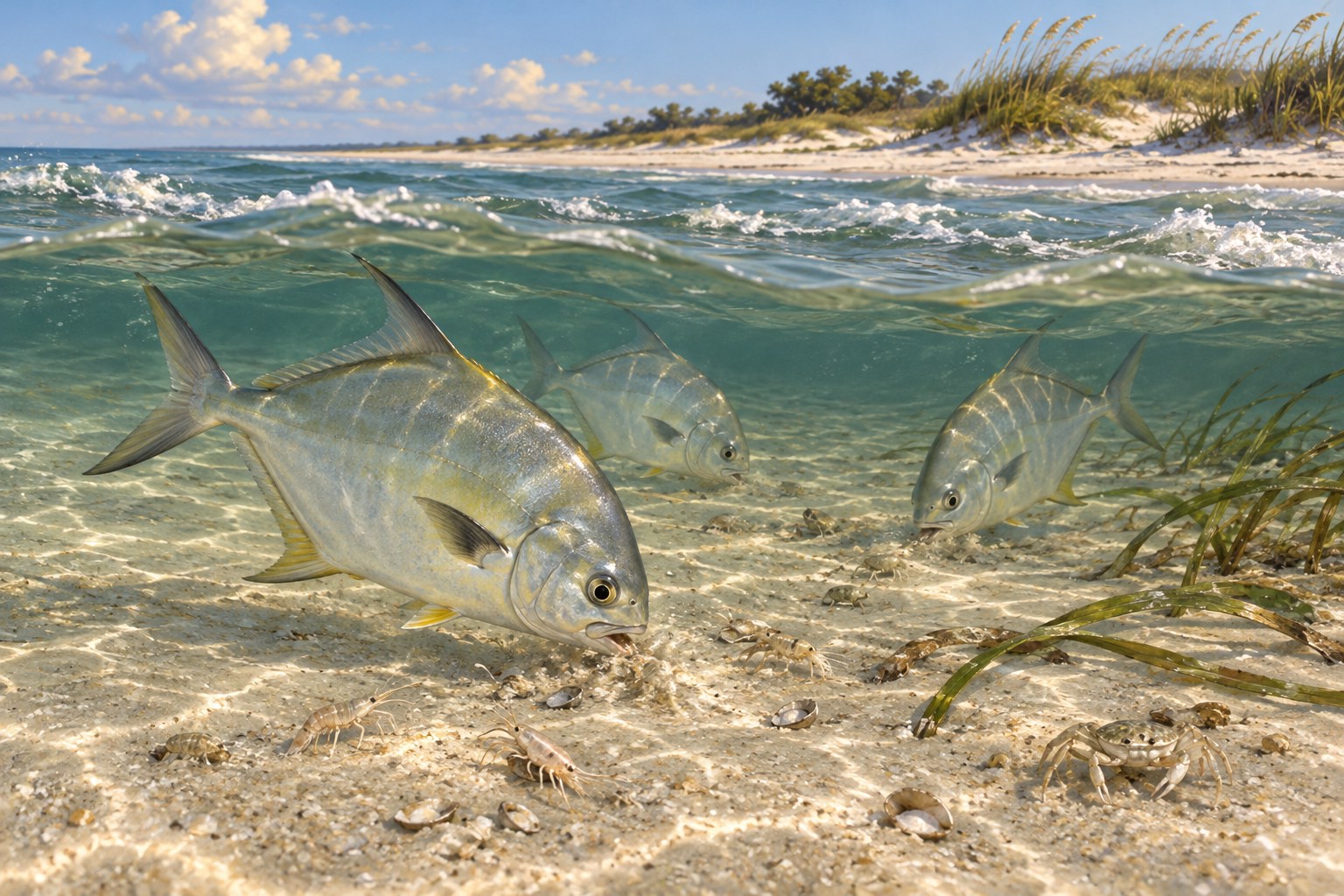
Passing baitfish can bring fast predators within casting range. A slender spoon or a small swimming lure gives you a way to search active water. Watch for repeated prey movement, rather than assuming every splash is a feeding fish. Keep the lure's path well clear of people swimming parallel to shore.
A moving lure can return unexpectedly fast when lifted by a breaking wave. Slow down near the wash and control the final few yards. Barbless or flattened-barb hooks can make releases easier, although secure handling remains important. Use pliers around teeth and never hold a fish by a loose treble hook.
Adjust line control before adding more lead
A bowed line catches moving water and wind. That pressure can pull a sinker along the beach and make the rod appear to register bites. Remove unnecessary slack after the cast and observe the direction of travel. A rig that steadily crosses your safe lane needs attention even if the weight remains on the bottom.
Choose a holding weight that fits the outfit. More lead may help a mild sweep but cannot make crowded or rough water safe. Use a leader strong enough for casting strain and check knots for wear. Carry a spare completed rig so a tangled leader does not turn the public crossing into a repair station.
| Problem | Practical change | Boundary |
|---|---|---|
| Empty hook on retrieval | Refresh smaller bait sooner | Do not scatter bait among swimmers |
| Frequent sideways movement | Improve tension and suitable weight | No line crossing another group's water |
| No bites at one range | Test a nearby trough distance | Keep the backswing clear |
| Lure lifted by a wave | Slow the final retrieve | Stop before hooks reach occupied wash |
Use current surf conditions to choose the day
Beach flags, wave height and visible current should come before a preferred tide hour. A forecast for Destin does not describe every gust at the waterline. Inspect conditions again after a weather change. Double-red conditions rule out entering the water, including stepping out to free a snag or land a fish.
Spring and fall can bring useful pompano opportunities along the Panhandle, while summer emphasizes heat, storms and crowd management. Winter fronts can make water conditions change abruptly. Those are broad planning patterns. The practical question is whether today's beach offers clean bait presentation, safe access and enough space for the intended session.
Keep the fishing trip useful for the whole group
The listed restrooms and showers make this park convenient for a mixed beach visit. Agree on a meeting point and a stopping time before separating. Keep bait and exposed hooks away from the picnic supplies. A child's first beach-fishing attempt works best with one close, supervised presentation instead of several unattended lines.
Destin and county services list beach-wheelchair arrangements, but availability and pickup details need confirmation before a visit. Do not assume a boardwalk alone provides effortless access across loose sand. Ask about the current arrangements if assistance is needed, and choose a setup that fits the person's comfortable route to the beach.
Keep only a catch you can identify and legally retain
Learn the difference between the fish you hope to catch and similar species before fishing. Use current rules for size, bag limits and seasons. A local shop's old photograph or someone else's cooler is not an authority on today's regulations. Release fish you cannot confidently identify rather than guessing their legal status.
Destin asks visitors to remove their belongings and keep trails clear. Finish by checking the sand around the rod holder for broken hooks, clipped line and packaging. Do not leave tackle for an overnight return. A compact session that ends cleanly suits this small public access better than an abandoned spread.
Common questions
Where is June White Decker Beach Park?
Destin's city listing places it at 1950 Scenic Highway 98. Use the signed public park entrance.
Does the park have beach facilities?
The city lists restrooms, showers and parking. Confirm current signs and any temporary service changes when you arrive.
Can I fish beside active swimmers?
Keep casts, hooks and the entire line outside swimming activity. If the available gap is too narrow, delay fishing or use another permitted access.
Do I need to wade to reach fish?
No. Start with an observable trough from firm sand. Wading is not part of the suggested plan for this busy Gulf frontage.
Prepare for your visit
Check local tides and weather. Read more about florida pompano, whiting, permit. Check current FWC saltwater fishing rules.