
PANHANDLE
John Beasley Park
fishing guide
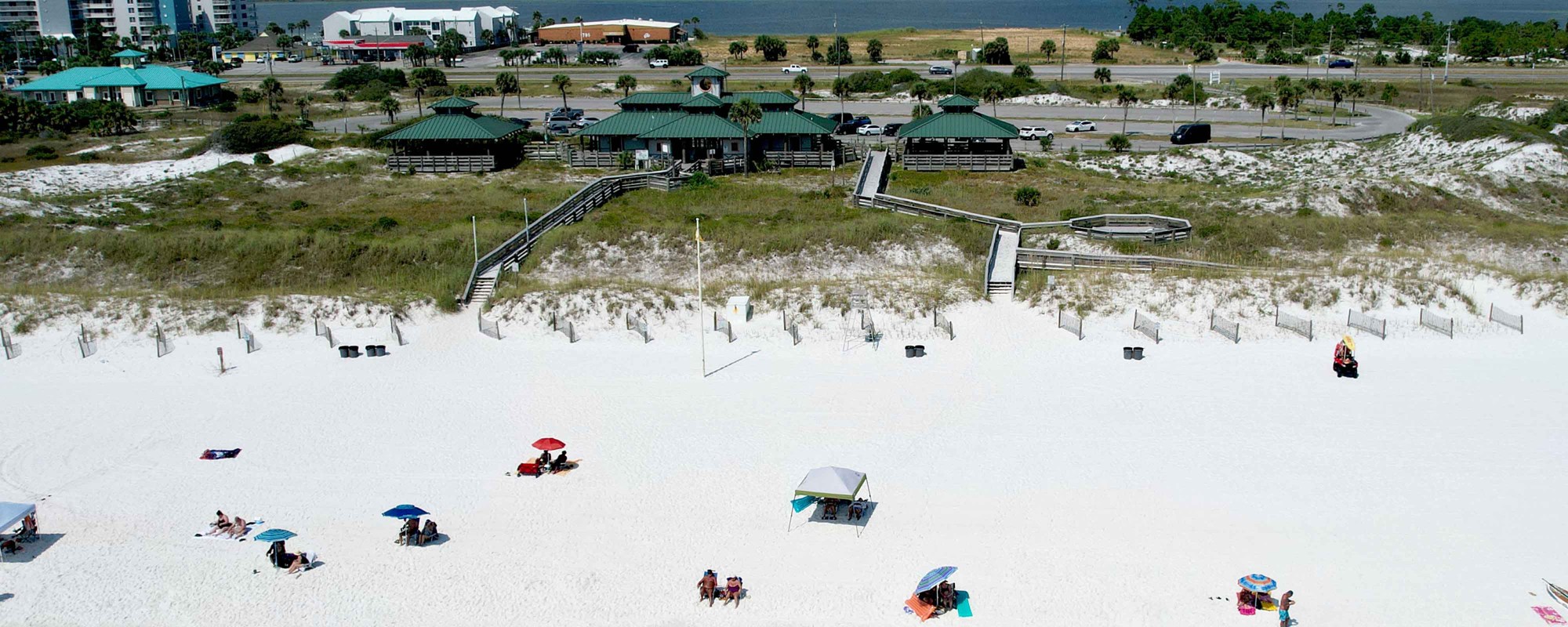
John Beasley Park gives anglers a public Gulf shoreline with substantial day-use facilities. Its broad beach still needs careful sharing with swimmers. A successful visit starts by choosing a clear lane and matching the rig to the moving sand below it.
Explore the guide ↓Know which side of the island you are visiting
John Beasley Park is at 1550 Miracle Strip Parkway on Okaloosa Island. The county describes a Gulf beach park with fishing, swimming, boardwalk access, restrooms and two pavilions. Its parking supply is larger than the small Santa Rosa Boulevard beachwalks, but peak-season visits can still fill the lot.
This is the Gulf-facing shoreline, not a sheltered bay fishing stop. Waves, beach flags and visitor traffic should shape the first decision. Take a short walk to inspect the beach before committing to a long session. Confirm the current park signs and any temporary restrictions at the entrance.
Shark fishing is prohibited on property owned by Okaloosa County. Keep the required emergency travel lane clear and follow the county setup restrictions, including its no-setup-before-7-a.m. rule. A general park opening time does not cancel those separate beach-use limits. Ask a ranger when you are unsure about a proposed setup.
Respect a park with a significant local history
The county notes that Beasley Park opened in 1960 and served as the area's beach for Black residents during segregation. It bears the name of local civic figure John C. Beasley. That history makes it more than an interchangeable stretch of white sand. Treat its shared public space with particular care.
Picnicking and family beach use can be busy around the pavilion routes. Choose a fishing position that allows those visitors to reach the water freely. Do not make people step over a rod holder, bait bucket or trailing line. A well-organized camp takes less space and creates fewer conflicts.
Find a feeding lane between the bars
Watch where successive waves stand up and where they soften. The shallow bar causing a break may have a deeper trough on its shoreward side. Small fish and crustaceans can gather along that change. A useful first cast lands in the trough rather than beyond every visible wave.
A narrow channel through a bar may move food, but it can also carry a powerful rip current. Work from dry, stable sand and avoid entering the channel. If water movement carries the rig sideways toward people, the feeding possibility does not justify keeping the line there. Change position or pause.
Start with modest bait for pompano and whiting
Small shrimp pieces, sand fleas and prepared strip bait offer different ways to test the surf bottom. A compact offering gives a small-mouthed fish a better chance to take the hook. Keep the point clear and replace tired bait instead of casting the same empty rig for half an hour.
Pompano may pass along this coast during suitable seasonal conditions. Whiting are another sensible surf target. Test one distance consistently before moving the bait farther out. When bites arrive, note the wind, wave height and where the sinker landed. Those observations are more useful than simply recording the time of day.
Read feeding activity before changing to a lure
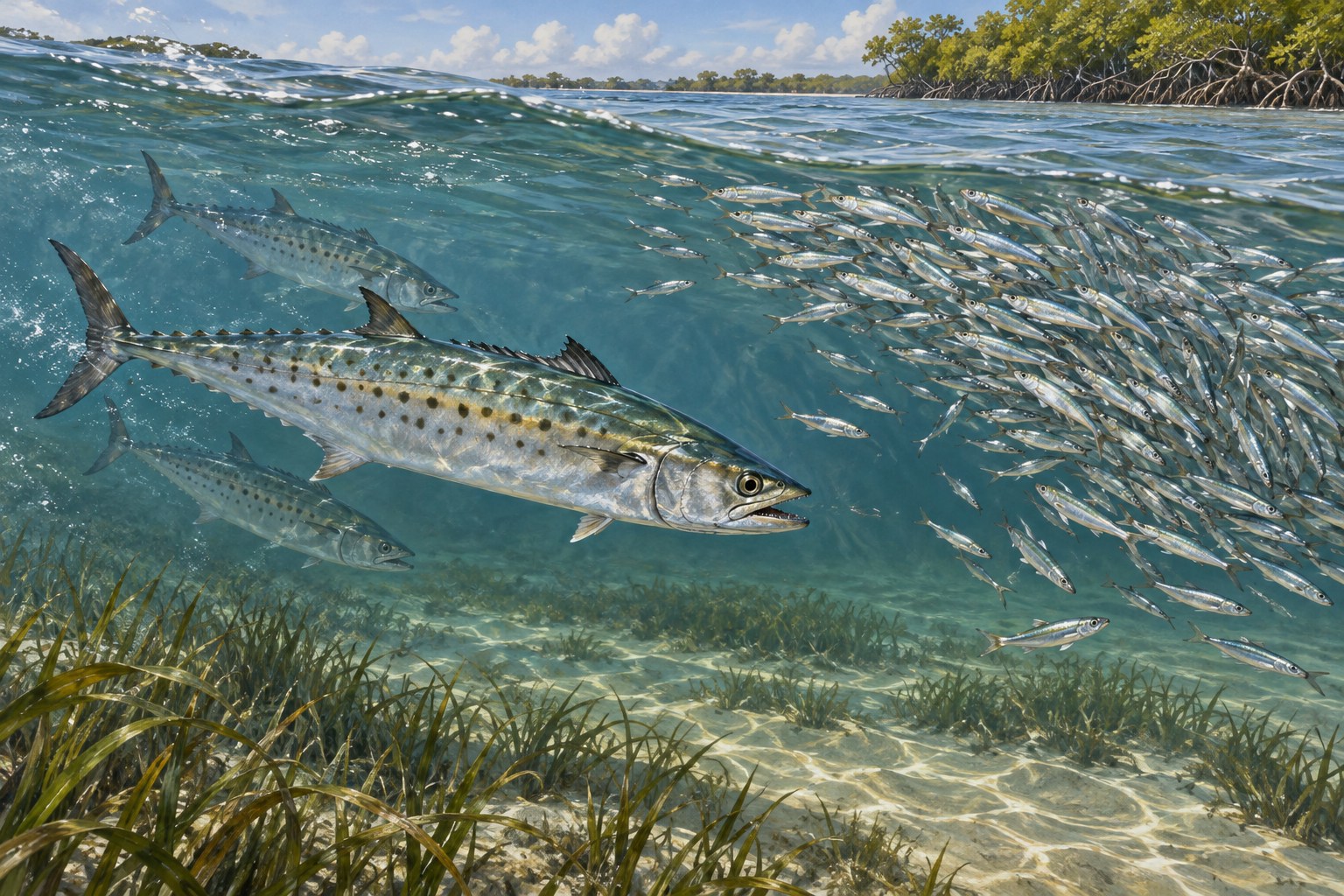
A scattering school of small baitfish can attract ladyfish, bluefish or Spanish mackerel along the beach. A compact spoon or baitfish-shaped lure can cover that moving activity when there is ample casting room. Choose a size close to the visible prey rather than the biggest lure in the box.
Bluefish and mackerel have sharp teeth. Carry suitable pliers and inspect the leader after a bite. A light leader presents naturally, while a heavier or bite-resistant section may help when cutoffs occur. This is a tradeoff to adjust, not a reason to leave a poorly controlled lure swinging near children.
Choose a rod you can cast repeatedly
A surf outfit should match the sinker and the distance you actually need. A very heavy rod can be tiring during a short family outing. A lighter spinning rod may be enough for close troughs in calm water. Check the rod's marked casting range before adding lead to resist stronger drift.
Use a secure sand spike outside pedestrian routes and keep the rod within reach. Do not tighten the drag so much that a strong fish can pull the outfit over. The table offers ways to match a presentation to a beach signal. It is a starting plan, not a forecast of the day's catch.
| Beach condition | Useful approach | What to watch |
|---|---|---|
| Small clean waves | Shrimp on a compact bottom rig | Bait loss and gentle bites |
| Visible inner trough | Short test cast | A repeatable depth change |
| Prey scattering on the surface | Small casting lure | Swimmers entering the retrieve |
| Strong sideways wash | Reduce line bow and assess holding weight | A rig moving beyond your clear lane |
Expect wind to change the same beach
A light morning may become a windy afternoon at Beasley. Recheck the water instead of trusting the forecast you read before leaving home. Whitecaps, an increasing sideways sweep and growing line bow all suggest the setup needs reassessment. Heavy weather can make this Gulf frontage unsuitable for a relaxed shore session.
The warmer months bring heat and thunderstorms as well as more visitors. Cooler seasons bring changing water temperature and passing fronts. Spring and fall are often considered for pompano, but local conditions matter each day. Plan an alternate shore visit without assuming that a crowded beach will offer safe casting space.
Use the facilities to keep the day manageable
Restrooms and pavilions make Beasley practical for a mixed group. One person can fish while others enjoy a picnic, provided the gear stays separate from activity areas. Keep drinking water nearby and place spare bait in a cooled container. Shade should be part of the outing rather than an afterthought.
Boardwalk access does not remove the effort of moving equipment over soft sand. Confirm accessible equipment and current arrangements with the county if a visitor needs assistance. Take a smaller kit on the first walk. It is easier to return for an item than to carry every possible outfit across the dunes.
Keep wildlife and catches out of trouble
Avoid dune vegetation, nesting areas and birds feeding near your bait. Casting across a flock creates a real entanglement risk. If birds repeatedly approach the setup, put away loose bait and choose another open position. Do not feed pelicans or gulls leftover scraps from a fish-cleaning session.
Identify and measure a catch before deciding to retain it. Follow current harvest rules for the species, including seasons and limits. For release, minimize handling and keep the fish supported. Check beneath the sand spike and around the pavilion route for line scraps before carrying the kit back to the car.
Common questions
Does John Beasley Park list fishing as an activity?
Yes. The county lists fishing along with swimming at this Gulf beach park. Follow current signs and keep tackle away from swimming activity.
Is this a bay fishing location?
No. Beasley's beach faces the Gulf. Sheltered island or mainland waters require a different access plan.
What fish should a beginner start with?
Whiting and seasonally passing pompano are reasonable surf targets. Small shrimp pieces let you test nearby sand without a complicated setup.
Can the parking lot fill even though it is large?
Yes. The county warns of peak-season crowding. An earlier visit and a smaller shared vehicle can make arrival easier.
Prepare for your visit
Check local tides and weather. Read more about florida pompano, whiting, spanish mackerel. Check current FWC saltwater fishing rules.