
PANHANDLE
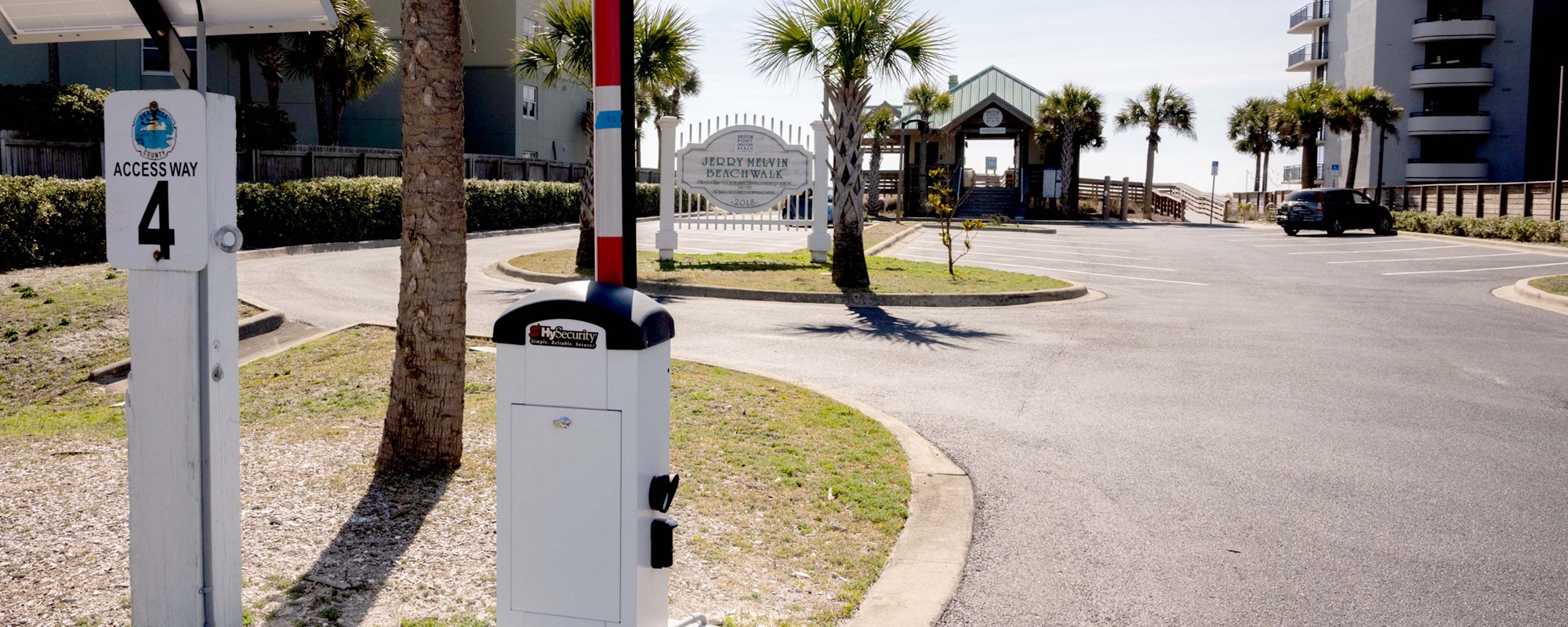
Jerry Melvin Beachwalk
fishing guide
Jerry Melvin Beachwalk is a compact Gulf access on Okaloosa Island. It suits a light surf-fishing kit and a short walk from the car. The important choices are casting space, water movement and the beach rules you find on arrival.
Explore the guide ↓Find Beach Access 4 before unpacking
Okaloosa County identifies Jerry Melvin Beachwalk as Beach Access 4 at 600 Santa Rosa Boulevard. Its listing includes a pavilion, restrooms and a small parking area. This is a neighborhood-scale crossing, not a boat launch or fishing pier. Carry only what you can move easily over the beach access.
The county's normal schedule begins one hour before sunrise and ends one hour after sunset. Check the entrance signs for temporary changes. A quiet lot does not guarantee an empty shoreline. Walk down first and decide whether an unobstructed fishing lane exists before bringing out rods, bait and a chair.
County park rules prohibit shark fishing on county-owned property. They also keep an emergency travel lane behind the beach and restrict setting up before 7 a.m. Opening before sunrise is not permission to ignore those setup conditions. Read the present signs before placing a rod holder or shelter.
Use the open sand without blocking the crossing
Set up beyond the foot traffic leaving the boardwalk. Beach visitors often change direction as they reach the sand. A rod laid across that route or a leader hanging from a bag can become a hazard. Keep tackle together and position sharp hooks where a child cannot reach them.
Fishing room includes the space behind your casting shoulder and the water where the sinker will land. If people enter either part, lower the rod and wait. At this small access, choosing a shorter session may work better than trying to maintain several long lines among arriving swimmers.
Read the first depression beyond the wash
Waves often break over shallow sand and soften over a deeper trough. Watch several sets before selecting a casting distance. A slightly darker strip can help locate deeper water, although shadows and cloud cover can produce similar colors. Confirm the pattern by watching how the waves change as they cross it.
Test the nearest useful trough before aiming far offshore. Whiting and other small surf feeders can search the sand surprisingly close to land. Place one bait near a clear depth change, observe the result, then try a different distance. Keep your feet on firm sand instead of following the trough into deepening water.
Offer small food to passing pompano
Pompano are a possible Panhandle surf target, especially during their seasonal coastal movements. A small sand flea, piece of shrimp or compact strip bait is a reasonable starting offering. Avoid covering the hook with a large bundle that hides its point and tumbles awkwardly in the current.
Use a simple dropper rig and a sinker that holds within your rod's safe casting range. A small float can help keep the bait clear of shifting sand. It does not guarantee a bite. Examine the offering after a missed strike and replace bait that has been chewed down or washed away.
Keep another presentation close for whiting
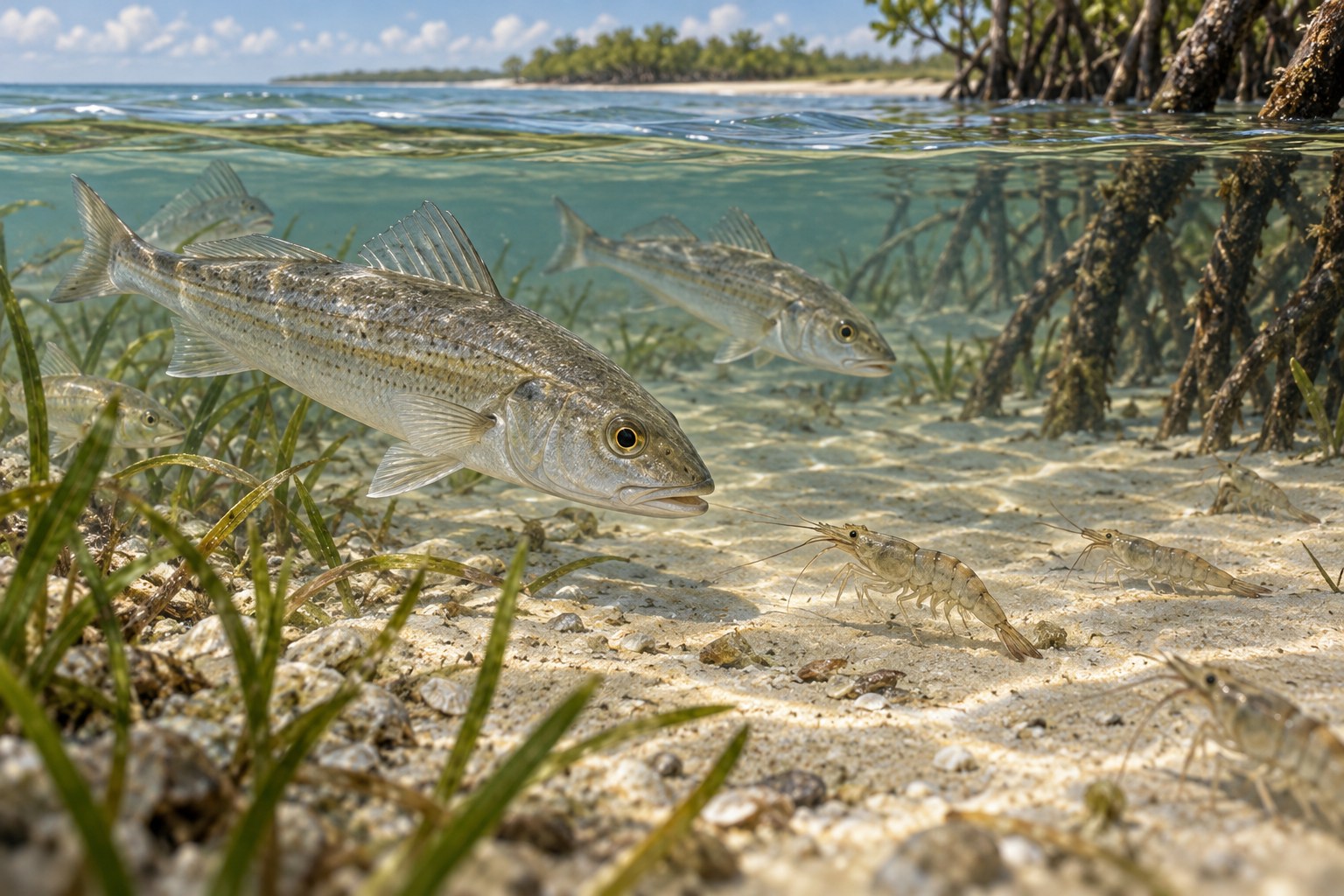
Whiting feed near the bottom and provide a useful target when the beach is calm enough for a compact rig. Start with peeled shrimp pieces on a small hook. Fresh scent and a clean hook point matter more than filling the rig with several kinds of bait at once.
A light tap can be hidden by moving waves. Watch for a change that continues after the wave has passed. Pick up the rod gently, gather slack and feel for weight. Jerking immediately at every movement can tear bait off the hook and make it harder to understand what the fish is doing.
Bring enough tackle to adapt, not a whole shed
A manageable spinning outfit, a few leaders and two suitable sinker weights cover many ordinary beach situations. Use line strong enough for the weight you cast and the fish you expect. Inspect the leader after each fish or snag. Frayed line near a knot is a reason to replace it.
Separate a small working bait portion from the supply kept cold. Salt, heat and loose sand quickly make a tackle bag unpleasant. A closed container for used hooks and line prevents wind from scattering scraps. Pliers, a measuring board and water for your own use belong in the first bag you pack.
| Observation | First adjustment | Reason to stop |
|---|---|---|
| Bait disappears without a clear bite | Shorten bait and check more often | Hooks are being exposed near people |
| Rig slides steadily along shore | Try a suitable holding sinker | Line enters occupied swimming water |
| Bites arrive close to shore | Repeat the same short cast | A safe landing lane is lost |
| Weed builds up on the line | Move to a cleaner permitted stretch | Tackle cannot be controlled |
Make the forecast part of the fishing plan
Spring and fall often draw interest from pompano anglers on this coast. Winter fronts can change water clarity and wave conditions quickly. Summer brings longer hot periods and more beach use. None of those broad patterns promises fish on a particular date. Visible prey, clean water and manageable conditions are better immediate clues.
Compare wind direction with the waves actually reaching Jerry Melvin's shoreline. An offshore breeze can flatten the beach while pushing a paddle craft away from land. A strong onshore breeze can make bottom rigs difficult to hold. Tide times help plan arrival, but wave action and wind still decide whether this access is practical.
Treat the beach flags as instructions
An angler standing on the sand can still be tempted to wade after a snag or a fish. Resist that impulse when surf conditions are hazardous. A gap between breaking waves may be carrying returning water. It is a feature to observe from land, not a shortcut into deeper water.
Stop before nearby thunder reaches the beach. Rods, an exposed shoreline and a distant parking lot are a poor combination during a storm. Keep an easy route back over the designated crossing. Dune plants and nesting enclosures are not places to shelter, cut across or store a heavy cooler.
End the trip with a clean landing and release
Have a species identification and measuring plan before you keep anything. Pompano, permit and small jacks can confuse inexperienced anglers. If you cannot confidently identify the catch and verify its current rules, release it promptly. A catch from a neighboring beach does not establish the rules for your fish.
Support released fish without dragging them across dry sand. Gather every clipped leader and discarded bait packet before leaving. At Jerry Melvin, the small access works best when each group leaves the crossing clear and the beach clean enough for the next visitor to enjoy.
Common questions
Is Jerry Melvin Beachwalk a pier?
No. It is Beach Access 4, a Gulf beach crossing on Santa Rosa Boulevard. A pier session requires a separate destination.
Can I arrive before daylight?
The county lists opening one hour before sunrise. Follow any current entrance notice and choose a casting area you can see clearly.
Should I cast as far as possible here?
Begin by testing the nearest visible trough. A short controlled cast can be useful and is easier to keep away from swimmers.
What is a sensible first bait?
A small shrimp piece is a flexible starting point. Sand fleas or compact strip bait can provide a separate test for pompano.
Prepare for your visit
Check local tides and weather. Read more about florida pompano, whiting, permit. Check current FWC saltwater fishing rules.