
PANHANDLE
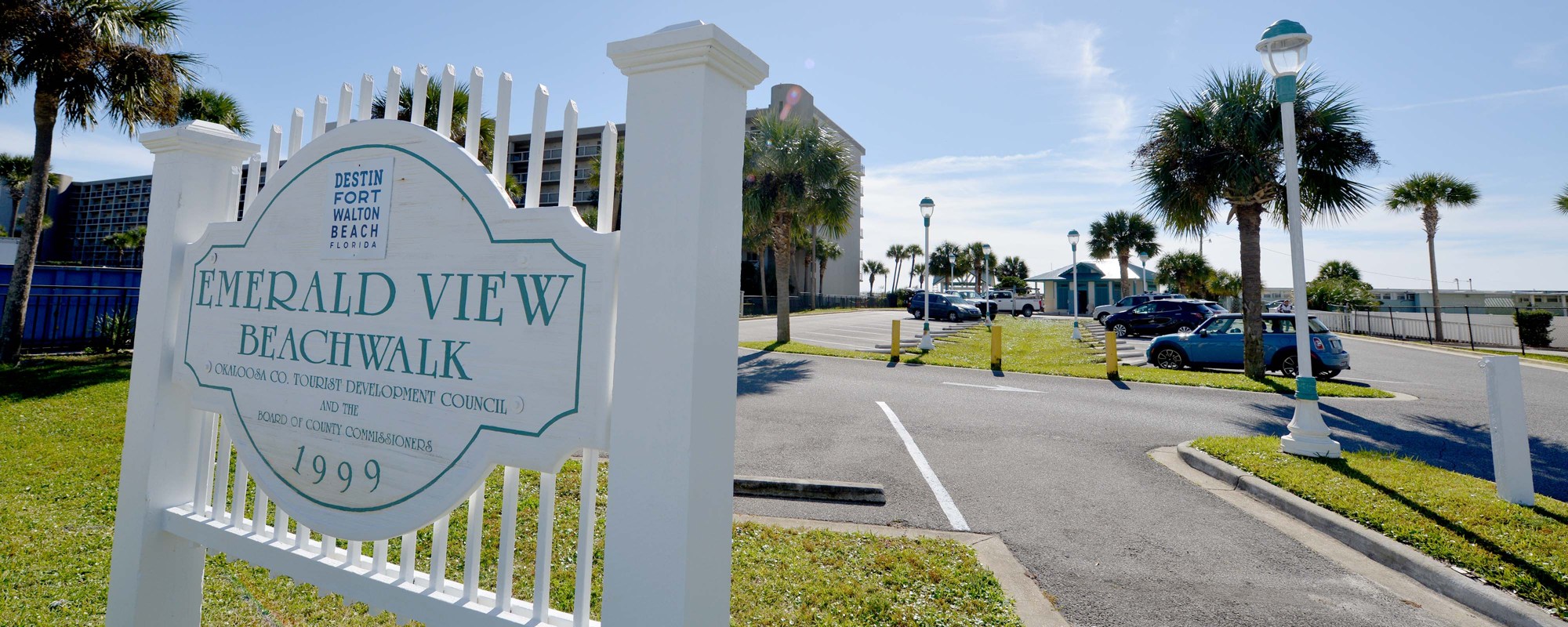
Emerald View Beachwalk
fishing guide
Emerald View Beachwalk is an eastern Okaloosa Island route to the Gulf beach. It offers a compact place to study the surf and try a short fishing session. A careful angler starts with the sand and waves, then chooses a small rig that fits the available room.
Explore the guide ↓Locate Beach Access 2
Okaloosa County identifies Emerald View Beachwalk as Beach Access 2 at 399 Santa Rosa Boulevard. The listing records 24 parking spaces and two accessible spaces. Use the marked lot and obey the current signs rather than treating nearby lodging parking as overflow space.
A pavilion and picnic tables are listed amenities. Plan a self-contained fishing kit and do not assume the pavilion provides drinking water, bait supplies or fish-cleaning facilities. Checking the county listing before departure avoids packing around conveniences that may not be present.
The marked walkover is the route between the parking area and the sand. Keep carts and rods out of the pedestrian flow while preparing tackle. Crossing the dune elsewhere can damage vegetation and may take you outside the public route.
Fit the session to county beach rules
The normal county access hours extend from one hour before sunrise until one hour after sunset. A separate county beach rule prevents equipment setup before 7 a.m. Allow for that distinction when planning an early trip, and follow any temporary restriction posted at the access.
County property is subject to a shark-fishing prohibition. An outing here should use suitable tackle for other surf species. The presence of open sand or deep-looking water does not create an exception to that rule.
Look at the people using the water before unpacking a rod. A cast needs a clear path in front and safe space behind. If the beach becomes crowded, shorten the fishing session instead of expecting swimmers to work around several lines.
Watch three wave sets before choosing a lane
Emerald View reaches a sand shoreline where the underwater shape can change after strong weather. Watch several wave sets and compare the places where they break. Repeated breaks can reveal a bar, while a darker, less broken strip may indicate a trough.
Try the nearest manageable trough first. Fish looking for small bottom prey can travel close to the beach, and a long cast may place the bait beyond them. Distance is only useful when it reaches the chosen feature without losing control of the rig.
A narrow gap carrying water back out through the breakers may be a rip. Observe it from shore and avoid entering the flow. Reading that feature helps with fishing decisions, but it does not make the water safe for wading or swimming.
Understand the fish before changing the bait
Whiting search sandy bottom for small food items. They suit a patient approach with a modest bait near the bottom. Several missed bites may mean the piece is too large or the hook point is covered, rather than that the whole beach lacks fish.
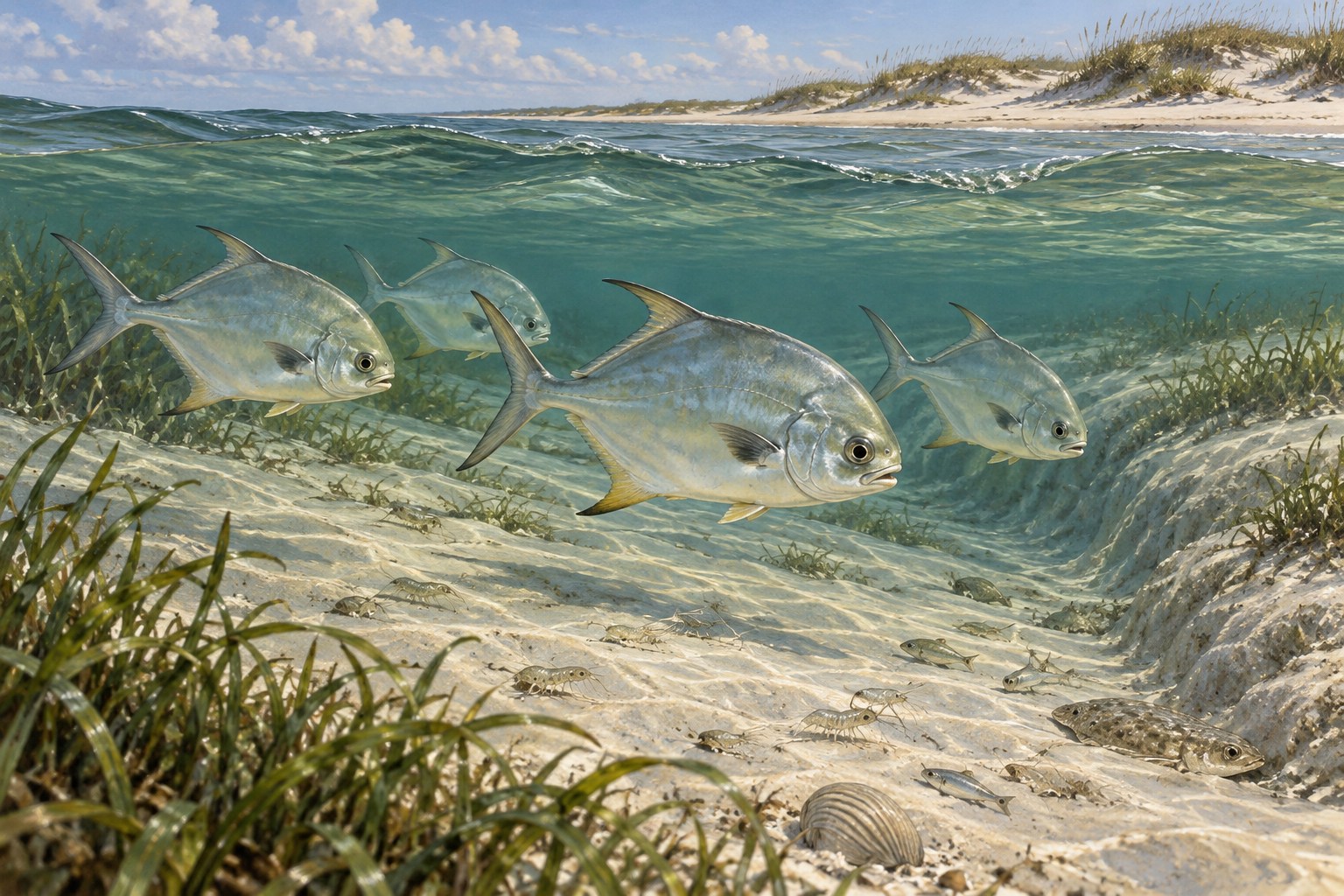
Florida pompano may use the same coastal strip during seasonal movement. Small shellfish baits can match that feeding style. Water temperature, surf clarity and regional movement influence their presence, so a spring date alone is not a reliable prediction.
Bluefish or jack crevalle can turn a quiet shoreline into a brief chasing scene. Their activity often follows baitfish rather than a fixed sand pocket. If they appear inside safe casting range, a moving lure can be worth trying until the action or open space disappears.
Change placement before multiplying rods
Start with a small shrimp section on a short bottom rig. Cast to one visible lane and give the bait time to work. If bites stop, shift the distance slightly or check the bait before covering the beach with additional lines.
Keep spare hooks and sinkers in closed boxes. The pavilion tables are shared picnic surfaces, so do not spread exposed tackle across them. Bait is easier to manage when divided into small sealed portions that remain cool until needed.
Choose enough sinker weight to hold the bait without forcing a strained cast. If the line continually sweeps toward swimmers or a neighboring rig, reel in and reassess. A heavy sinker can hold bottom while still leaving the rest of the setup unsuitable for the beach conditions.
| Observation | First adjustment |
|---|---|
| Small taps with empty bait | Reduce bait size and uncover the hook point |
| No bites in a distant cast | Test the nearshore trough |
| Rig moving quickly sideways | Retrieve it and check current and space |
| Fish chasing near the surface | Try a moving lure only in clear water |
Keep lure fishing brief and deliberate
A compact spoon or small metal lure is easy to carry as an alternative to bait. Use it when there is visible reason to search moving fish or when a manageable stretch of clear surf invites a few exploratory casts.
Retrieve at a pace that keeps the lure moving without repeatedly snagging the bottom. Pause to inspect the leader after a strike from a toothy fish. A weakened knot or nicked leader can fail on the next cast as well as on the next catch.
Stop retrieving when a swimmer enters the lure's path. The moving hook is difficult for another person to see through glare and breaking water. Keeping the session short also helps you remain alert to walkers approaching behind the rod.
Read the forecast alongside the beach
Check wind, thunderstorm risk and wave conditions before driving to the access. A favorable tide entry cannot cancel rough surf or lightning. If the forecast changes after arrival, let that information change the plan.
At this open Gulf shoreline, wind can push water and floating weed across the beach. The observed waterline may therefore differ from a simple expectation based on tide time. Use the forecast and visible water together rather than relying on one number.
Warm-season afternoons can be uncomfortable without shade beside the fishing lane. The pavilion provides a break away from the surf, but rods should be secured before leaving them. Bring enough water for the return walk and loading the vehicle as well as for the fishing itself.
Make each catch a short handling lesson
Keep a measuring tool and pliers within reach. Identify the fish before deciding on harvest, and check current state rules for that exact species. Similar-looking small fish can have different limits, so a quick guess is not a useful shortcut.
Handle release fish with wet hands and support their weight. Avoid lifting a fish by the line while searching through a bag for tools. Preparation keeps the time out of water shorter and reduces dropped fish on dry sand.
Children can learn to recognize a bite and retrieve a rig while an adult handles sharp hooks. Keep that division clear when bluefish or another toothy species appears. Catching a fish is only one part of a safe and enjoyable lesson.
Finish with a clean walk back
Retrieve every line before packing the first bag. Cap or secure hooks so they cannot swing beside another visitor on the walkover. Scan the sand under the tackle bag, where loose sinkers and short leader pieces are easy to overlook.
Keep a short note of the conditions that mattered: wind, clarity, chosen lane and bait size. That record is more useful for a return visit than assuming the same fish will gather at the same hour. The beach shape and the amount of shared space may both change.
Common questions
Which access number is Emerald View Beachwalk?
It is Beach Access 2, listed by Okaloosa County at 399 Santa Rosa Boulevard.
What facilities should I expect?
The county lists parking, accessible spaces, a pavilion and picnic tables. Confirm any other facility before relying on it.
Do I need to cast beyond the outer sand bar?
No. A nearer trough can hold feeding fish and is often easier to fish safely with a small rig.
What should I do if my line drifts toward swimmers?
Retrieve the rig immediately. Reconsider the casting lane and conditions before fishing again.
Prepare for your visit
Check local tides and weather. Read more about florida pompano, whiting, jack crevalle. Check current FWC saltwater fishing rules.