

PANHANDLE
Miramar Beach
fishing guide
Miramar Beach combines public Gulf accesses with extensive resort frontage. Choose a specific public entry rather than treating the whole coastline as one open park. From there, a compact surf rig and careful attention to people can make the visit simple and useful.
Explore the guide ↓Compare two named public regional accesses
Visit South Walton lists Miramar Beach Regional Beach Access at 2375 Scenic Gulf Drive and Scenic Gulf Drive Regional Beach Access at 907 Scenic Gulf Drive. Both have listed beach flags and useful day-visit facilities. Select the entrance that fits the route and the current parking situation, then verify the signs on arrival.
Much of Miramar's surrounding frontage is associated with resorts and private property. A room reservation, restaurant visit or shopping stop does not automatically give access to every beach path. Use the county's current public-access map and respect the marked boundaries. Do not force an uncertain shortcut because the public lot is full.
Choose a lane that stays clear as visitors move
A public crossing can lead to a busy swimming beach. Inspect the water before placing a rod holder and consider how people may approach from either side. The fishing lane includes the whole line, not only the point where the bait lands. Be ready to retrieve as beach use changes.
Keep the setup small enough to relocate within lawful space. One attended rod and a compact bag can be easier to share than several long lines spread across the frontage. Secure hooks during walks past beach chairs and vendor areas. Never let a cast depend on visitors guessing where the rig is going.
Test the near trough before the long cast
The beach's sandbars and depressions can move after rough weather. A useful position on one trip may be shallow on the next. Watch where waves repeatedly rise and where they soften. A trough bordering a bar can give fish a short feeding route. Make the first bait cast into an observable lane.
Compare distances deliberately while keeping the same bait and basic rig. A bite at a shorter range is information worth repeating. Strong side drift may erase the value of a distant cast by moving the presentation beyond your clear space. Stay on firm sand and do not enter a bar gap to gain range.
Keep crustacean offerings fresh and modest
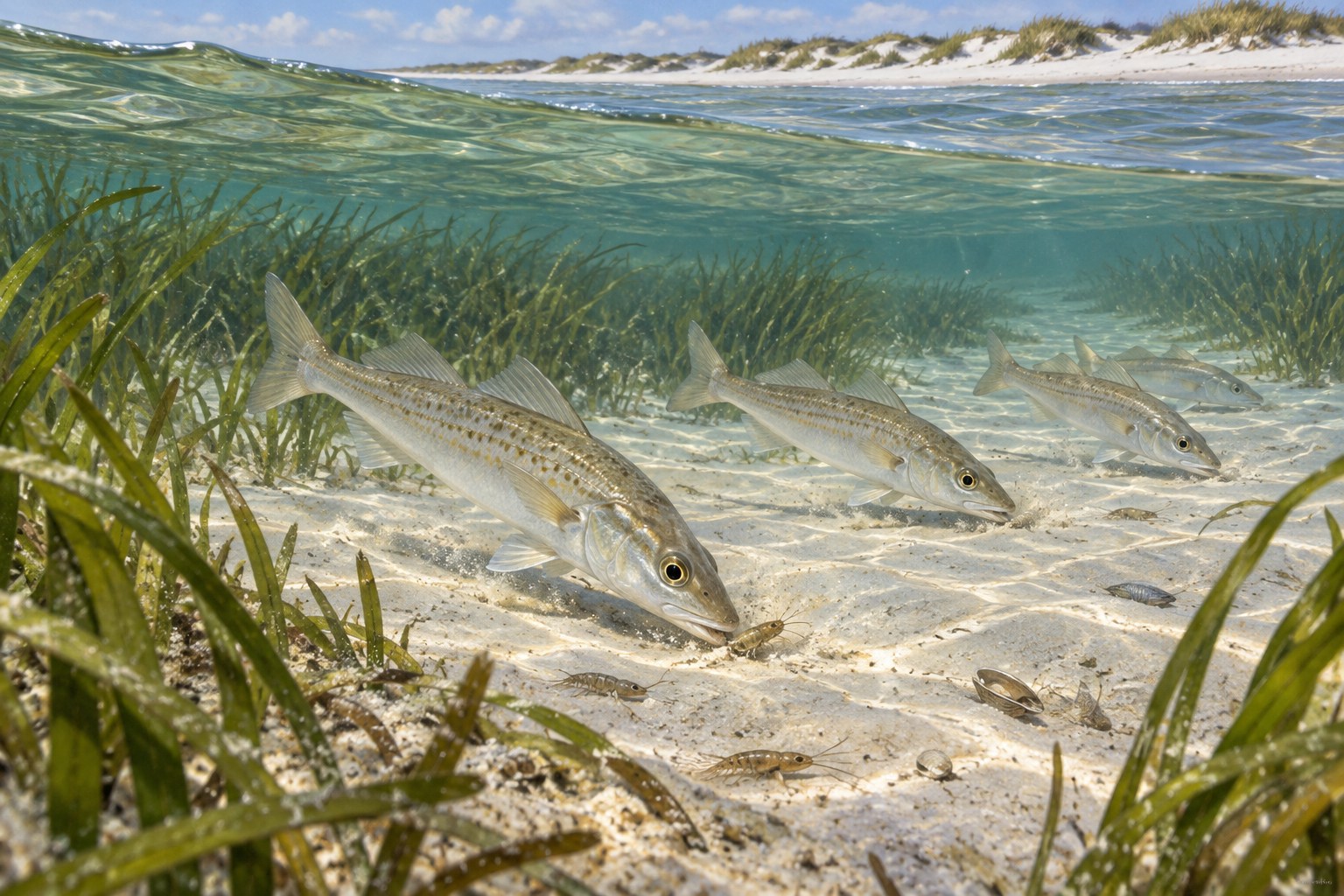
Small shrimp pieces work as a flexible test for whiting and mixed surf feeders. Sand fleas and compact prepared strips provide alternatives for a pompano-focused outing. Match the hook to the bait's size and leave the point available. A large soft bundle is likely to turn or be removed before a clean hookup.
Store the reserve in a cooled container and expose only a little at a time. Inspect regularly, even when the rod is quiet. Rapid bait loss suggests shorter checks or a tougher offering. Bait remaining untouched suggests a different range or lane may be worth trying before replacing the whole tackle combination.
Recognize an active-lure opportunity without chasing it
Repeated small-fish movement can bring passing ladyfish, bluefish or Spanish mackerel near the shore. A compact spoon or slender lure can cover that activity. Match the visible prey and use a retrieve you can control. Start only when the backswing and water ahead are fully clear.
A school may pass into swimming water before you can cast. Let it go. Beach fishing should not become a chase through other visitors' space. Use pliers for toothy fish and inspect the leader after contact. Slow the final retrieve so a breaking wave does not lift hooks into the occupied wash.
Use tackle suited to the day's side sweep
Choose a weight that holds the lane without exceeding the rod's casting range. Line bow catches wind and current, so remove unnecessary slack before assuming more lead is needed. If the rig still moves through occupied water, pause. No sinker choice turns an unsafe shared lane into a useful fishing position.
Keep spare leaders closed away from sand and use a container for damaged hooks. Carry a proper measure and enough drinking water. Public facilities make the day easier but do not replace a self-contained landing and release kit. The table helps turn a common beach problem into a controlled adjustment.
| Beach signal | First change | Reason |
|---|---|---|
| Short-range bites | Repeat the same trough distance | Build on evidence rather than casting harder |
| Bait disappears quickly | Shorten checks and offering size | Keep an effective hook presentation |
| The line bows strongly | Review tension and suitable holding weight | Reduce sideways travel |
| Swimmers approach from the side | Retrieve before they reach the line | Preserve a safe shared beach |
Plan for seasonal fish and daily crowds
Spring and fall often bring interest in pompano traveling the Panhandle coast. Summer's warm weather brings heavy beach use, heat and thunderstorms. Winter fronts can alter water clarity and current. These patterns inform expectations, but they do not establish a guaranteed fish or the same best hour for every public access.
Choose a session that fits the beach's current use and conditions. Check the flags, wave height and wind after arriving. Tide timing can help organize arrival, while actual line travel tells you whether the presentation is manageable. A smaller quieter fishing window can work better than an ambitious all-day spread.
Confirm the services needed by your group
Regional access listings identify amenities such as accessible parking and restrooms, boardwalks, water fountains and seasonal lifeguards. Confirm the exact services for the chosen entrance. Beach-wheelchair arrangements require a current availability check, and a boardwalk does not make every sandy fishing position effortless for someone with limited mobility.
Keep food and bait handling separate during a mixed family visit. Put sharp tackle away before anyone uses a common table or changes clothing. Use designated crossings and do not walk through protected dunes to avoid a crowd. The route back should remain easy enough after hours of heat and loose sand.
Leave the beach with accurate decisions and no tackle scraps
Identify and measure fish before deciding to keep them. Current species rules determine size, season and bag conditions. Do not adopt a harvest limit from a nearby angler without checking it. If uncertain, release the fish promptly with wet hands and body support, keeping handling as brief as possible.
Look for leader scraps beneath the rod holder and around the bag before leaving. Remove discarded bait and wrappers, and avoid feeding shorebirds. Respect the public and private boundaries on the return route. Miramar offers useful fishing possibilities when each visit remains specific about access, casting space and responsible catch handling.
Common questions
Which public accesses are listed in Miramar Beach?
The tourism directory lists Miramar Beach Regional at 2375 Scenic Gulf Drive and Scenic Gulf Drive Regional at 907 Scenic Gulf Drive.
Does every resort entrance allow public beach use?
No. Use a designated public crossing or an access you are specifically authorized to use.
What is a sensible beginner target?
Whiting and seasonally passing pompano are reasonable surf possibilities with a small crustacean offering in a clear trough.
Can I keep a rig out when swimmers approach?
Retrieve before their path reaches the line. The entire presentation needs to remain outside swimming activity.
Prepare for your visit
Check local tides and weather. Read more about florida pompano, whiting, spanish mackerel. Check current FWC saltwater fishing rules.