
Why You Must Fish Changing Winds With Tide Charts
We have all been there. The tide chart promises a perfect outgoing rip through the pass, but you show up to find dead water and a stubborn headwind. It is one of the most common frustrations in fishing, and it highlights a critical truth: tide charts only tell half the story. Understanding how wind affects tides for fishing is the missing piece of the puzzle, the skill that separates anglers who get lucky from those who consistently find fish. A tide prediction is a baseline, but the wind is the great equalizer that can make or break your day on the water.
Imagine planning a trip for snook stacked up in a Tampa Bay pass. You have timed the outgoing tide perfectly and your tackle is rigged for action. You arrive anticipating a strong current flushing bait right to the waiting predators. Instead, a stiff 15-knot onshore wind has completely stalled the flow. The water is not moving, the bait is not flowing, and the fish are nowhere to be found. This is not bad luck, it is physics. The wind is physically holding the water in the bay, overpowering the gravitational pull of the tide.
This guide is about moving beyond just looking at a chart and learning to interpret the water in front of you. Before you can master the wind, you need a rock-solid grasp of the basics provided by fishing tide charts, which are the foundation of any good trip plan. With that knowledge, you can start to factor in the wind. The goal is to make smarter, real-time decisions about where to launch, which routes to take, and which spots will actually hold feeding fish when the wind starts blowing. Mastering this skill pays dividends on every single trip.
How Wind Pushes Water and Changes Tides
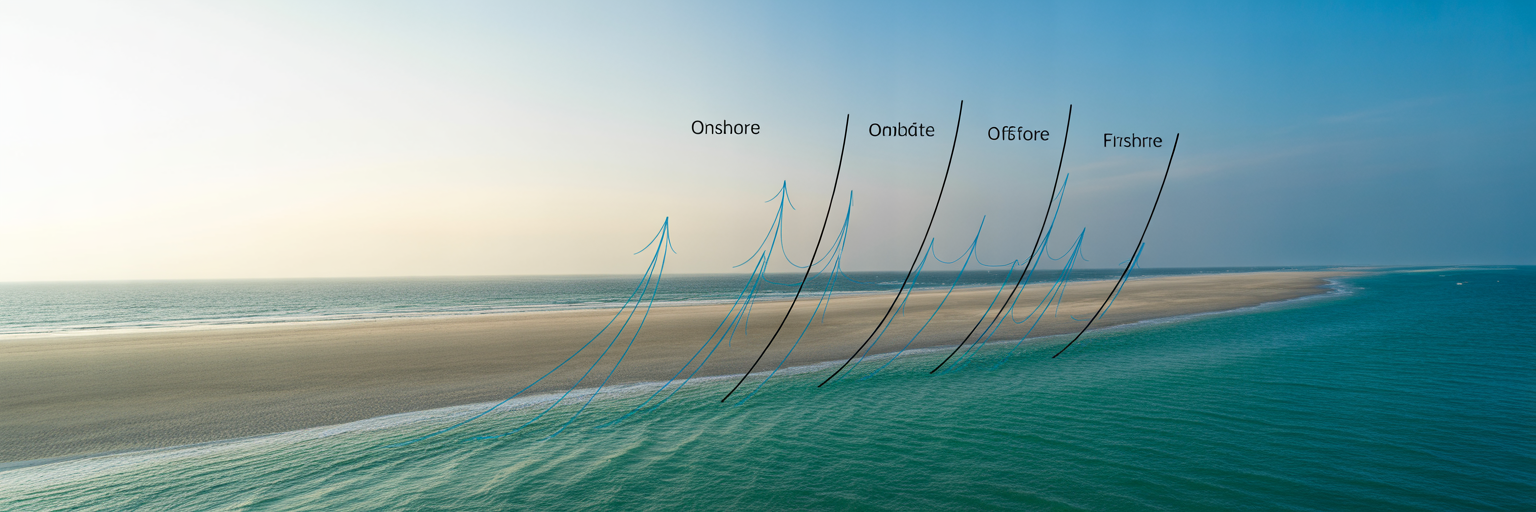
To beat the wind, you have to understand how it moves water. You do not need a degree in oceanography, just a practical sense of what is happening on the surface. Think of it in simple, direct terms that apply right at the end of your fishing line.
The Bulldozer Effect: Onshore Winds
An onshore wind, blowing from the sea toward land, acts like a bulldozer pushing a pile of sand. It physically shoves water against the coastline, artificially raising the water level higher than the predicted high tide. More importantly for anglers, this effect can delay or even completely stop the start of an outgoing tide. If you are waiting for that ebb current to fire up the bite at an inlet, a strong onshore wind can kill your plans for hours. The water simply cannot escape.
Draining the Flats: Offshore Winds
The opposite happens with an offshore wind blowing from land out to sea. This wind acts like a giant fan, pushing water away from the coast and effectively draining the shallows. This can make a predicted high tide seem disappointingly low and can dramatically accelerate an outgoing tide. For flats anglers, this is a critical factor. An unexpected offshore blow can suck the water off a flat much faster than the chart suggests, leaving you high and dry if you are not paying attention.
Current Velocity: The Real Key to the Bite
This is one of the most important Florida inshore fishing tips you will ever learn. Fish do not just care about water depth, they care about water movement. Current velocity is what triggers the bite because it is what transports bait. A wind blowing in the same direction as the tide acts like a tailwind, speeding up the current and often creating a more aggressive feeding response. Conversely, a wind blowing against the tide acts as a brake, slowing the flow and frequently shutting the bite down completely. The water might be deep enough, but if it is not moving, the fish are not eating.
Think about a hard east wind on the Atlantic coast. It will jam water into the Indian River Lagoon, keeping the water high for hours. On the Gulf side, a strong west wind can blow all the water out of Charlotte Harbor, leaving your favorite redfish flat looking like a desert long before the tide chart says it should.
Decoding Wind and Tide Conflicts on the Water
Once you are on the water, the conflict between wind and tide creates conditions you can see and feel. Learning to read these signs is essential for both finding fish and staying safe. It is the difference between a productive day and a miserable, fishless grind.
The Washing Machine: Recognizing Wind Against Tide
When a strong wind blows directly against a strong tidal current, especially in a confined area like a pass or inlet, it creates a dangerous and unfishable mess. We call it the washing machine for a reason. The waves become steep, sharp, and packed closely together with no rhythm. This is the classic wind against tide fishing scenario that smart anglers learn to avoid. It is not just uncomfortable, it is a serious safety hazard that can easily swamp a smaller boat. If you see these confused seas, it is time to find a different spot.
The Magic Carpet Ride: Wind With the Tide
The opposite condition is often a blessing. When the wind and tide are flowing in the same direction, the wind has a smoothing effect on the water’s surface. It can flatten the waves, creating a surprisingly comfortable ride even in a 15-knot breeze. We call this the magic carpet ride. This alignment helps with boat control, allows for long, perfect drifts over grass flats, and keeps areas fishable that would otherwise be too rough. It is a condition you should actively seek out.
How Conflict Murkies the Water and Repositions Fish
The turbulence from a wind-tide conflict does more than just create waves. It churns up silt, sand, and grass, destroying water clarity in minutes. This makes sight-fishing impossible and can make it difficult for fish to see your lure. Fish do not just sit there and take a beating in these conditions. They move. They will tuck in behind an oyster bar, drop into a deeper pothole on a flat, or get on the down-current side of bridge pilings to find a break from the chaos and find clearer water. Your job is to think like a fish and anticipate this move to structure.
| Condition | What You’ll See & Feel | Impact on Fishing | Where Fish Will Be |
|---|---|---|---|
| Wind Against Tide | Steep, choppy, ‘confused’ waves. Uncomfortable and potentially unsafe ride. Boat is hard to control. | Water clarity plummets. Lure presentation is difficult. Sight-fishing is impossible. Bite often shuts down in exposed areas. | Tucked behind structure (oyster bars, docks). In deeper holes or channels. On the leeward side of points and islands. |
| Wind With Tide | Smoother, flatter water surface. More comfortable ride. Easier to manage drifts and boat position. | Maintains or improves water clarity. Allows for long, controlled drifts. Can concentrate bait along current seams. | Actively feeding in predictable locations. Positioned along current edges and drop-offs. More willing to chase baits in open water. |
| Strong Crosswind to Tide | Waves hitting the boat from the side. Can create a ‘rocking’ motion. Difficult to hold a precise position. | Can create productive ‘wind-blown’ points and shorelines where bait gets pushed. Can make anchoring or using a trolling motor challenging. | Stacked up on the downwind side of structure. Along shorelines where the wind is pushing bait. |
Adapting Your Launch and Route to the Wind
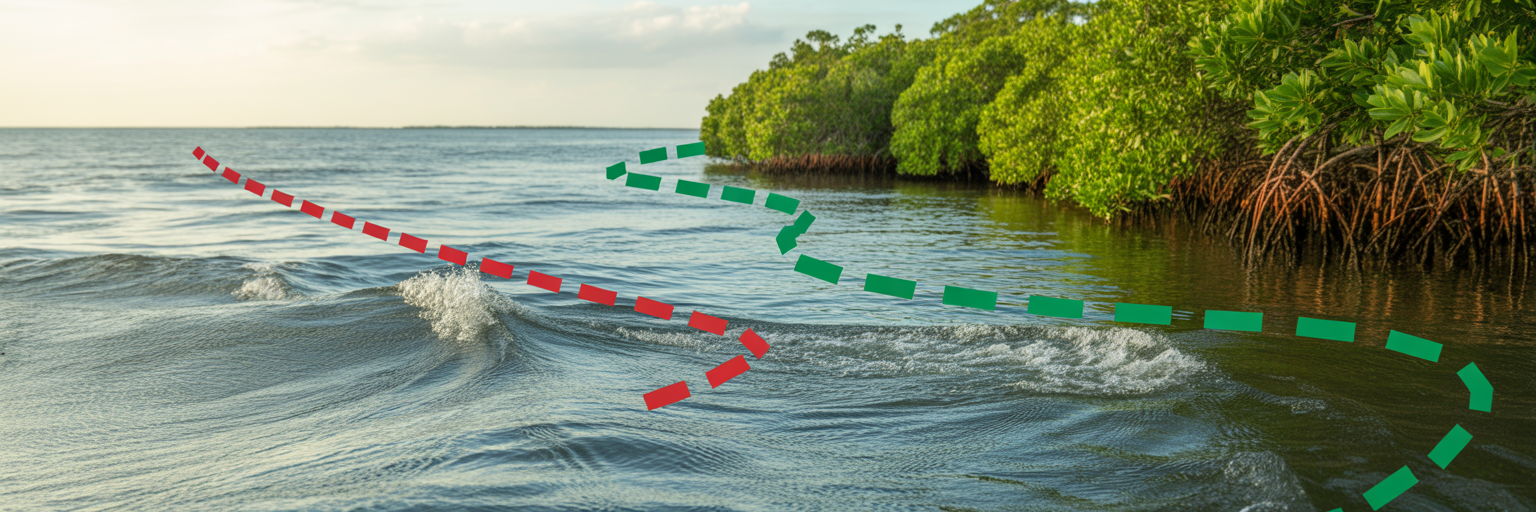
The best anglers make their most important decisions before the boat even hits the water. Proactive planning based on the wind forecast is a hallmark of a successful trip. It is about using the wind to your advantage instead of fighting it all day.
Beat the Blow: The Power of an Early Launch
This is simple, powerful advice for planning a fishing trip in Florida. If the forecast calls for the wind to build throughout the day, get out there at dawn. Do not wait. The best bite is often in the morning anyway, and by launching early, you can capitalize on the prime tidal movement in calm conditions. You can get your fishing in before the wind makes things difficult, uncomfortable, or even dangerous. By the time the bay gets rough, you are already heading back to the ramp with a full cooler.
Forget Slack Tide, Target Peak Flow
Many anglers fixate on high or low slack tide, but for most species, the real action happens during the strongest current flow. This is when bait is being flushed out of cover and predators are set up in ambush points. When you are reading tide charts for anglers, look for the two-hour window in the middle of the tide, between the high and low marks. That is when the water is moving fastest. That peak flow window is what you should build your plan around, as it is when fish are most likely to be actively feeding.
Run the Protected Shoreline: Smart Route Planning
Before you leave the ramp, pull up a map and look at the wind forecast. If a 20-mph northeast wind is predicted, running straight across an open bay is a recipe for a miserable, wet, and bone-jarring ride. Instead, plan a route that hugs the leeward, or protected, shoreline. If you are launching out of Destin and the forecast is a hard south wind, forget running the open Gulf. Plan your day fishing the protected bayous and shorelines north of the bridge. In the Florida Keys, a stiff east wind is your signal to fish the calmer, protected Gulf side instead of getting beat up on the Atlantic side. This simple step makes your entire day more enjoyable and productive.
Locating Fish When Wind Wrecks Your Spot
Even the best plans can get blown out. The mark of a great angler is not having a perfect Plan A, but knowing exactly what to do for Plan B. When the wind wrecks your primary spot, it is time to adapt and relocate.
Your first move should always be to find a leeward shoreline. In simple terms, this is the side of an island, a point of land, or a stretch of coast that is blocked from the wind. Even with a 20-mph wind howling across the bay, the water on the leeward side can be calm and perfectly fishable. This is where the wind will push baitfish, and predator fish will follow. These protected shorelines become magnets for both bait and gamefish on windy days.
Beyond the immediate shoreline, look to back bays and tidal creeks. When the main bay is a white-capping mess, these protected, winding systems are often sanctuaries. The water is calmer, the clarity is better, and fish like redfish, snook, and trout will push deep into these areas to escape the rough conditions and find an easy meal. Do not be afraid to explore these less-obvious areas when the wind picks up. They often hold the key to saving the day.
When your A-spot is a bust, run through this mental checklist to find your next bite:
- Find the Block: Where is the nearest shoreline, island, or point that is physically blocking the wind? Head there first.
- Look for Depth Changes: In choppy water, fish often drop into the nearest deep spot. Look for potholes on the flats, channel edges, or deeper troughs that offer a more stable environment out of the turbulence.
- Hug the Structure: Wind and current push fish tight to structure. Focus your efforts on the down-current side of dock pilings, rock piles, and oyster bars where fish can get a break from the flow.
- Follow the Clarity: If you find a pocket of clearer water next to a muddy, churned-up area, fish it hard. This transition line is a natural ambush point for predators.
Using Real-Time Data to Beat the Wind
A tide chart is a forecast, and just like a weather forecast, it can be wrong. The wind is the primary reason for this discrepancy. Modern tools allow us to “ground-truth” these predictions with real-time data, giving us a massive edge in finding the best fishing conditions Florida has to offer.
The key resource is the NOAA Tides and Currents website. This is not another prediction. It is a network of real-world stations reporting what the water level is doing right now. For a serious angler, this is a revolutionary tool. It allows you to see exactly how the wind is impacting the tide at your chosen location.
How to Read Real-Time Water Levels
On the NOAA site, you can pull up a station near your fishing spot and see a graph with two lines: “Predicted” and “Observed.” Focus on the gap between them. If the blue “Observed” line is a foot lower than the red “Predicted” line during an incoming tide, that is hard proof that an offshore wind is holding the water out. If the “Observed” high tide is holding steady for hours after it was supposed to start falling, an onshore wind is stacking the water up. This is how you get confirmation of what the wind is doing to the tide without even leaving your house.
Making the Go/No-Go Decision from Home
The real power of this data is using it before you hook up the boat. If you check the real-time water levels in the morning and see the wind is already overpowering the tide at your primary spot, you can make the call to switch to your Plan B location from the comfort of your kitchen. This saves hours of frustration, fuel, and wasted time on the water. It is the ultimate way to move from guessing to knowing, ensuring your day is as productive as possible.
Warning Signs It’s Time to Head In
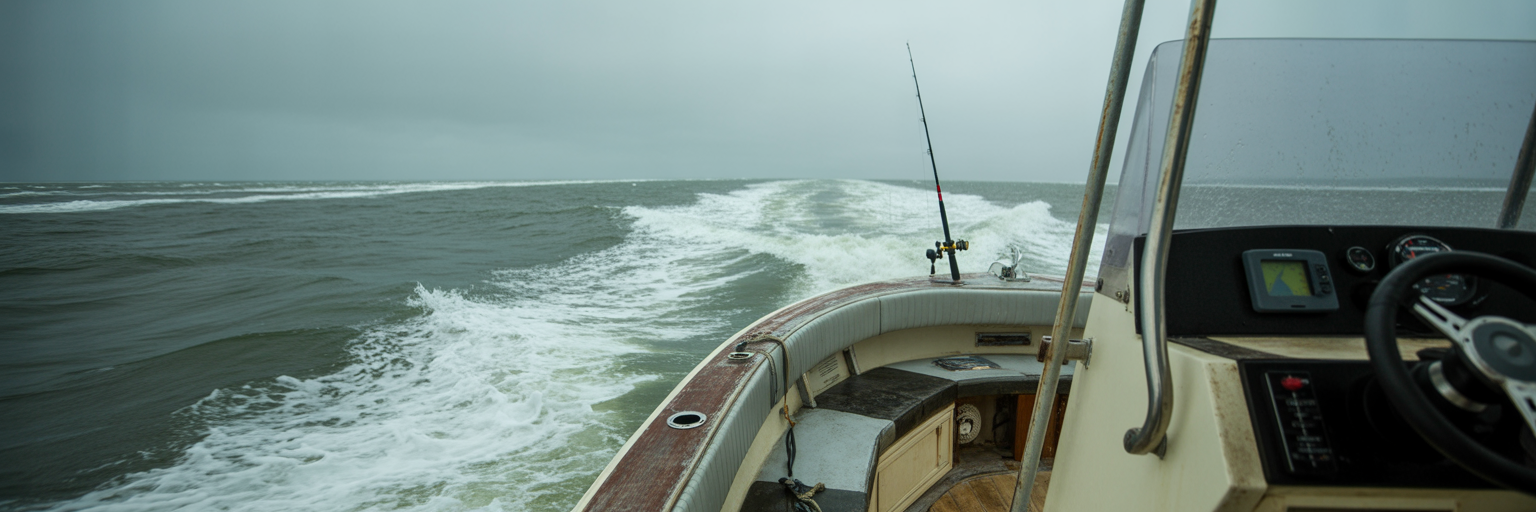
The number one goal of any fishing trip is to get home safe. A smart captain knows when the conditions have turned and it is time to call it a day. Being a great angler is not just about catching fish, it is about making the right decisions to ensure you can come back and fish again.
Pay attention to these non-negotiable red flags. When you see them, the decision is made. It is time to go.
- Whitecaps Everywhere: If you see whitecaps forming not just in the main channel but across the entire bay or on the flats, conditions are deteriorating fast and will likely get worse.
- Climbing Wind Speed: If the sustained wind speed climbs above 15-20 mph, especially for smaller boats, it is no longer a fishing day. It is a survival day. Do not test it.
- Confused Seas: This is a chaotic, multi-directional wave pattern with no rhythm, often caused by wind against tide near a jetty or shoreline where waves are bouncing back. It is extremely dangerous and can overwhelm a boat quickly.
There are also more subtle, tide-based signs that tell you the fishing is over, even if conditions are not yet dangerous. These are signs that the wind has completely taken over:
- The Stall: You are anchored or drifting on what should be a moving tide, but you notice your boat has stopped moving with the current. The water flow has stalled, and the bite has likely stalled with it.
- The Piling Test: You have been watching a barnacle line on a dock piling for an hour during a predicted strong tide, and the water level has not moved an inch. The wind has won. It is time to find a protected spot or head for the ramp.
There is no fish worth risking your boat or your life for. The fish will be there tomorrow. A good captain knows when to call it. Be that captain.