
SOUTHWEST
Barefoot Beach Access
fishing guide
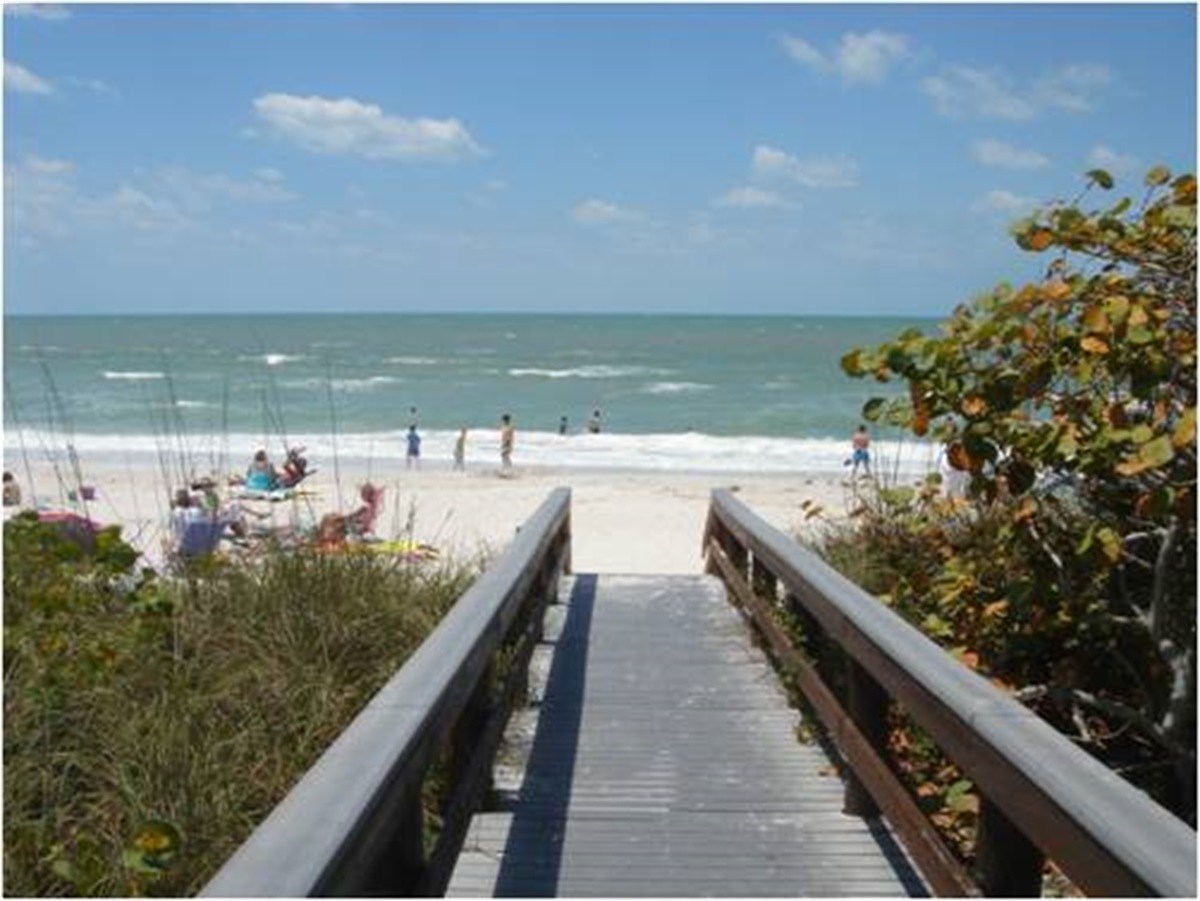
Barefoot Beach Access is the compact northern entry near Bonita Beach Road. It is separate from Barefoot Beach Preserve farther south and Lee County Bonita Beach Park to the north. Plan a simple Gulf shoreline visit around current access signs and space away from swimmers.
Explore the guide ↓Do not confuse three neighboring beach entries
Barefoot Beach Access lies near Bonita Beach Road and Lely Barefoot Boulevard in Collier County. Barefoot Beach Preserve is a separate natural park south of this access. Bonita Beach Park is another facility to the north, managed by Lee County.
A closure or parking instruction for one site may not apply to the other two. The county's current preserve page distinguishes these entries, while an older 2023 notice documents the northern access reopening. That old notice should not be treated as today's full operating report.
Check the present lot, walkway and beach signs before bringing rods through the entry. Ask Collier County Parks at 239-252-4000 if the allowed casting section is unclear. A beach access listing establishes a way to visit the shore, not a promise that fishing is suitable everywhere.
Use the shoreline shape to choose a cast
Look for an inner trough, a sandy depression or a modest break in a bar. Observe several waves before selecting a position. A dark stripe that remains between breaking waves may offer useful depth within an ordinary cast.
Small surf fish can feed close to dry sand. Test that reachable water before choosing the longest possible cast. A short presentation is easier to inspect, renew and keep away from people using the beach.
Do not walk into a sandbar gap to improve the angle. Gaps can carry water back offshore and become dangerous even when waves look small. Study them from stable sand and keep the outing shore-based.
Try whiting and pompano with compact bait
Whiting and pompano are reasonable regional surf targets when local conditions and seasonal movement suit them. A small piece of shrimp can test for feeding fish without carrying several live-bait systems. Purchased sand fleas or strip bait offer another simple option.
Match the hook to a compact offering with an exposed point. Overloading a hook often makes the rig harder for small fish to take. Inspect a bait after gentle taps instead of waiting only for a strong rod bend.
Compare the same bait at two safe distances. If one produces bites while the other does not, repeat the successful range before changing species or equipment. A little observation can be more useful than repeatedly replacing tackle.
Search the nearshore wash for moving fish
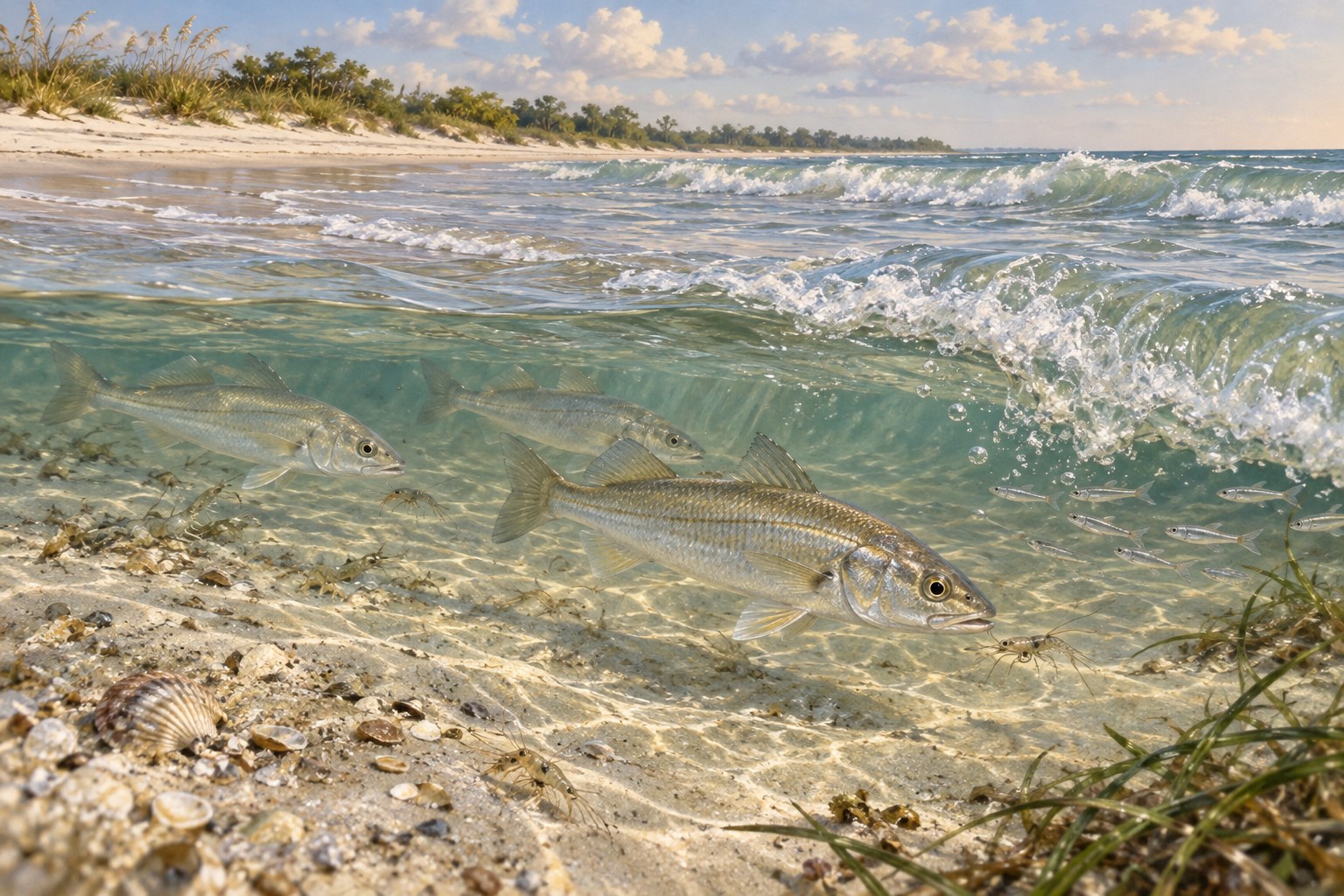
Beach snook may follow prey along coastal shallows, particularly in warmer water. A small baitfish lure can cover a clear stretch when angling is permitted. Watch for a feeding route instead of blindly working through every patch of surf.
A three-inch paddle-tail on a light suitable jig can swim through the inner edge. Retrieve with enough speed to keep it clear of sand and shells. Pause only where the lure will not settle into an obstruction.
Use a leader that tolerates abrasion and learn to handle snook before targeting them. Keep the fish supported, minimize handling and check current regional harvest rules. A summer feeding opportunity does not automatically mean a summer keep season.
Respond carefully to surface activity
Jacks, ladyfish and Spanish mackerel can follow small prey along the Gulf coast. When baitfish repeatedly scatter in a clear casting area, try a compact spoon or baitfish-shaped lure. A single splash is less persuasive than several signs moving along the same route.
Retrieve across open water while keeping the hooks out of occupied shallows. Do not cast over swimmers or across someone else's line to reach the school. If the fish move into crowded water, let them go.
Toothy fish need pliers and a leader suited to the intended target. Check for roughness or cuts after contact. Keep loose treble hooks controlled while unhooking a lively fish.
Keep the beach kit light and attended
A medium spinning outfit suits many modest beach lures and bait rigs in manageable surf. Use a rod rated for the sinker you intend to cast. Stronger waves can require a different outfit or simply a different day.
Carry only enough rigs to replace a damaged leader or test another presentation. A ruler, pliers, water and covered hook storage are essential. Avoid spreading tackle across the walkway or leaving a baited rod while walking away.
The options below assume an open permitted beach section and a safe casting lane. They describe choices rather than guaranteed local catches.
| Beach situation | Starting choice | Keep in mind |
|---|---|---|
| Inner sandy trough | Small shrimp bottom rig | Fish may be close to shore |
| Visible feeding route | Light paddle-tail | Cast ahead, not on the fish |
| Repeated surface prey activity | Compact spoon | People take priority over reaching the school |
| Sideways rig drift | Check slack and conditions | Stop if the lane cannot stay clear |
Use conditions to set the casting distance
A crosswind can bow the line and make a bait drift sideways. Reduce unnecessary slack and inspect how the rig settles. If it continues into occupied water, adding a heavier sinker does not solve the space problem.
A rising tide may bring feeding water closer, while a falling tide can expose bars and change the usable trough. Observe the actual surf rather than relying on the tide time alone. Wind can also alter the level along the beach.
Move the tackle bag before the wash reaches it and leave an easy dry route back to the entry. Do not let a changing tide separate you from the walkway or turn your landing space into a busy narrow strip.
Choose a comfortable short session
Cooler months may offer useful pompano fishing in the region, though fronts can bring rough surf. Warm months can suit a snook search along the wash. Bait presence, water clarity and manageable waves remain more useful than a rigid monthly promise.
Early permitted hours can provide more room before family use grows. Keep the plan flexible enough to stop when swimmers arrive. A beach access should not become an area reserved by unattended rods.
Watch for summer lightning and bring shade and drinking water. If the current walkway or amenities are under repair, shorten the outing rather than depending on uncertain facilities. Check a new notice before repeating a previous visit.
Leave the access clear and the catch lawful
Check Florida saltwater licensing and the current rule for every fish you intend to retain. Different species can require different measurement methods and seasons. Release a fish if you cannot identify it confidently at the beach.
Follow turtle and shorebird nesting signs and keep off dune vegetation. Do not use branches or fenced areas as rod supports. A public beach route does not authorize moving through neighboring private property.
Collect shrimp packaging, leader pieces and old hooks before leaving. Keep bait residue away from the public walkway and rinse tackle later in a suitable place. A tidy exit makes this small entry easier to share.
Common questions
Is Barefoot Beach Access the same as Barefoot Beach Preserve?
No. The northern access near Bonita Beach Road and the larger natural preserve farther south are separate entries.
Do Bonita Beach Park parking notices apply here?
Not automatically. That park is a separate Lee County facility. Check the correct access notice.
What is a simple surf bait to bring?
Compact shrimp pieces, purchased sand fleas or prepared strip bait are manageable starting choices.
Can I fish anywhere reached by the walkway?
Confirm the current allowed fishing section and keep the entire casting lane away from swimmers and posted exclusions.
Prepare for your visit
Check local tides and weather. Read more about snook, florida pompano, whiting. Check current FWC saltwater fishing rules.