
SOUTHWEST
Barefoot Beach Preserve
fishing guide
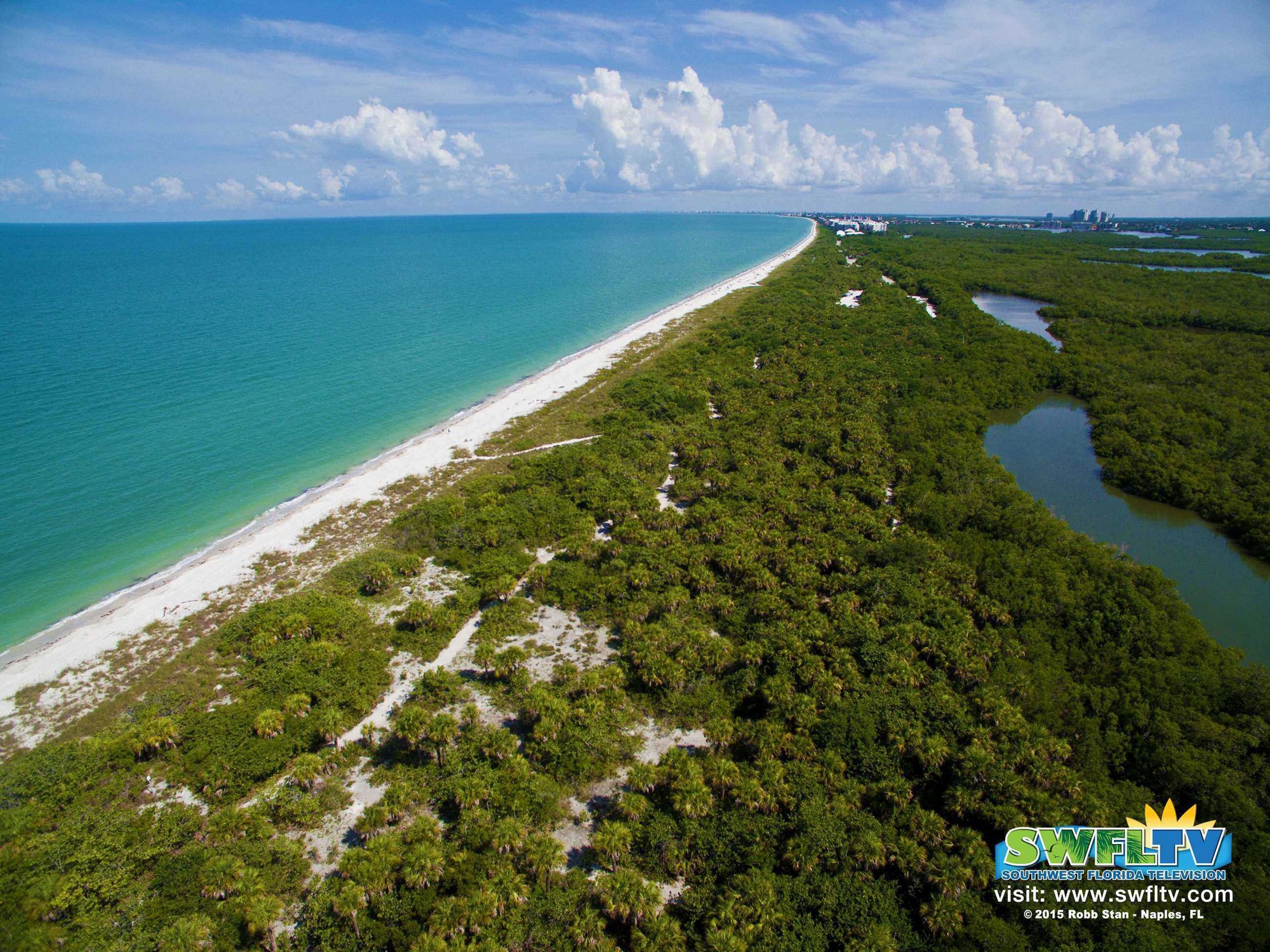
Barefoot Beach Preserve protects a natural barrier-island shoreline south of the compact Barefoot Beach Access. Its dunes, coastal vegetation and nearby pass habitat require a careful fishing plan. Choose open beach space, protect nesting areas and take what you need for the walk.
Explore the guide ↓Enter the natural preserve, not the northern access
The preserve is at 505 Barefoot Beach Boulevard in Collier County. It is a larger natural park south of the separately named Barefoot Beach Access near Bonita Beach Road. Choose the correct destination before comparing parking and facility information.
The current county page lists normal hours of 8 a.m. to sunset and $10 parking without a qualifying resident permit. It describes some rentals and services as coming soon. Do not make the day's bait, food or paddlecraft plan depend on those future offerings.
Call Collier County Parks at 239-252-4000 for current access or angling questions. Read signs for the exact beach section and avoid protected vegetation. A natural park may have visitor routes and wildlife exclusions that do not appear on a simple aerial image.
Look for subtle features along the sand
A natural beach can seem uniform until you watch several wave sets. A darker trough, a patch of shell or a bar opening may interrupt the pattern. Those changes can collect small prey and provide a feeding route for coastal fish.
Choose a position from stable dry sand with a clear backcast. Walk only on established or open beach routes. Do not flatten dune plants or cross a fenced nesting area to gain a few feet of casting distance.
Start by testing the nearby trough. Long casts can miss fish feeding in the inner wash and make it harder to control the rig. Compare distances systematically instead of assuming farther always means better.
Present crustacean-sized surf bait
Pompano feed on small prey and can respond to compact sand flea, shrimp or strip-bait offerings in suitable surf. Bring legally sourced bait rather than relying on gathering organisms inside a preserve. Keep the hook point unobstructed.
A small float on a dropper can lift bait just above the sand. Use a sinker that holds the chosen lane within the rod's rating. If the rig tumbles continuously, first check whether the water is manageable at all.
Inspect each cast for stripped bait and tangled droppers. Whiting and other small fish may produce delicate taps. Fresh compact offerings let you learn whether the trough is active without waiting on bare hooks.
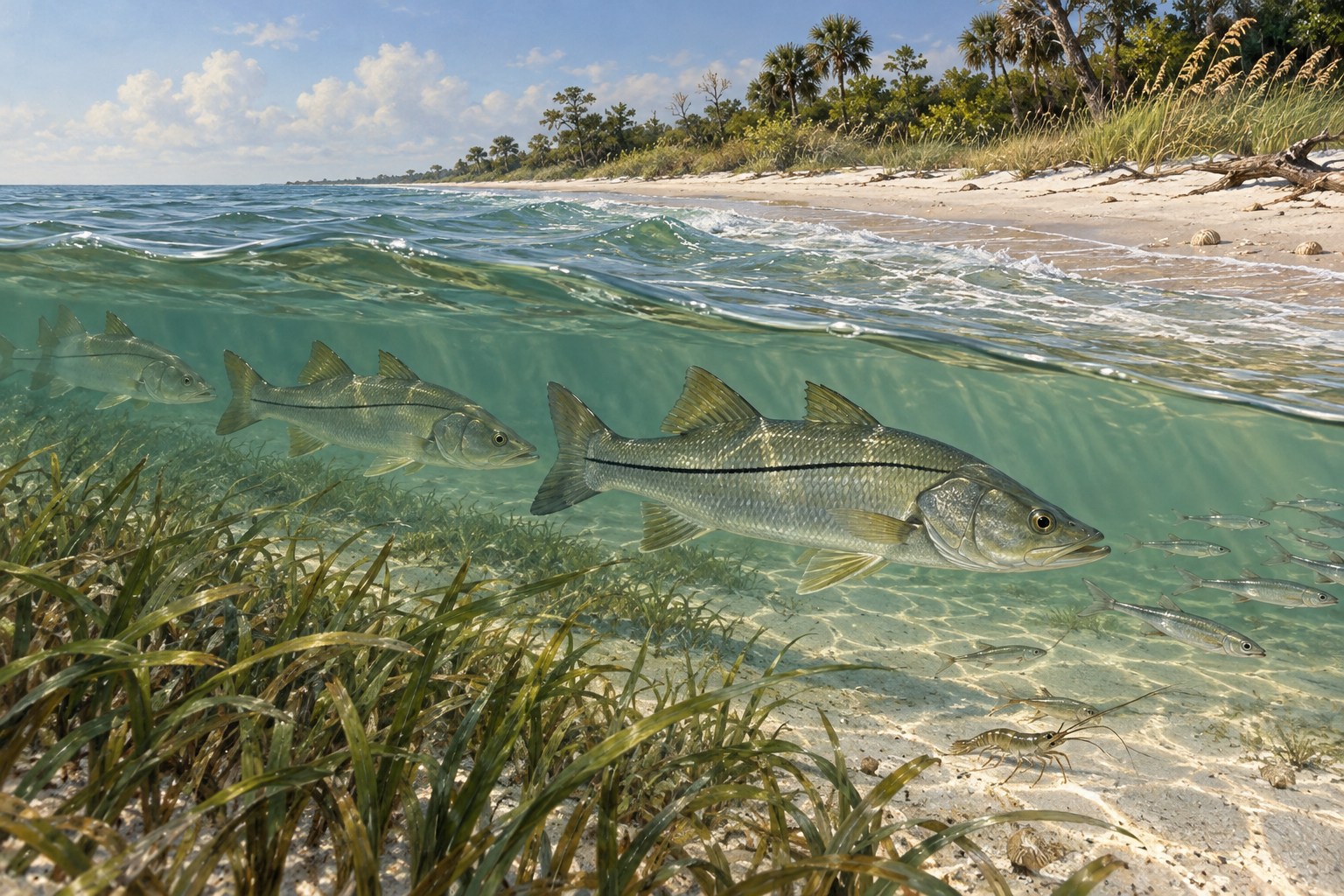
Watch the wash for cruising snook
Snook can use warm coastal beaches and pass-related feeding routes in the broader area. A small baitfish imitation worked along a clear inner edge is a practical search tool. Keep the cast within a lane that stays separate from beach users.
When a fish is visible, watch its direction and place the lure ahead of it. Landing a jig directly beside the head often creates an avoidable disturbance. A smooth retrieve through the route is easier for the fish to intercept.
Choose leader for the snook's rough mouth and any shell or cover nearby. Prepare a quick release with wet hands and body support. Use current Gulf-region rules to decide whether retention is lawful, not the season when the fish are easiest to see.
Keep Wiggins Pass separate from a casual beach walk
The southern coastal setting leads toward pass-influenced water, but strong flow and changing shoreline can make that a different outing. Do not enter a cut or climb unstable banks simply to reach deeper water. Follow current signs and any construction boundaries.
A pass can carry prey, boats and debris at the same time. Fish a safe permitted dry-land position only when the rig remains clear of navigation and swimmers. A larger sinker cannot make a dangerous location appropriate.
If the pass end is closed or unsuitable, return to an open sandy section. Ordinary surf fishing does not require reaching the strongest current. A reliable return route and safe landing space are better reasons to choose a position.
Take enough tackle without burdening the walk
A suitable medium spinning outfit covers modest lures and light bait fishing in gentle water. A surf outfit may help hold a bait when conditions are still safe. Keep casting weight within the rod's recommended range.
Carry spare leader, a small measuring board, pliers and a closed container for line scraps. Keep exposed hooks secured while walking through the preserve. Bring drinking water and sun coverage rather than counting on services described as future additions.
Use the table to match an open habitat with a manageable presentation. The available space and current signs still decide whether fishing can take place.
| Natural beach feature | Useful approach | Conservation limit |
|---|---|---|
| Clean sandy trough | Compact crustacean bait | Use legally sourced bait |
| Open snook route | Small baitfish lure | Stay clear of people and nests |
| Bar opening | Observe and cast from dry sand | No wading through outward flow |
| Pass-influenced edge | Safe target-specific plan | Respect closures and navigation |
Use water movement without entering it
Rising water can bring a nearshore trough closer to the dry beach. Falling water may reveal a bar and concentrate flow through an opening. Watch the water for a few minutes before choosing a bait position.
A bar opening is useful to understand but not a place to wade. Keep your footing on shore and do not cross moving water to follow a school. The current can become stronger than the surface appearance suggests.
Wind may move a bait along the beach or push water higher against a narrowed section. Check that your walking route remains open. Shift the entire fishing position when needed rather than merely recasting through an increasingly crowded lane.
Balance fish activity with weather and wildlife
Cool-season surf can offer pompano and whiting opportunities, with front-driven waves sometimes reducing control. Warm-season beach snook are another regional possibility. Use those tendencies as starting ideas and let current bait, wind and safe access shape the actual day.
Summer storms can build while the beach still looks pleasant. Keep enough time to walk back without rushing through vegetation. Open sand and a fishing rod are not suitable places to wait out thunder.
Nesting birds and turtles share the preserve. Respect barriers whenever present and avoid bright beach lighting. A quiet wildlife-viewing interval can be more appropriate than casting when a section is crowded with people or protected animals.
Make the natural setting part of the fishing skill
Do not remove live shells or disturb protected wildlife for bait or souvenirs. Keep the offering and all tackle inside the allowed fishing area. Private properties along the entry route do not provide shortcuts to the water.
Check saltwater licensing and current species rules before keeping a catch. Carry the information and a ruler where you are fishing. Release unfamiliar fish promptly instead of delaying while trying to guess an old size limit.
Take every broken rig and food wrapper out of the preserve. Pack line waste inside a secure container so it cannot blow away during the walk. Leaving the beach clean protects the same small prey, birds and habitat that make it worth visiting.
Common questions
How is the preserve different from Barefoot Beach Access?
The preserve is the larger natural park at 505 Barefoot Beach Boulevard. The northern access is a separate compact entry.
Are the advertised future services already operating?
Do not assume so. The county page describes some rentals and food as coming soon. Confirm before depending on them.
Should I walk into Wiggins Pass to extend a cast?
No. Treat strong pass water and construction boundaries separately from a safe dry-sand beach session.
What should I carry for a modest surf outing?
Compact bait, suitable tackle, pliers, a ruler, drinking water and a secure container for line waste.
Prepare for your visit
Check local tides and weather. Read more about snook, florida pompano, whiting. Check current FWC saltwater fishing rules.