

SOUTHWEST
Bluebill Beach Access
fishing guide
Bluebill Beach Access is the North Naples entry at Bluebill Avenue and Gulfshore Drive. Nearby Conner Park supplies separate off-site parking. Keep this county beach entry distinct from Delnor-Wiggins State Park and its designated fishing areas.
Explore the guide ↓Identify the county access at Bluebill Avenue
Collier County describes Bluebill Beach Access at the meeting of Bluebill Avenue and Gulfshore Drive. Conner Park is a separate nearby facility offering off-site parking. Verify the current walking route and payment instructions before unloading rods.
The official Conner description places the beach access about a quarter mile from the parking area. It also mentions a separate fishing area at Conner. Do not assume that every pond, roadside bank or walkway at either site is that designated area.
Delnor-Wiggins Pass State Park is another distinct facility nearby. Its entrance, fees, closures and northern fishing boundaries apply inside the state park. Bluebill access is not a shortcut around a closed park section or a pass-fishing restriction.
Choose a fishing lane after seeing the beach
The county beach listing gives an entry point, but the allowed casting position needs an on-site check. Follow current signs and ask Collier County Parks if the boundary is unclear. Avoid swimming concentrations and keep a generous clear area behind the rod.
A short walk from parking makes it tempting to use the first available patch of sand. Spend a moment checking how people enter the water and whether the line will cross their route. The easiest spot to reach is not always a suitable fishing spot.
Keep access paths open for wheelchairs, beach carts and visitors carrying gear. Move the tackle bag off the walkway before rigging. Secure hooks during the walk so the entry stays safe for people around you.
Search for reachable sandy depth
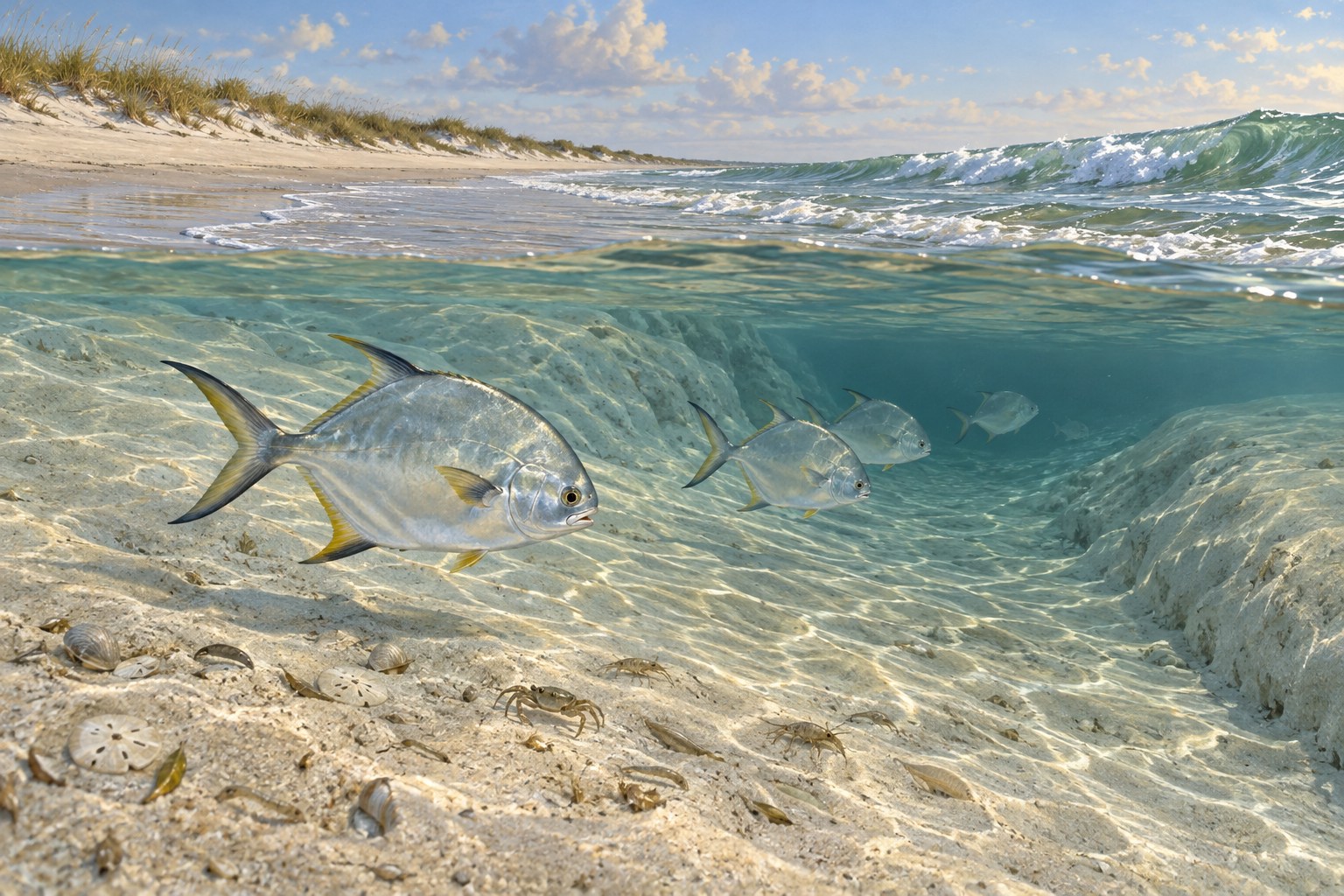
Look for the trough between the beach and a breaking bar. The darker stripe may provide enough depth for small fish to feed close to shore. Compare it with lighter shallow sand and the path of returning foam.
A compact shrimp rig can test that nearby water. Try a shorter cast and a modest farther cast in separate clear lanes. Notice where bites occur rather than assuming the longest cast is the best one.
If the beach has recently changed shape, familiar distances may no longer describe the bottom. Storms and coastal work can move bars and troughs. Read the current shoreline instead of using an old photograph as a depth map.
Use small bait for small surf prey
Whiting and pompano are sensible regional targets over suitable clean sand. Shrimp pieces, purchased sand fleas and prepared strip bait let you test the surf with a compact kit. Match bait size to the small prey these fish can take.
Keep the hook point exposed and replace bait that has turned soft or tangled around the leader. A small float on a dropper may lift bait clear of sand. It should not create so much movement that the rig swings through neighboring water.
If gentle taps continue without a hook-up, inspect the bait and hook before changing location. Small fish can strip an offering quickly. A sharper hook and smaller fresh piece may be a more useful change than another heavy sinker.
Try a moving presentation when prey is visible
A paddle-tail can search a beach edge for mobile fish such as jacks or snook where conditions suit them. Start with a light enough jig to swim above the bottom. Reduce weight when every retrieve returns with sand or debris.
Use a small spoon when baitfish repeatedly scatter in an open casting lane. Keep pace with the activity only within permitted public beach space. Do not cross neighboring private access routes or cast into a swimming area to follow a school.
Toothy fish need target-appropriate leader and careful plier use. Keep all hooks controlled during landing. An ordinary beach search is easier when you avoid large fish that require a specialized outfit and landing plan.
Make the walk from parking easy
A medium spinning outfit can cover modest natural bait and small lures in manageable surf. Choose the sinker by conditions and the rod's casting rating. A longer rod can help with reach, but it needs more backcast space near a busy entry.
Carry a small box of hooks and spare leaders rather than a large open tackle tray. Include a measuring tool, water and pliers. A secure waste pouch prevents clipped leader pieces from blowing into the dunes during rigging.
Choose among the following approaches only after permission and space are settled. Each is a starting point to be adjusted to actual water.
| Observed condition | First choice | Reason to change |
|---|---|---|
| Nearshore sandy trough | Small shrimp rig | Bait stripped or unsuitable depth |
| Prey over a clear edge | Light paddle-tail | Lure dragging on bottom |
| Open surface activity | Small spoon | People enter the casting lane |
| Strong side drift | Review weight and line angle | Rig cannot remain separate from visitors |
Let tide and crosswind change the plan
The tide can shift usable fishing water closer to or farther from dry sand. Wind can also push a bait sideways along the beach. Watch how the line settles before leaving it in a rod holder.
If the rig drifts toward people, reel in and move or stop. Increasing weight is useful only when the conditions remain safe and the outfit can cast it. More lead does not give an angler priority over a swimmer's route.
Keep an eye on the walkway when water rises. The return should remain simple and dry enough for your needs. Do not let a longer fishing session make the parking walk harder than the one you planned.
Choose the session around current conditions
The cooler season can be productive for regional surf fish, though passing fronts may churn the beach. Warm water can bring coastal predators closer to prey in the wash. Neither pattern guarantees fish at this small access on a particular day.
Use marine wind information and beach warnings together with the ordinary forecast. Summer lightning can require leaving even when the water still looks fishable. Set the day's walking and heat limits before unloading the entire kit.
Visit during permitted quieter hours if the goal is a short fishing session. Stop when beach use makes a clear lane unavailable. Observing prey and water changes can still teach you something after the rod is packed away.
Keep neighboring boundaries and catch rules clear
The county access, Conner Park and the state park have separate operating details. Follow the signs for the place you are actually using. Do not transfer permission from a listed fishing area to an unrelated shoreline.
Check current Florida license, size and bag requirements for each fish. Carry a ruler and identify similar-looking species carefully. A photograph of someone else's catch is not evidence of the present keep rules.
Take bait packaging and old hooks back to the parking area inside a closed bag. Leave dune plants and nesting barriers undisturbed. A compact clean outing is a good fit for an entry shared with many different beach visitors.
Common questions
Where is Bluebill Beach Access?
At Bluebill Avenue and Gulfshore Drive in North Naples, according to Collier County.
Is Conner Park the same beach facility?
No. It offers separate off-site parking and its own amenities. Confirm the route to the county beach access.
Does access let me fish in closed Delnor-Wiggins sections?
No. State-park fishing boundaries and closures remain separate.
What if the first beach stretch is full of swimmers?
Do not cast through them. Choose another allowed clear section or leave the rods packed.
Prepare for your visit
Check local tides and weather. Read more about snook, florida pompano, whiting. Check current FWC saltwater fishing rules.