
SOUTHWEST
Clam Pass Park
fishing guide
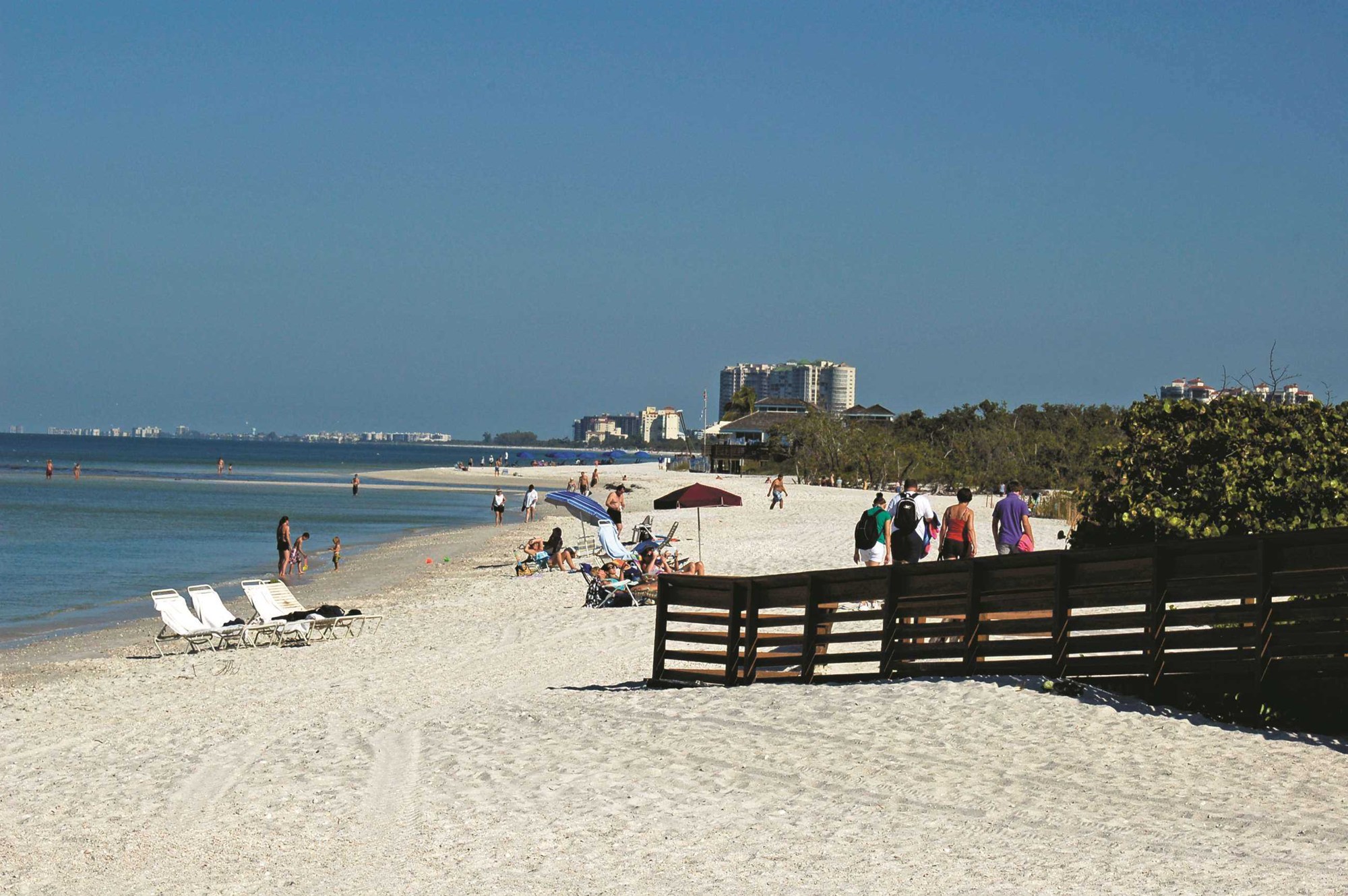
Clam Pass Park connects a mangrove-lined lagoon to the Gulf beach by a long boardwalk and a free tram. Fishing planning needs to account for that walk, shared swimming space and the pass current. The boardwalk is a visitor route, not an assumed casting platform.
Explore the guide ↓Plan the boardwalk before the first cast
Clam Pass Park is at 465 Seagate Drive in Naples. The county describes a three-quarter-mile boardwalk through coastal habitat to the beach, with a free tram. Its normal listed schedule is 8 a.m. to sunset.
Parking is listed at $10 without a qualifying resident beach permit. Tram availability and repair work can affect how you reach the shore. Be prepared to walk and verify current service before depending on a ride with long rods or a heavy cooler.
Keep hooks covered on the boardwalk and ask staff about carrying fishing equipment on the tram. The walkway crosses sensitive habitat, but that does not establish fishing permission from its railings. Choose a confirmed allowed beach area after reaching the shore.
Distinguish the lagoon, opening and Gulf beach
A mangrove lagoon and its tidal opening behave differently from the beach on either side. The opening carries water between them and can change with sand movement. Study it without entering the flow or assuming a shallow appearance means safe footing.
The broader lagoon supports nursery habitat and small prey, but its banks are not an invitation to leave the boardwalk through roots. Use established routes and current park directions. A visible fish beside the walkway may remain outside the area available for angling.
On the Gulf side, sandy troughs give a simpler shore-based fishing plan. Select a clear permitted section away from the primary swimming area. A safe beach rig does not require standing inside the pass.
Search a recoverable beach edge for snook
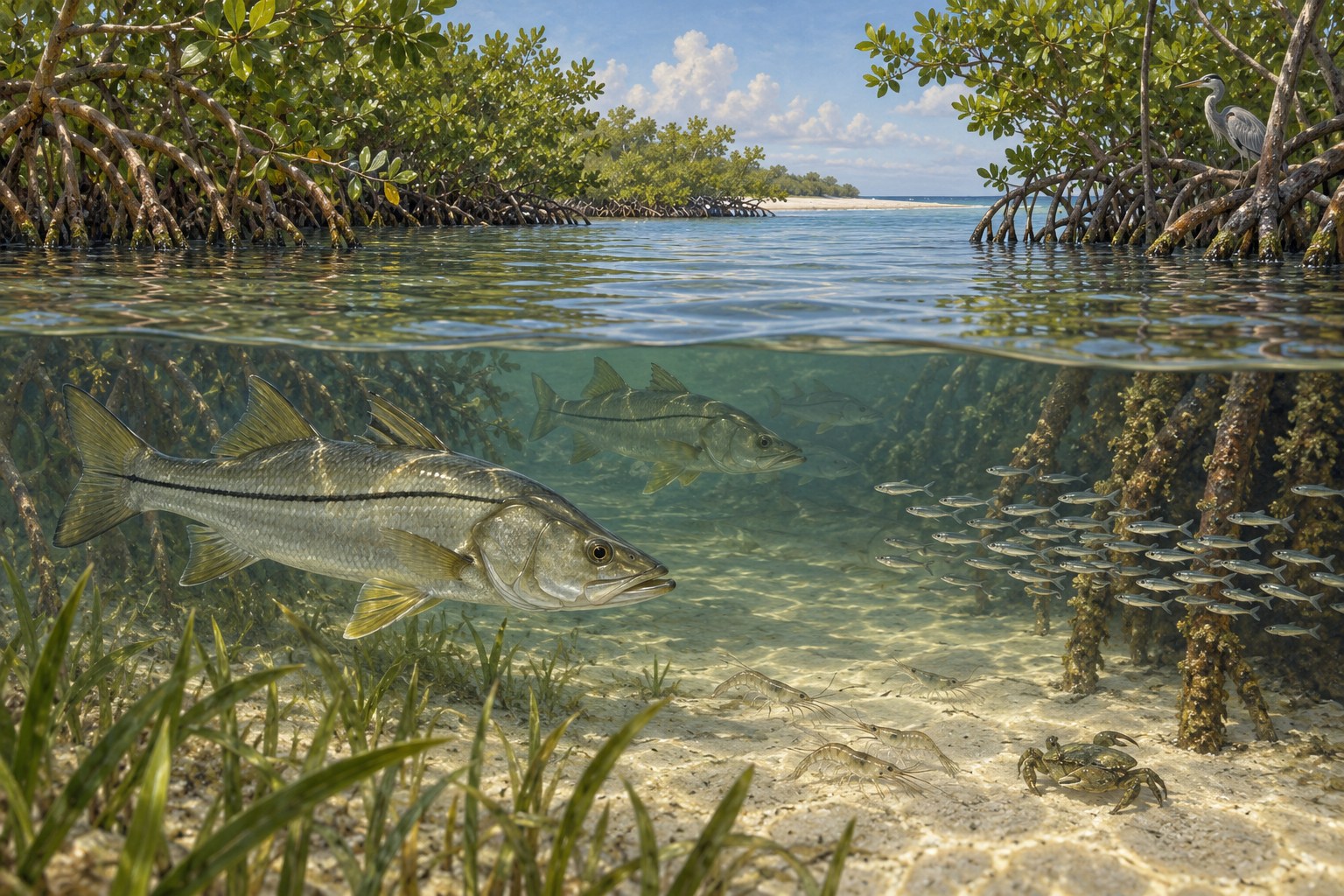
Snook can use beach and estuary feeding routes in this region, especially when warm water and prey coincide. A small paddle-tail or suitable live bait can test a clear coastal edge. Work within the allowed section and avoid crossing swimmers' paths.
A quiet cast ahead of a moving fish gives it time to approach. Keep the lure swimming above sand instead of dragging through the shallow wash. If the fish follows without taking it, try one brief pause in recoverable water.
Carry abrasion-resistant leader and suitable unhooking tools. Snook need body support and short handling time. Use current regional rules before considering harvest, and remember that a feeding season differs from a legal keep season.
Test open sand for whiting and pompano
Compact shrimp pieces, purchased sand fleas and strip bait can suit small surf feeders over clean bottom. A simple dropper rig is easier to carry along the boardwalk than several specialized outfits. Keep hooks matched to the bait rather than overloaded.
Begin at the inner trough when waves permit control. Try a modest second distance only if the first offers no sign of feeding. Note where bait is stripped or bites occur before changing the entire rig.
Use enough sinker weight to hold a safe lane within the rod's rating. If wave or current action sends the line into occupied water, stop. A larger sinker cannot resolve a shortage of safe beach space.
Follow feeding signs without chasing into unsafe water
Repeated baitfish sprays, small fish dimpling or birds watching one coastal edge can justify a lure search. Jacks, ladyfish and other mobile predators may follow that prey. A small spoon or soft plastic provides a manageable test when the lane is clear.
A school moving toward the pass should not draw you into the current. Continue only from safe allowed dry land. The fish may move quickly, while your footing and return route must remain reliable.
Keep birds away from exposed bait and landed fish. Do not throw scraps to attract activity. Feeding wildlife can create problems for people and animals at a heavily visited nature park.
Pack for the distance to the car
Take a rod suitable for modest lures and bait rigs, with spare leader and a few sinkers. Keep the load light enough for the full boardwalk walk in both directions. Do not make the return depend on a tram that might be delayed or unavailable.
Include water, sun protection, a ruler and pliers. Store clipped line and old hooks in a closed container. A small landing net can help, but it should not block the path or tangle with visitors on the boardwalk.
Use the table to select a presentation for permitted water. It deliberately separates a dry beach session from entering the opening.
| Allowed beach situation | Useful test | Limit |
|---|---|---|
| Clean inner trough | Compact shrimp surf rig | Keep away from swimming space |
| Visible coastal fish route | Light baitfish lure | Stay on stable dry sand |
| Surface prey movement | Small spoon | Do not follow into pass current |
| Strong tidal opening | Observe or choose other water | No wading crossing or unstable edge |
Let moving water guide observation rather than wading
A falling tide can draw lagoon water toward the Gulf, while incoming water changes the direction. Sand configuration and wind can make the actual flow vary. Watch it from shore before deciding whether any legal casting position remains manageable.
Do not wade across the opening or stand on a shifting edge to improve a cast. Depth and current can change quickly over a short distance. This fishing plan stays on stable dry sand and established visitor routes.
If the water is too strong to keep a rig controlled, move to ordinary surf or end the session. The strongest flow may look attractive for fish, but an accessible safe position matters more than reaching that exact water.
Allow time for walking and changing weather
Cooler months may provide useful regional pompano fishing, along with frontal surf that sometimes makes it impractical. Warmer months can suit snook searching near prey, but heat and thunderstorms reduce the comfortable window. Read the day's water before committing to a target.
Reserve enough time to return along the boardwalk before sunset closure. A last fish near the beach should not leave you rushing through a darkened route. Pack up early when thunder or heat stress changes the day.
On busy days, swimming use may make angling inappropriate near the access. Be ready to convert the outing into a nature walk. The mangrove route and shoreline still offer plenty to observe when hooks cannot be used safely.
Respect access, habitat and the catch
Ask staff for the current fishing boundary if signs are unclear. Beach entry and tram service do not imply permission to fish from every bank or platform. Remain outside posted restoration or nesting areas.
Confirm current Florida licensing and species rules before keeping a catch. Measure fish promptly and release unfamiliar species rather than guessing. Handle released fish with wet hands and keep them away from hot sand.
Remove bait scraps, line and packaging from the beach and boardwalk. Keep mangrove roots, shells and dune vegetation undisturbed. The careful route to and from the water is as important as the cast itself.
Common questions
Can I fish from the Clam Pass boardwalk?
Do not assume so. It is a visitor route through sensitive habitat. Confirm an allowed fishing position with park staff.
Is the tram required to reach the beach?
The county provides a free tram, but the boardwalk can also be walked. Be prepared for service changes.
Should I cross the pass on foot to follow fish?
No. Current, shifting sand and depth make that unsuitable for this shore-based plan.
What should I pack for the return walk?
Water, sun protection and a compact tackle load that you can carry without depending on an immediate tram ride.
Prepare for your visit
Check local tides and weather. Read more about snook, florida pompano, permit. Check current FWC saltwater fishing rules.