
SOUTHWEST
Delnor-Wiggins Pass State Park
fishing guide
Delnor-Wiggins has designated fishing near the northern pass and boat-launch dock. Current dredging and temporary facility limits affect the visit. Follow the park fishing markers, remain dry on the northern beach and keep all gear out of swimming areas.
Explore the guide ↓Read the current park alerts first
The park is at 11135 Gulfshore Drive in Naples, normally open from 8 a.m. to sunset. A September 25, 2026 alert announces maintenance dredging at Wiggins Pass. Equipment works on or near the beach, with periodic temporary closures of parking lot four.
A September 28 payment update requires credit or debit payment at remote kiosks. Display the printed receipt on the dashboard. The park's continuing notice says drinking water is unavailable and temporary restrooms are in use.
Call the park at 239-409-0637 for the latest access before traveling. General descriptions of an open beach do not override a closed work area. Bring drinking water and choose a flexible plan that can change if equipment blocks the intended section.
Use the designated park angling areas
The park identifies northern fishing beyond the double-red flags toward the pass and fishing at the boat-launch dock. It prohibits fishing in swimming areas. Read the current signs for the exact dry-land position before unpacking.
Northern beach water entry is closed, and anglers must remain entirely on dry land there. Do not wade into the pass to extend a cast. The park also restricts vessel fishing within 200 feet of its Gulf beach, separate from ordinary boating access.
Water Turkey Bay and the Cocohatchee River offer another fishing setting through a lawful boat or paddle route. Their access rules differ from the northern beach. Confirm current ramp and dock availability rather than relying on a remembered visit.
Fish an edge instead of the strongest current
Pass-related flow can carry baitfish and crustaceans past waiting predators. Snook, jacks and other coastal fish may use suitable edges. Select a permitted position where the line can stay controlled and the fish can be landed safely.
A small baitfish-shaped soft plastic can search a current margin. Use enough jig weight to keep contact without continually catching bottom. Cast so the lure travels across a recoverable lane rather than directly into working equipment or a boat route.
Large visible fish do not require you to make a cast. If the outfit, dry landing space or current makes a quick release impractical, leave that fish alone. Choose an ordinary inshore target that suits the permitted position.
Drift a modest offering under control
A lively shrimp or suitable small baitfish can test pass-adjacent water where the rig remains in the allowed section. Match the hook to the bait and leave the point visible. A compact presentation is easier to keep natural in moderate flow.
Adjust weight to keep the bait in contact with the chosen lane. Excess lead can pin the hook among obstructions, while too little can carry it into restricted water. Watch the line's path throughout the drift.
Refresh bait after repeated taps or damaged retrieves. Keep live bait protected from heat and do not dump bait water or scraps where people enter the beach. A clean attended rig is easier to manage around an active public park.
Use shallow bay water with a different rig
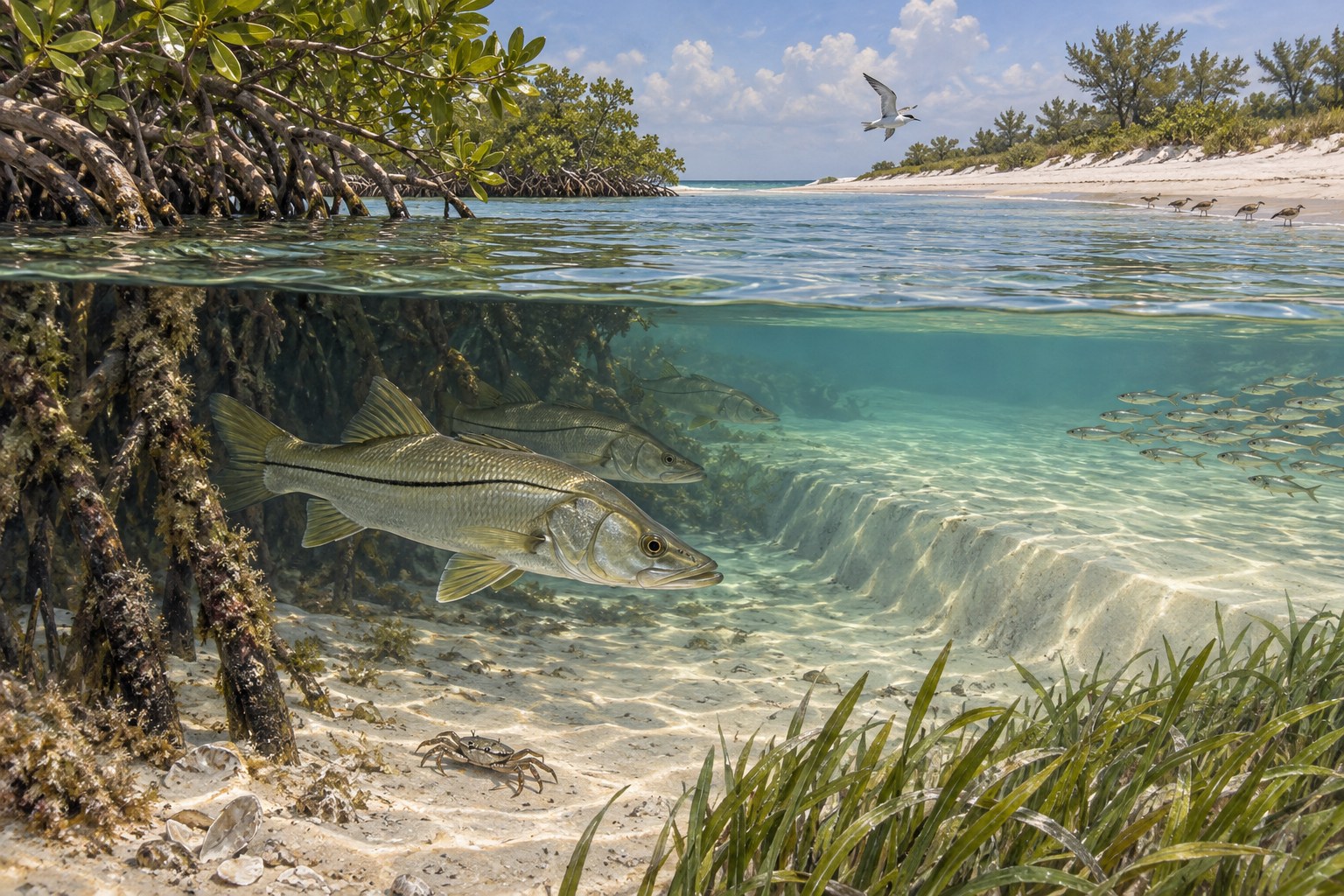
Water Turkey Bay has sheltered estuary habitat rather than open Gulf surf. In allowed water, vegetation edges and sand openings can suit seatrout, redfish and other inshore fish. Select an open lane where the offering can remain above plants.
A shrimp suspended under a float can test a grass edge. A small paddle-tail can cover sand beside cover. Reduce weight or change depth when the rig returns with vegetation on every cast.
Do not power a boat across shallow bottom to reach a feeding area. Follow navigable routes and keep away from wildlife and work restrictions. A longer safe approach is better than damaging habitat with a direct shortcut.
Choose tackle that fits the permitted position
A medium spinning outfit covers many modest shrimp and soft-plastic presentations. Stronger line and leader may be needed for larger intended fish or rough cover. Choose the tackle before the cast rather than discovering during the fight that the fish cannot be controlled.
Take pliers, a ruler and a landing tool suited to dry shore or boat use. Pack water because the current alert says no drinking-water supply is available. Keep spare hooks secured while walking around visitors and temporary facilities.
The table separates authorized fishing settings from water that is not part of the plan. Signs and current staff instructions decide the final boundary.
| Park setting | Starting approach | Required boundary |
|---|---|---|
| Open northern dry-land area | Controlled shrimp or small lure | Stay out of the water and work area |
| Open boat-launch fishing dock | Compact attended rig | Keep vessel operations clear |
| Permitted bay grass margin | Shrimp suspended above plants | Avoid damaging shallow bottom |
| Gulf swimming beach | No fishing setup | Follow swim-zone and vessel-distance rules |
Check actual water and the dredge work
Tide predictions show a broad rhythm, but the pass's working current needs direct observation. Dredging can change where equipment operates and what space remains open. Do not anchor, cast or stand near an active work corridor.
Wind against tidal flow can create rough water at an inlet. A calm-looking bay does not prove that the Gulf exit is suitable. For a boat trip, evaluate the entire route before leaving the sheltered launch area.
On shore, remain behind the northern water-entry boundary throughout the tide cycle. Rising water may shrink a dry fishing position. Pack up or move to another open designated area before the footing becomes unsuitable.
Keep the target flexible through the year
Warmer conditions can support a regional snook search around coastal prey. Cooler periods can change bait distribution and bring fronts with rougher pass water. Let today's access, bait and safe presentation guide the target rather than a fixed monthly expectation.
Morning permitted hours may be more comfortable in hot weather. Summer lightning is a reason to end the outing early, particularly near exposed beach work. Return to an appropriate enclosed shelter instead of waiting under a tree or open pavilion.
Construction and temporary facilities can make a short visit more practical than a full day. Check the alert again before the next trip. A safe previous session does not establish that lot four or the same fishing spot remains open.
Keep fishing and swimming areas separate
Never transfer the northern fishing permission into a swimming beach. Follow the marked boundaries even when the swim area looks quiet. A fishing license does not give access to a closed work area or permission to enter the pass.
Check current Florida species limits and the applicable license. Snook harvest rules are regional and seasonal, and a visible feeding school does not indicate whether fish can be kept. Measure lawful retained catches correctly and handle released fish promptly.
Take leader scraps and damaged tackle back out of the park. Keep shorebirds away from bait and never leave hooks near temporary walkways. Protecting people, habitat and work crews is part of choosing a responsible fishing position.
Common questions
Where does the park identify fishing opportunities?
In the northern designated area toward the pass and at the boat-launch dock, subject to current openings and signs.
May I wade into the northern pass beach?
No. The park says northern water entry is closed and anglers must remain on dry land.
What current construction affects a visit?
The September 25, 2026 alert describes Wiggins Pass maintenance dredging and periodic lot four closures.
Should I rely on a drinking-water fountain?
No. The continuing park notice says drinking water is unavailable. Bring enough for the full outing.
Prepare for your visit
Check local tides and weather. Read more about snook, permit. Check current FWC saltwater fishing rules.