
SOUTHWEST
Keewaydin Island
fishing guide
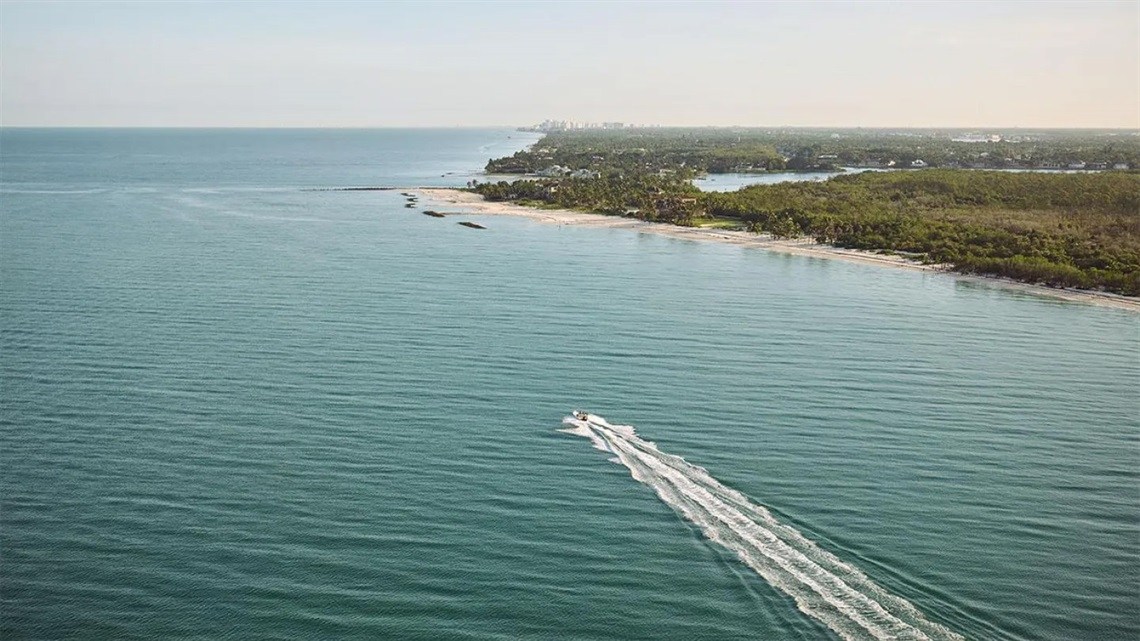
Keewaydin Island is a boat-only barrier island between Naples and Marco Island. Gulf sand and mangrove-side water offer different fishing possibilities. Settle the landing, permitted fishing area and return before walking the beach, and bring supplies rather than expecting island facilities.
Explore the guide ↓Build the visit around arrival and pickup
Keewaydin lies between Naples and Marco Island and has no road connection to the mainland. Official tourism describes public land alongside private holdings. Use an authorized boat or transport arrangement and know which landing and beach section are available for the visit.
The island does not provide ordinary shore amenities such as public restrooms. Do not rely on a floating vendor or tour stop to supply water, bait or an emergency return. Arrange the pickup location and departure time before unloading fishing gear.
Public access to part of the island does not make private homes, docks or inland paths available. Confirm current fishing and landing instructions with the reserve or land manager when uncertain. Keep your plan inside open shoreline space rather than using vegetation as a shortcut.
Choose Gulf surf or sheltered water deliberately
The Gulf beach and the mangrove side require different fishing approaches. Open sand suits compact surf bait or a moving beach lure. Mangrove-side water calls for a lawful boat position, quiet approach and a recoverable presentation beside cover.
Do not combine both sides by walking through the island interior without permission. Use established open routes and respect posted habitat closures. The map distance across a barrier island does not describe a safe path on the ground.
A busy boat landing also creates a separate use area. Keep hooks and lines away from people stepping ashore, swimmers and propellers. Choose a clear fishing lane beyond that activity only where access and rules permit it.
Test sand with a small natural offering
Pompano and whiting are reasonable regional surf targets when water conditions suit them. Shrimp pieces, purchased sand fleas or prepared strip bait offer a manageable starting kit. Bring bait with you instead of expecting to collect it from protected habitat.
Look for a trough between the dry beach and a breaking bar. Start with a short controlled cast, then compare a modest farther distance. Note where bait is stripped or bites occur before moving away from the landing area.
Use a hook appropriate for the compact offering and leave the point exposed. Check droppers for tangles after every retrieve. Clean simple tackle makes a short island session easier than managing several rigs spread across the sand.
Watch a warm beach edge for cruising fish
Snook may use coastal wash and pass-related routes in the region. When a clear permitted lane has small prey, a baitfish-shaped soft plastic can be worth testing. Keep the lure swimming near the edge without scraping constantly across sand.
Watch a visible fish long enough to learn its direction. Cast ahead so it can approach the offering. Repeatedly landing a lure beside its head creates noise and rarely helps a cautious fish in shallow water.
Use suitable leader and prepare a quick release. Support the body with wet hands and minimize time outside the water. Gulf snook harvest rules need a current check even during a period of active beach feeding.
Keep boat presentations outside roots
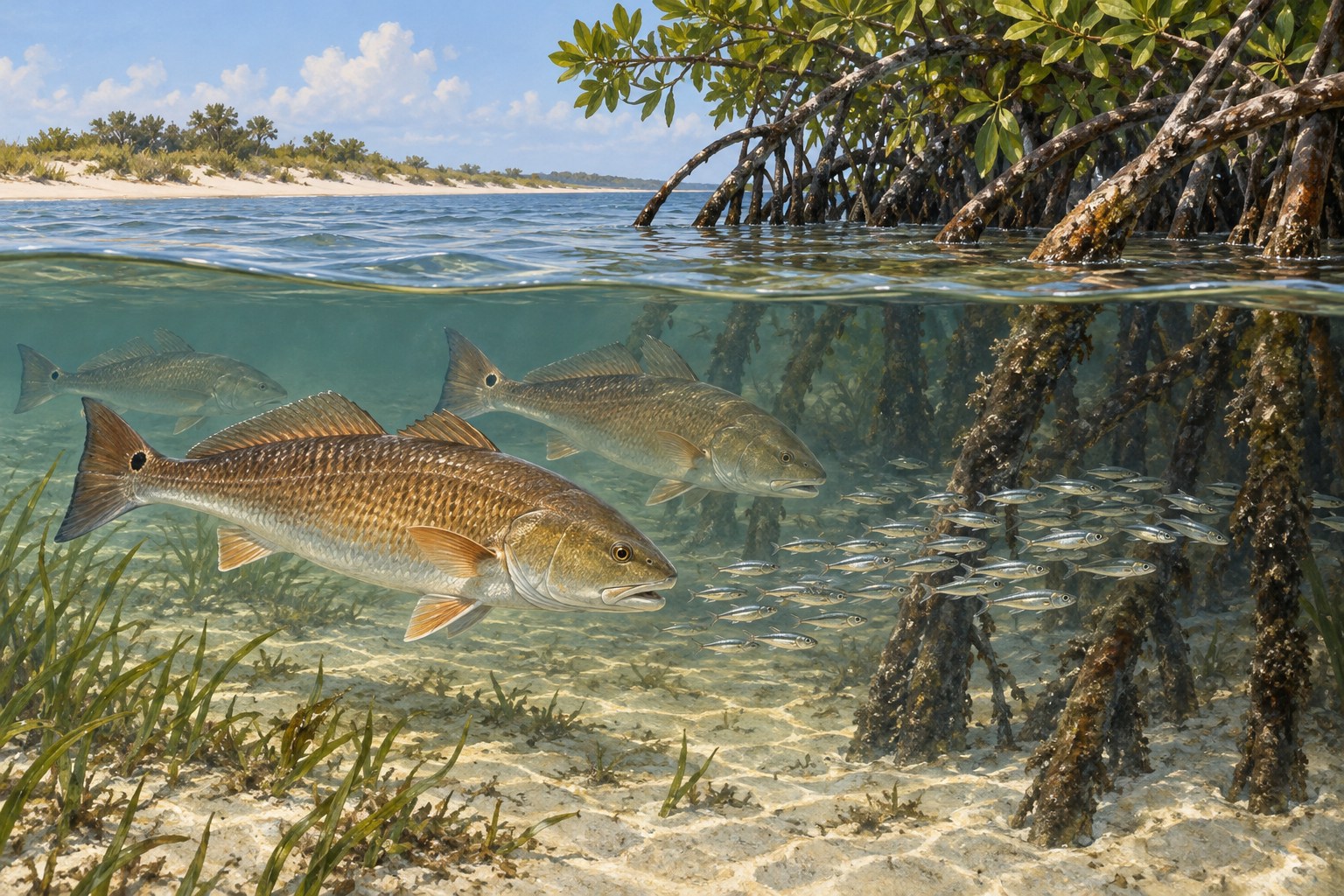
Mangrove cover supports small fish, shrimp and crustaceans. Snapper and other inshore predators may feed along open margins in allowed water. Choose a boat position that keeps the hull and motor off shallow sensitive bottom.
Drift a small shrimp just beyond the roots or retrieve a lightly weighted soft plastic along a recoverable edge. If each cast hooks a branch, shorten the angle or select another opening. More force is not a useful substitute for a clean casting route.
Do not land on a closed shoreline simply because the nearby water is open to fishing. Boat access, foot entry and harvest permission are separate questions. Follow the current reserve or land-manager directions.
Take a self-sufficient fishing kit
A medium inshore spinning outfit can cover ordinary soft plastics and modest bait rigs. A suitable surf rod helps if safe waves require more weight. Keep the total load within what you can carry at the actual landing, including the return when tired.
Pack drinking water, sun coverage, a measuring tool, pliers and a sealed waste bag. Store tackle away from swimmers and any dogs visiting the island. Cover hooks during boat loading and keep landing equipment available without unpacking everything.
The table helps separate the fishing choices. None requires entering unsafe pass water or crossing private island property.
| Allowed habitat | First fishing choice | Trip concern |
|---|---|---|
| Gulf sandy trough | Small shrimp surf bait | Open lane away from landings |
| Clear beach snook route | Light baitfish lure | Prompt lawful handling |
| Mangrove-side edge | Shrimp or modest soft plastic | No root or bottom damage |
| Changing landing depth | Shorten the session | Secure boat pickup before low margin |
Plan the landing through the whole tide cycle
An easy landing on arrival may be difficult after the tide or wind changes. Check expected water level and the boat's draft, then compare them with the actual approach. Leave enough margin to return without grounding or pushing through mangroves.
For beach fishing, a rising wash can narrow the dry strip available for bags and landing fish. Move gear before it gets wet. Keep the pickup landmark visible and do not let a long beach walk consume the return time.
If the intended transport cannot guarantee a suitable pickup in changing weather, shorten the visit. Island fishing should not depend on reaching the last possible departure minute. A secure route home is the day's first requirement.
Watch the exposed Gulf and the ride home
Cool fronts can make the Gulf beach windy while sheltered water appears mild. Check the marine forecast for both the landing and the full boat route. A calm patch beside the island is not proof that the mainland crossing will be comfortable.
Summer heat and lightning need a conservative schedule. Bring more water than a casual mainland beach visit would require. Open sand, a small boat and isolated trees are unsuitable places to wait while a thunderstorm approaches.
Crowded weekends can leave less room for fishing near popular landings. Visit with the ability to choose another allowed clear section or leave the rod packed. A shared island outing is not a claim to exclusive shoreline space.
Protect the island after the last cast
Respect turtle nests, bird closures and dune vegetation. Leave live shells and other protected animals where they belong. Do not create a rod-rest hole or temporary camp that damages a sensitive area.
Check the current Florida license and harvest rules before keeping any fish. Carry the correct measuring tool on the island and release unfamiliar catches. Keep released fish wet and off hot sand as much as possible.
Carry all line waste, bait packaging and food scraps back aboard. Inspect the fishing position and boat loading area before leaving. A self-sufficient island visit ends only when the gear and waste have returned safely to the mainland.
Common questions
Can I drive to Keewaydin Island?
No. It is reached by boat, with an authorized landing and a return arrangement.
Should I count on island restrooms or bait supplies?
No. Bring supplies and a waste plan. Vendors or tour services should not be the basis of an emergency plan.
Is all island shoreline and interior land public?
No. Public and private holdings coexist. Stay inside open allowed areas and established routes.
What matters most before a beach fishing walk?
A known pickup point, safe departure window and enough water for the full return.
Prepare for your visit
Check local tides and weather. Read more about snook, florida pompano, whiting. Check current FWC saltwater fishing rules.