
NORTHEAST ATLANTIC
Bethune Beach
fishing guide
Bethune Beach fishing guide with lagoon and ocean options, current accessibility notes, shrimp methods and shallow-water habitat.
Explore the guide ↓One beach community, two kinds of fishing
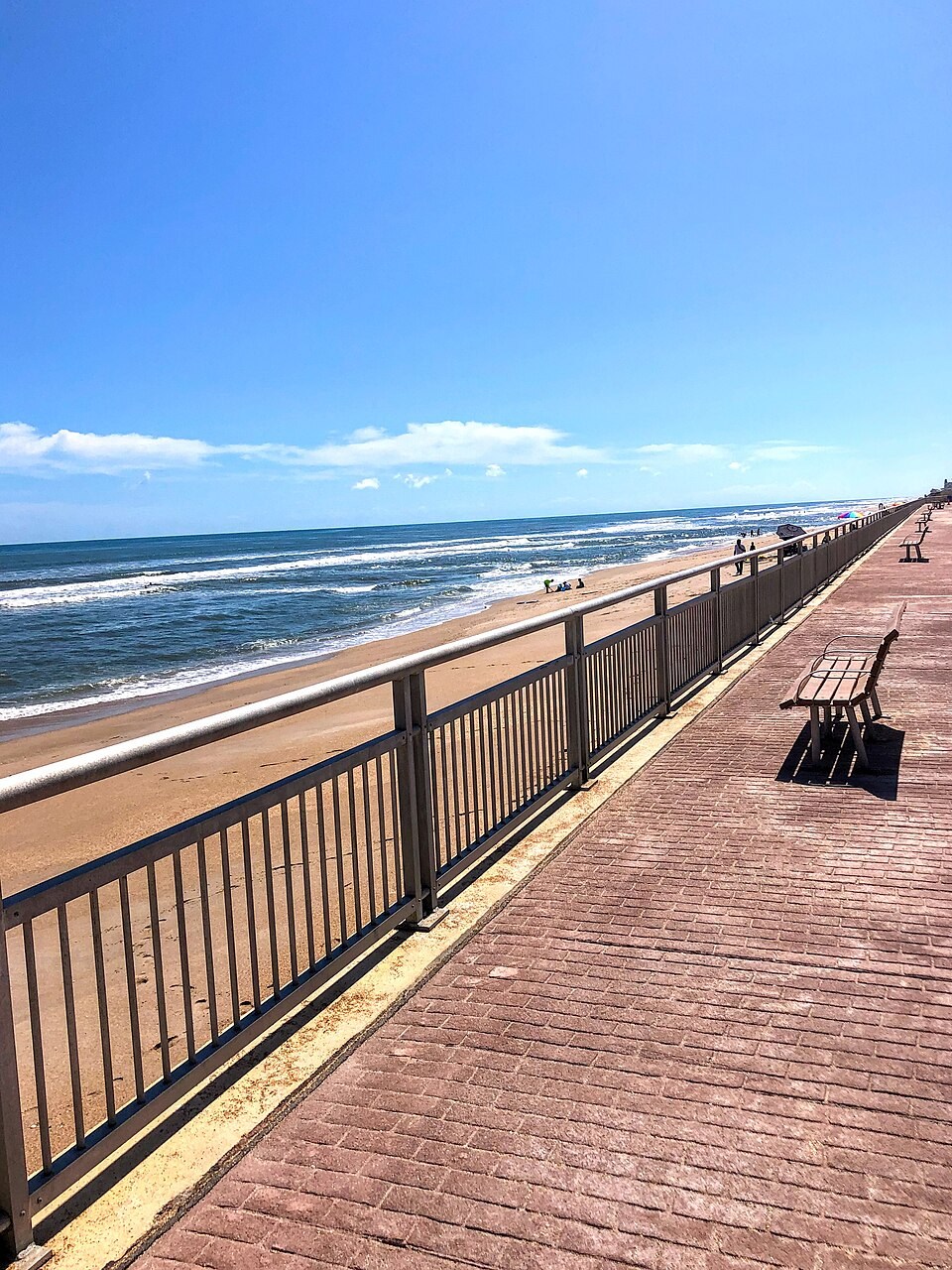
Bethune Beach lies south of the busiest part of New Smyrna Beach, with the Atlantic to the east and lagoon water to the west. That narrow coastal setting lets an angler compare surf fishing with a different estuary plan, but the access points and methods should remain separate.
The ocean side is a sand-trough setting for whiting and passing pompano. The lagoon side offers structure, shallow edges and small prey that can interest redfish, trout and other estuary fish. A map showing water on both sides does not mean every shoreline between them is public.
Choose the side that fits the weather and your equipment. A quiet-looking lagoon still has wind, wakes and shallow areas, while a pleasant beach can have strong currents just offshore.
Know the park’s current access limits
Mary McLeod Bethune Beach Park is listed at 6656 South Atlantic Avenue. County information describes oceanfront and lagoon-side facilities, including a fishing pier on the lagoon side. Check the current park notice for any temporary facility change.
At the October 2026 review, the county page stated that there was no ADA beach access. Visitors who need an accessible route to the sand should confirm a suitable alternative before traveling. Other park facilities do not remove that specific beach-access limitation.
Read the lot signs for parking requirements. County off-beach parking arrangements can depend on current fees and resident programs, so older descriptions of free parking may be misleading.
Use marked crossings and public routes. Do not pass through a residential yard or private dock to connect the ocean and lagoon sides.
Understand why quiet estuary edges matter
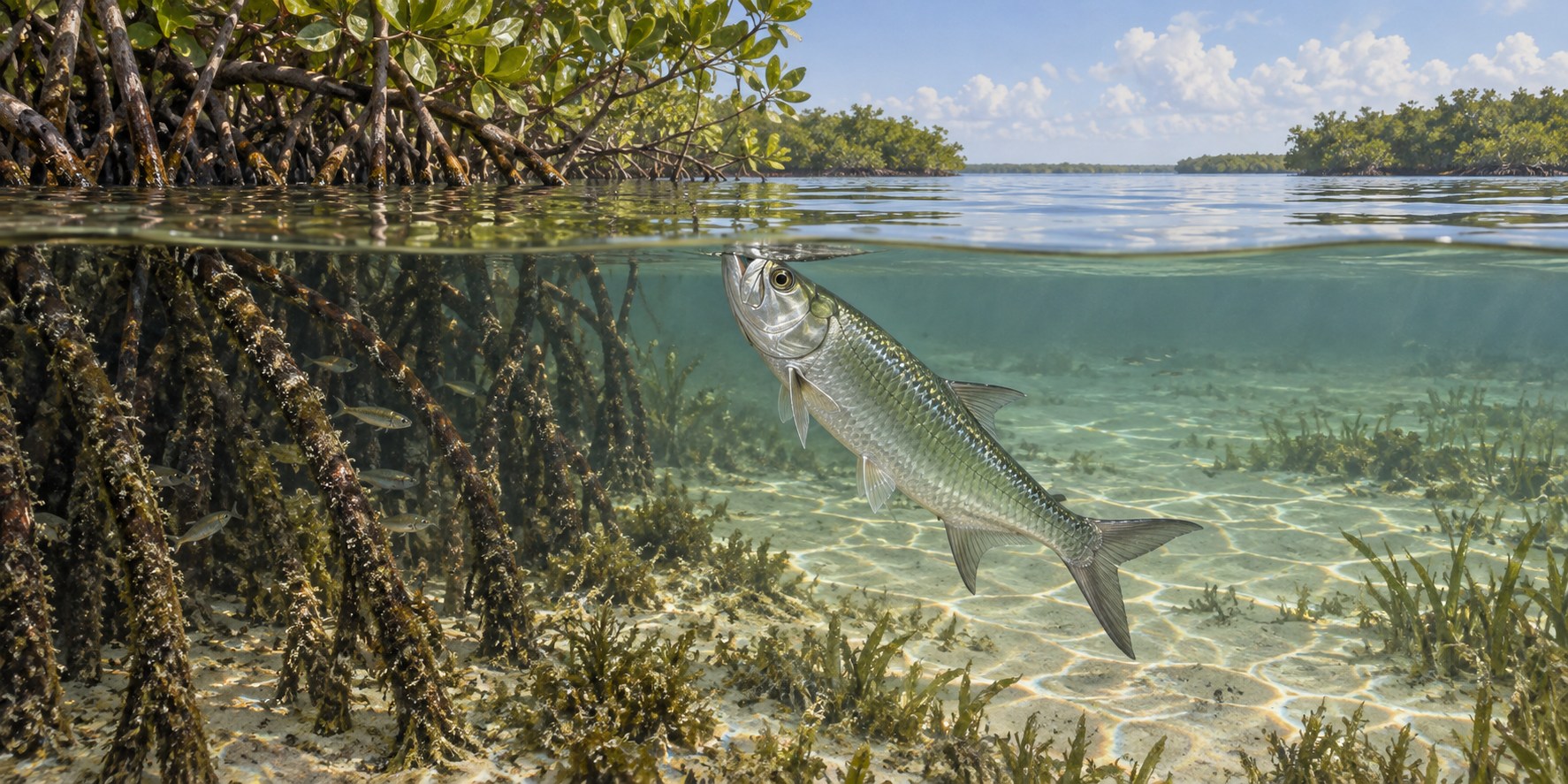
Shallow coastal habitat provides food and shelter for many young fish. Roots, vegetation and calm pockets can reduce exposure to larger predators while holding small prey. Protecting those edges helps the broader fishery, even when the visible fish are not a target.
Juvenile tarpon are associated with certain sheltered coastal waters, but they should not be treated as a routine catch at a particular public access. The illustration explains a habitat relationship, not a location report.
Do not push a boat into roots or walk through plants to investigate a splash. Observe from a legal position and let fish remain undisturbed when they are beyond reach. A nursery area has value beyond the immediate fishing opportunity.
If you encounter tarpon, know the special rules before targeting or handling them. Large fish should remain in the water as required, and all sizes need careful treatment.
Use the lagoon pier as a controlled starting point
Before rigging, inspect the current, depth and available space. A pier offers a defined place to stand, but pilings can snag tackle and passing wakes can move a bait. Keep a clear lane for other visitors.
Live shrimp provides a flexible first presentation. It can be suspended above bottom cover or fished with enough weight to remain controlled. Choose the arrangement after seeing whether the bottom is clear or cluttered.
A small swimming lure can help search open water beside structure. Bring it along an edge rather than repeatedly casting into the supports. If it catches the bottom on every retrieve, make it run higher.
Have a net suited to the platform and keep pliers nearby. The safest way to finish a catch should be decided before the fish is on the line.
Choose a realistic target for each side
| Area | Target to consider | Helpful presentation |
|---|---|---|
| Lagoon edge with open water | Spotted seatrout | Small swimming lure or suspended shrimp |
| Shallow margin beside deeper water | Redfish | Quietly placed soft plastic or shrimp |
| Hard cover near a legal position | Sheepshead or other structure feeders | Compact bait kept close without wrapping line |
| Atlantic inside trough | Whiting | Small shrimp piece near the sand |
| Clean surf lane | Pompano | Short dropper rig with a compact bait |
The list intentionally separates fishable habitat from a guaranteed catch. Conditions may make only one of these options practical during a visit.
Make the ocean session a lesson in distance
Watch the first breaking line from shore. The trough inside it can hold feeding fish close to the beach. Begin there with a modest cast and a small bait.
Try a second distance only after checking the first presentation. If the bait is being removed, the area is not necessarily empty. A smaller hook or firmer piece may improve the connection.
Pompano can travel through clean moving water over sand. Sand fleas, where legal to collect, and compact shrimp baits are useful options. Avoid making the rig so bulky that the bait spins in the wash.
Keep out of swimming lanes and watch for people approaching from either direction. A beach fishing position is temporary and should change when the surrounding use changes.
Fish shallow water without damaging it
From an authorized launch, a small craft may reach more estuary edges than the park pier. That extra reach also brings responsibility for the route. Know the draft of the craft and avoid running a motor through shallow vegetation.
Use a conservative course with a recognizable return path. Wind can push across open lagoon water and make a return harder than the outward trip. Low water can expose mud that is not safe to walk on.
Wear a life jacket and keep a communication device accessible. Do not store essential equipment beneath gear that cannot be reached after a capsize. Secure sharp tackle before moving between fishing positions.
Manatees and other wildlife need space. Slow down, observe and let animals move away without being followed. A fishing outing should not turn into a chase for a closer photograph.
Improve the drift before changing the bait
A bait may fail because it never reaches the useful water. Watch its path during the first few attempts. If it drifts away from the edge immediately, change the casting angle or the amount of weight.
When fishing above cover, shorten or lengthen the float setting in small steps. The aim is to keep shrimp visible without dragging it through plants. A float disappearing because the hook is snagged is not the same as a bite.
For a lure, slow down near a depth change and keep enough tension to detect contact. Avoid long slack pauses in current. If a fish follows but does not take, a modest change of pace may be more useful than a completely different lure.
After any contact with rough structure, inspect the leader. Replace worn line before the next fish tests it.
Allow time for two separate decisions
Check the forecast before leaving, then assess the actual side of the park you intend to fish. The Atlantic and lagoon can respond differently to the same wind. Neither should be treated as an automatic backup without inspection.
Summer visits benefit from water, shade breaks and an early finish when storms develop. Cooler periods may offer comfortable fishing, but a front can still make exposed water unpleasant or unsafe.
Use the local conditions planner as preparation. For a national seashore beach farther south, compare Apollo Beach at Canaveral, which has different entry rules.
Pack up with enough time to leave through the intended entrance. Wet gear and a tired group make the return slower than the walk in.
Use a careful finish for every catch
Keep measuring and dehooking tools ready. Support a fish’s body, use wet hands and shorten the time spent out of water. Avoid placing a released catch on hot decking or dry sand.
Verify licensing and species requirements through FWC’s saltwater recreational fishing guidance. Special rules for particular fish still apply even during a casual family outing.
Collect clipped line and used hooks in a closed container. Do not leave bait scraps around the pier or beach access. A tidy finish protects the next visitor as well as local wildlife.
Distinguish a nursery scene from a fishing forecast
A sheltered edge may contain young fish, small crustaceans and other life without producing an immediate bite from the species you want. Spend time watching how prey moves through it. The goal is to understand a usable feeding lane, not to assume every attractive root or grass patch holds a catch.
Keep that distinction in a trip record as well. Note what was actually observed and what was only a possibility. A reliable personal record becomes more useful over time when it separates the two.
Bethune Beach fishing questions
Is the fishing pier on the ocean?
The county describes a lagoon-side fishing pier. The Atlantic beach is a separate part of the park setting.
Is there an accessible route onto the beach?
The county page reviewed in October 2026 stated no ADA beach access. Confirm a current suitable route before traveling if that feature is needed.
Does the illustration mean tarpon are guaranteed?
No. It explains sheltered estuary habitat used by young fish. It is not a catch forecast for the public pier.
What is a useful first lagoon bait?
Shrimp is adaptable, but its depth and drift should match the reachable water. Keep it above cover or under controlled weight as conditions require.