
NORTHEAST ATLANTIC
Smyrna Dunes Park
fishing guide
Smyrna Dunes Park fishing guide with the public pier, sheepshead bait, changing current, safe landing and beach-access boundaries.
Explore the guide ↓A public pier beside a powerful inlet
Smyrna Dunes Park occupies the northern end of the New Smyrna Beach peninsula. It brings together dune habitat, beach views, estuary water and a designated fishing pier near Ponce Inlet. The variety is appealing, but it makes choosing the correct fishing area especially important.
The county lists the park at 2995 North Peninsula Avenue. Its facilities include an approximately 300-foot accessible fishing pier and a substantial boardwalk system. Check current opening conditions and entry or parking charges before visiting.
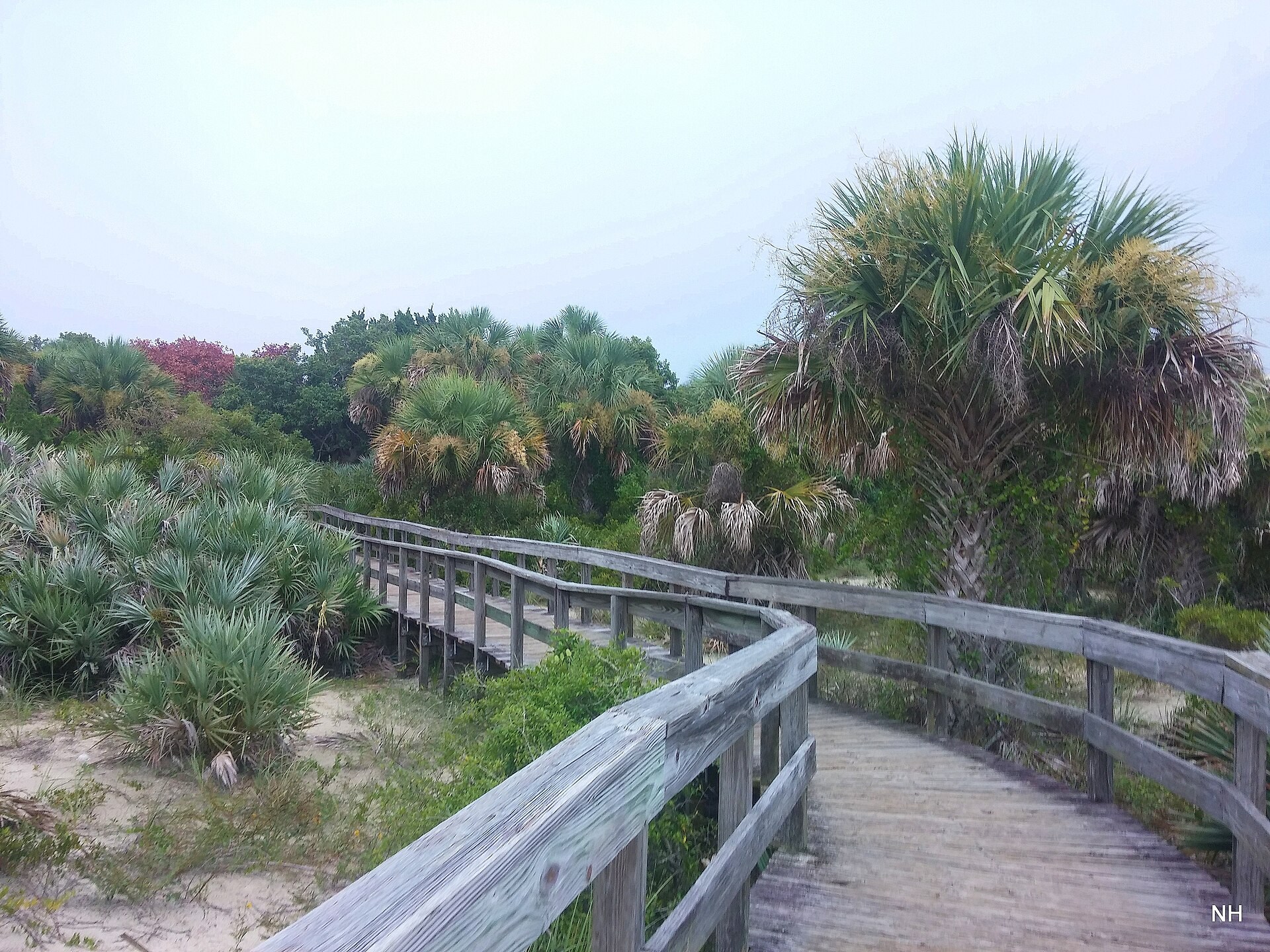
Use the intended routes. Dunes, shore plants and closed sections are not shortcuts to the water. The fishing pier provides a defined place to begin without climbing through sensitive habitat.
Walk the pier before unpacking
Take a moment to inspect the available space and water movement. Notice where other lines are drifting, where pilings interrupt the current and how high the platform stands above the water. Those details determine the rig and landing method.
Keep tackle out of the path used by walkers and other anglers. A small bag beside you is easier to manage than several open boxes spread across the deck. Secure loose hooks before moving along the rail.
Accessible facilities do not eliminate every practical obstacle. Weather, temporary repairs and the distance from parking can still affect a visit. Confirm the current route if a particular mobility feature is essential.
Do not assume a park entrance charge includes a personal fishing license. Verify the applicable license or exemption and any specific pier coverage before casting.
Work the reachable structure carefully
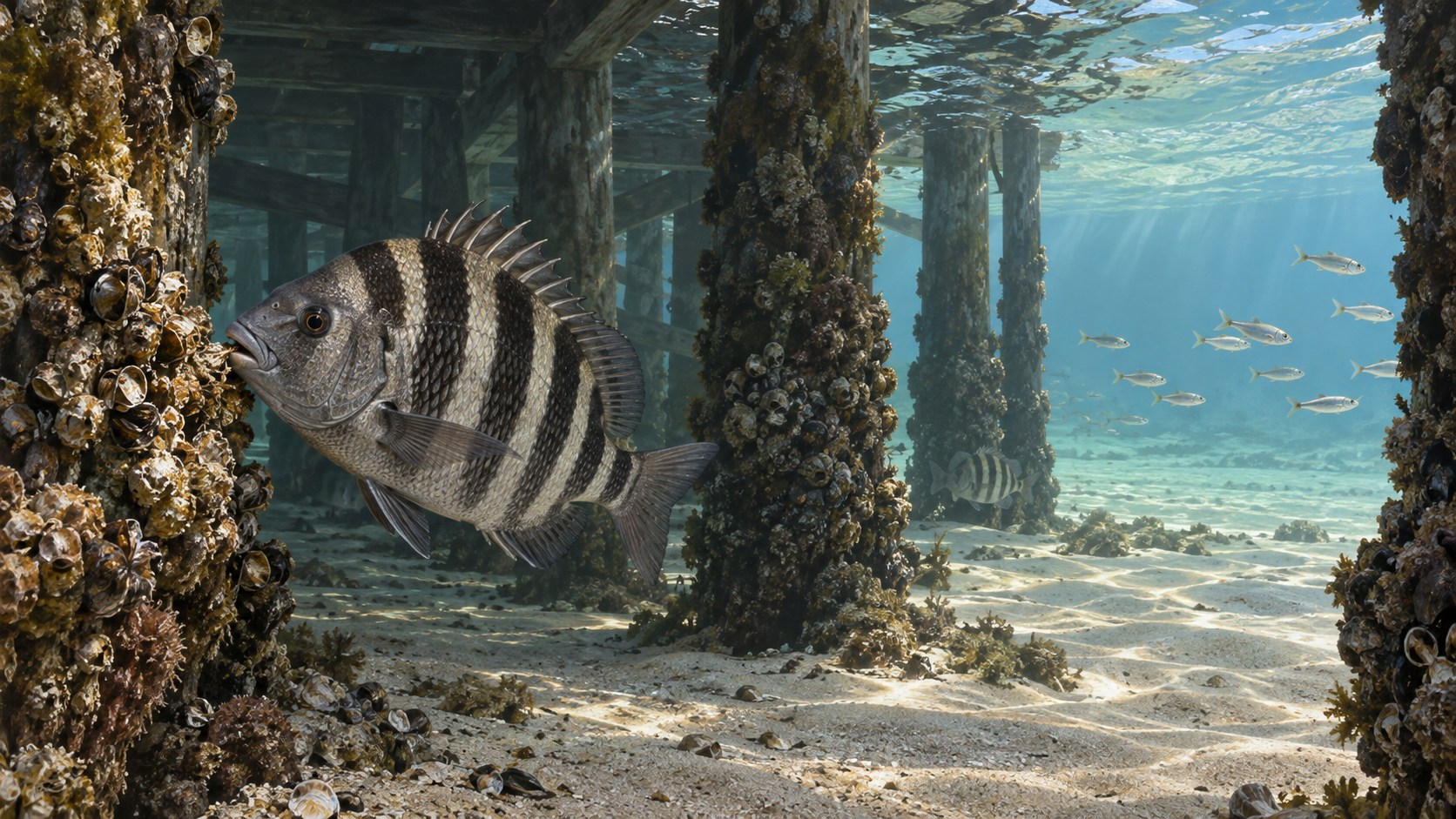
Sheepshead use hard surfaces to find small food items. A compact shrimp or other legal crustacean bait near a piling can be useful. Start beside the cover rather than dropping into a tight gap with no clear escape route.
Keep contact with the rig so a brief bite is easier to detect. Excess slack can let the bait disappear without an obvious signal. Use only enough weight to maintain a controlled position.
Current may press the line toward the piling. Retrieve early when that begins, since rough surfaces can damage leader quickly. Recast from an angle that lets the bait remain beside the structure instead of wrapping around it.
Check the hook point after a snag and replace worn leader. A small damaged section can fail when a fish makes its first turn.
Let the available lane choose the target
| Reachable water | Fish to consider | Practical approach |
|---|---|---|
| Open side of a piling | Sheepshead | Small bait held close to hard cover |
| Sand near slower current | Flounder or other bottom feeders | Light jig or bait worked with control |
| Open water with bait activity | Bluefish or mackerel | Compact moving lure in a clear casting lane |
| Current seam near structure | Snook or redfish | Suitable bait or lure with a safe landing plan |
| Permitted sandy beach away from inlet flow | Whiting | Small shrimp bait in a trough |
The park’s location creates opportunities, but it does not make every shoreline fishable. Use only the water that can be reached from an open legal position without interfering with swimmers, walkers or boats.
Notice how the current changes your cast
A rig may begin directly in front of you and end far to one side. Watch that movement from the first cast. Retrieve before it crosses a neighboring line or reaches an obstruction.
At moderate flow, a bait can drift naturally through a useful lane. At stronger flow, the same setup may become uncontrollable. Shorten the drift, adjust weight within the rod’s limit or wait for a more manageable period.
A lull in current can be a good time to learn depth and bottom contact. It is not a guarantee that fish will feed. Keep the presentation deliberate and watch for bait movement that suggests a new opportunity.
The strongest-looking water is not always the best place to cast. Fish can hold beside it and intercept food without fighting the full flow. A clear seam often makes a more practical target.
Bring equipment for the height above water
A landing net suited to the pier can prevent an awkward finish. Decide where it can be used without blocking others. Do not rely on lifting a substantial fish by the leader.
Keep pliers and a ruler ready. Once the fish is landed, support it properly and minimize time on the deck. Hot surfaces and prolonged handling can harm a fish intended for release.
If a catch is beyond the safe capacity of your equipment, do not climb over a railing or descend onto rocks. Plan tackle and targets around what can be handled from the permitted position.
Sharp spines and teeth deserve attention even on smaller fish. Use a tool rather than fingers near a mouth or hook, and keep bystanders clear while the fish is controlled.
A beach walk is not permission to fish everywhere
The park includes several kinds of shoreline, each with its own use and conditions. Read the signs before carrying a rod onto a beach section. Keep fishing away from swimming and other designated activities.
Where a sandy fishing lane is allowed and safe, a small shrimp bait can test the near trough for whiting. Watch waves from shore and avoid wading toward the inlet. Strong water can run close to apparently shallow sand.
Do not cross dune vegetation to reach a quieter patch. Stay on the boardwalk and marked access routes. Protected habitat is part of what makes this park distinctive.
For broader town options, compare New Smyrna Beach’s surf and lagoon guide. It helps separate the inlet visit from a simpler oceanfront outing.
Make the first visit short and organized
A family session works best with a small number of rods and a clear handling routine. Explain the casting space before baiting a hook. Check behind each time, even when the area looked empty a moment earlier.
Pack drinking water and sun protection for the walk as well as the fishing. Wind on an exposed pier can hide the strength of the sun. Take breaks before heat becomes a problem.
Keep food separate from bait and avoid feeding birds. A bird attracted to scraps can move into the line at the wrong moment. Closed containers help keep the area tidy.
A short visit that teaches safe casting and produces one carefully handled fish can be more successful than a long session with tired children and scattered tackle.
Give the weather the final decision
Ponce Inlet can become rough when wind and current oppose each other. Look at the marine forecast as well as the general city weather. On arrival, inspect the actual water around the fishing position.
Do not remain on an exposed structure as thunder approaches. Leave enough time to walk back to proper shelter. A distant dark cloud can move faster than a leisurely pack-up.
Tide predictions help choose a window, but visible flow tells you whether the rig is working. Check the tide and weather planner, then adjust to the conditions at the pier.
If the fishing area is too crowded or the current too strong, enjoy the open park routes instead. The visit does not need to become a contest with unsuitable water.
Keep access and harvest rules separate
Use FWC’s current saltwater guidance to verify licensing and the rule for each fish. A pier catch remains subject to species requirements even where a facility has a license arrangement.
Carry out line, hooks and packaging in a secure container. If a rig repeatedly catches the same obstruction, change the method rather than leaving more tackle behind. Responsible placement reduces losses before cleanup becomes necessary.
Record the current direction and bait position that worked. Those details can help on a return trip, while remembering that weather, tide and access may differ.
Keep the net ready without blocking the route
Prepare a landing net before fishing, then place it where it remains accessible without extending across the public walkway. Check that its handle or lowering arrangement suits the platform and current water level. A net that cannot reach the fish does not solve the landing problem.
If someone is helping, agree on the sequence before a catch arrives: control the fish, bring it to the clear side and use the net without crossing other lines. A calm routine is easier on the fish and everyone nearby.
Put the plan into practice
A light shoulder bag can make the boardwalk approach easier than several hand-carried boxes. Pack the landing tool where it can be reached without emptying the bag onto the walkway.
Smyrna Dunes Park fishing questions
Does the park have a designated fishing pier?
Yes. County information lists an accessible pier about 300 feet long. Check current facility notices before planning the visit around it.
Can I walk through the dunes to reach water?
No. Use the boardwalks and marked routes, and respect closed or protected areas.
What bait can I try near pilings?
A small shrimp or another permitted crustacean bait is a practical option for structure-feeding fish. Keep the line from wrapping around the support.
Why bring a landing net?
The platform height can make safe landing difficult. Suitable equipment avoids lifting a fish by the line or attempting an unsafe position.