
NORTHEAST ATLANTIC
Beverly Beach
fishing guide
Beverly Beach fishing guide with Varn Park access, small-bait surf methods, bluefish opportunities and beach-work considerations.
Explore the guide ↓A quieter beach does not mean empty water
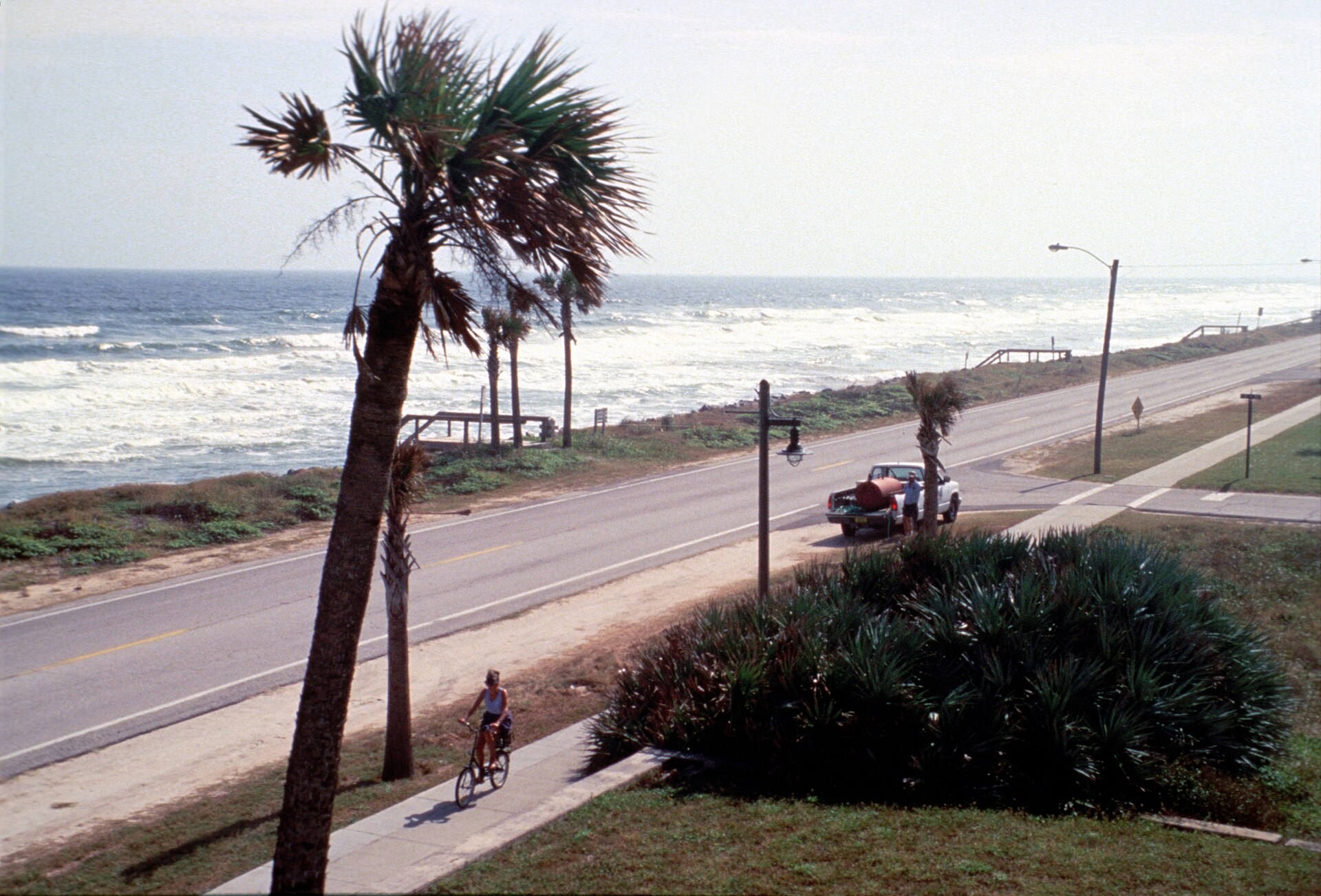
Beverly Beach sits along the Atlantic coast north of Flagler Beach. Its fishing appeal is the sand itself: shallow bars, feeding lanes and small changes in depth that can bring fish within a short cast. This is a place to study the wash rather than search for a large fishing pier.
Whiting make a sensible first target. Pompano can pass through suitable surf, and bluefish may arrive with schools of small bait. The mix changes with temperature, clarity and the movement of food along the shore.
Public access is important here because not every beachfront entrance serves visitors. Choose an established park or marked public crossing. A campground’s beachfront or a private walkway should not be treated as public fishing access.
Use Varn Park as an access reference
Flagler County lists Varn Park at 3665 North Ocean Shore Boulevard. It provides a public beach setting with restrooms and showers. Check the entrance signs for the current parking arrangement, operating hours and any temporary restrictions.
The park is a useful starting point for an outing in the Beverly Beach area, but nearby construction can change the usable shoreline. County coastal project information has included nourishment work through Beverly Beach, Painters Hill and Varn Park. Do not assume a project has finished simply because its announced start date has passed.
Stay outside equipment zones and use only open crossings. Freshly placed sand can change the slope and nearshore trough. Walk carefully at the water’s edge and examine the beach before selecting a fishing position.
Carry gear in one manageable load. A rod, small bait container and basic tackle bag allow an easy move if a family settles nearby or the water reaches the equipment. Leave the dune vegetation undisturbed.
Read a small piece of shoreline carefully
Choose a stretch you can observe for several wave sets. A bar usually creates a repeated breaking line. Water inside that line may be deep enough for fish to travel without crossing the shallow crest.
Look for a low section where the white water fades, then watch what the foam does. Alongshore movement may carry bait steadily through a lane. Fast outward flow signals a place to avoid entering, even if the fishing looks promising.
Begin close to the beach. A small bottom bait in the first trough can be more effective than a long cast into a featureless shallow bar. Move the next cast slightly farther if the inside presentation gets no response.
The strongest clue may be bait rather than depth. Tiny fish gathering at the edge, birds watching one patch or a brief burst of surface activity all deserve attention. Observe from a safe position before approaching.
Match a method to the fish in front of you
| Target | Clue to watch | Useful presentation |
|---|---|---|
| Whiting | Small bites in a sandy nearshore lane | Short shrimp piece on a small hook |
| Pompano | Clean surf and moving water over sand | Compact bait held above the bottom |
| Bluefish | Bait pushed upward or chased through the wash | Moving spoon or metal lure |
| Black drum | Bottom feeding near shell and a deeper depression | Shrimp that stays in place long enough to find |
A rig that catches one small fish can reveal a useful feeding lane. Do not dismiss the information because the first catch is not your preferred species. Adjust bait size or position while keeping track of what produced the bite.
Keep identification and current regulations separate from assumptions about size. A fish that looks large enough to eat still needs to meet the rule for that exact species.
React calmly when bluefish appear
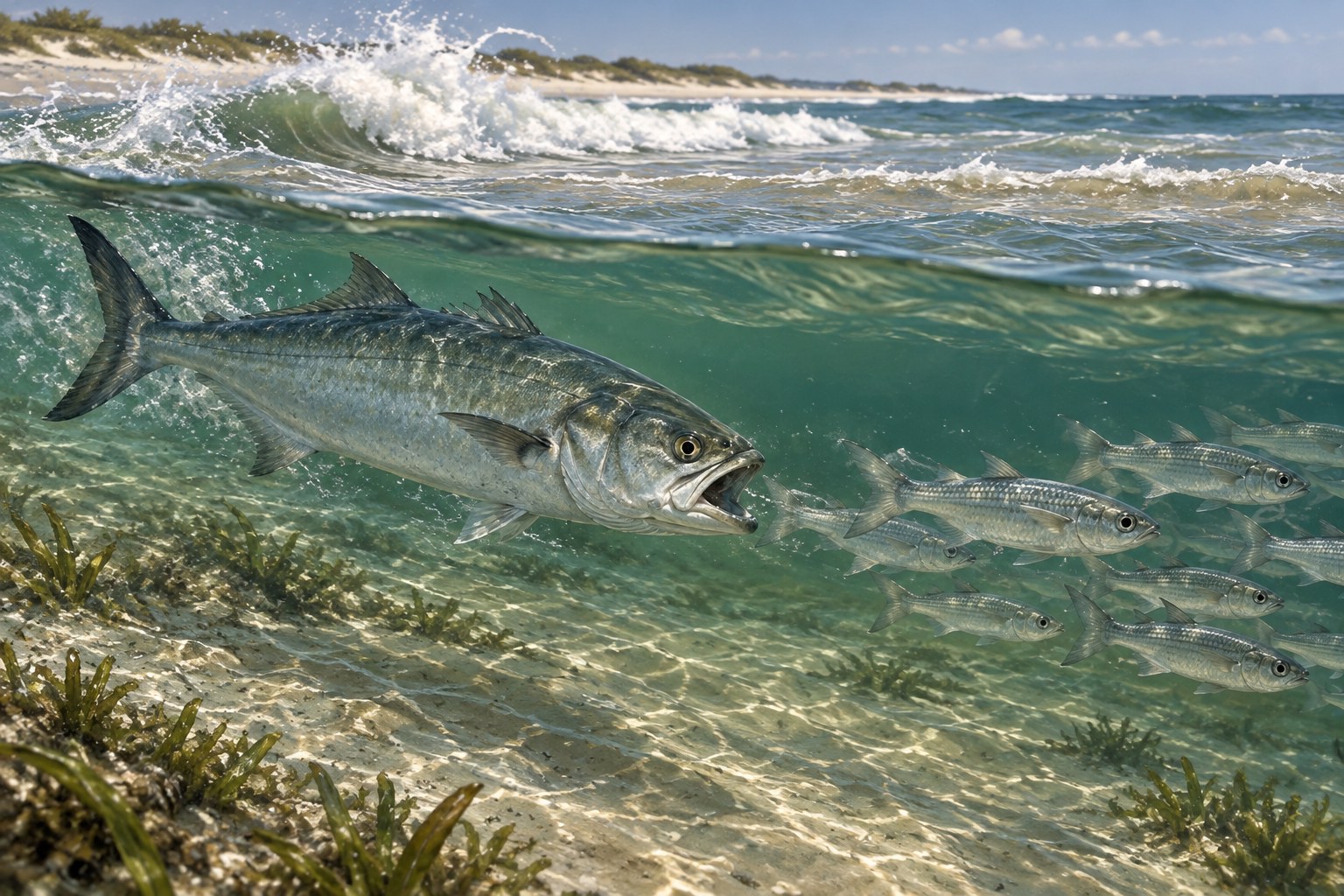
Bluefish can move quickly along the shore. Keep a suitable lure ready if you see repeated feeding activity, but resist running through other visitors or casting across their space. A clean casting lane matters more than reaching the first splash.
Retrieve a compact lure with enough speed to suggest escaping prey. If fish follow without striking, try a brief change of pace. Avoid large pauses that let the lure tumble into the bottom unless the depth and lure design suit that method.
The teeth require care. Use a leader and handling tools appropriate for the target, and keep fingers outside the mouth. A damaged leader should be replaced instead of trusted for another cast.
When the school moves away, return to watching the water. Repeated blind casts may be less useful than waiting for a new sign of bait. Beach fishing often alternates between patient observation and short periods of activity.
Make a small bait last long enough to work
For whiting, trim a shrimp into a piece that fits the hook. Tougher sections can stay attached better than a loose ball of soft flesh. Keep the hook point clear so a small bite can become a secure connection.
Use only the weight needed to keep the bait in a useful area. Some slow movement is acceptable if it remains controlled. If the rig races down the beach, retrieve it before it reaches another person or line.
For pompano, a short dropper rig with compact baits is a practical option. Sand fleas can be useful where collection is allowed, while prepared baits offer a backup when natural bait becomes difficult to keep on the hook.
Check the bait even when the rod has been quiet. Small fish can remove it without a dramatic bend. An empty hook soaking for twenty minutes teaches little about whether the chosen lane contains fish.
Choose the morning by conditions, not habit
A light breeze and manageable shore break make the first visit easier. Strong onshore wind can produce enough drag and rough water to overwhelm a beginner’s setup. A protected-looking patch beside a crossing is not necessarily safe to enter.
During warmer months, an early visit may reduce heat and crowding. Leave room in the schedule for a weather-related change. Thunder should end the session before the storm reaches the beach.
Cool fronts can move fish and reshape the surf. The day after a front is not automatically poor, but clarity, wave height and wind direction need another look. An old catch report cannot describe those details for the current morning.
Use the weather and tide planner to compare the available window. Then use the beach itself to decide where to cast.
Keep the outing comfortable and easy to move
A sand spike keeps a rod out of wet sand, but remain close enough to respond. Set it above the active wash and far from a walking route. A line stretched low across the beach is difficult for other visitors to see.
Pack drinking water and sun protection where they can be reached without emptying the tackle bag. Keep bait chilled and separate from food. A small covered container is easier to manage than an open bag spilling into the sand.
When landing a fish, guide it through a manageable wave and avoid dragging it far up the beach. Use wet hands, support the body and remove the hook promptly. Keep the fish in good condition whether it will be released or legally retained.
Birds may gather near bait. Do not feed them or cast toward a flock sitting on the water. Put discarded hooks and leader in a closed container so neither wildlife nor barefoot visitors can reach them.
A simple way to learn this stretch
Choose one open access and fish a small section thoroughly. Try the near trough first, then a second distance, while keeping the bait and rig mostly unchanged. Record which placement receives bites.
If the beach is crowded, shorten the fishing window or move to an uncrowded legal stretch. More rods do not improve an outing when there is too little room to cast safely. One controlled presentation can be enough.
The nearby Flagler Beach guide explains a different access setting and the pier construction issue. Do not build a backup plan around a closed structure.
Before keeping fish, check Florida’s saltwater fishing requirements from FWC. Verify your license situation as well as the target species rules.
Use a compact approach after beach work
Freshly shaped sand may leave a different slope from the one shown in older photographs. Begin with a short observation period and a moderate cast. Check for bottom contact and drifting debris before extending the distance. A familiar beach name should not replace that simple first inspection after construction or a strong weather event.
Beverly Beach fishing questions
Where is a useful public starting point?
Varn Park on North Ocean Shore Boulevard is a county beach access with restrooms and showers. Check current work notices and entrance signs before unloading.
Can nourishment change the fishing?
Yes. Added sand can reshape the slope, bars and troughs. Read the new shoreline rather than relying on a previous casting distance.
Should I bring a lure as well as bait?
A compact lure is useful if bluefish chase bait nearby. Bottom bait remains a practical choice when no surface activity is visible.
Is every beachfront path public?
No. Use designated public crossings and respect private facilities. A visible path does not establish permission to enter.