
NORTHEAST ATLANTIC
Crescent Beach
fishing guide
Crescent Beach fishing guide with public crossings, surf-reading tips, shrimp baits, nearby launch planning and seasonal considerations.
Explore the guide ↓A sandy beach with a separate river-side option
Crescent Beach gives surf anglers a long Atlantic setting south of St. Augustine. The main opportunity is simple to understand: waves move small food through shallow sand lanes, and fish follow those lanes. Reading the beach is more useful than choosing a casting distance in advance.
The nearby Intracoastal side is a different outing. Green Road provides a boat-launch option, but a launch should not be confused with an unrestricted bank-fishing area. Plan any paddle or boat trip separately from a beach session.
For a newcomer, a public beach access, a small shrimp bait and gentle surf form a practical start. Keep the first visit short enough to learn from the conditions without carrying more equipment than the group can manage.
Check the crossing and parking first
St. Johns County identifies the Crescent Beach access at Cubbedge Road. Its accessibility information notes that the boardwalk ends before a remaining stretch of soft sand of about 30 feet. That final section matters when choosing equipment or helping someone with limited mobility.
Confirm the current surface at the entrance. Storms and maintenance can change the last step onto the beach. An access described as having a boardwalk does not mean every part of the route is firm.
Green Road boat ramp is at 180 Green Road on the river side, with limited parking. Arrive with a realistic launch plan and leave ramp lanes clear. Do not park a vehicle or set rods where boaters need to turn or retrieve trailers.
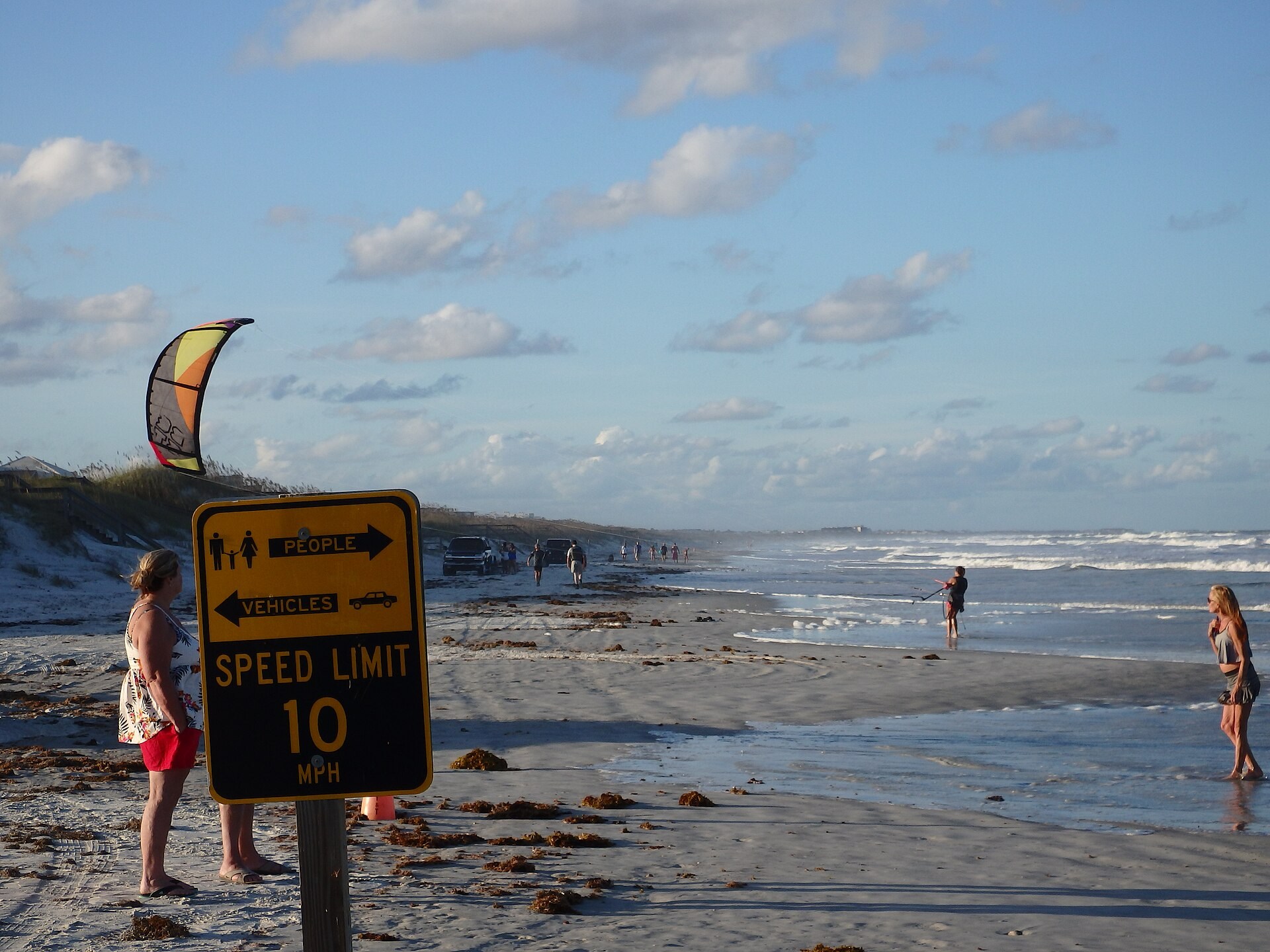
Beach vehicle rules need a current county check. An old photograph with a speed sign does not establish present driving permission, fees or entry availability. Walking from a legal lot is the simpler assumption for an occasional visitor.
Fish worth planning around
| Fish | Useful water | First bait or lure |
|---|---|---|
| Whiting | Shallow sand trough near the wash | Small shrimp piece |
| Florida pompano | Clean surf over sand and shell | Sand flea or compact shrimp bait |
| Bluefish | Bait moving close to the beach | Small spoon or suitable fish bait |
| Redfish | River-side current edge or coastal bait lane | Fresh bait on a controlled presentation |
| Spotted seatrout | Suitable estuary depth and moving prey | Shrimp suspended above bottom |
The beach targets and estuary targets are not interchangeable guarantees. A surf rig is designed to hold in waves. A float or light lure in the river setting works by moving through a chosen lane.
Flounder can also use sandy estuary transitions. If that is the goal, choose a route and access that lets you fish near the bottom deliberately. Do not expect a random cast from a busy ramp to substitute for a fishing plan.
Offer a small bait where the wash carries food
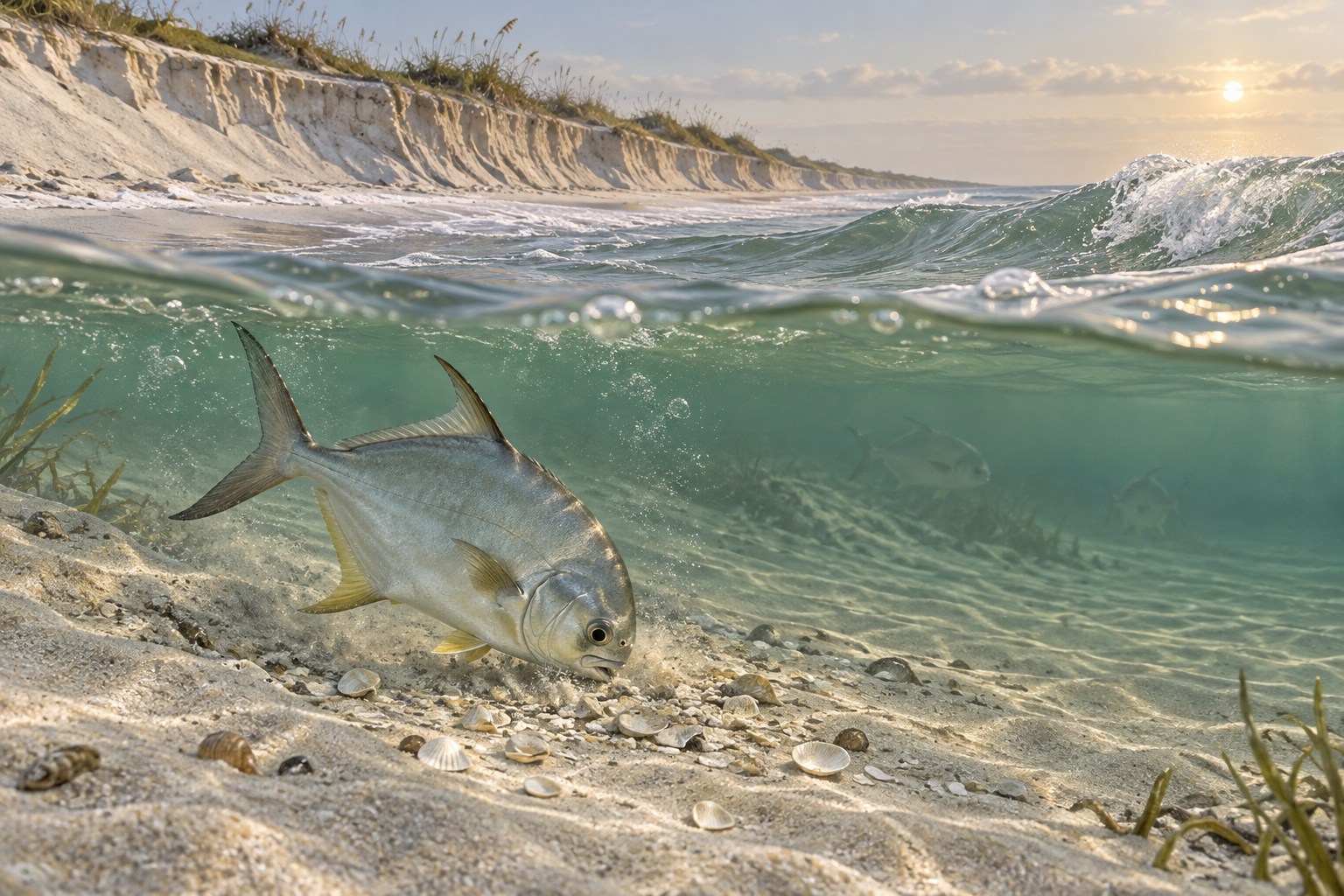
Pompano feed on small animals associated with sandy water. A compact bait suits that feeding style. Keep the point exposed and avoid turning a small hook into a large bundle of shrimp.
Sand fleas are useful when legally available, but fresh shrimp keeps the method simple. A small amount of artificial bait can help a rig withstand repeated picking. Check that it has not slid over the point.
Place one cast in the near trough before trying beyond the next bar. If fish are feeding close, extra distance only makes the presentation harder to monitor. Compare distances rather than assuming farther means better.
Water clarity and temperature influence when pompano appear. Use the day’s evidence and keep whiting as a sensible alternative. A mixed small-fish session is still a useful surf-fishing day.
Look for a trough you can actually fish
Watch several wave sets from dry sand. A strip of water that stays slightly darker or stops breaking may mark more depth. Foam traveling along it shows how the rig is likely to drift.
Choose a lane with room from swimmers and other anglers. A promising trough directly through an occupied swimming area is not available to fish. Walk to another authorized stretch or choose another time.
A deeper gap can also carry water away from shore. Stay out of it. Surf fishing does not require wading into an unfamiliar channel to reach a fish-holding feature.
If the sinker rolls down the beach with every wave, adjust within the rod’s limits. When the conditions demand too much weight, stop trying to force a light outfit to hold. A calmer visit will be easier to learn from.
Give the Green Road outing its own plan
A river-side launch opens a different set of choices. Before leaving the ramp, decide how far you will travel, what tide will remain for the return and how wind will affect exposed water. A short route is best for a first visit.
Fish likely edges rather than simply traveling farther. A marsh opening, small point or sand-to-channel transition gives a bait a reason to be there. Cast ahead of the current and let the presentation approach the feature naturally.
Wear a life jacket in a paddle craft and keep communication equipment accessible. Do not depend on walking through soft mud if water drops. A route that becomes too shallow can be difficult to solve from the bank.
Leave private docks and shore property alone. A launch provides water access, not permission to land wherever the fishing looks attractive. Keep clear of navigation traffic and other boats using the facility.
Pack around one main method
For the beach, carry a rated surf outfit, secure rod holder, spare leader and a few bottom rigs. Keep bait cool and take out only a little at a time. Pliers and a ruler should be near the top of the bag.
For the estuary, a medium spinning outfit and a few light presentations may be more useful. A float can hold shrimp above shell, while a weedless plastic covers a shallow edge. Match the hook and weight to the actual lure.
Do not bring so many rods that the group cannot keep track of them. One closely watched bait can show whether fish are stealing, tapping or ignoring it. Several unattended rods mostly add crossing lines and loose hooks.
Check line after contact with rough ground. A damaged leader may feel slightly rough before it fails. Replace it while the problem is still small.
Pick the comfortable weather window
Summer mornings reduce heat exposure and usually leave more time before thunderstorms. Spring and autumn can provide useful surf periods between fronts. Winter fishing may be quieter, with slower bottom presentations worth trying during calmer weather.
Strong onshore wind can add waves and weed. A wind along the shoreline may move the line toward other people even when the surf looks modest. Consider both direction and strength.
Use Crescent Beach-area tides and weather before the trip. Then look at the actual beach. Forecast tide height alone does not describe wave run-up or the current depth of a trough.
If thunder approaches, retrieve early and leave exposed shore. Allow enough time for the soft-sand section at the crossing, particularly with children or a loaded cart.
Keep a family visit easy to manage
Begin near a confirmed public access with a manageable walk. Explain the casting arc before anyone handles a baited rod. An adult should control hooks and help with unfamiliar fish.
Choose a finish time before the group becomes tired. Fishing, a snack break and a short beach walk can fit the same morning without leaving lines unattended. Keep food and bait in separate containers.
For another nearby beach-and-pier comparison, the Vilano Beach guide describes a defined river-side fishing facility. Its access period and landing needs differ from a surf session.
Check the current fishing requirements
The FWC recreational saltwater rules cover licensing and harvest. Confirm the species and measurement before keeping a fish, and release uncertain catches.
Use wet hands and support fish during hook removal. Keep sharp spines and teeth away from fingers. Collect line scraps before they blow into dunes or toward feeding birds.
Local access, vehicle and park rules apply alongside fishing regulations. A license does not grant entry through private property or into a closed beach section.
Use the bait check as a small experiment
Retrieve at a reasonable interval and examine the bait before replacing it. A clean untouched piece suggests a different problem from a bare hook or a tangled leader. Move the cast when the lane seems quiet; improve attachment when bait is being stolen; simplify the rig when it twists. Reading those differences gives each new cast a purpose.
Crescent Beach fishing questions
Is the boardwalk route firm all the way to the water?
No. County information identifies a remaining soft-sand section beyond the boardwalk. Check the current condition before bringing mobility equipment or a heavy cart.
Can I park indefinitely at Green Road ramp to fish?
Parking is limited and ramp operations need clear space. Follow the facility’s signs and use only permitted fishing positions.
Which bait is a useful surf starting point?
A small fresh shrimp piece covers whiting and several other sand-feeding fish. Keep the hook point exposed and inspect it after light bites.
Should I bring a kayak for my first beach visit?
A simple shore session is easier to organize. A kayak trip needs a separate launch, route, weather and return plan.