

NORTHEAST ATLANTIC
Vilano Beach
fishing guide
Plan Vilano Beach fishing from the public pier or Atlantic sand, with bait, current, target fish and realistic access advice.
Explore the guide ↓The fishing pier faces the river, not the ocean
Vilano Beach has an Atlantic shoreline and a public fishing pier on the Intracoastal side. That distinction matters. The pier offers a tidal-water setting with structure and boat traffic. Ocean fishing involves sandbars, breakers and space from swimmers.
Vilano Fishing Pier is at 260 Vilano Road. The county lists dawn-to-dusk access, restrooms and a floating dock. Start there if you want a defined public fishing facility, while checking current notices before the trip.
Do not confuse the pier with the oceanfront or assume that its floating dock is an unrestricted casting platform. Shared boating facilities need clear access. Follow signs for where fishing is permitted and keep hooks away from people boarding or leaving boats.
Choose a position with a landing plan
Walk the open pier before assembling every rod. Look at the water height, rail, current direction and room around other anglers. A position that allows a controlled cast and safe release is more useful than one chosen only because it is near the end.
Bring a landing method suited to the distance above the water. A small hand net may not reach. Avoid targeting fish that would require lifting by the line or leaning outside the railing.
Keep the walkway clear. Coolers and spare outfits should not form a barrier for other visitors. Cover hooks while moving between positions and check behind before every cast.
For ocean access, use an established public crossing and obey its parking signs. A riverside parking plan does not necessarily provide a convenient or legal route to every part of the beach.
Fish to consider around Vilano
| Target | Setting | Presentation to try |
|---|---|---|
| Flounder | Sand beside a tidal depth change | Slow minnow or soft plastic near bottom |
| Sheepshead | Hard structure with shell growth | Small shrimp or crab close to cover |
| Redfish | Moving-water edge with prey | Fresh bait or a swimming soft plastic |
| Spotted seatrout | Current lane above uneven bottom | Suspended shrimp or a small lure |
| Whiting | Ocean-side sandy trough | Compact shrimp bait on a bottom rig |
Jacks and bluefish may pass through when bait is present. Keep an eye on activity without casting across another person’s line. A short feeding burst is not worth turning a shared pier into a tangle.
The table separates habitat possibilities from guaranteed catches. The productive method depends on the current and available space during the visit, not just the species name on the plan.
Work the sand beside the seam
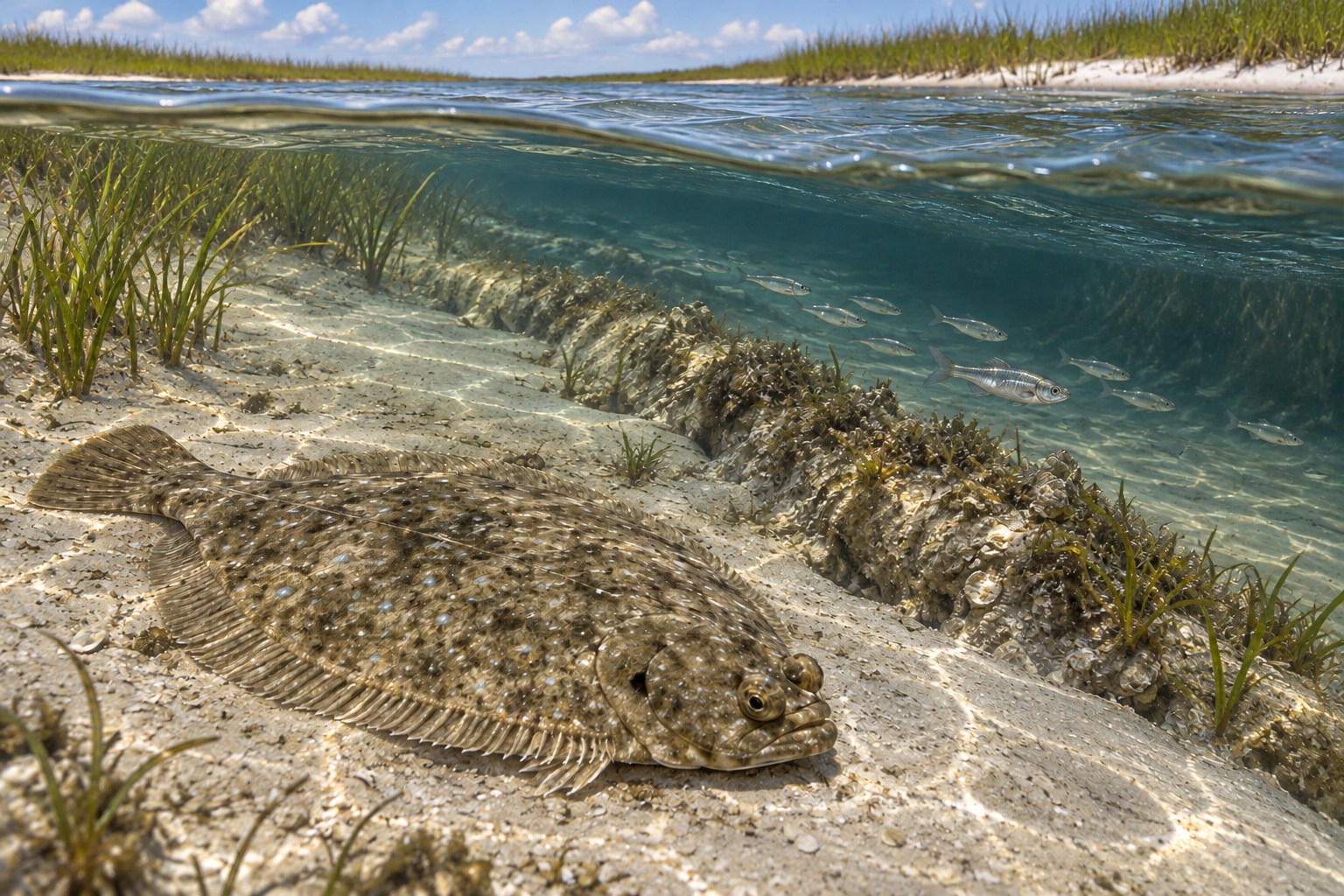
Flounder often rely on concealment near the bottom. A lure traveling high through the water may pass above their useful feeding range. Keep a small jig or natural bait close to the sand without dragging it continuously into rough cover.
Begin with a weight that allows a controlled descent. Let the bait settle, move it a little and keep contact during the pause. A bite can feel like extra weight rather than a sharp strike.
Vary the angle when a retrieve finds a snag. The edge of the obstruction may be useful even when the middle is unfishable. A slightly shorter cast can keep the bait in the productive lane and out of the worst cover.
Have the net ready before the fish reaches the pier. Flounder can shake free near the surface, and a rushed lift is an avoidable mistake. Current harvest restrictions still apply even when this method produces fish readily.
Let the current show where to cast
Watch a small piece of floating material pass the pier. It can reveal the direction of flow and the slower water beside a structure. Fish may hold near that boundary while prey passes within reach.
Place the bait slightly upstream of the intended lane when the space is clear. Let it move naturally rather than pulling hard against the flow. Keep enough contact to recognize a bite and steer away from a piling.
If the current is too strong for the rig, wait for a more manageable stage or move to another permitted position. Increasing sinker weight without considering the rod rating and neighboring lines is not a complete solution.
When the tide changes, the useful side of the structure may change too. Take a moment to observe before repeating the earlier cast. A productive morning angle can become an unhelpful afternoon one.
Keep sheepshead baits compact
Sheepshead feed close to hard surfaces. A small crab or shrimp offered near shell growth can be more useful than a large bait swinging far from the piling. Keep the hook point available and inspect the bait after light taps.
Use a short, controlled presentation where permitted. Too much loose line can wrap around structure. Too much weight can bury the rig in a crevice. Adjust the setup to the actual flow instead of using a fixed sinker for every visit.
Do not scrape the pier to gather bait or attract fish. Bring a legal bait supply. Keep the area tidy so birds do not take hooks from an unattended container.
If a fish turns toward structure, apply steady pressure within the outfit’s limits. Inspect the leader afterward. Abrasion often explains a later break that otherwise seems mysterious.
Use a different method on the Atlantic beach
On the ocean side, begin by reading the first bar and trough. A small shrimp bait in the near lane can interest whiting. Pompano may also use clean sandy surf when conditions suit them.
Stay away from occupied swimming and surfing water. A beach entrance can become crowded quickly, especially when the weather is pleasant. Retrieve before another person enters the line’s path.
A rod holder should sit securely above the wash, with the angler nearby. Check it as the tide advances. Softening sand can loosen a spike that seemed firm at the beginning.
For a longer open-beach comparison, the Ponte Vedra Beach guide explains public entrance planning and trough fishing farther north.
Use the forecast to simplify the day
Strong wind can make either side uncomfortable. On the pier, it may bow the line and complicate a precise drop. On the beach, it may add surf and weed. Choose the setting that remains manageable rather than assuming one is always sheltered.
Summer sessions are often easier early, with a firm exit if thunderstorms approach. Cooler months may favor patient bottom work. Spring and autumn can bring changing bait activity, but passing fronts still determine the day’s conditions.
Check tides and weather near Vilano and remember that local current can lag a published tide height. The visible flow around the pier is the final guide for the cast.
Keep dusk in the return plan because the county lists dawn-to-dusk pier access. Do not extend a visit beyond posted hours simply because the bite improves late.
A practical pier bag
Bring pliers, leader material, a few spare hooks, suitable sinkers and a ruler. Keep the selection small enough that a rig change does not cover the walkway. Store sharp items immediately after use.
Water and shade protection matter on a pier with limited escape from the sun. Keep bait cool and separate from food. Live shrimp needs aeration and sensible stocking, while dead bait should be taken out in small portions.
For children, begin with one rod and a controlled drop where allowed. Teach them to watch the line and listen for instructions before adding casting distance. Keep them away from rail climbing and loose hooks.
A fish intended for release should spend as little time out of water as practical. Prepare tools and a camera in advance, and support its body rather than holding it by the line.
Check both fishing rules and facility rules
The FWC recreational saltwater guide provides current license, gear and harvest requirements. A public pier should not be assumed to cover your license unless the operator confirms that arrangement.
Follow the signs for the pier and floating dock. Fishing access does not override boating use, temporary closures or the posted opening period. Keep all discarded line out of the river.
Prepare two different ways to finish a catch
From the pier, landing depends on the height and the approved equipment available. From the beach, it depends on manageable waves and a clear stretch of sand. Think through that difference before choosing the target. A net suited to a raised platform may be unnecessary on sand, while a simple beach release routine cannot be copied from a high rail. Keep the tools where they can be reached without leaving a fish unattended.
Vilano Beach fishing questions
Is Vilano Fishing Pier on the Atlantic?
No. It faces the Intracoastal side at 260 Vilano Road. Ocean surf fishing is a separate setting.
Can I use the pier all night?
The county lists dawn-to-dusk access. Check current signs and plan to leave within the allowed period.
What is a useful flounder presentation?
A minnow or small soft plastic kept near the sandy bottom can cover a depth transition. Move it slowly while maintaining contact.
Can I cast from any part of the floating dock?
Do not assume so. Follow posted fishing permissions and keep the boating access clear.