
NORTHEAST ATLANTIC
Guana
fishing guide
Compare Guana lake, river and ocean fishing with entrance hours, motor limits, trout and redfish tactics, and low-water planning.
Explore the guide ↓Guana is several fishing settings, not one
The Guana area combines Atlantic beach, brackish lake and tidal river habitat. A visitor who arrives with only the place name may end up at the wrong entrance with the wrong tackle. Choose the water you want to fish before choosing the route.
The beach favors small bottom baits in sandy troughs. Lake and river edges call for attention to depth, vegetation and changing water. Dam access has its own hours, and a kayak plan must account for shallow mud and the return tide.
This is a protected landscape with multiple managed areas. Follow the rules for the exact entrance and water body. A fee or pass for one part should not be assumed to authorize every nearby activity.
Use the correct entrance and schedule
The reserve’s visitor information lists Guana Dam access from 4 a.m. to 9 p.m., while park trails and beach access operate from 8 a.m. to sunset. Check current notices before traveling because temporary conditions can change what is usable.
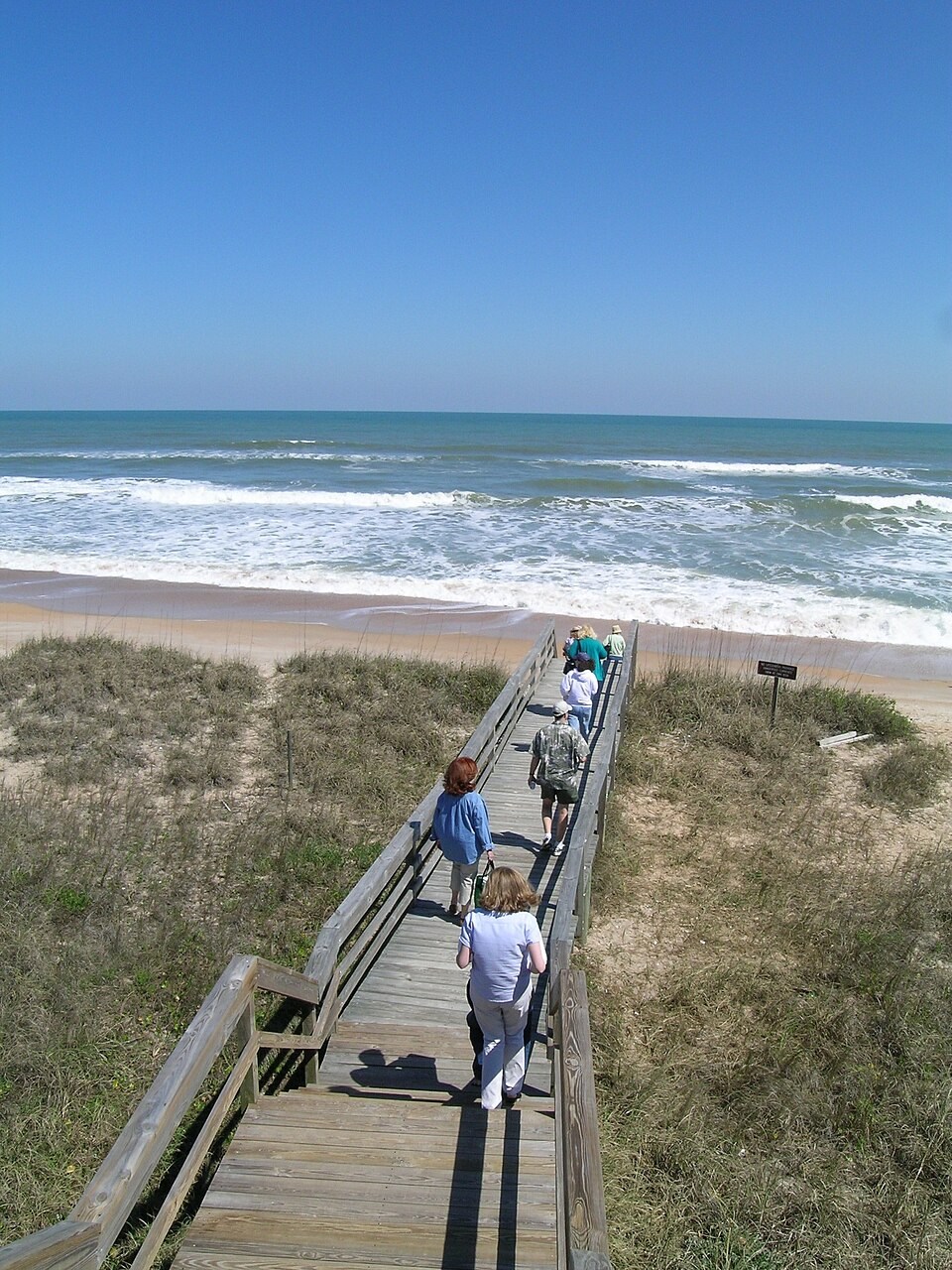
Three beach parking areas serve the Atlantic side along A1A. Use their designated crossings and do not walk through dunes to shorten the route. There are no lifeguards at these beach accesses.
Guana Lake has a 10-horsepower motor limit. That restriction matters when choosing a boat, and it does not replace other boating or fishing requirements. Confirm the exact launch arrangement before towing.
Low tide can leave parts of Guana River too shallow for easy paddling, with soft mud that is difficult to cross. Do not plan to solve a stranded kayak by stepping out and dragging it through an unfamiliar creek.
Match the plan to the habitat
| Water | What to look for | Method to begin with |
|---|---|---|
| Atlantic beach | Sand trough and manageable surf | Small shrimp bait for whiting |
| Brackish edge | Prey near a depth or vegetation change | Light lure worked beside cover |
| Tidal river | Drain or bend with moderate movement | Shrimp carried through the lane |
| Shell margin | Open sand beside rough bottom | Weedless plastic or carefully placed bait |
| Deeper pocket | Water retained as nearby shallows drain | Slower retrieve near the usable depth |
Redfish, spotted seatrout and flounder are reasonable estuary targets where their habitat is present. Beach whiting and occasional pompano require a different presentation. Do not treat a catch report from one side of Guana as a forecast for the other.
Salinity and water conditions can vary within this system. Check the applicable license and harvest rules for the water and fish you will pursue, rather than deciding from appearance alone.
Search the edge rather than the whole lake
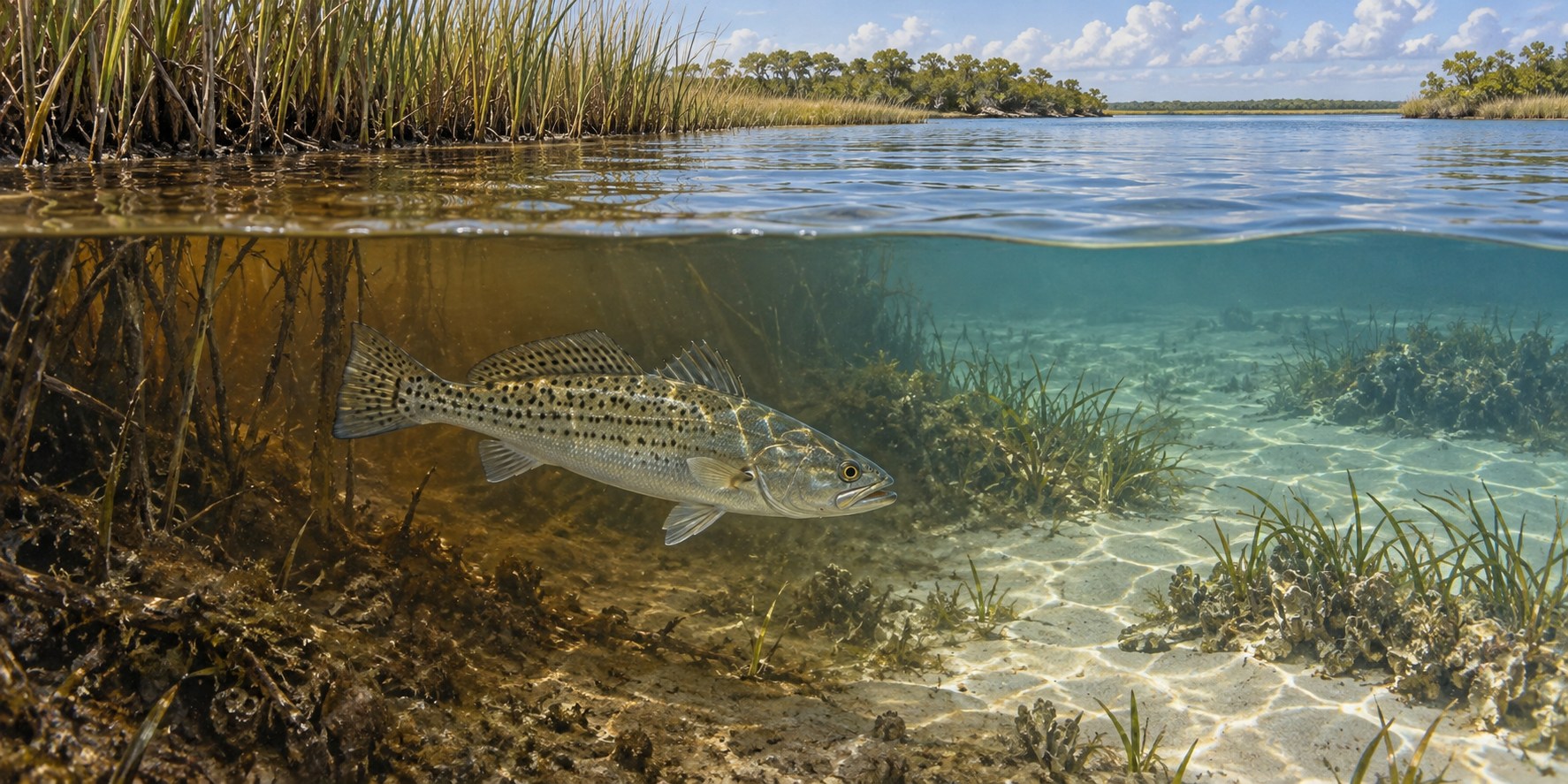
Spotted seatrout may hold where small prey crosses a useful depth. Look for an opening beside vegetation or a slightly deeper lane rather than casting randomly across a wide surface.
A small swimming soft plastic can cover the area at a controlled speed. Start with a steady retrieve and occasional short pauses. If it drags plants on every cast, change depth or angle.
Live shrimp under a float offers another way to keep bait above bottom clutter. Set the depth for the place in front of you. A float is useful only when the bait hangs in a fishable part of the water.
Do not assume clear water is empty because you cannot see fish. Stand back, reduce noise and watch for small bait movements. A quiet approach can matter more than a new lure color.
Present a lure along the shallow margin
Redfish can use shallow edges to search for food while keeping deeper water nearby. A small point, drain or shell boundary gives them a route. Cast ahead of the likely path and bring the lure across it.
A weedless rig helps near plants, but it still needs careful placement. Pulling directly into thick vegetation or oysters creates unnecessary snags. Aim along the boundary, where the lure remains visible and has room to move.
If a fish turns toward the lure, avoid an abrupt extra splash. Keep a controlled motion and let the presentation remain within reach. A follow is useful information even when it does not become a strike.
Protect the shallow habitat while moving. Do not power a boat across water too shallow for the motor or walk through shell beds to shorten a route.
Plan the return before the launch
A Guana paddle should begin with the tide, wind and a conservative turnaround point. The route back may be against the flow or into a stronger breeze. Distance alone does not describe the effort required.
Keep the first route short and recognizable. Note bends, openings and the location of the launch. A phone map is useful, but have a way to navigate if the battery fails or the device becomes wet.
Wear a life jacket, carry communication equipment within reach and tell someone the plan. Keep hooks and spare rigs contained. A loose lure in a kayak is an avoidable distraction when conditions require attention.
Low water deserves particular caution here. Soft mud is not a firm emergency walkway. Turn around while the route is still usable instead of waiting until a narrow creek becomes impassable.
Stay away from wildlife and do not feed animals around the bank. Give alligators a wide margin in brackish and freshwater settings, and keep pets and children under close control where permitted.
A separate surf-fishing lesson
At a beach access, spend a few minutes studying the waves. A repeated breaking line can mark a bar. The quieter strip inside it may be the first trough, where small fish can feed close to shore.
Use a short shrimp bait and a weight that holds within the rod’s rating. Check after small taps and replace damaged bait. A long cast is optional; a controlled presentation in useful water is the goal.
Keep away from swimmers and remain on dry sand when currents are uncertain. Gaps in the breakers can carry outward flow. Without lifeguards, a conservative shore-only approach is especially sensible.
If weed overwhelms the rig or the surf becomes too heavy, end the attempt. A nearby lake is not an automatic backup unless you also have the correct access, equipment and rules for that water.
Let conditions choose the pace
Summer heat calls for water, shade breaks and a quick exit when thunder approaches. Early dam access may offer a cooler window when current rules permit, but beach access begins on its own schedule.
Cooler periods can favor a slower lure and deeper retained water. Spring and fall may provide comfortable days with active prey, though fronts can change clarity and wind overnight.
Check the local tide and weather information before departure. Use tide predictions for the tidal route, while recognizing that a managed lake does not behave exactly like the nearby ocean.
For another open-coast option, compare Ponte Vedra Beach access and surf methods. Keep the entrance details for each destination separate.
Pack for a focused outing
A small estuary kit might include soft plastics, a few jig weights, shrimp hooks, floats and spare leader. A beach kit needs a suitable sinker and rod holder instead. Avoid carrying both complete systems unless the day genuinely allows two planned sessions.
Bring pliers, a ruler, drinking water and a bag for discarded line. Keep the release tools ready before fishing. Wet hands and body support help return a fish promptly.
Choose a practical finish time. Reaching the launch before low water or leaving a beach before sunset is part of the fishing plan, not a separate detail to consider after the bite stops.
Read the rules for the exact water
Use FWC fishing guidance to verify licensing, species limits and relevant freshwater or saltwater requirements. Reserve access rules and motor restrictions still apply in addition to those requirements.
Respect closed trails, wildlife areas and posted boundaries. Do not gather bait or launch from an unmarked place merely because it is close to the water.
Let water type guide the spare tackle
A few floats and small lures can serve a brackish-edge plan, while suitable holding weights are more relevant to the Atlantic. Keep those choices separate enough that changing locations does not create confusion. The lake’s motor limit is only one part of a boating plan; the craft also needs adequate depth, a legal launch and a safe return route. A short first session can establish those practical details before attempting a longer fishing day.
Guana fishing questions
Are the beach and dam hours the same?
No. Visitor information lists a longer dam-access period and separate beach and trail hours. Check the current schedule for the entrance you intend to use.
Can I use a large motor on Guana Lake?
The published limit is 10 horsepower. Confirm launch and boating requirements before bringing a vessel.
Why is low tide important for a kayak?
Shallow river sections can expose difficult mud and prevent an easy return. Plan to travel while the route retains enough water.
What is the easiest beach target?
Whiting in a manageable nearshore trough are a useful starting point. Use a small shrimp bait and keep the rig under control.