

NORTHEAST ATLANTIC
Daytona Beach Shores
fishing guide
Daytona Beach Shores surf guide with restored Frank Rendon Park access, pompano rigs, whiting bait and advice for a busy beach.
Explore the guide ↓Make the sand the center of the plan
Daytona Beach Shores is well suited to a focused surf-fishing visit when the ocean is manageable and there is room away from swimmers. The useful fishing ground is often a nearshore trough rather than a distant deep-water spot.
Whiting can feed in that inside lane, while pompano travel through clean sandy water in search of small prey. Bluefish or other predators may interrupt a quiet session when bait moves close to the beach. Begin with the bottom fish and keep an eye on the surface.
This guide does not rely on Sunglow Pier as an available fishing platform. Its current fishing access was not confirmed during this review. A nearby restaurant or an old pier photograph is not enough to establish that anglers can use the structure.
Use current information for Frank Rendon Park
Frank Rendon Park is at 2705 South Atlantic Avenue. Volusia County announced its restored opening for March 31, 2026 after storm-related repairs. The park’s current listing includes beach access, restrooms, showers, picnic facilities and parking.
Check the entrance for parking charges and temporary notices. County off-beach parking and beach-driving arrangements are separate, and older pages may describe fees that no longer apply. Follow the current signs for the lot you use.
The park lies beside a driving-beach area, but that does not mean vehicles may park anywhere in front of the access. Keep gear outside traffic routes and obey the beach’s marked restrictions. Do not stretch a line across a path used by vehicles or pedestrians.
A restored crossing can make access easier, but the sand beyond it still changes with tides and storms. Assess the actual walk and waterline before unloading a heavy cart.
Give pompano a reason to stop
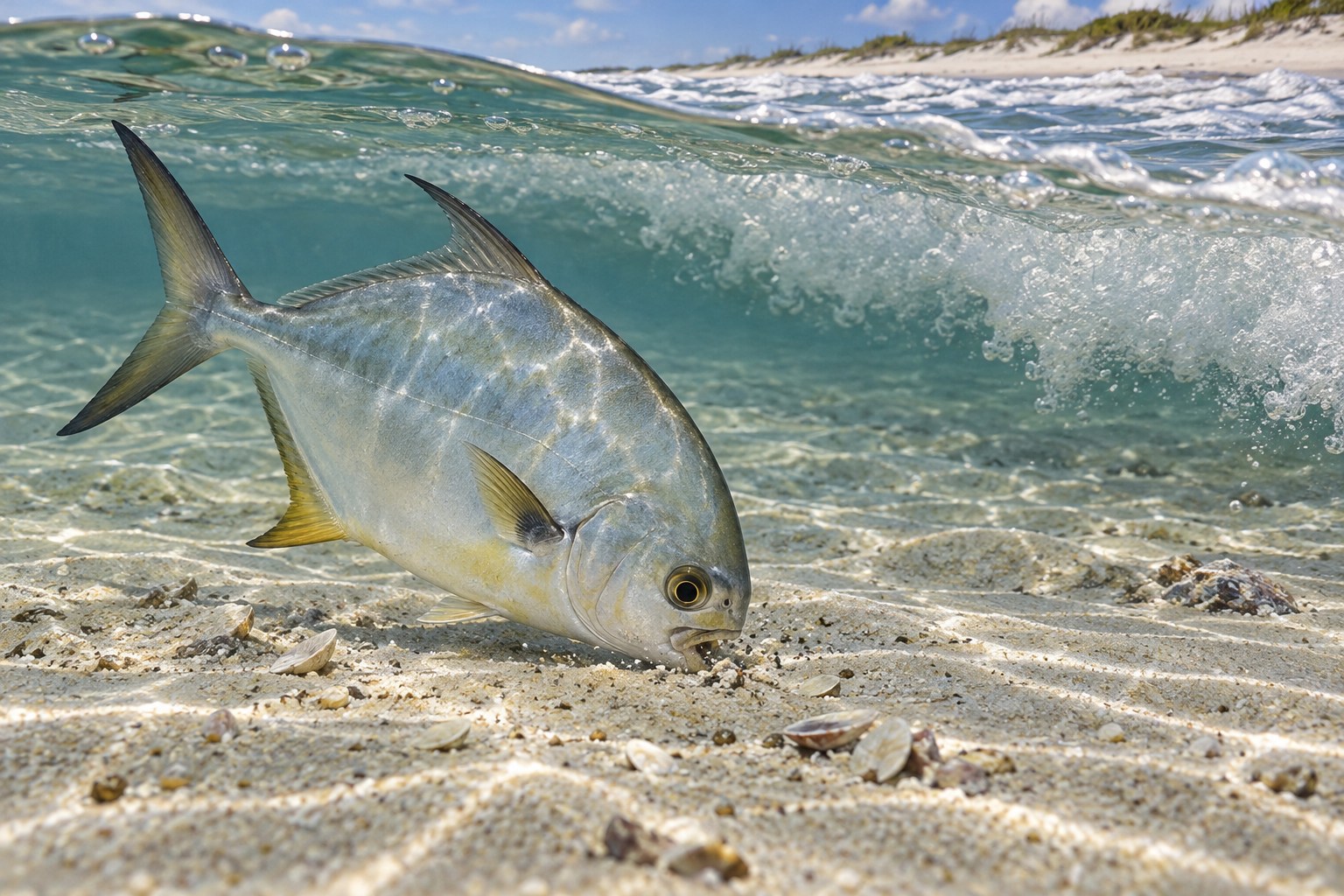
Pompano search sandy areas for small prey. A compact dropper rig presents bait just above the bottom, where it can remain visible in moving water. Avoid oversized pieces that cover the hook or twist around the leader.
Sand fleas are an option where collecting them is permitted. Small shrimp pieces and prepared baits are practical alternatives. Start with two bait choices at most so you can recognize which one receives attention.
Test the first trough before aiming beyond the bar. If the nearer bait gets bites, repeat that distance. If the water is too shallow or the bait remains untouched, shift the next cast gradually outward.
Pompano are mobile. A quiet period does not necessarily mean the rig is wrong, but it does justify checking bait condition and placement. Keep watching for changes in water color and wave pattern.
Use waves to locate a lane
Repeated breaking waves can outline a sandbar. The strip between that bar and dry beach may be deeper than it first appears. Look for a darker band or a place where the foam thins after crossing the bar.
A low section in the bar can create stronger flow. Fish may use nearby water, but an outward-running gap can also be dangerous. Stay on dry sand and do not wade into it to gain casting distance.
Notice where loose seaweed travels. If it races along the beach, your line may do the same. Choose a more manageable stretch or reduce the time spent fishing in that current.
After a storm or beach project, repeat the observation from the beginning. Sandbars are not fixed structures. The place that worked on a previous trip may now be too shallow or too rough.
Use the bite to guide the next move
| Observation | Likely issue or opportunity | Useful response |
|---|---|---|
| Small taps followed by bare hooks | Small fish removing soft bait | Use a smaller, firmer piece and check sooner |
| Steady sideways drag | Current or weed moving the rig | Retrieve and restore control before recasting |
| Bites only on the short cast | Fish using the inside trough | Repeat that lane instead of casting farther |
| Baitfish jumping repeatedly | Possible predators feeding nearby | Try a compact lure if the casting area is clear |
| People entering the water ahead | The fishing lane is no longer clear | Reel in and select another safe position |
These adjustments keep the session understandable. Change one factor, observe the result and then decide on the next step. Replacing the whole rig after every quiet cast makes learning harder.
Keep a whiting setup light enough to read
Whiting often provide the first signs of life in a sandy trough. A small hook and a short shrimp bait suit their feeding better than a large piece intended for a much bigger fish. Leave enough point exposed to make contact.
Select a weight that holds within the rod’s casting limit. A smooth cast with suitable tackle is safer and often more accurate than forcing a heavy sinker. If the surf demands too much weight, choose another day.
Hold the rod for a while if the bite is difficult to see from a holder. This can help separate small taps from the regular movement of waves. Keep a relaxed grip and avoid striking at every vibration.
After landing a fish, check the hook, bait and leader before the next cast. A small amount of preparation between catches prevents tangles and missed opportunities.
Choose a weather window you can finish safely
Early summer hours can be more comfortable, but heat and storms still need attention. Carry drinking water and leave enough time to return to the vehicle before thunder reaches the coast.
Cooler periods may suit pompano and whiting efforts, while fronts can create rough water or heavy weed. Look at the forecast and actual surf instead of choosing solely by season.
Tide changes alter the space available on the beach and the depth of the trough. Place equipment high enough that rising water does not surround it. Keep a clear route back to the crossing.
Consult the area’s tide and weather information. If a designated fishing pier is the priority, compare the separate Daytona Beach city-pier guide and verify its current schedule.
Finish with careful fish handling
Keep pliers and a measuring tool ready before the bite. Support a fish with wet hands and avoid dragging it far across dry sand. A release should be prompt, especially in warm weather.
For a fish you intend to keep, first confirm identification and the current rule. Use FWC’s saltwater recreational regulations for licensing, seasons and harvest requirements. A public beach is not an automatic license exemption.
Chill a legal catch promptly and separate it from bait. Carry out unused packaging and discarded tackle. Do not leave scraps where they attract birds into the casting area.
Make a brief note of the successful trough, bait and tide stage. Those observations help you return with a better plan while remembering that the sand itself will keep changing.
Treat a damaged bait differently from an empty lane
A shredded shrimp tells you that something reached the presentation. Before moving, shorten the bait, expose the hook point and check sooner. An untouched bait after several well-controlled casts suggests testing another distance instead. A tangled rig calls for a casting or rig adjustment. Those are three different problems with three different responses.
Keep the first session small enough to notice the difference. One rod held for a few casts can teach more than several unattended rods in holders. Once the useful distance and bait size are clear, repeat them carefully. The aim is a readable fishing pattern, not simply more equipment in the water.
Put the plan into practice
Keep the access route clear while assembling the rod. Carry the outfit to an appropriate open position before attaching bait, particularly where families are moving between parking and the beach.
Daytona Beach Shores fishing questions
Has Frank Rendon Park reopened?
The county announced its restored opening for March 31, 2026. Check the current park notice for any later change before visiting.
Can I count on fishing from Sunglow Pier?
Current fishing access was not verified for this guide. Confirm directly before making it the reason for your trip.
What should I try first from the sand?
A compact shrimp bait in the inside trough is a useful test for whiting. Adjust the distance after seeing how the bait and current behave.
Are parking and beach-driving fees the same?
They are separate arrangements. Read the current signs for the parking lot and any beach vehicle access you intend to use.