
NORTHEAST ATLANTIC
Ponce Inlet
fishing guide
Ponce Inlet fishing guide with Lighthouse Point Park, current seams, snook and sheepshead tactics, safe landing and surf alternatives.
Explore the guide ↓The inlet rewards observation and restraint
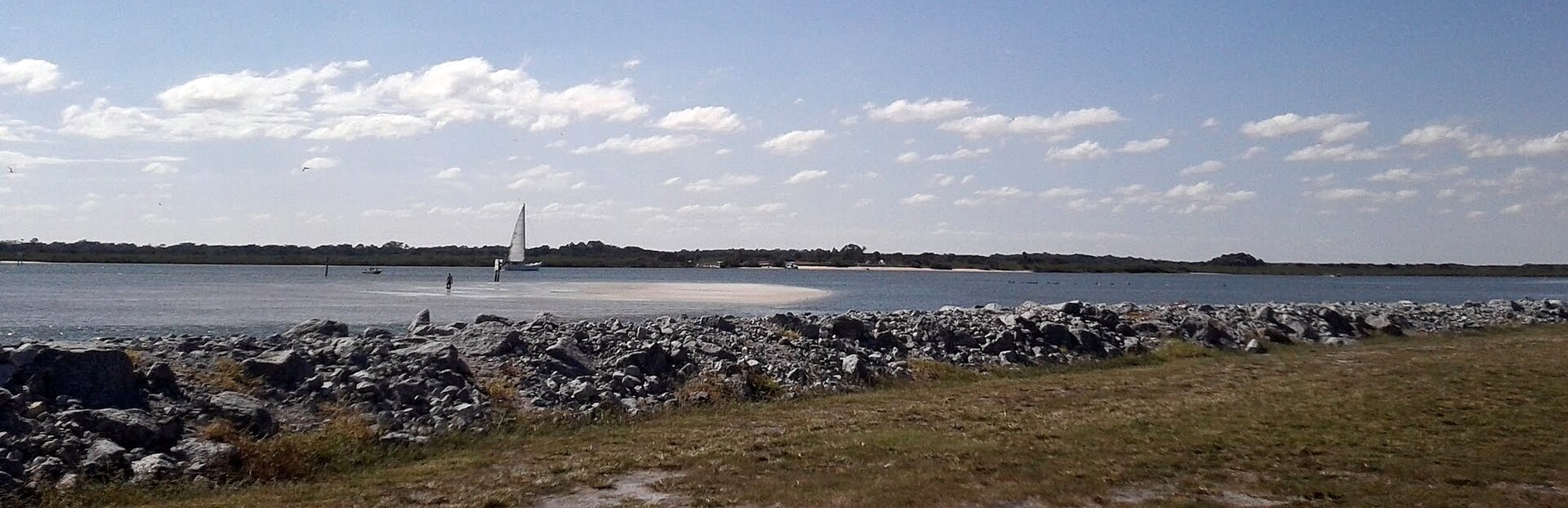
Ponce Inlet connects ocean water with the Halifax and Indian River estuary system. That movement can bring bait and predators within reach, but it also creates a much more demanding setting than a quiet surf beach. Current, waves, rocks and navigation traffic all shape the fishing.
For a first visit, choose a designated public fishing area and stay on the intended walking surface. Do not treat the rock line as a route to a better position. A safe casting lane is more valuable than a few extra yards of reach.
Snook, redfish, sheepshead and passing bluefish or mackerel are possible targets in suitable conditions. Sandy beach water offers a separate whiting or pompano plan. Choose the method after seeing which water is safely available.
Start with Lighthouse Point Park
Lighthouse Point Park is the county access on the north side of the inlet, at 5000 South Atlantic Avenue. Its published facilities include an approximately 800-foot jetty deck. Check current entry charges, hours and closure notices before arriving.
Use the maintained deck and designated routes. Do not climb around a barrier or descend onto wet rocks. Waves can reach places that looked clear between sets, and the current beside the inlet is not a safe wading shortcut.
Keep public walking space open. Carry tackle in a compact bag and secure hooks while moving along the deck. If the rail is crowded, wait for space or choose a different fishing plan.
Park admission should not be assumed to include a fishing license. Verify your own license or exemption and any specific facility arrangement. Access fees and fishing regulations address different things.
Place a snook bait beside the current
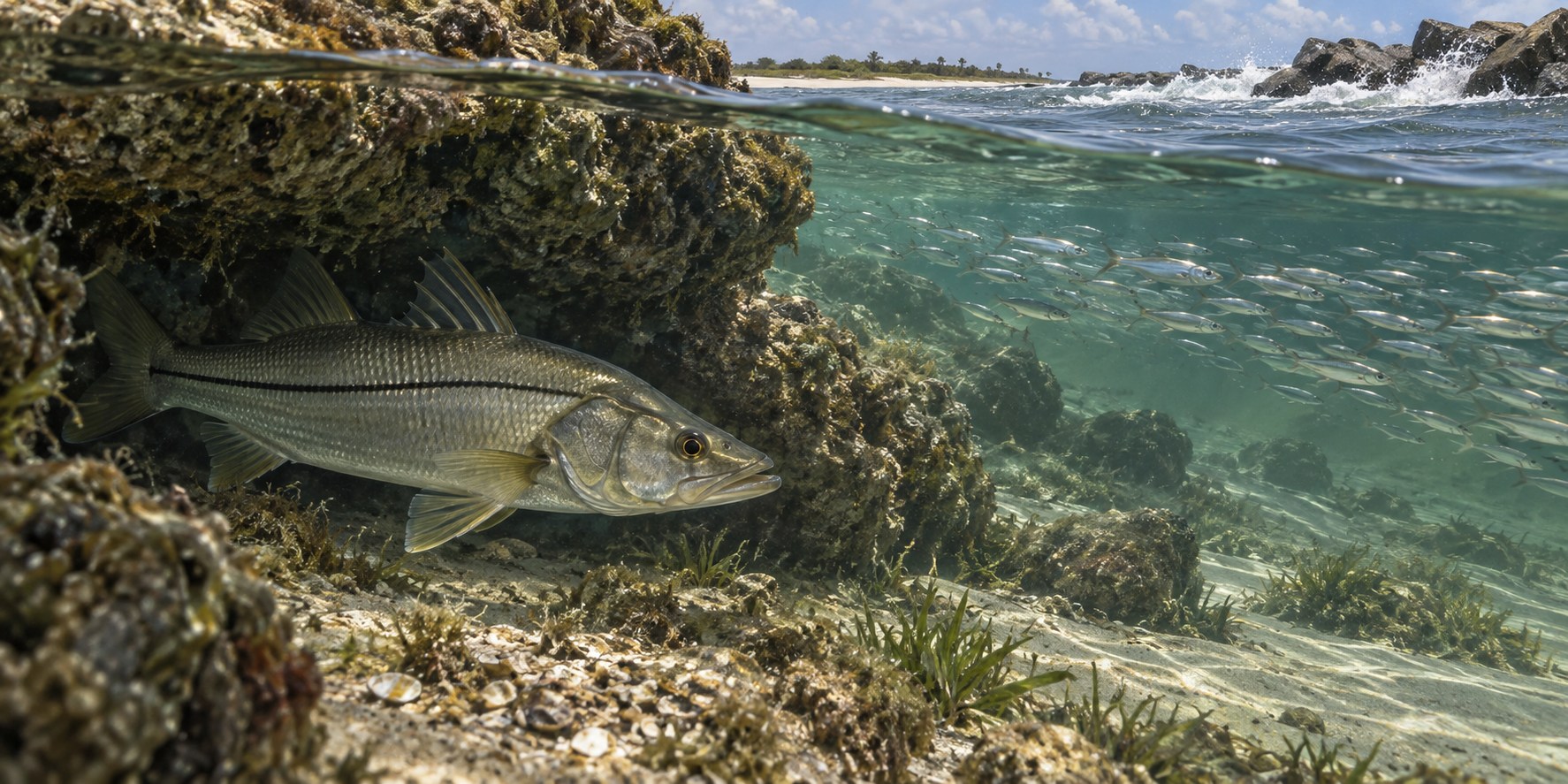
Snook can use structure and changes in current to meet passing prey. Look for the boundary between faster water and a calmer pocket. A bait presented along that boundary may remain useful longer than one swept through the main channel.
Use tackle capable of controlling a fish near rough surfaces. That does not mean locking the drag completely. Maintain steady pressure and guide the fish toward a clear landing area rather than allowing the line to rub against rock.
Live bait can work when it drifts naturally, while a swimming lure can cover a reachable seam. Select a weight that keeps the presentation controlled without forcing it into the bottom. If every cast snags, change the angle or method.
Snook harvest rules are regional and seasonal. Catching one does not establish that it may be retained. Plan for a careful release unless you have verified the current requirements for this location.
Fish the manageable water, not the fastest water
Watch the current before casting. Foam, bait movement and the direction of neighboring lines help show how the water is traveling. A predictable moderate lane is often more practical than a powerful central flow.
As the tide changes, the same casting angle may stop working. Shorten the drift or move the presentation to a new seam. Do not leave a line sweeping across several positions just because it began in a clear lane.
Slack water can make bottom contact easier, while stronger flow may concentrate food. Neither stage guarantees a bite. Use the period when your tackle can remain controlled and your landing route stays safe.
An inlet tide prediction is a planning aid, not a description of every eddy beside the jetty. Watch the actual water throughout the visit.
Keep several realistic options in mind
| Target | Water to examine | Starting presentation |
|---|---|---|
| Snook | Structure beside a current seam | Live bait or a controlled swimming lure |
| Sheepshead | Reachable hard cover outside the strongest flow | Small crustacean bait close to structure |
| Redfish | Current edge or adjoining estuary habitat | Bait placed where it can remain fishable |
| Bluefish or mackerel | Open water with visible bait activity | Compact lure retrieved through the school edge |
| Whiting | Safe sandy beach trough away from inlet flow | Small shrimp bait on a surf rig |
The inlet can produce large fish, but a first visit should not be built around fighting the largest possible target from an awkward position. Match the tackle and landing equipment to the fish you can handle responsibly.
Keep structure baits close and deliberate
Sheepshead feed around hard surfaces where small food items collect. A compact shrimp or other permitted crustacean bait can be effective near reachable cover. Keep enough contact with the rig to notice a brief bite.
Start on the open side of the structure. Dropping into a narrow gap may place the bait near fish, but it may also leave no practical way to retrieve the rig. Repeated losses are a sign to change the presentation.
Check the hook point after contact with rock. Inspect leader for abrasion and replace worn sections. Small equipment damage matters when a fish turns toward cover.
Handle the fish with attention to sharp spines. Have the dehooking tool ready and avoid balancing a catch on a narrow rail while reaching for equipment.
Use the beach as a separate, calmer lesson
When an open sandy stretch is safely available away from inlet current and swimming areas, surf fishing can offer a simpler outing. Watch for the first trough and begin with a modest cast.
Whiting often respond to a short shrimp piece near bottom. Pompano may take compact baits in clean moving water. Keep the rig small enough to present naturally and check it regularly.
Do not wade toward the inlet mouth to gain distance. The transition from beach shallows to moving inlet water can be abrupt. Fish from a safe shore position and respect all posted restrictions.
For the south side of the inlet, see Smyrna Dunes Park’s separate access guide. Reaching that side requires its own route and entry plan.
Give navigation water a wide margin
Boats need room to enter and leave the inlet. Keep lines out of travel lanes and respond early when a vessel approaches. A long cast across moving traffic is not a workable fishing strategy.
This guide’s shore access should not be interpreted as a recommendation for a beginner to take a kayak through the inlet. Breaking waves, current and wakes can combine quickly. Small-craft decisions require experience and a full marine assessment.
Even from a deck, watch the water for larger wakes. Secure loose equipment and avoid positions where a surprise wave could push you toward the edge. If conditions worsen, leave before the route becomes uncomfortable.
Choose a conservative weather window
Wind opposing current can make inlet water rougher than expected. Look beyond the beach forecast and consider the marine conditions at the entrance. A sunny sky alone does not make the jetty comfortable.
Cooler weather may favor a slower structure presentation, while warmer conditions can bring active bait movement. These are broad clues rather than fixed fishing calendars. Local prey and safe current matter more on the day.
Review the tide and weather outlook and leave a margin for a changing forecast. Thunder is a reason to end the session immediately and head to proper shelter.
Bring drinking water even on a breezy day. An exposed deck can make it easy to underestimate sun and heat.
Prepare for the fish before it bites
Carry a landing net suitable for the position, pliers and a measuring device. Decide where a catch can be handled without blocking the walkway. Never climb down a dangerous surface to retrieve a fish or lure.
For current licensing, seasons and size rules, consult FWC’s saltwater fishing regulations. Keep the relevant rules available offline if phone reception is uncertain.
Support released fish properly and minimize time out of water. Do not suspend a heavy fish by the jaw or leave it on hot decking for photographs. A clean release is part of a successful inlet outing.
Pack every clipped leader and damaged hook into a container. Inlet structure already catches lost tackle; careful rig placement and cleanup reduce that problem.
Check the drag before the first inlet cast
Pull line from the reel under controlled tension before fishing. The drag should release smoothly rather than sticking and then giving suddenly. Set it for the line, rod and realistic target, leaving room for a fish’s surge. Never wrap a tight line around fingers while testing it.
Near structure, a steady angle and clear landing route help more than a completely locked reel. If the outfit cannot guide the expected fish safely, choose a smaller target or another presentation before the bite happens.
Ponce Inlet fishing questions
Where is the main north-side public access?
Lighthouse Point Park at 5000 South Atlantic Avenue provides the county park and jetty-deck setting. Check the current opening conditions before visiting.
Should I climb onto the rocks?
Stay on designated surfaces. Wet rock, waves and strong adjacent current make an improvised position unsafe.
Is the strongest current best for fishing?
Not necessarily. A manageable seam can be easier to present a bait in and may let fish feed outside the fastest flow.
Can park entry replace my fishing license?
Do not assume so. Confirm your license or exemption separately from the entrance fee.