
NORTHEAST ATLANTIC
Daytona Beach
fishing guide
Daytona Beach fishing guide covering the city pier, seasonal hours, license arrangement, mackerel lures and surf-fishing basics.
Explore the guide ↓Choose between the pier and the beach
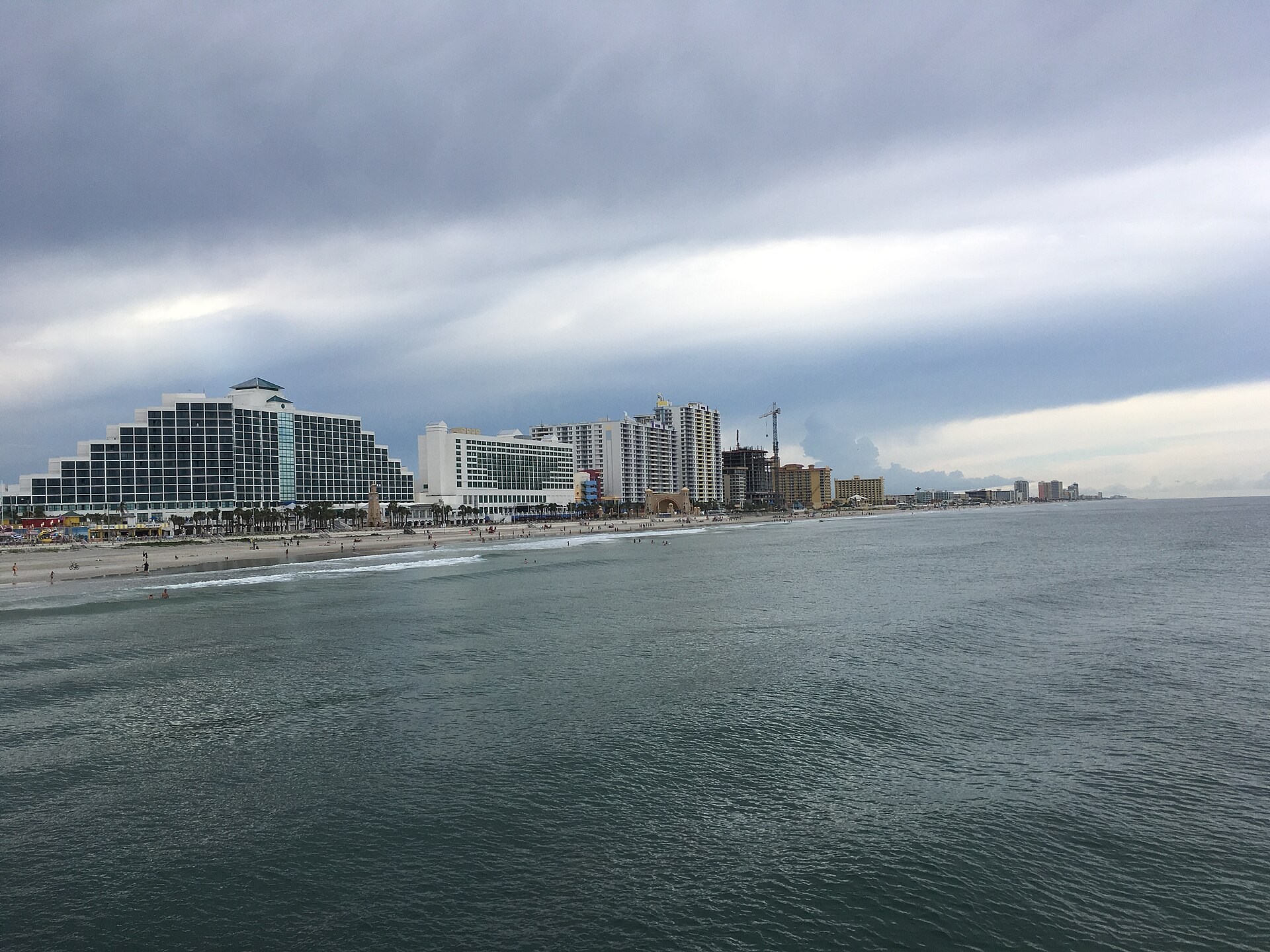
Daytona Beach gives visiting anglers two very different ways to reach the Atlantic. The city pier places you above the water, while a surf session keeps you on the sand and lets you move between troughs. Choose one as the main plan so the tackle and landing equipment fit the setting.
The pier is useful when you want a defined fishing area and less walking through sand. The beach is useful when there is open space and manageable surf. Neither option guarantees fish, and both depend on weather and current access.
Whiting and pompano are familiar sandy-water targets. Spanish mackerel and bluefish may appear around bait schools, while other fish can take a bottom bait near the pier. Identify each catch before making a harvest decision.
Understand the city’s pier arrangement
The City of Daytona Beach lists fishing on the eastern end of the pier. At the October 2026 review, fishing was free and anglers using that pier did not need an individual fishing license under its stated arrangement. That applies to the designated pier fishing activity, not automatically to a later beach outing.
The published seasonal schedule is 7 a.m. to 7 p.m. from March 16 through October 31, and 7 a.m. to 5 p.m. during the remainder of the year. Weather, maintenance or special restrictions can override those hours. Confirm current access before carrying equipment onto the structure.
Restaurant operations and fishing access are separate questions. An open business does not prove every part of the pier is open to anglers. Follow the signs directing visitors to the fishing section.
Look at the rail height and the water below before setting up. Bring a suitable landing net when needed, and avoid planning to lift a large fish by its line.
Watch for Spanish mackerel around bait
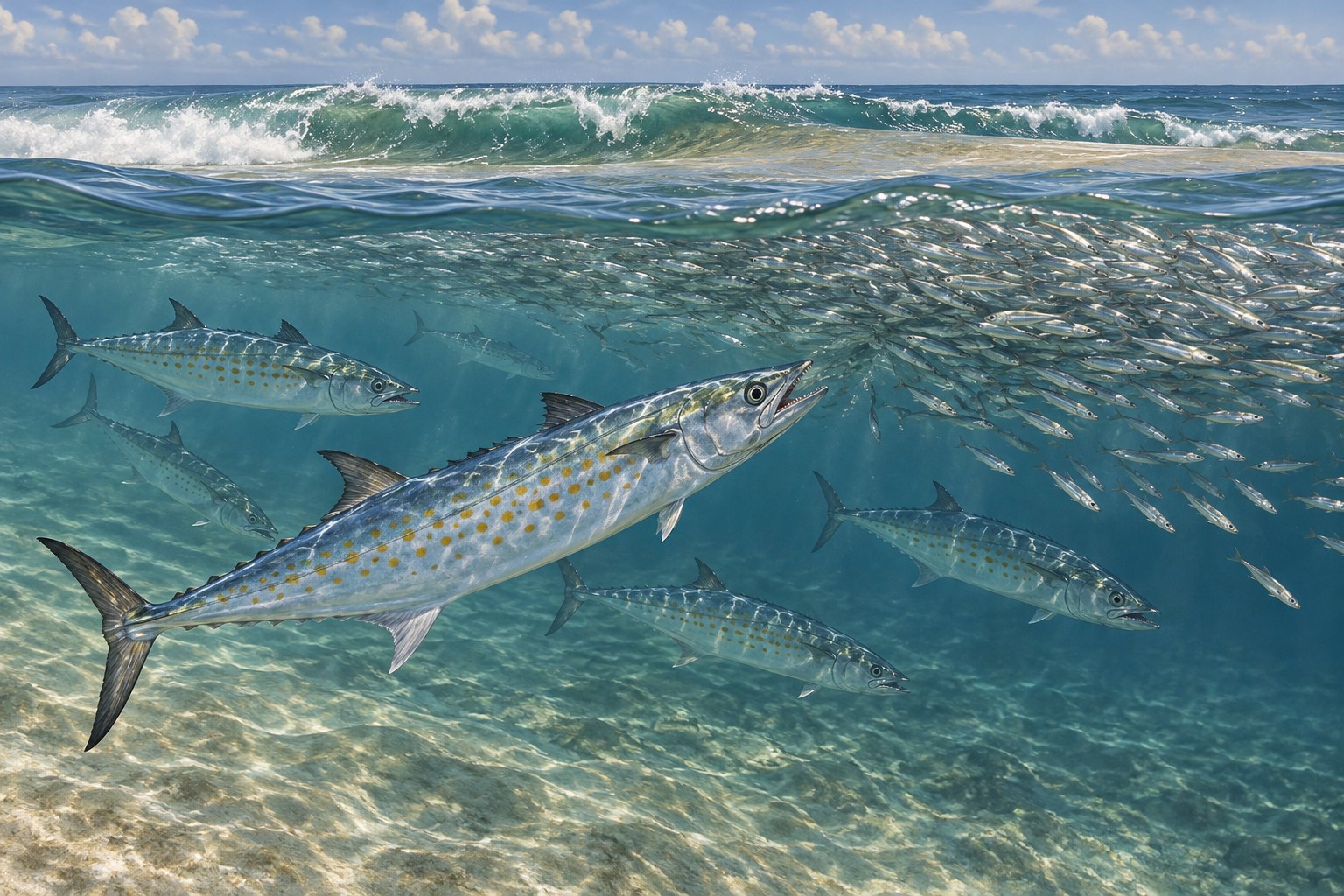
Spanish mackerel often reveal themselves through bait movement. Watch for small fish scattering, birds reacting to one patch or repeated flashes below the surface. A compact metal lure can match the size of the prey better than a large bulky plug.
Cast only where the lane is clear. From a shared pier, check behind and beside you before every cast. A feeding school does not justify swinging a lure over another visitor’s head.
Retrieve with a lively, controlled pace. If fish follow without taking, vary the speed slightly while keeping the lure in the feeding layer. A long pause can drop it below the action.
Use a leader suitable for toothy fish and check it after contact. Keep pliers ready, and handle the catch without placing fingers near the teeth. Confirm the species carefully rather than treating every mackerel-like fish as interchangeable.
Bottom fishing needs a clear landing plan
A shrimp bait can attract several kinds of fish below or beyond the pier. Use enough weight to manage the current without overloading the rod. Keep the rig away from pilings when possible, since rough surfaces can cut or trap the line.
Lowering a bait straight down may be easier than casting, but first check for obstructions and nearby lines. A short controlled presentation can teach you the depth and flow without creating a tangle across several anglers.
Do not leave multiple rods spread across a busy rail. Watch the one you are fishing, keep spare tackle contained and make room for people moving past. If the current changes, adjust before the line drifts into someone else’s position.
Agree on how a fish will be brought to hand before the bite occurs. If a catch is too large for the available safe landing method, do not improvise a dangerous climb or lean over the rail.
Match the setup to the opportunity
| Opportunity | Useful setup | Adjustment to watch |
|---|---|---|
| Baitfish activity near the pier | Compact metal lure with an appropriate leader | Retrieve speed and feeding depth |
| Open bottom away from pilings | Shrimp bait with controlled weight | Current carrying the line sideways |
| Nearshore sandy trough | Small hook and shrimp piece | Cast distance and bait loss |
| Clean surf with pompano potential | Compact bait on a dropper rig | Which lane receives bites |
A useful setup is one you can retrieve, inspect and land fish with safely. Bigger gear is not automatically better in a crowded public setting. Match it to the realistic target and conditions.
Read the beach before planting a rod holder
On the sand, spend a few minutes watching repeated wave sets. The first bar may create a breaking line, with a deeper trough inside it. Fish can move along that trough close to the beach.
Try a small shrimp bait at a moderate distance. If it produces bites, repeat the placement before experimenting farther out. If the bait returns untouched, test another lane while keeping the rig simple.
Pompano may respond to sand fleas or other compact baits where their use and collection are permitted. Keep the hook point clear. A bait that spins or folds over the hook can be less effective than a smaller, tidier piece.
Choose a stretch away from swimmers and follow all beach signs. Vehicle traffic, where allowed, adds another reason to keep rods and line out of travel routes. Dunes are protected and should never be used as a shortcut.
Let crowding influence the fishing window
A busy visitor beach requires flexibility. An early legal start may provide more room, but a quiet patch can fill quickly. Be prepared to reel in when people enter the casting or landing lane.
Keep hooks covered while walking. A lure hanging from a rod tip can swing toward another person as you turn. Secure it to a safe keeper and carry the rod with awareness of the people around you.
For children, start with short controlled casts and an uncluttered position. Explain where the hook is at every stage of the cast. A simple successful routine is more valuable than trying to cover maximum distance.
If the available space becomes too tight, take a break. Fishing should fit the public setting rather than forcing other visitors to navigate around hidden lines.
Judge wind, waves and tide together
Wind affects both presentation and comfort on an exposed pier. A lure may become difficult to cast accurately, while a bottom rig can drift far from its intended lane. Strong conditions are a reason to shorten or cancel the attempt.
Tidal change can influence the movement of bait, but the best stage depends on the local sand and current. Watch the actual water instead of assuming one tide phase always produces fish.
Summer heat and lightning deserve a firm exit plan. A pier offers little protection from an approaching electrical storm. Leave early enough to reach proper shelter.
Use the tide and weather forecast to plan the visit. For a quieter sand-focused alternative farther south, read the Daytona Beach Shores guide.
Know which rules follow you off the pier
The city’s stated pier license arrangement does not remove species limits or other fishing regulations. It also should not be carried over to surf fishing elsewhere. Check your personal license or exemption for any additional location.
Use FWC’s current recreational saltwater rules to verify identification, seasons and harvest requirements. Keep a measuring tool handy instead of estimating a fish against the rod.
Release fish with brief, careful handling and keep retained catches cool. Dispose of bait packaging and clipped leader in proper containers. Nothing should be thrown from the pier simply because the water is below it.
After the outing, note whether the productive water was near the surface, close to bottom or inside the first beach trough. That distinction makes the next tackle choice much easier.
Bring tackle that can be managed beside other people
A shorter pier rod can be easier to maneuver than a long surf rod in a shared space. Choose according to the permitted casting method and the target, and keep the printed lure or sinker rating in mind. Rod length by itself does not establish what weight is safe to cast.
Keep spare leaders wound or bagged so hooks do not catch clothing as visitors pass. If a knot needs rebuilding, move the loose tackle into a contained work area rather than laying it across the rail. Good organization makes both the fishing and any weather-related exit calmer.
Put the plan into practice
On the pier, keep spare leaders inside a closed container. Wind can scatter a loose hook or wrapper across the deck before an angler notices it moving.
Daytona Beach fishing questions
Does the city pier charge for fishing?
The city information reviewed in October 2026 listed free fishing on the eastern end. Confirm current access and hours before visiting.
Does the pier’s license coverage apply to beach fishing?
No automatic extension should be assumed. The city’s statement concerns its designated pier fishing arrangement; check your own license needs for the sand.
What lure suits visible mackerel activity?
A compact metal lure resembling the small bait is a useful starting point. Retrieve it through a clear lane and use suitable protection against teeth.
Can I use the restaurant opening hours to plan fishing?
No. The public fishing section has its own seasonal schedule and can close for weather or maintenance.