
FLORIDA KEYS & EVERGLADES
Everglades City
fishing guide
Plan from the new visitor center, read tidal river bends and keep navigation and national park requirements part of the fishing day.
Explore the guide ↓Think in channels, bends and return routes
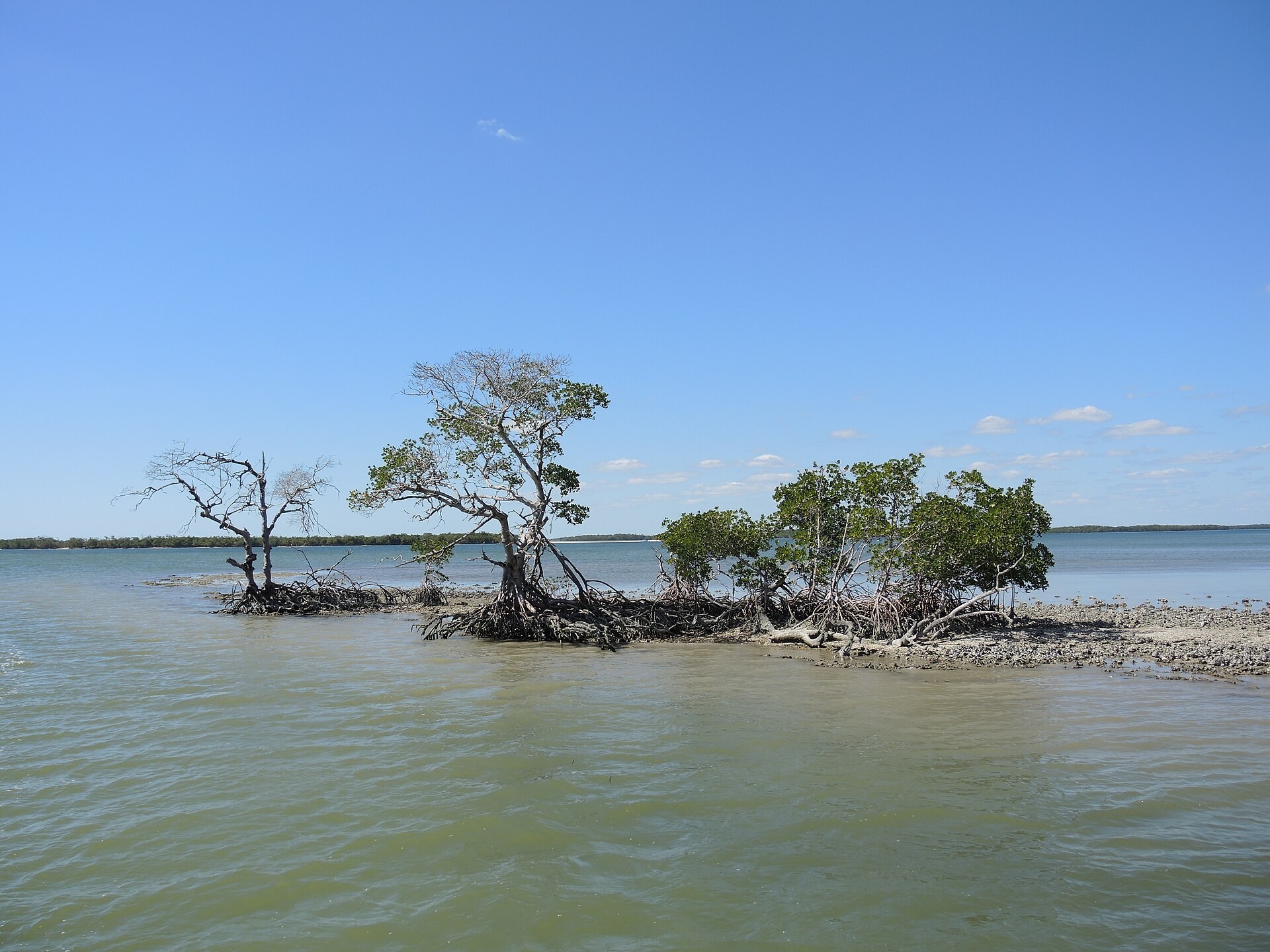
Everglades City is a gateway to tidal rivers, mangrove islands and the broad coastal waters of the western Everglades. The fishing is shaped by moving water and connections between shallow feeding ground and deeper channels. Snook, redfish, seatrout and mangrove snapper give anglers several possible approaches, but reaching suitable habitat safely comes first.
This is not a place where every attractive waterfront is a public fishing bank. Working docks, private marinas and park facilities have different rules. A launch arrangement and a realistic route are more useful than a long list of unnamed creek mouths.
Start with a small part of the landscape. Learning one channel bend and one nearby shoreline can teach you more than racing through a maze of islands. Keep enough time for a careful return while the route is still easy to see.
Use the new visitor center for current park information
The National Park Service now lists the Marjory Stoneman Douglas Visitor Center as open in Everglades City. Its reviewed information gives daily hours of 9 a.m. to 5 p.m. and identifies a kayak launch and restrooms. This replaces the assumption in many older accounts that the Gulf Coast visitor facilities remain entirely unavailable.
Check the current page before travel. The reviewed notice says park entrance passes are not sold at this site, so arrange the required pass through an available official option in advance. Ask staff about routes, closures and the limits of your intended trip.
A visitor-center kayak launch should not be confused with a public trailer ramp for every size of motorboat. Confirm the actual launch type you need. Private marinas in the community may have separate fees, hours and parking requirements.
Do not cast from a visitor dock or boarding area simply because fish are visible. Park fishing rules restrict fishing from public boat docks unless specifically designated. Keep boat handling and fishing positions separate.
Why the outside of a river bend matters
Moving water often creates a deeper edge along the outside of a bend. Mangrove roots can add cover beside that depth. Snook may hold where a small prey item passes close enough to catch without a long chase.
Make the first presentation from outside the bend. Cast upstream or across the current at an angle that lets the lure approach the edge naturally. If it rushes past above the fish, adjust weight or casting angle before changing to a much larger lure.
The shallow inside bank can also hold feeding fish when water covers it. That does not mean a boat should cross it. Watch the depth and avoid cutting corners across mud, oysters or grass.

Build a target list from the habitat
| Target | Likely setting | Starting method | Observation that helps |
|---|---|---|---|
| Snook | River bend, mangrove point or creek opening | Weedless soft plastic or small minnow lure | Bait carried along a distinct current edge |
| Redfish | Shallow oyster or mangrove feeding margin | Shrimp imitation or slowly moved soft plastic | A push of water or disturbed bait in the shallows |
| Seatrout | Open grass and sand areas with suitable salinity | Light jig or suspended shrimp | Clear pockets beside grass instead of uniform bottom |
| Mangrove snapper | Roots or legal structure near a deeper lane | Small bait close to cover | Quick taps and stolen bait that call for a smaller piece |
| Tarpon | Connected tidal channels and suitable backwaters | Properly sized tackle and a deliberate release plan | Repeated rolling in an area with room to fight the fish |
Tarpon are a separate challenge, not an automatic addition to a light-tackle outing. Do not target a powerful fish with gear or boat position that makes a safe release unlikely.
Control the lure in stained water
Tea-colored water is common around mangrove rivers. Visibility may be limited without the water being unsuitable for fish. Keep the lure close to useful cover and give it enough time in the feeding lane.
A paddletail supplies movement that fish can detect. A darker or contrasting lure can be easier to see under some conditions, but accurate placement usually matters more than carrying every color. Begin with one familiar lure and vary depth and speed.
If the lure repeatedly strikes bottom, lighten it or retrieve slightly higher. If it never reaches the edge before the current carries it away, add a small amount of weight. The aim is controlled movement, not constant contact with roots and shell.
Watch the line as well as the rod tip. A sudden sideways movement can indicate a fish taking the lure before you feel a clear strike. Keep slack manageable without pulling the lure out of the lane.
Know when you enter national park waters
Everglades National Park has fishing and boating requirements in addition to state rules. Its motorboat education and permit requirements need to be checked before operating in park waters. Use current park maps to understand boundaries and restricted areas.
Bait rules differ between freshwater and saltwater portions of the park. Do not carry bait inland on the assumption that a coastal method is allowed everywhere. The park also protects particular animals and limits fishing at some facilities.
Keep the official park information with your route planning. This guide describes fishing approaches, but it does not turn a river bend, dock or wilderness campsite into an authorized fishing location.
Wet and dry periods change the search
During drier, cooler periods, water levels and temperature can concentrate fish near deeper routes. A cold front may slow activity in shallow exposed places. Try a sheltered bend with nearby depth and retrieve patiently.
During warmer wet periods, rainfall can change salinity and water color. Fish may move between interior water and more coastal habitat. Look for usable water and prey activity rather than returning automatically to a coordinate that worked under different conditions.
Summer storms are a major route-planning issue. An island that shelters a fishing spot may also hide an approaching storm. Check the forecast before departure and keep a return time that allows a generous margin.
Insects, heat and sun exposure can be significant even on a short trip. Long sleeves, drinking water and an appropriate insect plan help you remain focused on navigation and fishing.
Choose a fishing window you can use safely
Consult the regional tide and weather outlook, then allow for differences inside connected creeks. The strongest flow at a distant prediction station may not match the current at your bend.
A modest falling tide can make a drain easier to read, but it also reduces depth over the return route. A rising tide can allow fish to spread into roots. Choose the condition that fits both the fishing and the vessel.
Do not keep pushing into shallower water because the bites improve. A good fishing window ends when the safe return window requires it.
A sensible first-day goal
Choose one nearby river or island section and two habitat types. Fish a deeper bend, then a shallower edge if conditions permit. Keep notes about current direction, lure weight and where strikes occur.
Spend more time observing each stop than traveling between them. Watch for bait flickers, birds working naturally and repeated fish movement. Leave wildlife room and avoid casting toward feeding birds.
Return with daylight and energy remaining. Familiarity with a safe local route is valuable even when the catch is modest. You can extend a future trip from actual experience rather than guesswork.
Prepare for release as carefully as capture
Check the Florida saltwater fishing rules along with the national park requirements described in the notes. Carry identification and measuring tools before deciding to keep a fish.
Use tackle strong enough to bring fish in without an unnecessarily long fight. Support released fish in the water whenever possible. Avoid laying them on hot decks, oyster shell or dry mud for photographs.
Everglades City questions
Is the visitor center still closed?
The reviewed NPS information says the Marjory Stoneman Douglas Visitor Center is open. Check its current notice before traveling.
Can I fish from every public dock?
No. National park rules restrict public-dock fishing unless the location is designated for it.
Is a phone enough for navigation?
Do not make mobile reception your only safeguard. Carry suitable navigation, communication and a clear return plan.
Where are the park sources?
The Everglades City reference notes collect the official access, boating and fishing information.