

TAMPA BAY / SUNCOAST
Holmes Beach
fishing guide
Choose between a light Gulf beach session and a bay-side grass-flat trip, with Kingfish launch guidance and clear depth-control advice.
Explore the guide ↓Fish the middle of Anna Maria Island
Holmes Beach offers a useful choice between Gulf sand and bay-side grass habitat. The beach is the easier option for someone carrying a rod from a car. The sheltered eastern water is more often approached by boat or kayak from an authorized launch.
Its central position makes it tempting to borrow advice from every part of Anna Maria Island. Keep the geography straight. The northern City Pier and southern Bridge Street Pier are separate destinations. This guide focuses on Holmes Beach, its public beach access and the Kingfish launch area.
Choose one method for the first outing. A beach bait session and a grass-flat paddle trip use some of the same tackle, but they need different access, weather and return plans.
Use Manatee Public Beach thoughtfully
Manatee Public Beach is a major public entrance to the Gulf at Holmes Beach. It is also a busy swimming destination. Fishing should take place only where permitted, with generous separation from swimmers and recreational activity.
Arrive with a compact load and read the current beach signs. Lifeguarded swimming space is not an invitation to cast through bathers. If you cannot find a clear legal area, choose a different time rather than forcing the session into a crowd.
Other public beach entrances may provide a quieter starting point, but parking rules vary. Do not block residential driveways or cross private property to reach the sand. A longer legal walk is preferable to an uncertain shortcut.
Stay on designated dune crossings. Carry spare hooks inside a closed box, not hanging from a rod while walking beside people.
Kingfish Boat Ramp is a launch, not a shore shortcut
Kingfish Boat Ramp serves the bay side near the Manatee Avenue approach to the island. County information places it at 752 Manatee Avenue and notes that overnight parking is prohibited. Check current operating notices and parking restrictions before a launch.
Prepare your craft away from the active ramp. Do not cast across the launch lane or leave equipment on a boarding dock. Boat traffic needs a clear path even when the surrounding water looks promising.
From a small craft, investigate nearby grass and sand transitions within your experience. The fact that water looks protected from the road does not show the wind farther out. Set a short route and a definite turnaround time.
Grassy Point Preserve helps explain the natural bay shoreline in this part of the island. Treat protected vegetation and marked areas with care, and do not assume every preserve boardwalk is a fishing platform.
Learn to fish a sand pocket
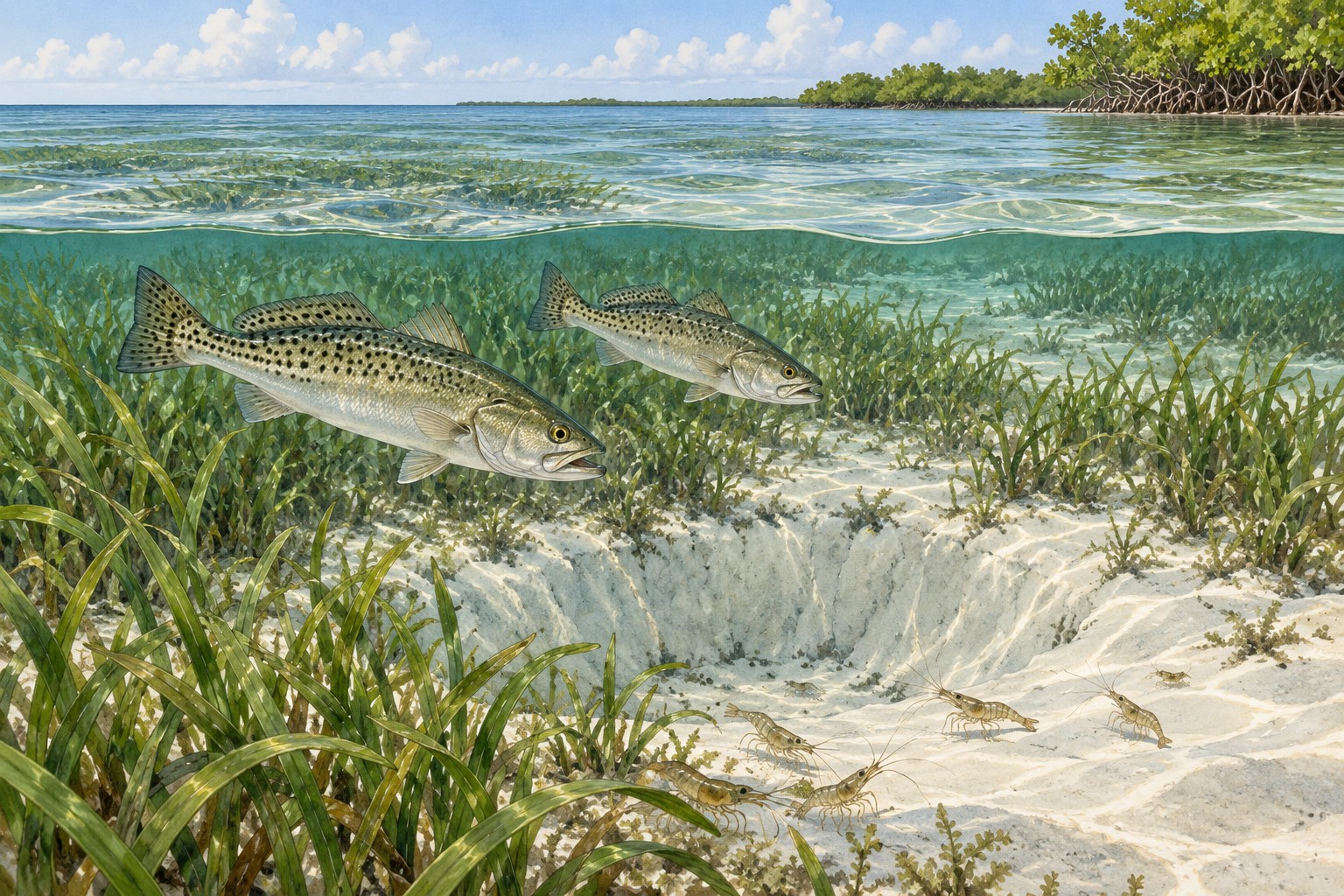
A pale opening inside darker grass creates a clear edge for fish to patrol. Trout may wait above the vegetation and move toward a lure crossing the opening. Redfish may work closer to the bottom where shrimp and crabs hide.
Cast beyond the edge without dropping the lure directly onto a visible fish. Swim it across the opening with a controlled pace. A brief pause over clean sand can help, but a long pause over grass often fouls the hook.
Watch for small baitfish, nervous water and an isolated wake. Do not confuse every mullet jump with feeding predators. Look for several clues before moving the boat into a shallow area.
Targets on each side of Holmes Beach
| Target | Setting | Useful method |
|---|---|---|
| Whiting | Gulf beach wash | Small shrimp bait close to shore |
| Pompano | Clear sandy bars | Sand flea or light jig |
| Snook | Warm beach lanes and bay edges | Small baitfish lure with a quiet approach |
| Spotted seatrout | Bay grass and sand openings | Paddletail above the vegetation |
| Redfish | Shallow feeding margins | Weedless plastic or suspended shrimp |
The best choice depends on the water you can reach responsibly. Do not force a grass-flat method onto a beach simply because that species was your original goal.
Keep beach fishing close and controlled
Begin with the first trough outside the wash. Use a small bait with an exposed hook point and only enough weight to keep it in place. If the sinker rolls along the beach, retrieve before it crosses another person’s path.
Test different distances one at a time. A bite at short range tells you where food is available. Repeating maximum-distance casts can miss a productive lane beside your feet.
For beach snook, walk slowly with polarized glasses and watch for fish traveling parallel to shore. Cast ahead of their direction. Avoid wading into their path or repeatedly landing lures directly beside them.
When bait schools appear, a small spoon can reach jacks or mackerel. Keep casts clear of birds and inspect leader damage immediately after a strike.
Keep a bay lure above the weeds
Light jig heads are useful over shallow grass. Choose one that lets the lure swim at the required depth without touching the bed every few feet. If you need to reel uncomfortably fast just to stay clear, reduce weight.
A weedless hook is another option. Rig the soft bait straight and check it after each cast. Even a small strand of grass around the nose can change its action.
For live shrimp, a float lets you control depth. Begin with the bait well above bottom and adjust downward only as needed. Keep the drift away from navigation lanes and anchored boats.
A seven-foot spinning rod with moderate braid strength suits this work. Carry a stronger leader for rough cover and a lighter one for open grass, then choose according to the actual conditions.
Let wind decide which shore fits
The Gulf beach and eastern bay do not respond identically to wind. One may be calm while the other is difficult. Check the nearby weather and tide forecast before deciding which side to fish.
Summer dawn can offer a comfortable beach interval before heat and crowds. Winter fronts can lower shallow bay water and make a familiar launch route less forgiving. Spring and fall may give a wider choice, but current conditions still matter most.
Do not paddle farther simply because the first shoreline is quiet. A strong return wind can arrive after an easy outward trip. Keep enough energy and time to return conservatively.
Two short plans that stay focused
Beach plan
Park legally, walk to an uncrowded permitted section and identify one trough. Fish shrimp at two distances. If nothing responds, walk to a different bottom feature rather than adding rods. Finish when swimming activity expands into your space.
Bay plan
Confirm the launch is available, keep your route nearby and fish two grass edges with different depths. Note which one holds bait. Return before the wind or falling water makes the route harder.
Both plans leave time to learn. Photograph the water pattern and record the wind direction. Those observations help you repeat a useful situation without pretending fish stay in one place permanently.
Protect grass, birds and the catch
Keep propellers off seagrass and avoid anchoring where it will tear the bed. Give manatees space and do not follow them for a closer look. Shorebird nesting closures deserve the same respect as a fence around a construction site.
Release fish with wet hands and support under the body. Verify the FWC saltwater license and harvest requirements before placing a fish in the cooler.
Adjust the lure to the height of the grass
Imagine the grass bed as a low canopy rather than a flat floor. A lure running just above it stays visible. One running through it repeatedly stops swimming and carries weeds back to the rod.
After a cast, begin retrieving sooner than you think necessary. If the lure travels cleanly, add a little sink time on the next cast. Continue in small steps until you find the depth just above the vegetation. This is easier to repeat than changing several things at once.
At a sand pocket, let the lure slow briefly without leaving it motionless for too long. A fish following from the grass may take as the bait enters the opening. Resume the retrieve before it reaches the far edge and fouls again.
If the wind creates a bow in the line, shorten the cast. Better contact with a nearer lure can be more useful than a long cast you cannot control. Position the craft so the drift does not carry you directly over the pocket before fishing it.
Natural bait follows the same principle. Set a float so the shrimp remains above the bed, then adjust after checking for grass on the hook. A float alone does not guarantee the bait is at the correct depth.
This approach gives a Holmes Beach bay outing a clear purpose. You are testing a narrow layer of water where food and cover meet, rather than casting randomly across every dark patch you can see.
Holmes Beach questions
Can I leave a trailer overnight at Kingfish?
The county listing states that overnight parking is prohibited. Arrange a compliant return and storage plan.
Is the main public beach always suitable for fishing?
No. Swimming activity, local signs and the available casting space determine whether fishing is appropriate.
Why does my lure return covered in grass?
It is probably running too deep. Try a lighter head, a higher retrieve or weedless rigging before changing the lure’s color.