
SPACE / TREASURE COAST
Jetty Park
fishing guide
Jetty Park fishing guide with the October 2026 rules, permitted pier fishing, pass arrangements, bait methods and vessel-awareness tips.
Explore the guide ↓Plan a pier outing, not a beach-fishing outing
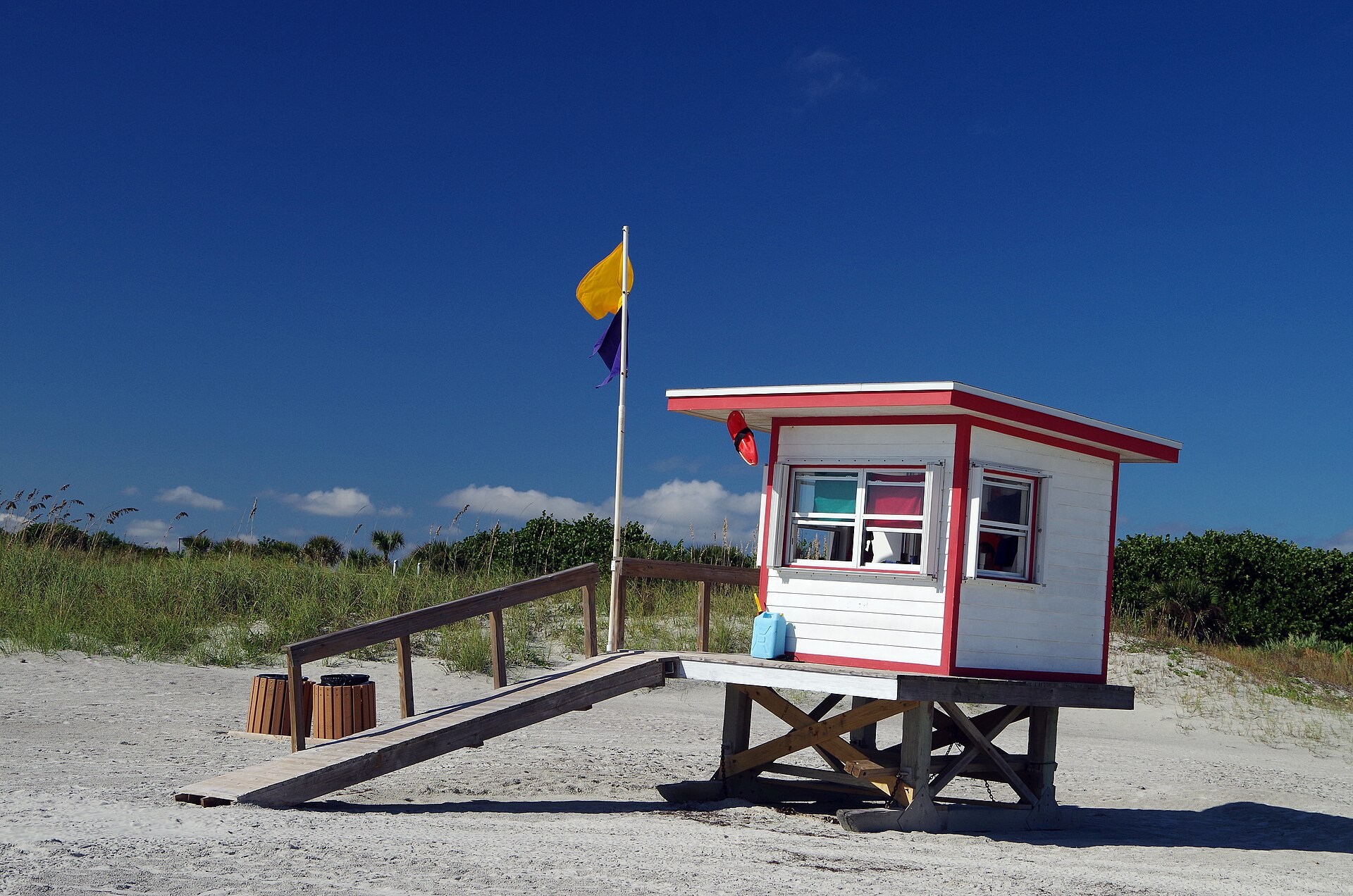
Jetty Park sits beside the entrance to Port Canaveral, where ocean water and vessel traffic meet. Its fishing attraction is the designated pier. The park’s beach and rocks should not be treated as alternate casting positions.
Rules effective October 1, 2026 prohibit fishing from the beach, shoreline and rocks. They also specify rod-and-pole fishing and exclude methods such as cast nets and crab traps. Read the current rules before packing equipment.
One part of the published rule text discusses shoreline licensing, while the explicit location restriction prohibits shoreline fishing. Do not interpret that wording conflict as permission. Use the pier and ask park staff to clarify any proposed exception before acting on it.
Arrange entry before reaching the gate
Jetty Park is listed at 9035 Campground Circle in Cape Canaveral. The port’s visitor information directs day visitors to online passes and lists day-use hours of 7 a.m. to 9 p.m. Confirm current entry arrangements and temporary closures before departure.
Camping access and day admission are different. A rule allowing registered campers to use facilities at other hours does not grant that access to a day visitor. Plan the fishing session within the conditions of your own entry.
The port states that the fishing pier’s license covers its guests. That facility-specific arrangement does not carry over to another beach or fishing location. Species regulations still apply to every catch.
Bring the confirmation and identification needed for the pass you purchased. A smooth arrival leaves more time to inspect the fishing conditions instead of resolving entry issues at the gate.
Inspect the pier before choosing a position
Look at the direction of current and the amount of available rail space. Notice where other lines travel and where a catch could be landed. A clear position with manageable flow is better than a crowded corner with no safe finish.
Keep walking space open and secure lures while moving. A long rod can swing unexpectedly when you turn to speak to someone. Check behind before casting and keep the motion within a clear lane.
Watch vessel movements at the port entrance. Do not cast toward navigation traffic or attempt to follow a passing boat with a line. Obey staff directions and any temporary restrictions.
Have a suitable landing net or other permitted tool ready before baiting up. A substantial fish should not be lifted by a thin leader from an unsuitable height.
Look for a controlled presentation near structure
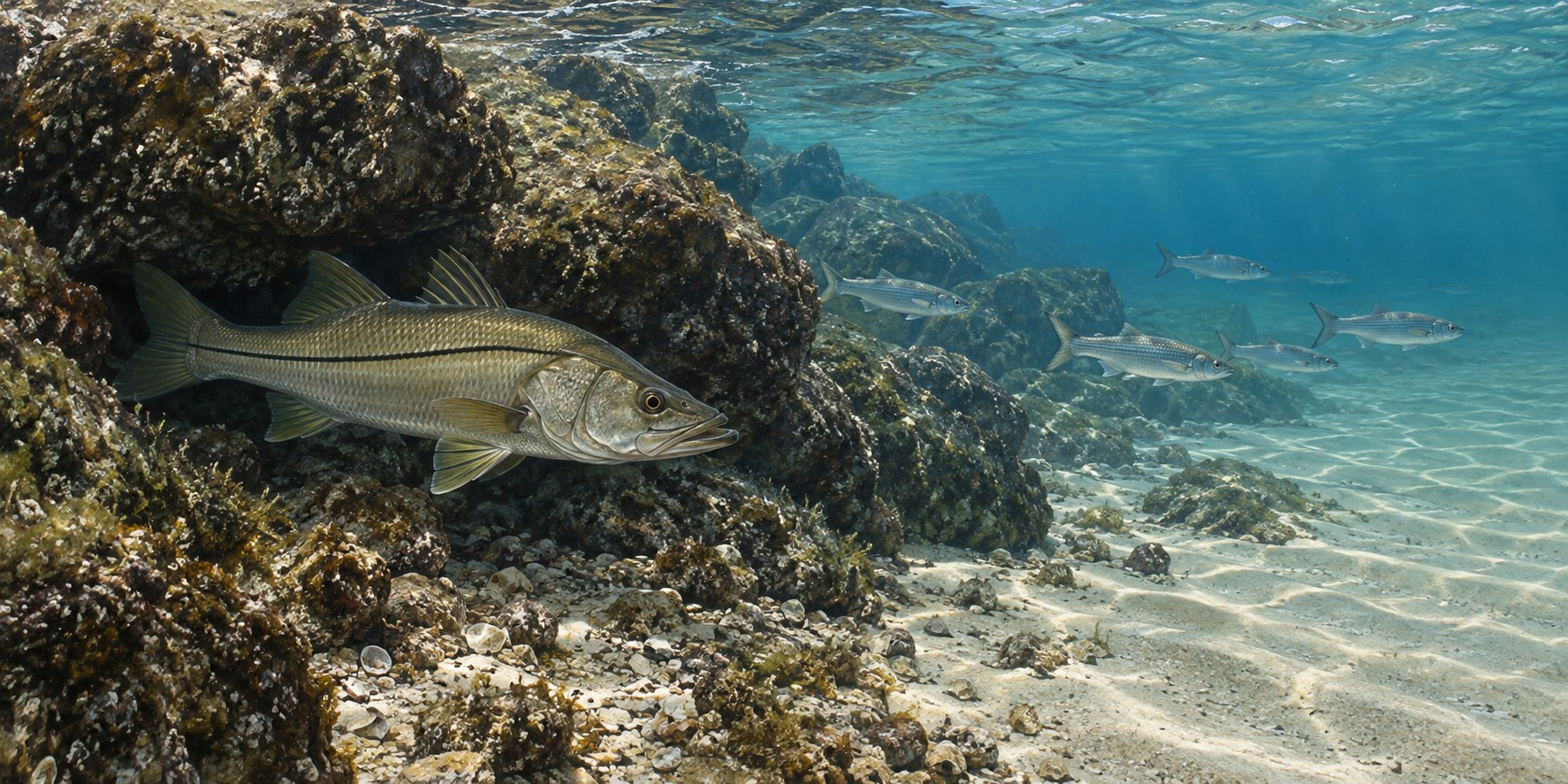
Snook and other predators may use a change in flow beside structure to intercept food. Look for a seam that your tackle can reach without drifting into an obstruction. The objective is a natural presentation, not a cast into the fastest possible water.
A live bait or swimming lure can be useful when it stays in that lane. Select enough weight to control the depth, but avoid repeatedly burying the rig in rough bottom. If every attempt snags, change the angle or target water.
Use leader suited to abrasion and inspect it after contact. Keep pressure steady on a hooked fish and guide it toward the planned landing area. Excess force can break tackle or make the finish harder to control.
The illustration explains underwater habitat. It does not suggest climbing onto Jetty Park’s rocks, which the fishing rules prohibit.
Choose a method that fits the space
| Visible opportunity | Method to consider | Important limit |
|---|---|---|
| Small bait moving in open water | Compact lure retrieved through a clear lane | Keep casts away from vessels and visitors |
| Manageable bottom water | Shrimp bait with controlled weight | Retrieve before current carries it into structure |
| Reachable current seam | Live bait or swimming lure | Match tackle to the fish and landing method |
| Crowded rail or strong flow | Wait or change the session | Do not move onto prohibited shoreline |
A small number of well-managed rods is more useful than spreading tackle across a busy platform. Give each presentation enough attention to prevent tangles and unnoticed bait loss.
Use shrimp to learn the water
A compact shrimp bait can help reveal how the current behaves near the chosen position. Begin with a simple rig and observe its path. If it sweeps sideways immediately, adjust before making a longer cast.
Keep the point of the hook clear. A large loose piece can fold over it or be removed in small bites. Check the bait frequently until you know how quickly it is being taken.
When using a circle hook, let the line tighten with steady pressure rather than making a sharp overhead strike. Keep the response controlled, especially with other people close by.
A small catch provides useful information about the lane and bait. Identify it carefully and do not assume that a familiar-looking fish has the same harvest rule as another species.
Switch to an active lure only with room to cast
Baitfish scattering near the surface can suggest bluefish, mackerel or another feeding predator. A compact metal lure is a practical way to test the edge of that activity. Retrieve through open water instead of dropping into the middle of a crowded group of lines.
Use protection appropriate for teeth and inspect the leader after a hit. A missed strike can still damage the line. Keep pliers accessible for safe hook removal.
If the fish move beyond a clear casting lane, let them go. Do not reach over another angler or cast across a walkway to extend the opportunity. Shared-pier fishing depends on predictable movements.
When no bait activity is visible, a controlled bottom presentation may be more useful than constant casting. Let observations decide the method.
Respect the exposed setting
Wind can make the pier uncomfortable and change the direction a rig travels. Look at the marine forecast, then inspect the actual water before committing to a long session. A sheltered parking area does not describe conditions at the end of the pier.
Thunder requires an early retreat to proper shelter. Do not wait for heavy rain before packing away rods. Keep equipment organized so the exit does not become a search for scattered tackle.
Sun and reflected light can be strong even with a breeze. Carry drinking water and use sun protection. Plan breaks for children or anyone unfamiliar with an exposed coastal platform.
Consult the tide and weather page before the visit, while recognizing that visible flow beside the pier may differ from a simple tide-height prediction.
Keep a legal backup plan
If the pier is closed, crowded or unsuitable, the park’s beach does not become a fishing substitute. Enjoy another permitted activity or choose a different public fishing access.
The Cape Canaveral guide describes Cherie Down Park as a separate beach setting. Its access and rules should be checked independently from Jetty Park.
Do not use port service roads or secured waterfront to bypass a closure. A view of fishable water is not permission to reach it. Staying within designated access prevents a simple outing from becoming an avoidable problem.
Keep the return time within the day pass conditions. Allow time for the walk and loading rather than fishing until the last posted minute.
Handle the catch before discussing the photograph
Have a ruler and dehooking tool ready. Support the fish, keep handling brief and avoid setting it on a hot surface. A photograph should fit into a safe routine, not delay release while equipment is found.
Check FWC’s saltwater recreational rules for seasons, size limits and species identification. Pier license coverage does not remove those requirements.
Place clipped leader and damaged hooks into a closed container. Keep bait scraps out of the water and away from birds. A tidy position is safer for everyone passing through.
After the visit, note what the current did and which presentation remained controlled. That is valuable information even when the catch is small.
Keep the pass and fishing rules together
Save the admission confirmation and the current fishing instructions where they can be checked at the entrance. That is more reliable than remembering a social-media report from a different season. If staff explain a temporary change, follow it even when an older printed description says otherwise.
Before leaving the vehicle, remove gear that is not permitted under the current rules. A simpler rod-and-line kit makes the walk easier and prevents an unnecessary return trip. Keep the visit focused on the authorized platform and the conditions you can actually fish.
Jetty Park fishing questions
Can I fish from the beach or rocks?
The rules effective October 1, 2026 prohibit those locations. Plan around the designated fishing pier and follow current staff guidance.
Can I bring a cast net?
The published fishing rules exclude cast nets and crab traps. Confirm permitted methods before bringing specialized gear.
Does the pier cover my fishing license?
The port states that pier guests are covered by its fishing license. Species rules still apply, and coverage should not be assumed at other locations.
Can a day visitor use camper hours?
No. Follow the schedule and conditions attached to your own admission, including enough time to leave.