
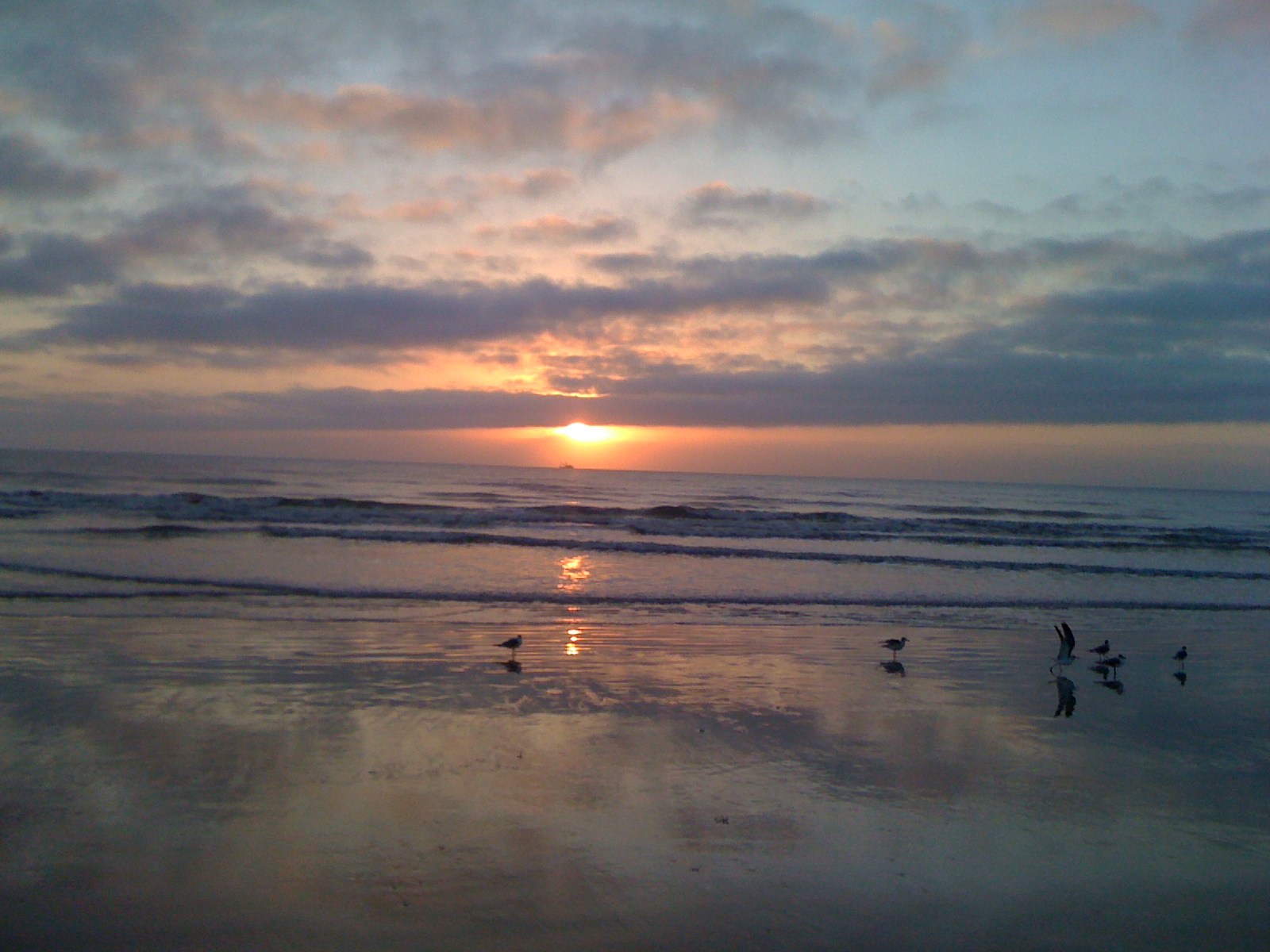
SPACE / TREASURE COAST
Cocoa Beach
fishing guide
Cocoa Beach fishing guide with Lori Wilson Park, pompano and whiting rigs, pier-access checks and practical advice for shared sand.
Explore the guide ↓Build the first outing around surf fishing
Cocoa Beach is a busy Atlantic destination with a useful opportunity close to shore: fish moving along sandy troughs. You do not need a boat or a distant cast to begin learning that water. You do need a clear public access and enough space away from swimmers.
Whiting are a practical first target, while pompano may travel through suitable clean surf. Bluefish and mackerel can follow small bait along the coast, but their appearance is less predictable than simply presenting a small bottom bait.
Choose a manageable morning and one stretch of beach. Learn its wave pattern, bait loss and productive distance before adding more rods or moving repeatedly between entrances.
Lori Wilson Park is a useful public base
Brevard County lists Lori Wilson Park at 1500 North Atlantic Avenue. Its facilities include restrooms, showers, beach crossings and parking on both sides of the maritime hammock. The county specifically lists surf fishing among its activities.
The park page describes six dune crossings, including four accessible crossings, and free parking at the time reviewed. Confirm current conditions if a particular access feature is essential, since temporary repairs can affect individual routes.
Use a designated crossing and remain off the dunes. The park’s natural vegetation is part of the shoreline, not an obstacle to cut through with a cart. Keep the load small enough for the route you choose.
Once on the sand, find a legal fishing area outside swimming and other active recreation. A park that permits surf fishing still requires anglers to share the beach safely.
Do not assume the landmark pier is your fishing access
Westgate Cocoa Beach Pier is a privately operated attraction at 401 Meade Avenue. Its published rules prohibit overhead casting and shark fishing, but the rules page alone does not establish the current everyday fishing arrangement.
If the pier is central to your plan, confirm directly with the operator at 321-783-7549 before bringing rods. Ask whether recreational fishing is currently available, where it is permitted and what equipment or admission conditions apply.
Do not use an old fishing photograph as proof of present access. Restaurants, sightseeing and fishing can operate under different arrangements at the same structure.
This guide’s dependable starting plan is a permitted public surf-fishing area, with pier use treated as a separate question to verify.
Look for a sandy feeding lane
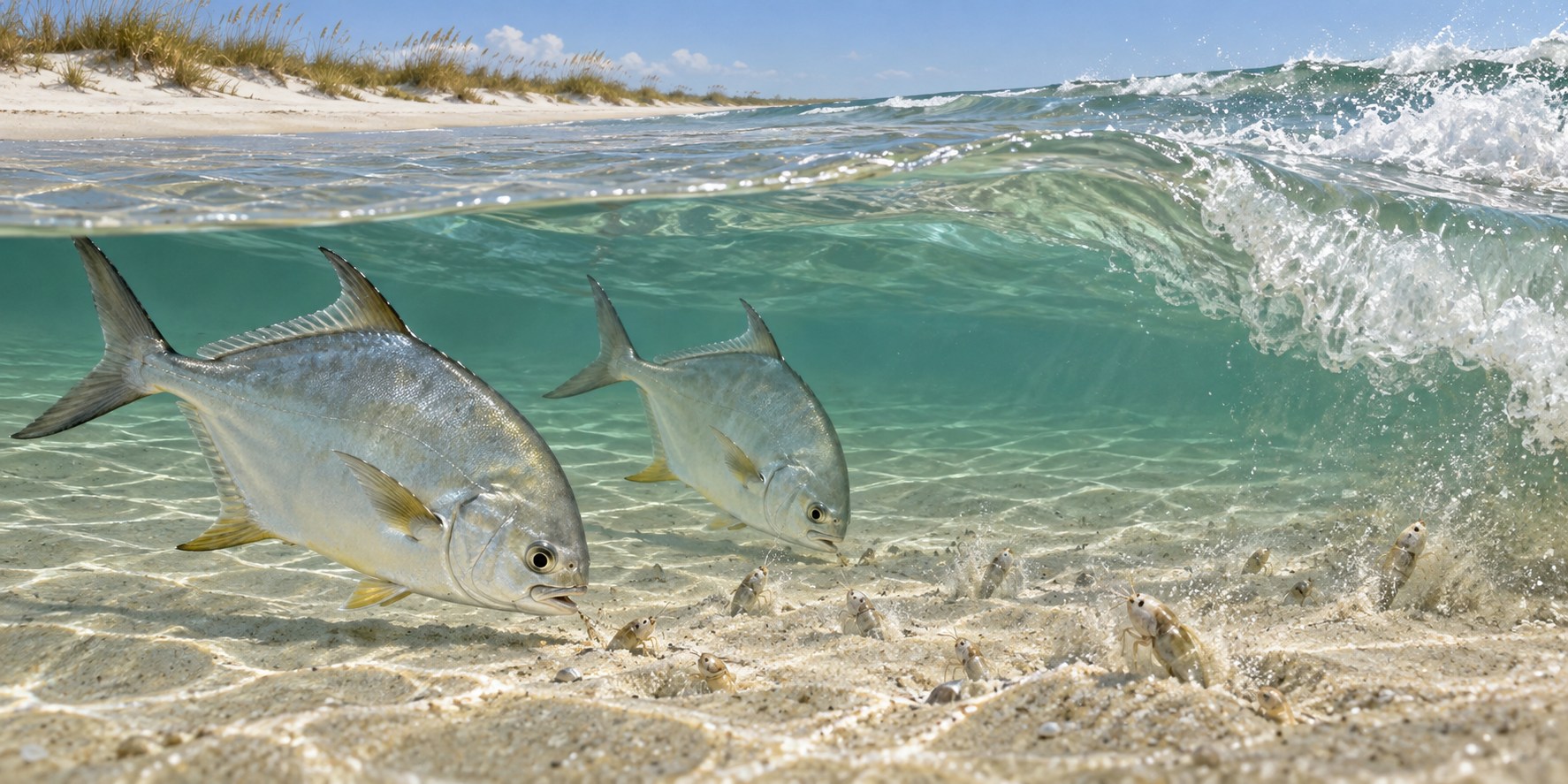
Pompano fishing begins with the shape of the surf. Watch where waves repeatedly break and where the white water fades. The trough inside a bar can hold enough depth for feeding fish.
A compact dropper rig keeps a small bait above the sand. Use sand fleas where collection is permitted, or try small shrimp pieces or a suitable prepared bait. Keep the hook point exposed and the bait from twisting around the leader.
Test more than one distance over the course of the session. A farther cast is useful only if it reaches better water. If the inside lane produces attention, stay with it long enough to learn the pattern.
Water clarity and the amount of drifting weed affect presentation. A rig buried in weed is not fishing cleanly, even if it remains in the water for a long time.
Use whiting to learn the nearshore water
A small shrimp bait is a straightforward way to investigate a trough. Whiting can take compact pieces close to bottom, often within an easy cast. Begin with a hook and bait small enough for the intended fish.
Watch for light taps rather than waiting for a dramatic bend. Retrieve occasionally to check whether the bait is intact. If it is gone, reduce the time between checks or use a firmer piece.
Hold the rod for several casts if wave movement makes bites hard to read from a holder. Learn the regular rhythm of the surf so an unusual signal is easier to notice.
After a catch, repeat the same placement. A feeding lane may be narrow, and an accidental change in distance can move the next bait away from it.
Make one useful adjustment at a time
| Problem | First adjustment | Reason |
|---|---|---|
| Bait missing without a landed fish | Trim the bait and check the hook point | Small fish may be taking only the loose end |
| Rig drifting rapidly sideways | Retrieve and reassess weight or location | The presentation is no longer controlled |
| Repeated weed accumulation | Try a clearer lane or shorten the session | Drag masks bites and pulls the sinker |
| No response at one distance | Test a nearer or farther trough | Fish may be traveling in a different depth |
| New swimmers in front | Stop casting and reel in | The fishing lane is no longer safe |
Changing the entire rig at once makes it difficult to learn what mattered. A simple method with careful observation often teaches more than a large assortment of tackle.
Carry one option for moving baitfish
A compact spoon or metal lure can be useful when small bait scatters near shore. Keep it secured until there is a clear casting lane. Check behind before every cast, even when the beach looked quiet a moment earlier.
Retrieve through the edge of the activity rather than casting into birds. Vary speed slightly if fish follow without striking. Keep the lure high enough to remain near the prey instead of dragging it along sand.
Toothy fish require an appropriate leader and careful handling. Inspect the line after a strike and use pliers near the mouth. Do not assume a missed bite left the connection undamaged.
If the school moves out of reach, let the opportunity pass. Wading farther into uncertain surf is not a sensible way to extend it.
Fit fishing into a busy beach day
Cocoa Beach attracts swimmers, surfers and walkers as well as anglers. An early start may offer more space, but that space can change quickly. Remain willing to move or take a break.
Place rod holders above the active wash and outside walking routes. Do not leave a line stretched across the sand while tending another task. Keep spare hooks inside a closed box.
A short family session works best with one clear routine. Show new anglers where the hook goes during transport, how to look behind and when to ask for help. Keep the landing area free of loose equipment.
Use park facilities for a break rather than continuing through heat and fatigue. Fishing comfortably for a shorter period is more useful than forcing a long session.
Read the forecast and the beach together
Onshore wind can increase the surf and line drag. Offshore wind may flatten the near beach while creating other concerns for anyone using a small craft. The shore-fishing plan should stay focused on what can be done safely from sand.
Tide changes alter the depth of the trough and the width of the beach. Set equipment where rising water will not surround it. Avoid outward-flowing gaps and do not wade to gain distance.
Check the area’s weather and tide information before departure. For another public beach farther north, compare Cape Canaveral’s shore options.
Thunder should end the outing before the storm is overhead. Pack so the return to shelter is quick and straightforward.
Handle fish and tackle with care
Keep pliers and a measuring tool within reach. Use wet hands and support the body of a fish being released. Avoid leaving it on dry sand while searching for a camera.
For licensing and current harvest decisions, use FWC’s saltwater recreational guidance. Public park access does not automatically provide a license exemption.
Remove every clipped leader and bait wrapper. Check the sand around the rod holder for hooks, especially before a family group takes over the space. Keep unused bait contained rather than feeding birds near the casting area.
Finish by noting the useful casting distance and bait condition. Those small observations are the foundation of a better second visit.
Do a quiet test before the long cast
Make the first cast comfortably within reach and retrieve to inspect the rig. Check whether bait remains attached, whether the leader twisted and whether the sinker moved as expected. Once those details work, extend the distance only if the beach shape gives a reason. A controlled short cast is a useful diagnostic step, especially with an unfamiliar rod or a newly tied surf rig.
Put the plan into practice
When small fish repeatedly remove shrimp, shorten the dangling portion before increasing hook size. The goal is to place the edible piece near the hook, not to make a larger target.
Cocoa Beach fishing questions
Where can I start with public beach access?
Lori Wilson Park is a county beach park that lists surf fishing and visitor facilities. Use an open crossing and select a clear area away from water recreation.
Can I assume the pier allows fishing today?
No. Confirm the current arrangement directly with the operator before bringing gear. Its general visitor rules do not answer every fishing-access question.
How far should I cast for whiting?
Begin with the inside trough rather than a fixed distance. The beach shape determines where useful depth lies.
What if seaweed keeps covering the line?
Retrieve, clear it and test another manageable lane. Persistent weed may make a different time or location the better choice.