
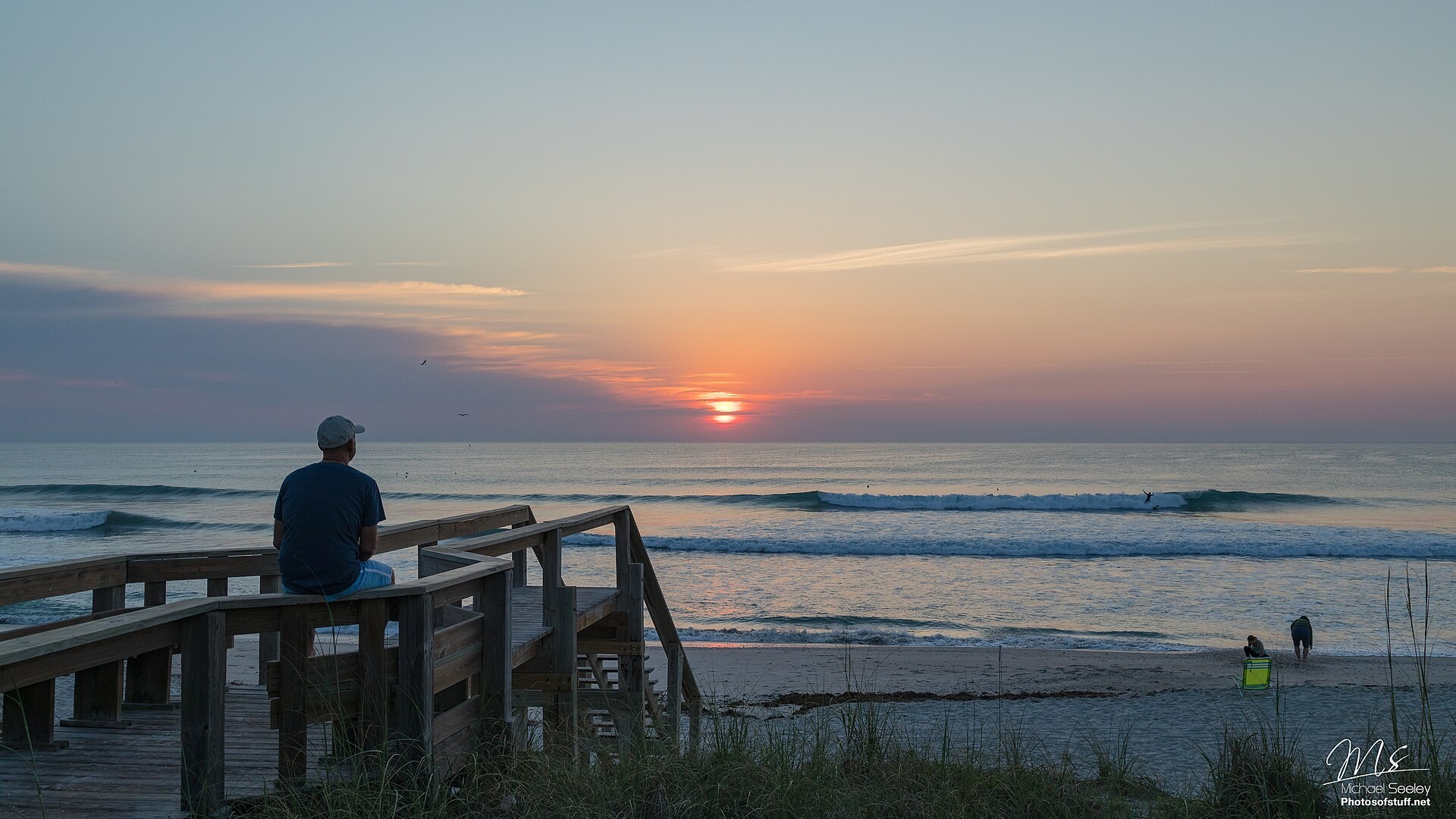
SPACE / TREASURE COAST
Satellite Beach
fishing guide
Satellite Beach fishing guide with public park choices, parking details, sand and hard-bottom tactics, bait and beach-safety advice.
Explore the guide ↓Learn the bottom before choosing the cast
Satellite Beach offers public Atlantic access along a coast where sand, surf and hard patches can create different fishing situations within a short distance. A smooth-looking surface does not tell you everything about the bottom.
For an uncomplicated outing, choose an open sandy lane and fish small baits for whiting or passing pompano. Where hard bottom is safely reachable, structure-feeding fish may be a possibility, but snags and rough footing require a more careful approach.
The important first step is to watch the water from shore. Decide where a rig can be retrieved cleanly and where people are swimming or surfing. A safe open lane should determine the fishing position.
Choose facilities that fit the group
City beach parks include Hightower and Pelican Beach, while many smaller crossovers have limited parking and few facilities. The city’s current parking program requires a registered virtual pass or payment at its beach lots. Arrange an applicable pass ahead of time rather than assuming arrival-day registration is immediate.
Hightower offers a larger natural beach setting with restrooms and a designated dune crossing. Check current facility notices and the route needed for your group. Use the built access rather than walking through plants.
Seagull Park is a separate county-listed option at 285 Highway A1A. Its listing describes a small lot with about 15 spaces, surf fishing and no restrooms. The outdoor shower uses non-potable water, so it is not a drinking-water source.
City and county listings can have different parking arrangements. Read the actual lot signs and do not apply one park’s fee description to another entrance.
Treat hard patches as habitat, not a walkway
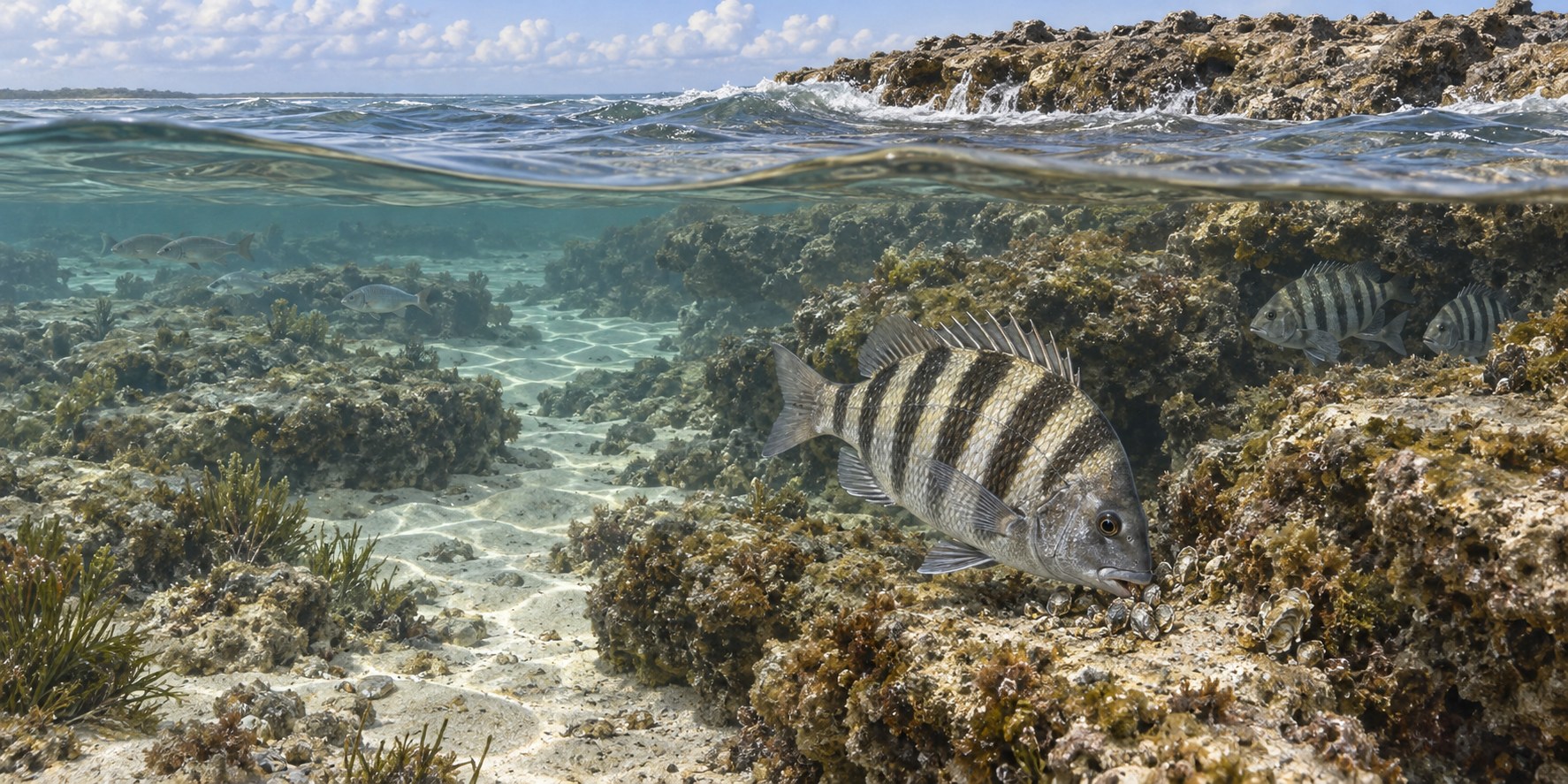
When exposed rock or rough bottom is present, fish the open sand beside it if a legal safe position allows. The boundary can offer food without requiring the rig to settle deep into cracks. A cast straight into the roughest patch often produces more lost tackle than useful fishing.
Sheepshead often pick food from the edges of hard structure. A compact shrimp or another permitted crustacean bait can be placed near the edge. Keep contact with the rig so a short bite is not lost in slack line.
Do not step onto wet rock to gain distance. Wave sets can cover an apparently dry surface, and uneven footing makes a retreat difficult. Stay on a stable shore position.
Inspect leader after any rough contact. If several rigs are lost in the same lane, move to a cleaner area instead of continuing to leave hooks behind.
Use an open trough for the simplest session
A repeated line of breaking waves can mark the first bar. The water inside it may form a feeding lane close to shore. Start with a short-to-moderate cast into that trough.
Whiting can take small shrimp pieces near the bottom. Keep the hook point exposed and check bait after light taps. A large dangling piece may be stolen without the fish reaching the hook.
For pompano, use a compact presentation held slightly above sand. Sand fleas may be an option where collection is allowed; small shrimp pieces and prepared baits are alternatives. Test a different distance before changing every part of the setup.
Stay out of outward-flowing gaps in the bar. Such water can be interesting to observe from shore but dangerous to enter. A longer cast is never a reason to wade into uncertain current.
Match tackle to the lane
| Bottom or activity | Useful method | Adjustment |
|---|---|---|
| Clear sandy trough | Small bottom bait for whiting | Change casting distance in short steps |
| Clean moving surf | Compact dropper rig for pompano | Keep bait from spinning or hiding the point |
| Sand bordering hard cover | Carefully placed crustacean bait | Retrieve before it drifts into a crack |
| Small bait chased at the surface | Compact lure through open water | Check for people and birds before casting |
The choice should fit both the target and the ability to recover the rig. A fishable lane is one where the bait can work without constant snagging or interference.
Use enough weight, but respect the outfit
Surf current can make a light sinker move too quickly. Increase weight only within the rod’s rating and with a smooth casting motion. Do not try to force an overloaded outfit to reach farther.
Some controlled movement can cover ground. Rapid sideways travel is different: it carries the line toward other users and makes bites difficult to interpret. Retrieve before that happens.
Weed adds drag even when the sinker itself is suitable. Clear it promptly and check whether a different lane is cleaner. Persistent weed can be a reason to choose another time.
Keep spare rigs ready in a closed bag so a damaged leader can be replaced without leaving hooks scattered on the beach.
Leave room for the living beach
Dunes, nesting birds and sea turtles are part of this shoreline. Follow seasonal barriers and avoid disturbing marked nests. Keep lights and other activity consistent with posted wildlife rules.
Do not drive rod holders or other equipment into protected vegetation. Use open sand where fishing is allowed and remove everything at the end of the visit.
Birds attracted to bait can become tangled. Keep scraps contained and pause casting when birds gather close to the line. Never deliberately cast at or toward wildlife.
The health of the beach supports its fishing value. A careful outing leaves no clipped line, broken hooks or food packaging behind.
Use the forecast to narrow the visit
A moderate morning can make learning the surf easier than a windy afternoon. Summer heat and thunderstorms call for an early exit plan. Cooler months can offer comfortable sessions, but fronts may quickly increase wave energy.
Tide changes alter how much water covers a trough or rough patch. Observe how the lane changes during the session instead of continuing to cast to a fixed distance.
Check the weather and tide planner before leaving. For another sand-focused public-park option, compare Cocoa Beach’s fishing guide.
Bring drinking water regardless of whether a park lists showers. At Seagull, the shower water is explicitly not intended for drinking.
Keep the catch decision clear
Measure and identify fish before retaining them. Consult FWC’s current saltwater recreational requirements for licensing and species rules. A park parking pass does not answer those questions.
Use wet hands and support the body during release. Keep the fish away from dry hot sand and have the dehooking tool ready. A quick, organized routine reduces stress for the fish and confusion for the angler.
Record whether the successful bait was beside hard bottom or over open sand. That distinction is particularly useful on a shoreline where the bottom can change over a short walk.
Let abrasion decide when leader needs replacing
A leader can look intact while its surface has been weakened by rough bottom. After contact with hard cover, inspect for whitening, flattened sections or damaged knots. Replace doubtful material before it is loaded by a fish. Do not pull a tight leader through bare fingers as a test.
Keep a few prepared replacements in separate small bags. That allows a quick change without spreading hooks across the beach. Match the leader to the intended target and the rod rather than making every connection heavier by default.
When repeated damage comes from the same casting lane, changing location is more useful than continually adding stronger line. A clean sand boundary beside the rough patch may offer a better presentation with less lost tackle and less disturbance to the habitat.
Put the plan into practice
Carry enough drinking water for the walk as well as the fishing time. A small access without a restroom or drinking fountain should be treated differently from a fully serviced beach park.
Satellite Beach fishing questions
Does every beach crossing have facilities?
No. Many are small pedestrian accesses. Choose a larger park if restrooms or a specific accessible route are needed.
Does Seagull Park have drinking water and toilets?
The county lists no restrooms and describes the outdoor shower water as non-potable. Bring drinking water and plan accordingly.
Should I fish directly into the rock?
A sand lane beside hard cover is often easier to manage. Avoid wet-rock footing and repeated tackle losses.
Do I need to arrange parking ahead?
City lots use a pass or payment system, with advance registration requirements for passes. Check the current arrangement for the exact lot.