
SOUTHEAST ATLANTIC
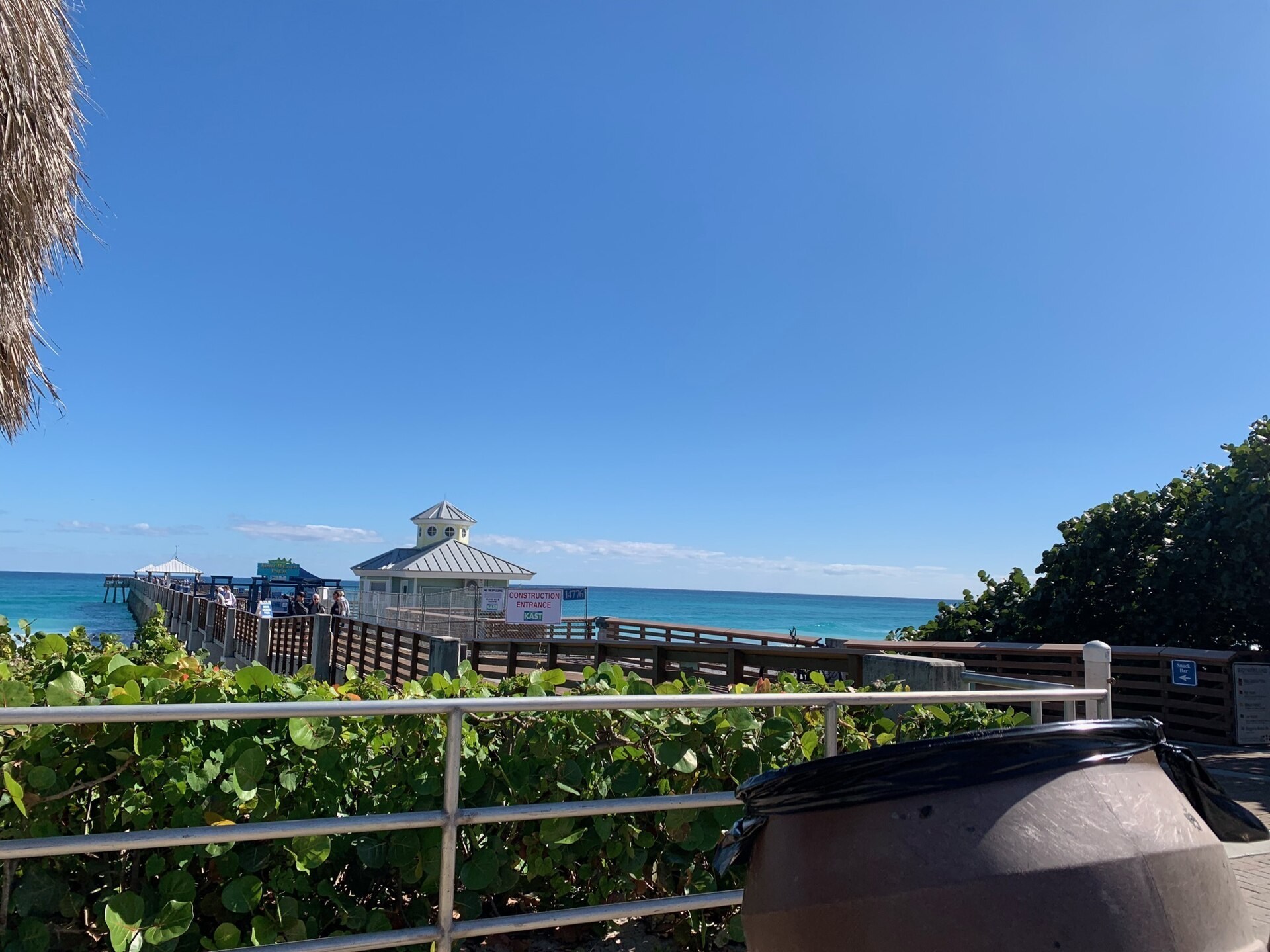
Juno Beach Park
fishing guide
Juno Beach Park provides ocean access and the Juno Beach Pier. A pier outing and a surf outing need different tackle, rules and expectations, especially while the pier refurbishment changes the available space.
Explore the guide ↓Check construction before counting on a rail space
The Juno Beach Pier extends into the Atlantic from the county park. Loggerhead Marinelife Center manages the fishing facility and pier services. Admission, equipment rental and opening arrangements should be checked directly before a visit.
The 2026 refurbishment began June 1. A late-September notice said construction would resume October 5 after work on replacement panels away from the site. That notice does not establish that every part of the pier is closed or fully open.
Ask which sections are available and whether fishing operations have changed that week. A favorite rail position or a usual opening time should not be treated as dependable during construction.
If the pier cannot support your planned session, make a separate legal beach plan. Do not cast from construction areas, climb barriers or use an unapproved route beside the works.
Fish the water you can safely reach
Pier fishing removes the need to cast from breaking surf, but height above the water creates its own problems. A bait lowered beside a piling can snag, and a hooked fish may be difficult to land without suitable equipment.
Watch how current carries an unbaited rig before making a complicated presentation. Choose a lane that keeps your line away from neighboring anglers. Wind can bow line sideways even when the sinker is holding beneath the surface.
Fish can move between shallow water near the beach and deeper water farther along the structure. The end is not automatically the best place. Bait activity and available safe space should guide the choice.
Stay clear of repair equipment and any section staff has restricted. A seemingly empty spot beyond a barrier is not spare fishing room.
Present a small bait above clean bottom
Small shrimp pieces and durable prepared baits can attract suitable bottom-feeding fish. Begin with a simple rig whose hook and leader can be managed at the rail. Avoid adding hooks merely because there is room in the tackle box.
Lower or cast according to the facility's rules and the available space. A sinker swinging behind an angler can injure someone walking along the pier. Check the entire motion before sending the rig out.
Lift the rig when weed or another line reaches it. Waiting while lines twist together can turn a small problem into broken tackle. If repeated snags occur, change the presentation or location.
Identify the catch before deciding to keep it. Mixed pier catches can include species with different size, season and bag rules. A fish that resembles a familiar target may still need closer identification.
Use a lure when prey is moving through
Spanish mackerel, bluefish and jacks may follow bait around the ocean side. Surface splashes and quick changes in the bait school's shape can reveal a feeding opportunity. Bird activity is useful to observe but is not a reason to cast through birds.
A compact jig or metal lure can be worked through the permitted open lane. Control the retrieve so it does not cross every neighboring line. Give another angler's hooked fish room rather than casting into the same commotion.
Toothy fish require leader checks. Replace nicked material before the next cast, and keep fingers away from a fish's mouth. Pliers and a secure landing plan belong within reach.
When bait moves beneath a closed section, let it pass. Construction boundaries and safe casting room take priority over following the school.
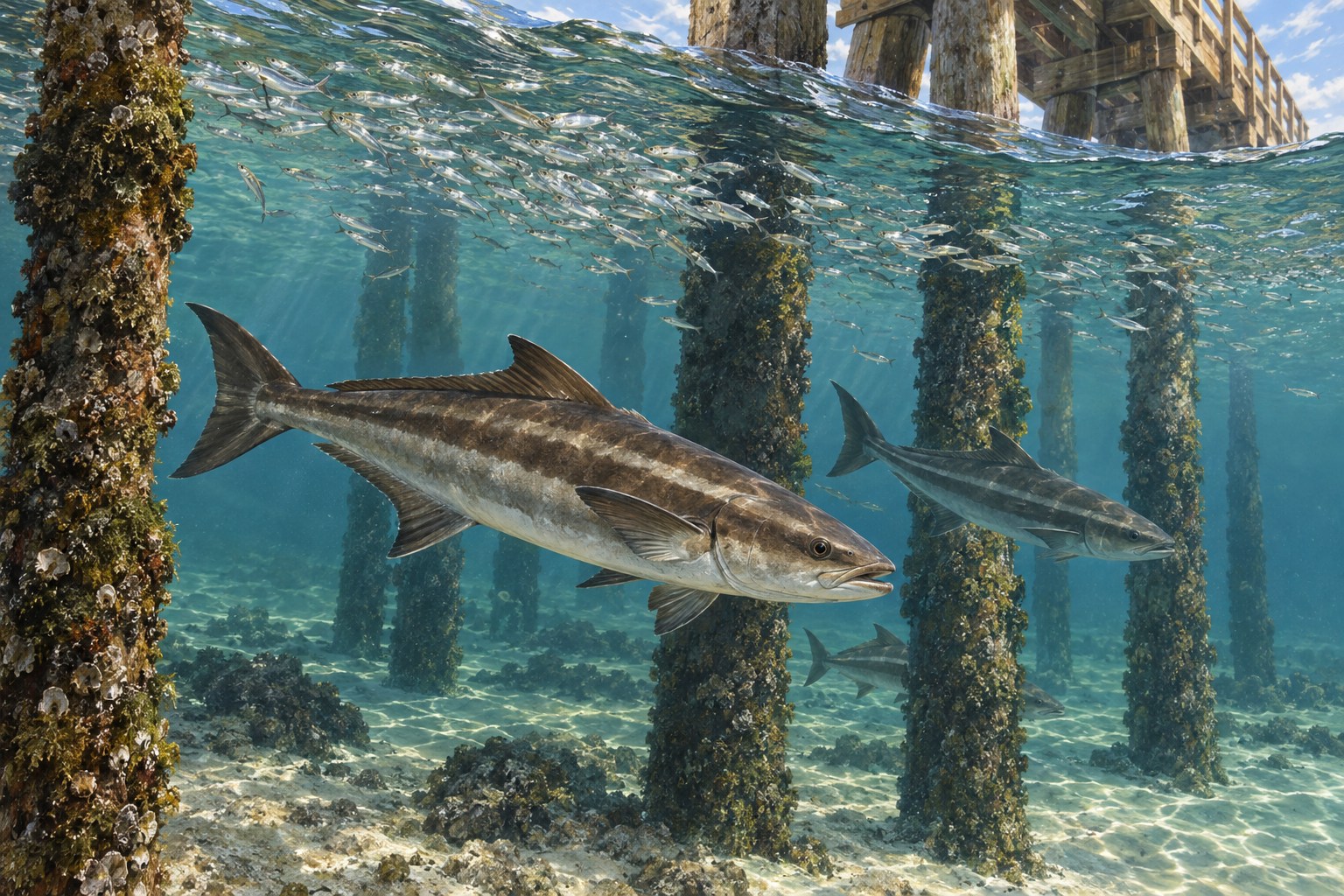
Understand snook near structure
Snook can use ocean shorelines and suitable cover as feeding routes. A piling edge may concentrate prey, but it can also make a hooked fish difficult to control. Do not use a method that regularly breaks line against the structure.
A carefully placed lure should travel in open water beside cover. Choose tackle that allows steady pressure without forcing the fish onto the rail. Ask staff about permitted landing equipment for larger catches.
Keep a release fish in the water when practical and safe. Lifting a fish by its leader can damage the fish and break the line. Never climb down the outside of the pier to solve a landing problem.
A pier photo is not worth prolonged air exposure. Have the camera ready beforehand and return the fish using the approved method.
Use the beach as a different kind of trip
The park also has guarded ocean frontage. Fishing must remain outside swimming areas under the applicable beach guidance. Confirm the boundary rather than assuming that the sand directly beside the pier is a casting area.
A beach session is built around troughs, bars and shorebreak. Small baits for pompano or whiting may work close to shore. Choose a sinker that holds without constantly dragging into other beach users' space.
Surf tackle and pier tackle are not interchangeable in every situation. A rig that is easy to lower from a rail may be awkward to cast through waves. Retie for the setting rather than carrying the entire pier arrangement onto the beach.
Keep the sand route uncluttered with chairs, loose leaders and buried hooks. Pack early enough to collect everything in good light.
Choose one method for the available conditions
A clear rail space, manageable current and an intact bait are a good starting combination. If a lure school appears, switch only after clearing the previous rig. Multiple unattended rods can reduce your ability to respond safely.
Ask about current rod limits, bait rules and species restrictions at the facility. Equipment rentals can make a first trip simpler, but they do not remove the need to understand how the rig is used.
| Situation | First approach | Watch for |
|---|---|---|
| Quiet permitted rail section | Simple small-bait rig | Line drift toward pilings |
| Baitfish passing in open water | Compact jig or metal lure | Birds and neighboring casts |
| Legal sandy beach section | Small surf bait in a trough | Swimmers and rolling sinkers |
| Restricted construction space | Choose another approved area | Changing weekly access notices |
Make the visit comfortable and manageable
Bring drinking water, sun protection and a container that keeps bait secure. A pier can feel cooler in the breeze while still exposing you to strong sunlight. Keep valuables dry and leave the walking lane open.
Check parking arrangements and facility hours separately from the county park's general schedule. Rental availability and admission fees can change, so verify them when planning a budget.
Do not feed turtles or other wildlife around the pier. Hooks, bait and discarded line can create injuries even when the animal appears comfortable near people.
End with a clean rail and a useful note
Collect every leader offcut and bait wrapper before leaving. Rinse equipment where permitted without blocking other visitors. Check the return route around any work areas rather than following an old shortcut.
Write down which section was open, what the current did and whether baitfish appeared. Those details make the next trip more realistic than a promise that the pier always produces a certain fish.
Common questions
Who manages the Juno Beach Pier?
Loggerhead Marinelife Center manages the pier facility. Check its current information for fishing access, admission and rental arrangements.
Can I plan around the end of the pier?
Only if that section is currently available. Repairs can change access, and the end is not automatically the best fishing position.
What should a first-time pier angler bring?
Start with manageable tackle, bait, pliers, water and a clear landing plan. Ask staff about permitted equipment and current rules before setting up.
Is beach fishing a replacement for a closed pier section?
It can be a separate option in an approved fishing area. Swimming boundaries and beach rules still apply, and the surf needs a different presentation.
Prepare for your visit
Check local tides and weather. Read more about snook, florida pompano, whiting. Check current FWC saltwater fishing rules.