

SOUTHEAST ATLANTIC
Miami Beach
fishing guide
Miami Beach has a long ocean shore, busy swimming areas and locally controlled fishing access. Confirm the exact permitted place before casting. Use the coast's surf, bait and seasonal patterns to plan a lawful trip rather than assuming the entire beach is open to hooks.
Explore the guide ↓Check the permitted place before choosing the tide
Miami Beach's swimming areas and public waterfront routes do not provide unrestricted fishing access. Ask Ocean Rescue or the responsible city staff about the exact section and activity. Keep hooks outside swimming space and obey signs and barriers.
The city also prohibits land-based shark fishing. Do not plan a shark session from its shore or land structures. Confirm any other local limits before selecting a target.
A pedestrian bridge, seawall or jetty can look like an attractive rod position while having separate restrictions. Do not turn easy walking access into assumed permission. If the chosen place is unsuitable, use a verified designated facility instead.
North Beach, Mid-Beach and South Beach have different local settings and crowds. The following methods explain the ocean habitat only where angling is authorized.
Read the nearest sand channel before casting farther
A breaking wave can reveal a shallow bar, with a trough on its shoreward side. Fish may search that channel for dislodged food. Watch several sets to distinguish a repeating feature from one passing wave.
A small gap in the breakers may show a different depth or current route. It can also indicate dangerous water, so it is not an invitation to wade. Study it from a safe authorized position.
Longer casts are useful only when they reach a better controllable lane. Test near water before adding distance. A sinker rolling toward people is a signal to retrieve and change the plan.
Offer pompano a compact bottom bait
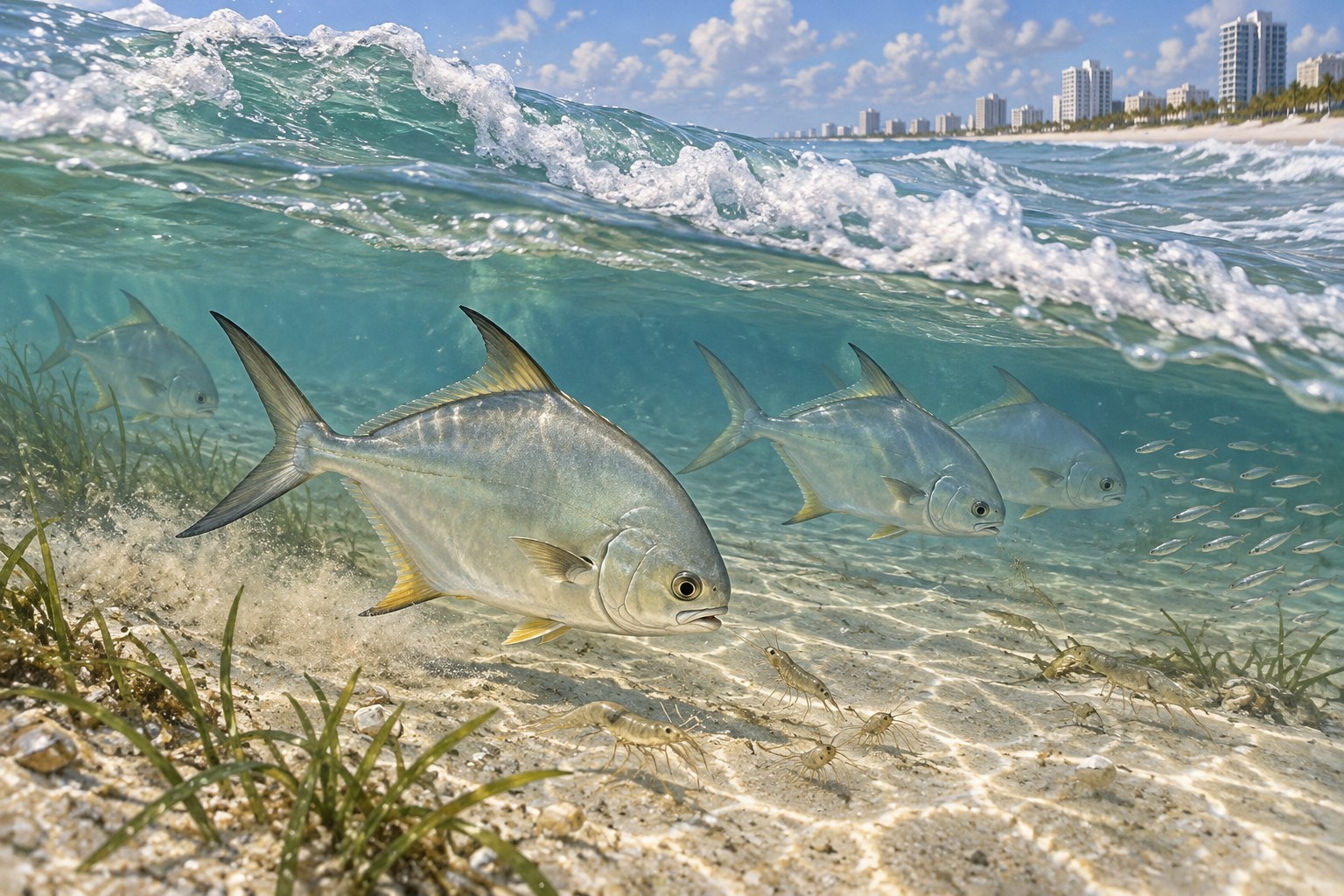
Florida pompano can search suitable sandy surf for small crustaceans. Sand fleas or a small shrimp piece can provide a neat first test. Check bait collection rules and keep the point exposed.
A simple compact rig is easier to observe than several large baits spread across the beach. Choose enough sinker hold for the actual water without using distance as the only goal. Check whether weed is burying the offering.
Refresh stolen or softened bait. If a rig returns empty repeatedly, shorten the inspection interval. The illustration explains a sandy feeding setting, not a claim that a fish is present at the photographed beach.
Give close-range bottom fishing a fair trial
Whiting can use suitable sand close to shore. A small shrimp portion or firm strip bait can be tested in a clear permitted lane. A modest presentation may be more appropriate than a large offshore-style hook and bait.
Notice small taps and changes in line tension. Keep the rod attended so a rolling sinker or stripped bait is found quickly. Start with one controlled offering until the water movement becomes clear.
Change bait size or placement before rebuilding the whole rig. A simple sequence of adjustments helps show whether distance, food or current is the main problem.
Use a lure only when the route stays clear
Spanish mackerel and jacks can follow small fish through suitable ocean water. A compact metal lure or small swimming lure can cover a visible moving opportunity. Use a clear authorized lane and stop when people or traffic enter it.
Bring the lure across the prey route rather than throwing directly into every splash. A steady retrieve gives a useful starting point. Watch for a following fish before deciding whether a short pause might help.
Inspect leaders after toothy contact. Have long pliers ready and avoid loose treble hooks around pedestrians. A feeding school does not justify casting beyond the permitted area.
Make one useful change at a time
A quiet rod can mean the bait is missing, covered or outside the useful lane. These checks help diagnose the presentation before blaming the season.
| What returns with the rig | Likely issue to examine | Practical adjustment |
|---|---|---|
| Bare hook | Small bait theft | Check more often or use a firmer portion |
| Weed-covered bait | Presentation hidden | Try a clearer authorized lane |
| Sinker moving sideways | Insufficient control | Shorten or reposition the cast |
| Untouched bait after several checks | Placement or prey mismatch | Test nearer sand before extra distance |
Use seasonal ideas with the day's evidence
Cooler water can change the mix of surf fish, while warm conditions alter prey activity and comfort. Avoid treating a month as a guarantee. Visible bait, manageable waves and legal access decide whether a specific method makes sense.
Dawn or softer light can help reveal prey movement, but local permission still applies. Clear brighter water can make fish visible while also making the tackle more noticeable. Adjust presentation size and movement rather than relying on the clock alone.
Keep a brief note of wind, water clarity and what the bait looked like when retrieved. That record is more useful than labeling the whole Miami Beach coast productive or empty after one visit.
Keep the fishing plan compatible with a busy beach
Choose a setup that can be stopped and packed promptly. Do not spread unattended rods across a public path. Keep the entire hook path clear, including the backcast and the line drifting beyond the sinker.
Watch beach operations, lifeguard guidance and changing weather. Leave wildlife and marked nesting areas undisturbed. Lightning requires a prompt end to the session rather than one last cast.
Carry water, shade protection and a small closed tackle bag. A short lawful session in comfortable conditions is more useful than a long crowded one.
Identify the catch and plan its release
Check current FWC license, species and harvest rules. Have a measuring tool and pliers ready before the bite. Return unwanted fish with wet hands and proper support rather than leaving them on dry sand.
Remove line fragments and bait waste from the beach. Pack hooks securely for the walk back. Reconfirm the local position's permission before another trip because a fishing memory is not a current access check.
Common questions
Can I fish anywhere along Miami Beach?
No unrestricted access is assumed. Confirm the exact permitted section and keep hooks outside swimming areas.
Can I target sharks from the city shore?
The city prohibits land-based shark fishing. Do not plan that activity from its shoreline or land structures.
Do I need to make the longest possible surf cast?
Start by reading the near trough. Extra distance helps only when it reaches a better controlled legal lane.
What should I try for a simple bottom-bait session?
A compact shrimp, sand flea or firm strip bait can suit different sandy-surf targets when access and species rules allow.
Prepare for your visit
Check local tides and weather. Read more about florida pompano, whiting, spanish mackerel. Check current FWC saltwater fishing rules.