
PANHANDLE
Panama City Beach
fishing guide
Find a roomy pier rail or a useful beach trough. Learn how to match Panama City Beach water, bait and tackle to your first target.
Explore the guide ↓LONG PIERS AND OPEN GULF WATER
Start with a pier or a stretch of sand
Panama City Beach makes it possible to reach productive coastal water without owning a boat. Long fishing piers cross the beach shallows. St. Andrews State Park adds a pass-side setting and sheltered bay water. Miles of surf give a patient shore angler room to search.
Your best starting place depends on what you want from the day. A pier offers a firm platform and a view of bait schools. A beach session gives you more control over distance from other anglers. The pass demands more care because moving water, boats and rock structure can complicate a simple fishing plan.
Panama City Beach is the Gulf-front city. Panama City, across the bay, has a different collection of waterfront access points. Check the actual destination before setting your navigation.
Useful places to begin
Russell-Fields Pier
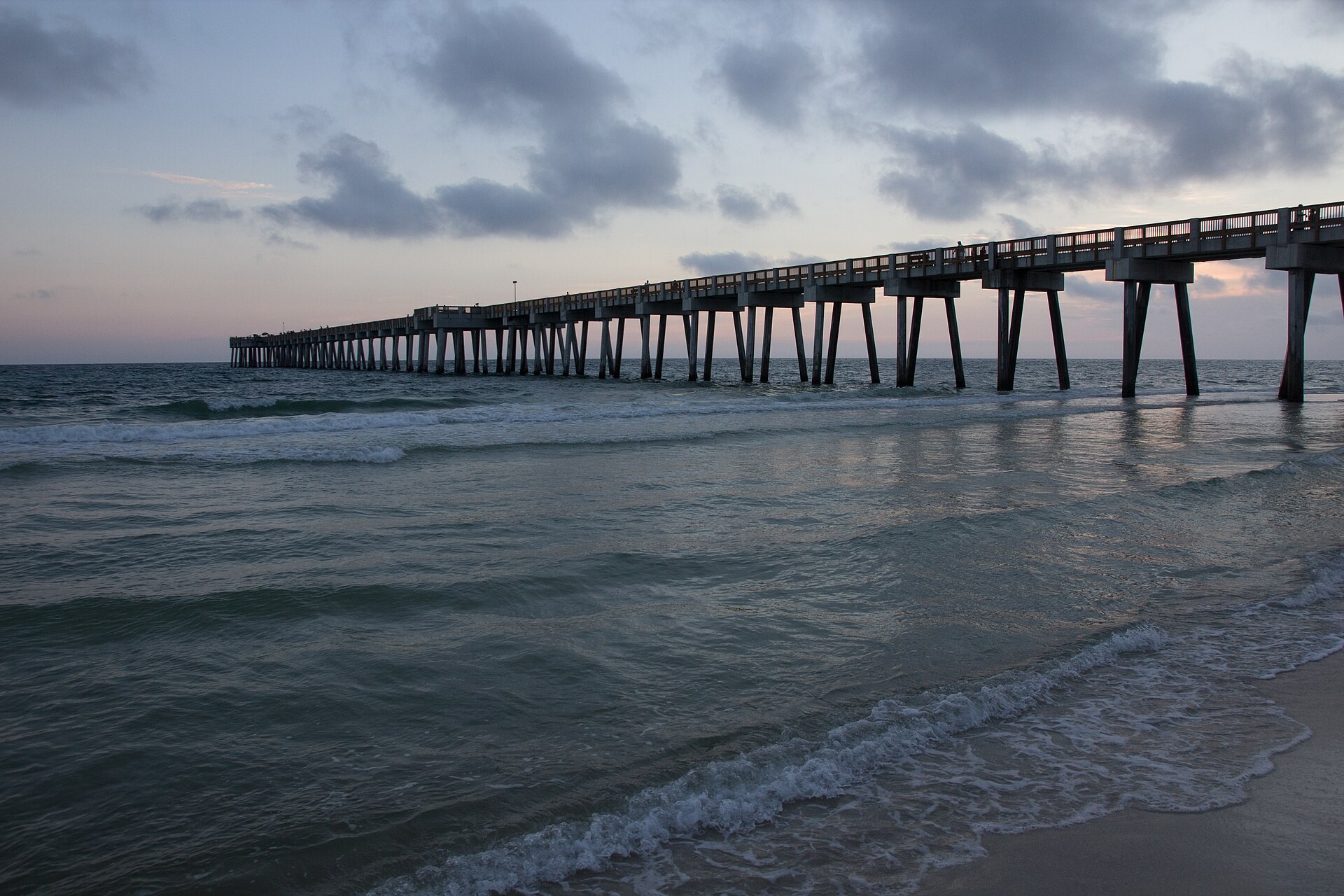
The city pier stands at 16201 Front Beach Road. It extends more than 1,500 feet into the Gulf. Fishing and walking admission are separate choices. The city’s current listing says the bait shop is closed, so arrive with your essentials and confirm any rental arrangements before counting on them.
Walk the rail and observe the water first. Look for bait, available casting room and the direction everyone’s lines are drifting. Nearshore sections can hold worthwhile fish. You do not need to squeeze onto the end to have a useful session.
St. Andrews State Park
The park sits where the Gulf meets the entrance to St. Andrew Bay. Choose a designated fishing area that matches the conditions and your ability. The beach, bay side and pass are different environments even when they are only a short walk apart.
Rocky edges create shelter for food and fish, but wet rocks are poor walking surfaces. Fish from safe, permitted ground. Never climb out toward a breaking wave for a better casting angle. Keep swimming areas and the marked boat route clear.
Open beach accesses
Use an established public entrance and allow ample separation from swimmers. Early morning often offers more room, though fishing must still follow posted restrictions. Keep your rods visible and your tackle contained. A nearly invisible line stretched across a busy beach is a hazard.
What to target first
| Fish | Clue to watch | Starting method |
|---|---|---|
| Whiting | A sandy trough close to the wash | Small shrimp bait near the bottom |
| Pompano | Clean surf moving across sand | A compact sand-flea or bait-strip rig |
| Spanish mackerel | Fast splashes around tiny baitfish | A small spoon retrieved briskly |
| Sheepshead | Barnacled pilings or hard edges | A crustacean bait kept close to cover |
| Redfish | A deeper beach cut or pass-side feeding edge | A natural bait or controlled soft-plastic drift |
| Flounder | Sand beside a change in depth | A small lure worked near the bottom |
Large roaming fish sometimes create excitement around the piers. They are not the best foundation for a beginner’s plan. Learn a manageable target and bring tackle that can land it cleanly.
Read the pier before choosing your rig
Notice whether fish are feeding at the surface, halfway down or close to the bottom. That observation should determine the rig. A bottom sinker is of little use when mackerel are chasing tiny bait just under the surface.
For a spoon or metal jig, begin with a size close to the visible bait. Cast into open water beyond the activity and retrieve through its edge. A steady, quick retrieve is a useful starting point. Vary speed before changing to a much larger lure.
For structure fish, hold the bait close to a piling without letting the line wrap around it. Keep enough contact to notice a small peck. Move if the current pushes every drop beneath the pier. A different rail position can solve the problem without changing your entire outfit.
Ask about a landing net before you hook a fish you cannot safely lift. Keep the deck route open. If a fish runs across neighboring lines, speak up calmly and let nearby anglers make room.

A beach approach that avoids wasted casts
Watch how waves break before walking into the wash. A break in the whitewater can reveal a deeper cut. The first trough may also hold fish only a short cast away. Test that close water before sending every bait over the far bar.
Put a small piece of shrimp on a simple bottom rig. Choose enough sinker to keep the bait in your own fishing lane. If wind and surf continually sweep the rig toward other people, find a quieter location or stop.
Keep one eye on the rod tip and another on the beach around you. A line can go slack when a fish swims toward shore. Reel gently until you regain contact rather than making an immediate hard strike at every change.
Carry spare leaders already tied. Replacing one quickly is easier than rebuilding hooks and knots in blowing sand. Store used tackle in a closed container instead of setting sharp hooks beside a beach chair.
Give the pass extra respect
The water at the bay entrance can move much faster than it appears from shore. A tide table’s high or low time does not guarantee slack current at your exact position. Watch floating material and boat movement before selecting a cast.
A slightly calmer edge beside fast water can hold fish waiting for food. You do not need to put a heavy rig into the strongest flow. Avoid letting a bait drift into the navigation route or across anglers positioned farther down-current.
A kayak is not a substitute for a safe shore platform near a busy inlet. Do not make a first local paddling trip across the pass. Choose sheltered, permitted water and stay within a route you can comfortably reverse.
Seasonal planning
During spring warming, watch for returning bait schools and improving surf opportunities. A run of mild days can matter more than a date on a fishing calendar. A fresh cold front may make the previous day’s advice less useful.
In summer, arrive early and plan a break from the sun. A pier has little protection from a thunderstorm. Leave exposed railings and water well before lightning reaches the beach.
During fall, moving bait can bring short periods of fast action. Keep a suitable lure available while you fish a steady bottom method. Avoid casting into birds just because fish are feeding beneath them.
In winter, use comfortable weather windows and lower your retrieve speed when fish seem reluctant. Structure and nearby depth may be more useful than a long search across empty shallow water.
Compare the wind, waves and forecast on the HookCurrent tides and weather page. A light offshore wind can make the beach look flat while still pushing a small craft away from land.
Keep the first visit simple
For a pier visit, carry one suitable rod, pliers, a measuring tool, spare leaders and a small bait supply. Check the rod’s casting limits before using a heavy sinker. Pier height makes good landing equipment more valuable than extra tackle.
For a family surf trip, set a short fishing window with time to clean up before swimming begins nearby. Choose a place with a manageable walk and known facilities. If a child loses interest, do not leave several baited rods unattended while the group moves away.
Identify your catch before deciding to keep it. Confirm current seasons, lengths and limits through FWC’s recreational saltwater fishing guidance. Pier admission and license arrangements should be confirmed for the particular pier you use.
Match the size of the meal
Pier fish may be feeding on very small bait. When that happens, a large shiny lure can pass through active water without interest. Start with a compact lure that resembles the size of what is being chased. Match the general shape and speed before worrying about a perfect color.
For whiting, a neat shrimp piece is easier to take than a whole oversized shrimp. For a sheepshead presentation, keep a small crustacean bait close enough to the piling to be noticed. The right bait in the wrong part of the water is still the wrong presentation.
Keep bait containers shaded and lids secure. A windy pier is an easy place to lose packaging, hooks or bait into the water. Open only what you need and put the rest away before making another cast.
When a fish bites lightly, do not automatically add a larger hook. Check whether the point is exposed and sharp, whether the bait has shifted, and whether too much slack hides the contact. A small adjustment to the existing rig can be enough.
Four common problems and a useful response
The line keeps wrapping around a piling
The current and your position are working against each other. Move to a permitted rail section where the bait travels away from the structure, or shorten the presentation. Repeating the same drop with a heavier sinker may only make the snag harder to free.
Fish are feeding but ignore the lure
Watch the bait’s size and depth. Try a smaller profile or let the lure run slightly deeper. Make the change on a few controlled casts so you can judge the result. Changing every detail at once makes it hard to learn anything.
The surf rig will not stay put
Check whether the sinker is suitable and safely within the rod’s rating. Move to a cleaner, gentler section if possible. If the whole beach is sweeping hard, a pier session or another weather window may be a better choice.
The fishing space becomes crowded
Reduce the number of rods and shorten the area your line occupies. If that still leaves no safe room, move or finish. Catching one more fish is not worth a hook near a passerby. A courteous angler is also more likely to get useful local help from staff and other visitors.
End with a quick tackle check. Rinse salt from equipment according to its care instructions, discard damaged leaders properly and note the conditions that produced bites. The next trip begins with that information.
Before you head out
Can I buy bait at Russell-Fields Pier?
The city’s listing currently marks the bait shop closed. Bring bait and basic tackle, and check for changes before your trip.
Is the end of the pier always better?
No. Fish follow food and suitable water. The nearshore rail may offer an easier and more productive place for your chosen species.
Should I fish the pass on my first visit?
Only from an allowed, secure position with conditions you understand. A beach or roomy pier section is often a simpler introduction.
What if I only have a light spinning rod?
Choose small lures or modest baits within its rating. Do not force it to cast a heavy surf sinker or lift fish onto a high deck.