

TAMPA BAY / SUNCOAST
Pass-a-Grille Beach
fishing guide
Explore Gulf sand and bay-side opportunities at the island’s southern end, with a clear plan for pier closures and strong pass current.
Explore the guide ↓A small point with several different waters
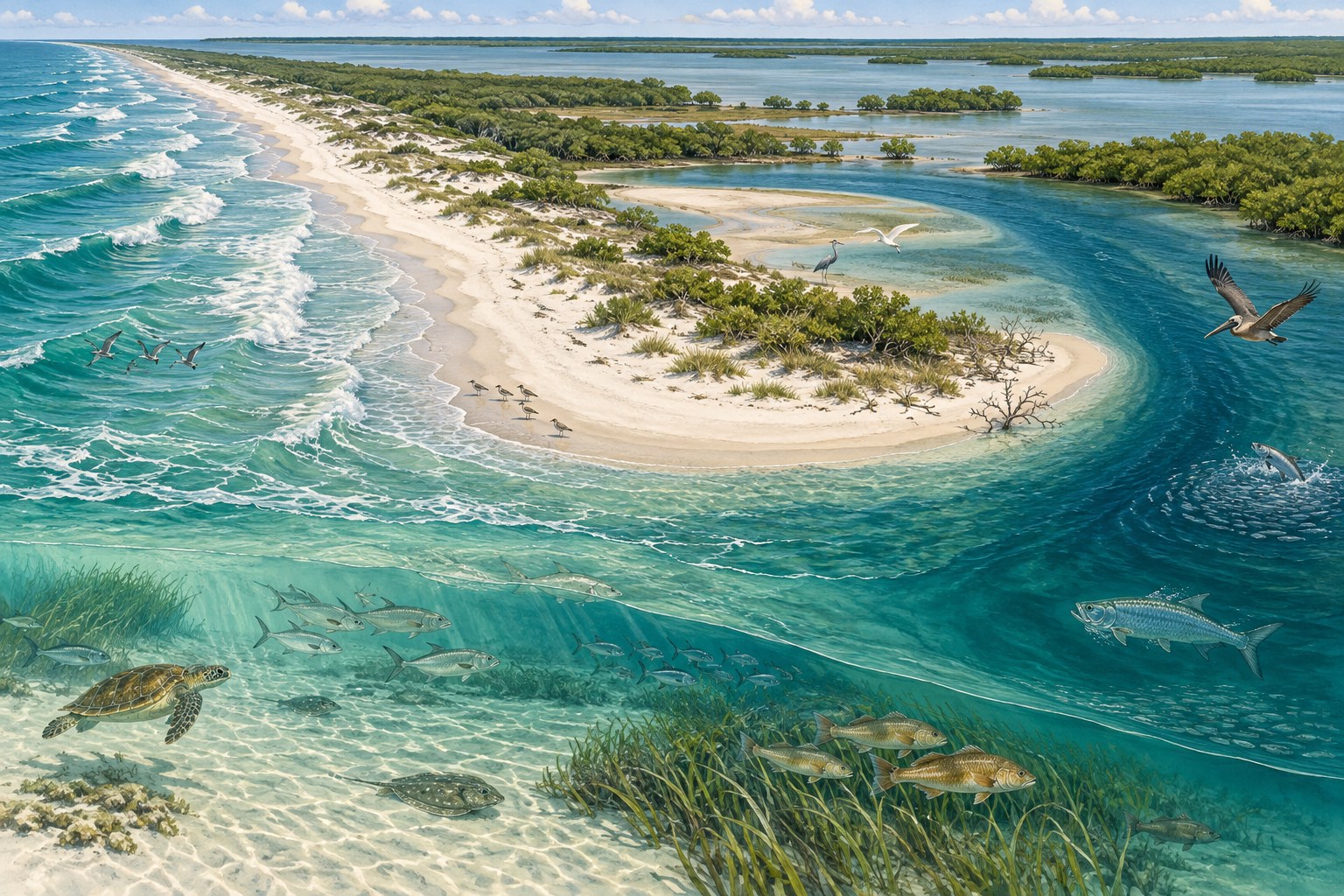
Pass-a-Grille sits at the southern end of St. Pete Beach. The Gulf faces west, bay water lies to the east and a strong tidal connection curves around the southern end. You can walk between very different views in a short distance, but each asks for its own fishing plan.
The quietest-looking water is not always the shallowest or safest. Near the point, depth and current can change quickly. A shore angler is better served by a secure position and a controlled cast than by trying to reach the very tip.
The Gulf beach suits a light traveling kit. The bay side may provide public fishing facilities, but recent storm damage makes a current access check essential. Do not build the whole day around an old photograph of an open pier.
Keep the southern point and the bay piers as separate choices. A change of wind may favor one, while a repair closure may rule out the other regardless of the weather.
Check piers before packing for them
Merry Pier is a familiar name in Pass-a-Grille, but it should not be treated as a dependable open fishing stop for this guide. The city’s 2025/26 budget identifies hurricane damage and unsafe portions of the bait-shack area. Local visitor information also lists a temporary closure. Confirm a formal reopening before planning to use it or buy bait there.
Other small city piers appear in the facility directory, including First Avenue and Eleventh Avenue. Check the individual listing and barriers at the site. Nearby facilities can have different repair schedules.
For a beach outing, use an open public walkover and legal parking. Keep equipment clear of the walking route along the waterfront. A short distance on a map can still become an awkward carry with multiple rods, a cooler and loose tackle.
Bay-side dog recreation areas and busy boat landings are not interchangeable with fishing space. Choose a location where hooks, animals, swimmers and boarding passengers will not overlap.
Work the Gulf beach in small sections
Start by looking for a lane of slightly darker water inside the breaking waves. Fish can travel along this trough close to shore. A small shrimp bait placed there may find whiting without a heavy surf outfit.
Pompano are more likely to interest an angler when the water is clean and moving over sand. Try a small bait or compact jig beside a bar rather than assuming the deepest reachable water is best. If the beach is crowded, postpone that approach until there is room.
In warm conditions, snook may pass through the shallows. Watch from dry sand and cast ahead. A lure pulled toward a fish’s face looks different from one fleeing along its natural travel direction. Set up your angle before casting.
Fish the bay side only where access is clear
From a permitted open pier, study shade, shell growth and the edge of the current. Sheepshead may feed close to hard surfaces. Mangrove snapper can shelter around cover. A well-placed shrimp often does more than a long cast away from every useful feature.
Keep the rig near your own position and out of boat approaches. A bait drifting naturally still needs supervision. If the flow pulls it beneath a platform, retrieve before it becomes a snag.
Do not attach lines to moored vessels or fish through occupied slips. Boat owners need room to maneuver. A public waterfront view does not make each dock a public angling site.
Choose a target that fits your position
| Fish | Suitable opportunity | Starting choice |
|---|---|---|
| Whiting | Light Gulf wash over sand | A tiny fresh shrimp bait |
| Pompano | Clear beach water with a bar edge | Sand flea or small jig |
| Snook | Warm shoreline or a safe current edge | Soft plastic or small baitfish |
| Sheepshead | Open structure with encrusted pilings | A crab or shrimp held close |
| Mangrove snapper | Shaded cover on the bay side | Live shrimp on a modest hook |
Tarpon sometimes move through the wider coastal area, but their presence does not make a light public pier setup appropriate. Large-fish tackle, landing space and release plans require separate preparation.
Pack for walking rather than waiting
A medium spinning rod, a small reel and a compact shoulder bag are enough for an exploratory visit. Carry several light jig heads, a few paddletails, small hooks and a limited range of sinkers. Leave room for water and line cutters.
For open beach fishing, a lighter leader helps a small bait move naturally. Increase leader strength when fishing close to abrasive cover or targeting snook. Check the last few feet after every encounter with a rough surface.
Bring bait in a sealed chilled container. If planning live shrimp, use a properly aerated bucket and keep it out of direct sun. Warm stagnant water can turn an expensive bait purchase into unusable bait before you make the first cast.
Choose a place to land a fish before choosing a place to stand. High rails, slippery edges and crowds can make a promising fishing position impractical.
Follow the light and the moving water
Early light can make the Gulf beach easier to fish before recreational use grows. In clear water, watch the angle of your shadow. Walking with a large shadow sweeping over fish can spoil a close-range opportunity.
A moderate stage of tidal flow often gives better control than the fastest part. Use the tide and weather information to plan a likely window, then judge the actual current at your chosen position.
Spring and fall can bring mobile bait schools. Summer favors shorter outings and a watchful eye for storms. Winter may suit patient fishing around legal structure during a mild spell rather than long exposed beach walks.
The pass remains a moving-water hazard regardless of season. Never assume you can wade around the point because the water beside the beach feels shallow.
A flexible half-day approach
Begin with the Gulf side if wind and swimming activity allow. Walk a manageable stretch and fish two or three distinct features. Keep the same bait while testing different distances so you can tell what changes.
If the surf is rough, consider a bay-side facility only after confirming it is open and safe. Do not turn a closed-pier visit into an improvised climb onto nearby rocks or construction materials.
When both sides are unsuitable, use the visit to learn access and return on a better day. Locating legal parking, checking entrances and understanding the shape of the point is useful preparation, even without a catch.
Finish with a quick check of your tackle. Rinse salt from the reel exterior gently, dry hooks and replace damaged leader. Small maintenance steps keep a short coastal outing from ruining equipment.
Keep the point welcoming
Pass-a-Grille is compact, and fishing shares the waterfront with many other activities. Retrieve before a boat approaches your line. Pause a backcast for walkers. Keep fish-cleaning waste out of public seating and walking areas.
Handle releases close to the water and avoid dragging fish across sand. A quick photograph is enough. Larger fish need body support, and any deep hook requires careful handling rather than forceful pulling.
Check the FWC rules for recreational saltwater fishing for current licensing, size limits and seasons before retaining anything.
What to do when your first stop is unavailable
A closed bay-side pier does not automatically make the nearest seawall an acceptable substitute. Start by looking for an open public beach entrance and a safe area of sand. Check whether wind and recreation leave room to fish there.
Change the tackle to fit that alternative. The crab rig intended for pier sheepshead may be less useful on open sand than a small shrimp bait. Remove unnecessary weight and test the first trough. Keep the same careful landing plan even though the setting is simpler.
If the Gulf beach is also unsuitable, use the time to inspect legal access and return on another day. Photograph the entrance sign and note where parking is available. That makes the next visit easier without encouraging a risky improvised position.
At an open small pier, begin with a close drop. Pass-a-Grille’s compact waterfront can become crowded quickly, and a long cast may interfere with boats or other anglers. Fish within the space you can supervise comfortably.
Consider the return walk as the tide rises. A narrow stretch of sand may disappear even when the road and parking remain close. Keep an obvious route back that does not require crossing private property or climbing around barriers.
For visiting anglers, flexibility is more valuable than a long list of alleged secret spots. One confirmed access, a suitable bait and a manageable current window can provide a better outing than several hurried stops at facilities whose condition is uncertain.
Pass-a-Grille planning questions
Should I count on Merry Pier for bait?
Not without a current reopening confirmation. Arrange bait elsewhere while the facility remains affected by repairs.
Is the southern point good for wading?
It is not a casual wading option. Pass currents and abrupt depth changes make dry, permitted shore positions the better choice.
Can I combine this with the main St. Pete Beach?
Yes. They are parts of the same city, but allow time for parking and keep each area’s access restrictions in mind.