
TAMPA BAY / SUNCOAST
St. Pete Beach
fishing guide
Build an easy shore plan around public beach access, clear-water snook and small surf fish, with space for other beach users.
Explore the guide ↓Beach fishing with a little room to move
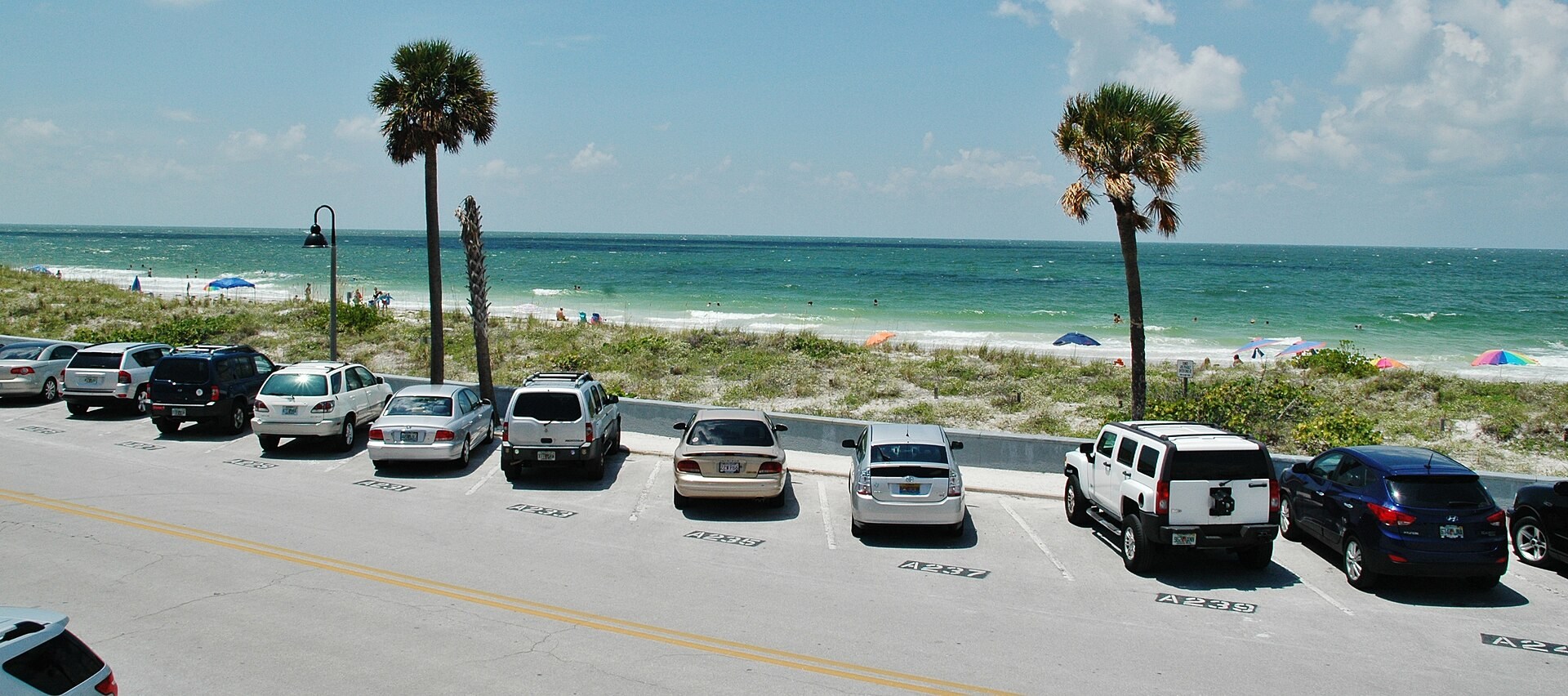
St. Pete Beach is a Gulf beach city, not the same place as downtown St. Petersburg. That matters when choosing a tide station, parking area or fishing pier. Here, the simplest shore plan is usually built around sand, gentle surf and bait moving close to land.
The city stretches along Long Key. Its northern end meets Blind Pass, while Pass-a-Grille occupies the southern portion. This guide concentrates on the main beach and Upham Beach area. The separate Pass-a-Grille guide looks more closely at the southern point and its bay-side options.
You can have a useful outing with a small spinning outfit. The challenge is often finding a safe casting window among swimmers, walkers and beach services. Arrive with a flexible plan instead of expecting one exact patch of sand to remain empty.
Pick a practical public starting point
Upham Beach is a recognizable public beach area near the north end of the city. It offers access to the Gulf without requiring a private resort entrance. Stay within open public routes and observe any temporary fencing around beach work or wildlife.
The broader central beach also has public access, but parking and walking distance vary. Choose a legal parking space and check the meter period. Hotel driveways and private beach walkovers should not be used as shortcuts unless you have permission.
City facility listings include several small fishing piers and boat ramps. Their individual condition matters. A citywide list of amenities is not proof that every pier is open after storms. Check the specific facility before relying on it for an outing with children or mobility needs.
Near Blind Pass, keep away from the navigation channel and any posted restricted area. A protected-looking corner can still experience strong flow and boat wakes. The pass is not a beginner wading destination.
Look for beach snook without chasing them
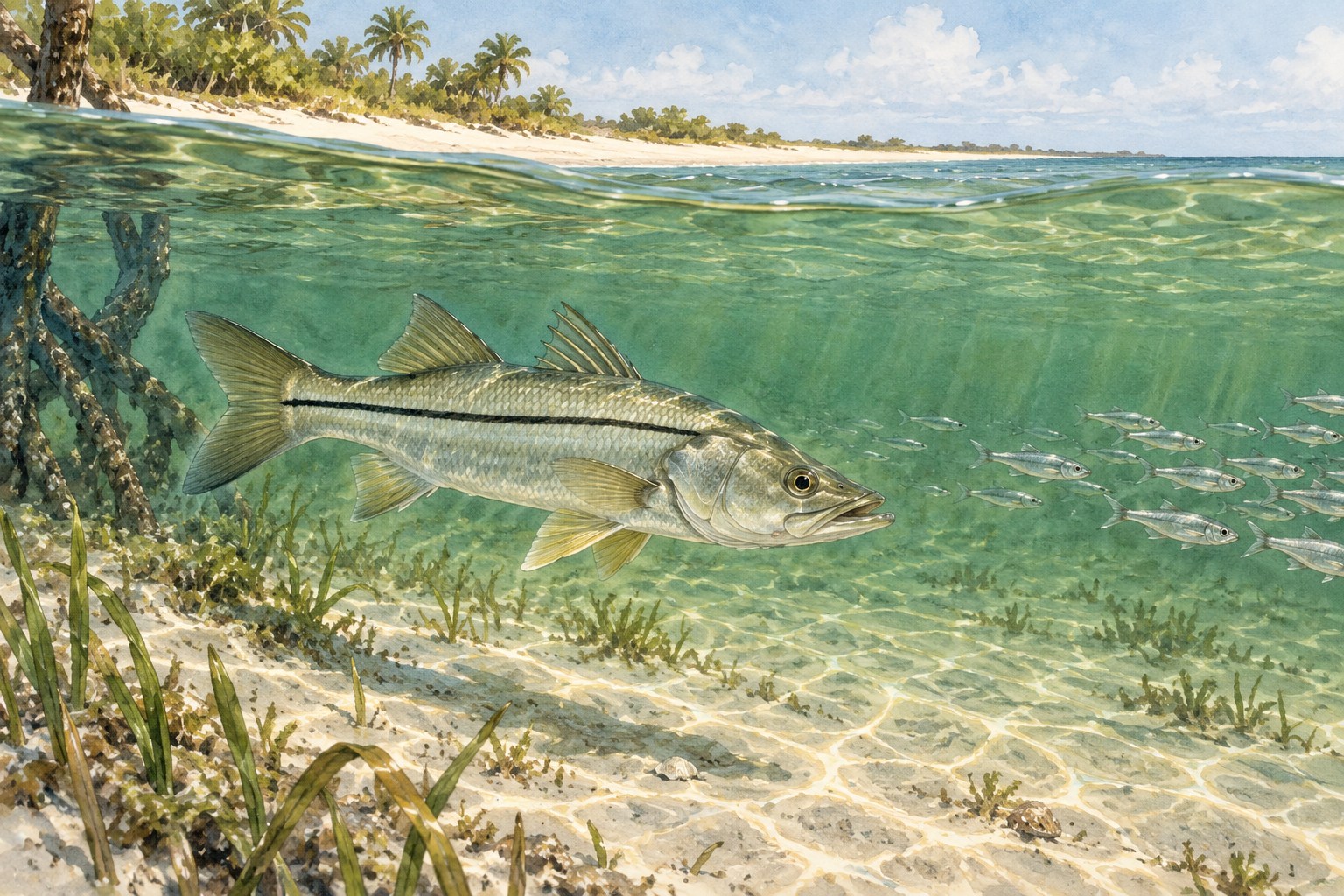
Warm, clear shallows may reveal a dark-backed fish moving parallel to shore. A common snook has a strong black lateral stripe and often travels with little surface disturbance. Watch for a shape that maintains direction while wave shadows move around it.
Stop walking before you cast. Place a small lure ahead of the fish’s path and bring it across naturally. Landing a heavy jig beside the fish may end the encounter. A lighter presentation also stays above the sand more easily in shallow water.
Snook along the beach can be feeding, traveling or involved in seasonal spawning activity. A visible fish is not always a willing fish. If several refuse your lure, leave them room and look for a different patch of bait rather than repeatedly casting at the same group.
Other fish worth planning for
| Target | Likely setting | Helpful bait or lure |
|---|---|---|
| Whiting | First sandy trough in light surf | A fresh shrimp piece on a small hook |
| Pompano | Clean beach water and sandy bar edges | Sand flea or a compact bouncing jig |
| Spanish mackerel | Moving schools of small baitfish | A slim spoon with a brisk retrieve |
| Ladyfish | Active surface feeding over sand | A small paddletail or jig |
| Sheepshead | Permitted, open structure with shell growth | Shrimp or small crab placed accurately |
A mixed-catch session is easier to enjoy when you do not judge it only by a single prized species. Small beach fish can teach a new angler how current, bait size and hook placement work.
Keep the bait fresh and the rig small
For beach bottom fishing, start with shrimp and a compact rig. Trim a large bait rather than folding it repeatedly around the hook. The point needs room to catch. Use a sinker suited to the wash, not the largest one in the tackle box.
Cast one bait into the nearest likely lane. Let it settle, then hold enough contact to notice a change. If the sinker rolls steadily toward swimmers, retrieve and relocate. A moving rig should never become someone else’s problem.
Small baitfish can suit snook, but catching and keeping them healthy adds work. For a visitor walking the beach, a few soft plastics may be more practical. Pack both a natural silver shade and a darker silhouette for changing light.
Carry a small rubbish bag for bait packaging and broken leaders. Fish scraps left on the beach attract birds toward hooks and people.
A useful light-tackle setup
A seven-foot medium spinning rod with a 2500 to 4000-size reel covers many ordinary beach situations. Around 10 to 15-pound braid gives casting distance and bite feel. Add a leader strong enough for the target and inspect it whenever a fish or rough surface touches it.
For small open-sand fish, lighter leader can improve presentation. For snook, start stronger because the mouth and gill plates can abrade line. Do not tighten the drag so much that the rod cannot cushion a sudden run.
Keep a pair of long-nose pliers ready before the first bite. If using a lure with several hooks, consider a suitable single-hook version for easier handling. That is especially helpful when fishing near other people or dealing with a lively ladyfish.
Adjust the plan as the water changes
In spring, watch for the return of active bait schools and clearer settled conditions between fronts. Summer favors early starts and careful attention to thunderstorms. Dawn can also give beach anglers a short interval before swimming activity expands.
Autumn may bring bursts of feeding along the coast. Keep a lure accessible, but do not run through other people’s space to follow a school. A school that disappears may return along the same shoreline route.
Winter weather can shift the beach from calm to rough quickly. On a mild afternoon, small bottom baits may be a better choice than searching for summer snook. Cold wind, dirty water and repeated weed fouling are reasons to shorten the trip.
Use the forecast as a starting point
The local fishing weather page helps compare wind and tide. Choose the relevant beach area, then check how the real water behaves. Nearby sheltered bay water may rise and fall differently from the open Gulf.
At the beach, wave shape reveals more than a tide height alone. A trough with moving clean water can remain useful at several stages. A high tide that leaves little dry sand may reduce the room available to fish safely.
Do not plan a long wade around an unfamiliar point. Water can deepen abruptly, and a rising tide may remove an easy return. Stay within a route you can leave comfortably before conditions change.
Make a family session manageable
Choose one attended rod and a short session. Let a child practice casting without a hook in an open permitted space before adding bait. Keep everyone behind the caster and use a simple rig that is easy to see.
Set the tackle box above the wash, with hooks closed away between changes. Bring shade for breaks, but keep umbrellas and chairs out of the casting lane. If swimmers enter the area, take a break rather than trying to fish between them.
Finish while the outing is still comfortable. A child who catches a small whiting, learns to release it and leaves before becoming overheated has had a successful fishing visit.
Take care of the catch
Wet your hands and support a fish’s weight. Keep photographs quick and avoid laying fish on dry sand. Do not lift a large snook by its lower jaw alone. A fish that needs a moment to recover should be supported in the water until it swims strongly away.
Read the Florida saltwater rules maintained by FWC for licensing and current harvest restrictions. Local signs also control where fishing is allowed.
Make clear water work in your favor
Clear shallow water lets you see fish, but it also lets fish notice you. Keep a little distance from the wash and avoid waving the rod while deciding what to cast. A low, controlled cast can place a small lure ahead of a traveling fish without a heavy splash.
Watch the lure before the fish arrives. It should swim level rather than spin or drag sand. If it rolls, check that the soft body sits straight on the hook. If it plows into the bottom, lighten the head or begin the retrieve sooner.
A fish that follows and turns away gives useful information. Try a smaller profile or a more natural pace on the next opportunity. Do not immediately throw the same lure at the departing fish several more times. Let the shoreline settle and look for another approach.
When visibility is poor, abandon the sight-fishing expectation. A small shrimp bait in the trough can still find whiting. That change gives you a method suited to the actual water rather than the clear morning you hoped to find.
Keep beach users in the same field of view as the fish. A promising shadow in the shallows does not justify casting past a swimmer. Wait for a genuinely clear lane or choose another area.
For a return trip, note the sun angle as well as the time. Glare can make the same piece of beach look empty even when the fish are still there.
Questions about St. Pete Beach
Is the downtown St. Pete Pier nearby on this beach?
No. The downtown pier is on Tampa Bay in St. Petersburg. It requires a separate drive and a different access plan.
Can I fish wherever I find an empty beach chair area?
Only where fishing is permitted and you have adequate separation from people. Empty chairs may soon become occupied.
Is snook the only worthwhile target?
Not at all. Whiting, pompano and moving schools can make a light beach outing rewarding even when snook are absent.