
PANHANDLE
Shell Point
fishing guide
Explore Apalachee Bay’s small changes in depth. Learn grass-flat methods and choose a short, sensible route from permitted access.
Explore the guide ↓WIDE SHALLOWS ON APALACHEE BAY
At Shell Point, a little depth makes a big difference
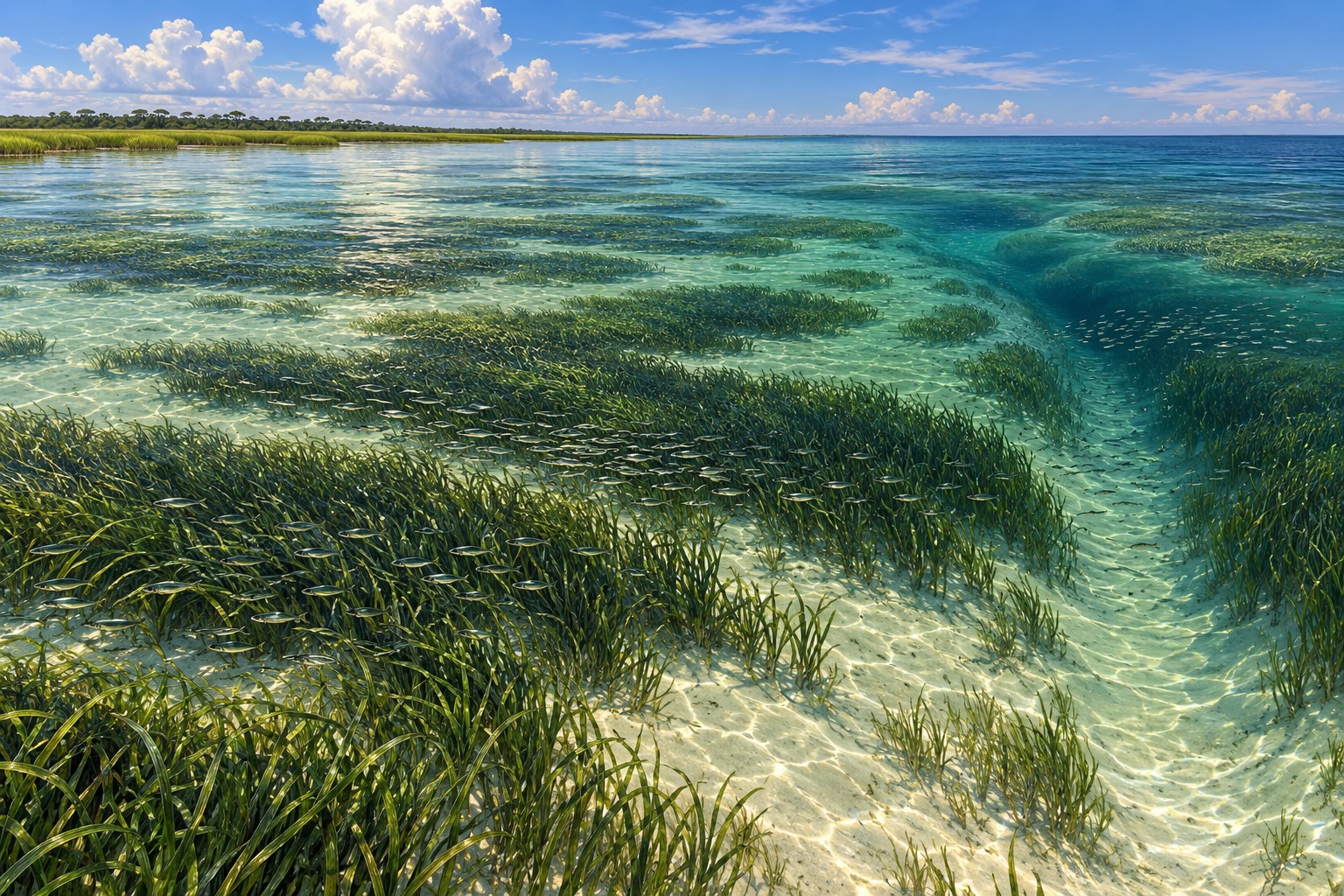
Shell Point looks out across northern Apalachee Bay. The broad, shallow coast is better understood as a collection of grass beds, sandy lanes and small depressions than as a single fishing flat.
That difference matters. A few extra inches or feet of water can provide a route for fish, a place for bait to gather or enough clearance for a boat. You do not need to locate a dramatic drop to find a useful feature.
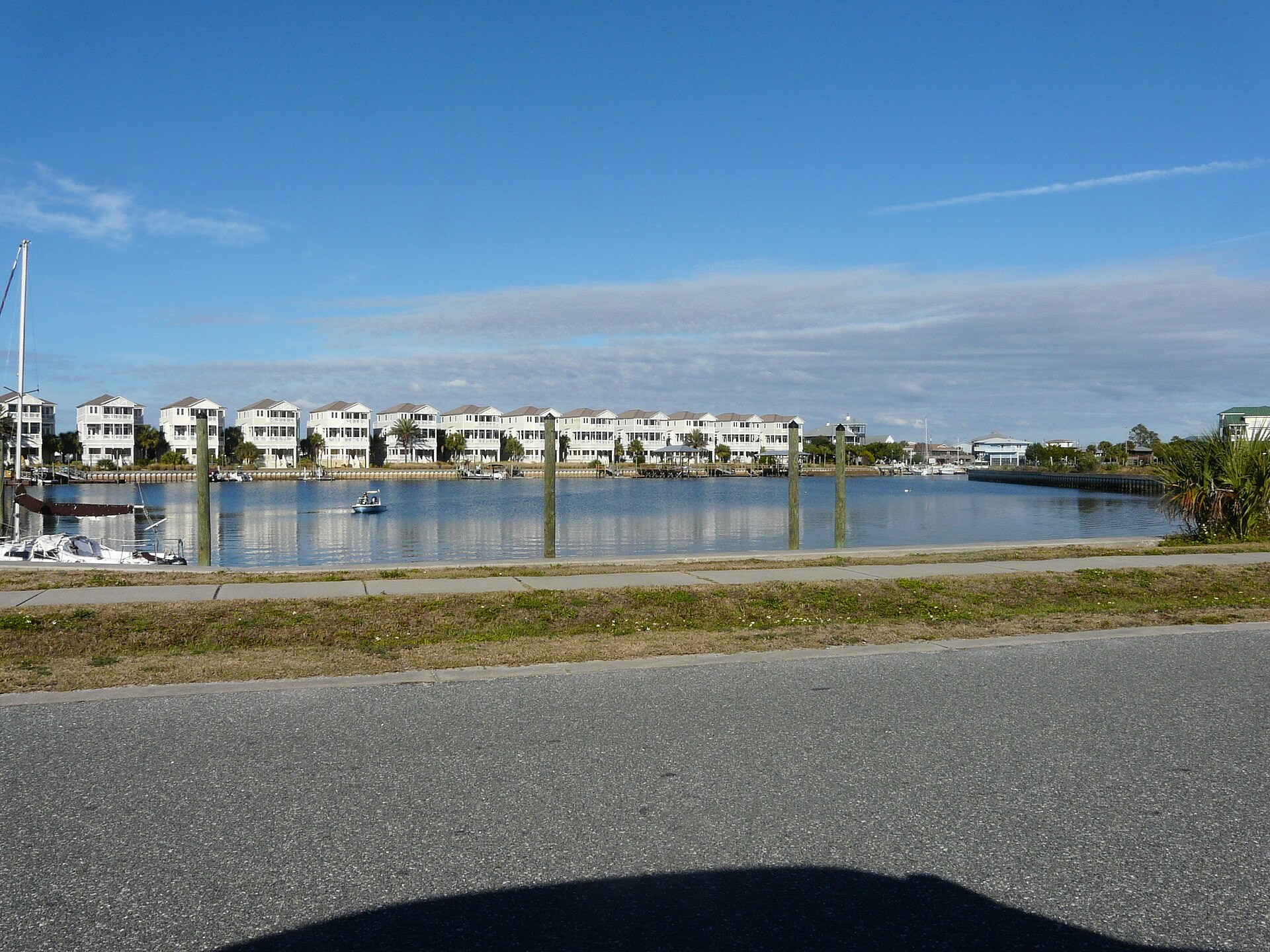
Public beach activity, sailing and paddling share this waterfront. Choose your fishing space with those uses in mind. A quiet photograph of a boat basin does not mean its docks or slips are public fishing platforms.
Begin with the public beach and a clear plan
Shell Point Beach is a listed Wakulla County coastal destination. Use the designated public access and read the signs before casting or launching. Keep swimming areas, launch paths and other visitors clear of your hooks.
Do not assume every canal-side road gives legal access to the water. Homes and private docks line parts of the community. A lawful public starting point is more valuable than a shortcut to a promising-looking bank.
If you intend to launch a kayak, inspect the shoreline before unloading. Consider how much farther the water may retreat before you return. A convenient launch at one level can become a long carry across unsuitable bottom later.
Choose a backup that does not depend on trespassing or an uncertain facility. Sometimes the right backup is a shorter beach visit rather than another fishing location.
Search the grass in a repeatable way
Use polarized glasses to compare bottom colors. Pale areas may be sand. Darker areas may be vegetation or deeper water. Confirm the pattern rather than treating every dark patch as a hole.
From a safely positioned kayak or boat, work a small area with controlled casts. Begin along the edge of a sandy lane. Bring the lure above the grass and watch for bait. If nothing changes after several careful casts, move a short distance to another feature.
When you get a bite, remember the habitat and retrieve. A strike beside the sand tells you more than a strike somewhere during a long, random drift. Repeat the useful approach before leaving.
A practical seatrout starting method
A light paddletail lets you cover water without carrying live bait. Use a jighead light enough to remain above the vegetation at a comfortable retrieve. If it gathers grass, make the adjustment immediately instead of finishing a dozen fouled casts.
A shrimp beneath a float offers another option. Set the bait high enough to travel cleanly. Give it time to drift across an edge, then retrieve and inspect it. A float moving naturally is useful; one repeatedly hanging up is telling you the depth setting is wrong.
Keep a soft mouth in mind when fighting spotted seatrout. Use steady pressure and a landing net. Avoid swinging a fish by the line or squeezing it tightly while removing a hook.
Other fish to plan around
| Target | Feature | Adjustment from grass-flat fishing |
|---|---|---|
| Redfish | Shallow edges and marsh-side feeding water | Make a quieter cast and use a weed-resistant lure |
| Flounder | Sand near a deeper lane | Lower the presentation and slow the retrieve |
| Sheepshead | Suitable hard structure | Use a small crustacean bait close to cover |
| Spanish mackerel | Open water with active bait | Try a smaller, faster-moving metal lure |
These options depend on reachable habitat and seasonal conditions. Do not force a structure method onto an open flat just because sheepshead are listed as an area species.
The breeze may decide the entire trip
Shell Point’s sailing activity is a reminder that open water can become windy. A breeze that helps a sailboat can make a fishing kayak’s return difficult. Evaluate the full route rather than only the sheltered launch edge.
Plan a short first paddle and turn back before fatigue appears. Keep your life jacket on and your communication device reachable. Do not let a productive drift carry you farther from land than you intended.
For boaters, adequate water depth must remain part of the route. Avoid running across grass, even if the hull can barely float there. A damaged propeller is only one cost of an unsafe shortcut.
Use the tides and weather page to compare wind and expected water level. Then make a fresh decision at the beach. A forecast cannot account for every shallow patch on your route.
How to adjust the search through the year
In spring, look for warming shallow habitat with signs of bait. A nearby deeper pocket can make an area worth investigating after a cool night. Fish the transition instead of only the shallowest edge.
During summer, combine lower light with adequate water for your route. Keep a close watch on developing storms. Do not remain on an exposed flat because fish finally started biting.
Fall can reward short moves between grass edges as bait travels. A handful of well-chosen drifts can teach more than covering the entire bay with no attention to the bottom.
Winter fishing often comes down to wind and available depth. Strong weather can push water off the shallows. Pick a reachable protected option and accept that some days do not suit a small craft.
Pack for a shallow-water session
Bring a compact selection of light jigheads, soft plastics, spare leader and a float rig. Add pliers, a measuring board and a net suitable for the fish you intend to catch. Keep hooks organized in a closed box.
Sun glare can be intense over open water. Polarized glasses, a hat and drinking water improve both comfort and observation. Insect protection helps around the shoreline, especially when wind drops.
Avoid wading across unfamiliar mud or shell. A shallow-looking bottom may not support your weight. Use a safe shore position or a properly planned craft rather than treating the whole bay as walkable.
A focused first visit
Arrive with one target, such as seatrout over reachable grass. Confirm the access and weather, then fish a small area carefully. Note whether bites occur over sand, beside vegetation or during a particular part of the drift.
Leave while you still have an easy return. At home, write down the water level and wind along with the catch. Those details will help you choose a better route on the next visit.
Check current harvest rules through the Florida Fish and Wildlife Conservation Commission. Keep protected habitat intact and return unwanted fish promptly.
Find a retrieve you can repeat
Cast across the drift and count briefly as a light lure sinks. Begin a steady retrieve before it reaches the grass. If the hook returns clean, you have a useful baseline. Repeat that presentation several times before experimenting.
When a bite occurs, remember whether it came during the swim, just after a pause or near the boat. That information can help you adjust more effectively than immediately changing lure color.
If bites come after a short pause, add that pause without allowing the lure to settle into vegetation. If fish follow without taking, try a smaller profile. If every cast fouls, change the weight or angle first.
A lure moving naturally through the right depth is a better test than a wide assortment of baits used without control. Keep the method simple enough to know what it is doing.
Use the drift to learn the flat
Watch the bottom as well as the rod. Note when the boat crosses pale sand, thick grass or a slightly darker depression. Relate each bite to that change. You are looking for a pattern small enough to repeat.
Reset a productive drift from outside the fishing area. Avoid driving or paddling directly over the place where fish were feeding. Leave other anglers enough room to complete their own drifts.
Do not let a long quiet drift carry you out of the planned area. Set a visible stopping point or a sensible time limit, then reassess. Wind can quietly turn a fishing search into a longer return than intended.
When natural bait is easier
A shrimp beneath a float can help a new angler see how the water moves. Keep the bait above grass and let the float travel through a useful edge. A small controlled presentation is enough to begin learning.
If tiny fish strip the bait, shorten the time between checks and use a compact piece where appropriate. An empty hook drifting beautifully is still an empty hook. Keep spare bait shaded so it remains usable.
When to stop searching
Increasing wind, distant thunder and shrinking water depth are more important than a quiet catch count. Leave while the return is straightforward. The best route is one that remains within your ability after the conditions change.
At home, note the wind direction and which part of the flat you could safely reach. Add the lure weight or float depth that stayed clean. This turns the next visit into a better-informed starting plan without pretending the same fish will wait in the same place.
Shell Point questions
Is a deeper hole always obvious?
No. Bottom color can be misleading. Look for several clues, including the surrounding grass, current and how a light lure sinks.
Can I fish from the neighborhood boat slips?
Only with permission where required. The presence of a dock or basin in a photo does not establish public access.
What if my kayak keeps drifting too fast?
Move to a safer sheltered area or end the session. Do not focus on casting while losing control of your position.
Why use a light jighead?
It helps the lure travel above shallow grass. The useful weight depends on depth and current, not simply the size of fish you hope to catch.