

PANHANDLE
St. George Island Public Beach
fishing guide
St. George Island Public Beach offers a central Gulf-shore starting point near the island lighthouse. Keep its public access separate from the state park and private western community.
Explore the guide ↓Keep the central public beach separate from other island areas
St. George Island's central public beach is reached near the island's main visitor area and lighthouse. The state park occupies the eastern end and has its own entrance and notices. The private western community has separate access conditions. A fishing plan should name the actual public crossing it uses.
Check local signs, parking arrangements and beach condition before setting up. A central public access does not authorize crossing every private lot farther along the island. After storms, confirm that the crossing is open and keep away from repair areas. Choose an uncrowded legal section rather than placing rods at the busiest route from the parking area to the water.
Look for small changes in the surf pattern
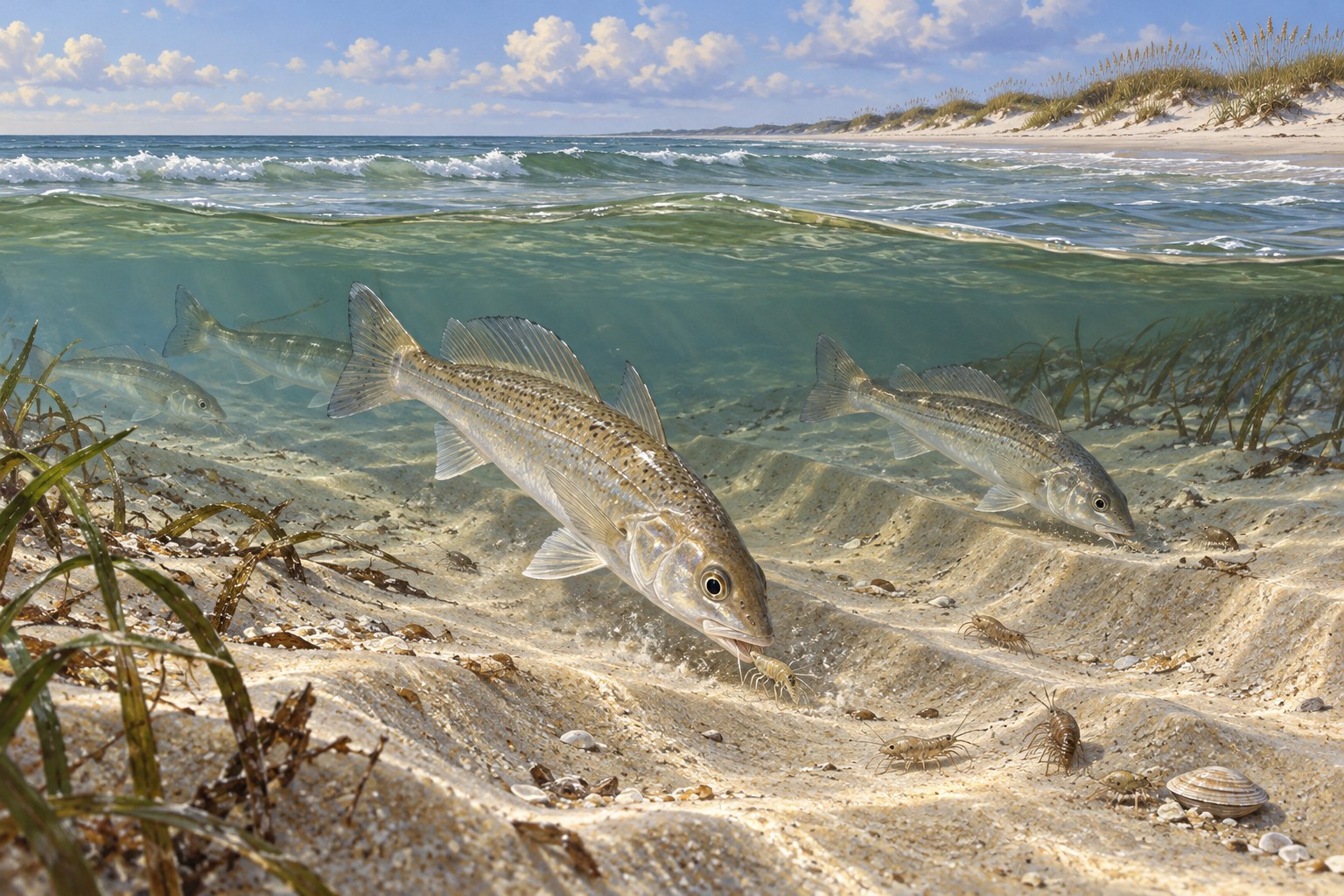
The Gulf beach gives anglers a sandy surf environment. A shallow bar may make a repeated line of breakers, with a quieter trough closer to dry sand. Small crustaceans and other food can collect where waves move and settle, bringing fish within an ordinary cast.
Watch several sets before judging a location. A calm gap between breaking waves can signal a deeper channel and a dangerous current. Read it from the shore; do not wade into it to check. Begin with a reachable trough that allows a rig to hold without sweeping toward people. The longest cast is only useful if it places bait where fish can find it.
Use whiting to learn bait control
Whiting are a sensible target for a simple Gulf-beach outing. Put a trimmed shrimp piece on a small hook, leave the point visible and use modest weight to keep the presentation near clean bottom. A short bait is easier for a small feeding fish to take than an oversized offering.
Watch the tip for light taps that break the steady rhythm of waves. Retrieve after a reasonable trial and inspect the bait. If it is untouched, alter distance or location. If it is repeatedly stripped, try a tougher small piece. Keep the rod attended and a landing spot free of loose hooks, towels and bags.
Prepare for a seasonal opportunity without promising a run
Pompano travel along sand beaches in response to temperature and food. Spring and fall often bring interest from surf anglers, but local conditions can shift the useful window. Clean enough water and manageable wave action matter more than simply arriving in a named month.
Sand fleas gathered legally, shrimp and compact prepared crustacean baits can make useful starting choices. Test a small presentation near the trough before adding more color or bulk. Learn the difference between pompano and similar fish before retention. A traveling school can arrive briefly or miss the beach entirely, so a patient mixed-small-fish plan is more realistic than expecting a daily limit.
Keep a lure available for an actual bait chase
Bluefish, jacks and Spanish mackerel may follow bait along the broader island coast. Small fish scattering repeatedly can reveal activity worth testing with a compact spoon or fish-shaped lure. Cast into an open lane from secure sand and retrieve through the edge of the disturbance.
Check for birds before each cast. A feeding flock is useful information, but a lure through its center can injure wildlife. Use pliers with toothy fish and inspect leader damage after every encounter. If the activity moves beyond safe reach, let it go. Following it into deeper surf is an unnecessary risk for a beach outing.
Match the rig to the small part of beach you can use
A medium spinning outfit works for many close-range baits and compact lures. A longer rated surf rod helps control a bottom rig when modest breakers demand additional weight. Stay within the rod's casting range and change sinker size only to gain useful control.
Carry a few spare hooks, leaders, pliers and a measuring device. Put bait in a shaded container and keep food separate. A small waste pouch prevents line scraps blowing away during a retie. A rod holder is useful only for supervised fishing. Remove every baited line before taking a break away from the chosen casting area.
| Plan | Suitable opening rig | Priority |
|---|---|---|
| Small surf fish | Shrimp on a small hook | Attended rod and clear lane |
| Possible pompano | Compact crustacean bait | Identification before harvest |
| Visible bait chase | Small spoon | No birds in the cast path |
Use weather to adjust the session length
Hot summer afternoons can bring heat and thunderstorms. A short early session with an easy return to the car is often a more comfortable first visit. Winter fronts can change water clarity, wave height and fish activity, sometimes making a later sheltered alternative more sensible.
Tide predictions help you anticipate level, but local waves and wind shape where the bait actually stays. Compare the chart with the shore in front of you. Retreat when surf reaches gear or lightning develops. No public-beach catch justifies leaving a child, loose rod or loaded cooler in a position that rising water can reach.
A public beach must work for swimmers and wildlife too
Set the fishing lane well away from occupied swimming space. Reel in before a family crosses between the sand and water. Do not leave sharp hooks uncovered while changing bait or tying leaders. The busiest central area may simply be better for a beach walk than a fishing setup.
Protect dunes and follow nesting markers. Central public access does not remove turtle and shorebird responsibilities. Keep light use consistent with local protection rules and bag all bait waste. A dog-friendly visitor description is not permission for an unleashed animal to run through a tackle area or disturb birds on the shore.
Keep a record that identifies the actual public crossing
For a first session, use one small bait and compare two reachable distances. Note water color, wave direction and which sinker stayed put. A short record of those observations is more useful than a claim that the whole island fishes best on one tide.
Check current license and harvest rules before keeping fish. Support released catches with wet hands and keep identification brief. Leave the public crossing clear and collect all line before departure. If the state park is closed, do not describe your central-beach visit as evidence that its distant fishing areas have reopened. Each access needs its own current check.
Common questions
Is this beach inside St. George Island State Park?
The central public beach is separate from the eastern state park, which has its own entrance and access status.
What is an easy bait for the Gulf trough?
A small shrimp piece on a manageable bottom rig is a useful way to begin looking for whiting.
Can I fish beside people swimming?
Keep hooks and lines out of occupied swimming water. Choose a clear legal lane or put the rods away.
Does central beach access allow entry to the private west end?
No. Different parts of the island have different property and access arrangements.
Prepare for your visit
Check local tides and weather. Read more about florida pompano, whiting, spanish mackerel. Check current FWC saltwater fishing rules.